Artwork
Der Walchensee (The Walchensee)
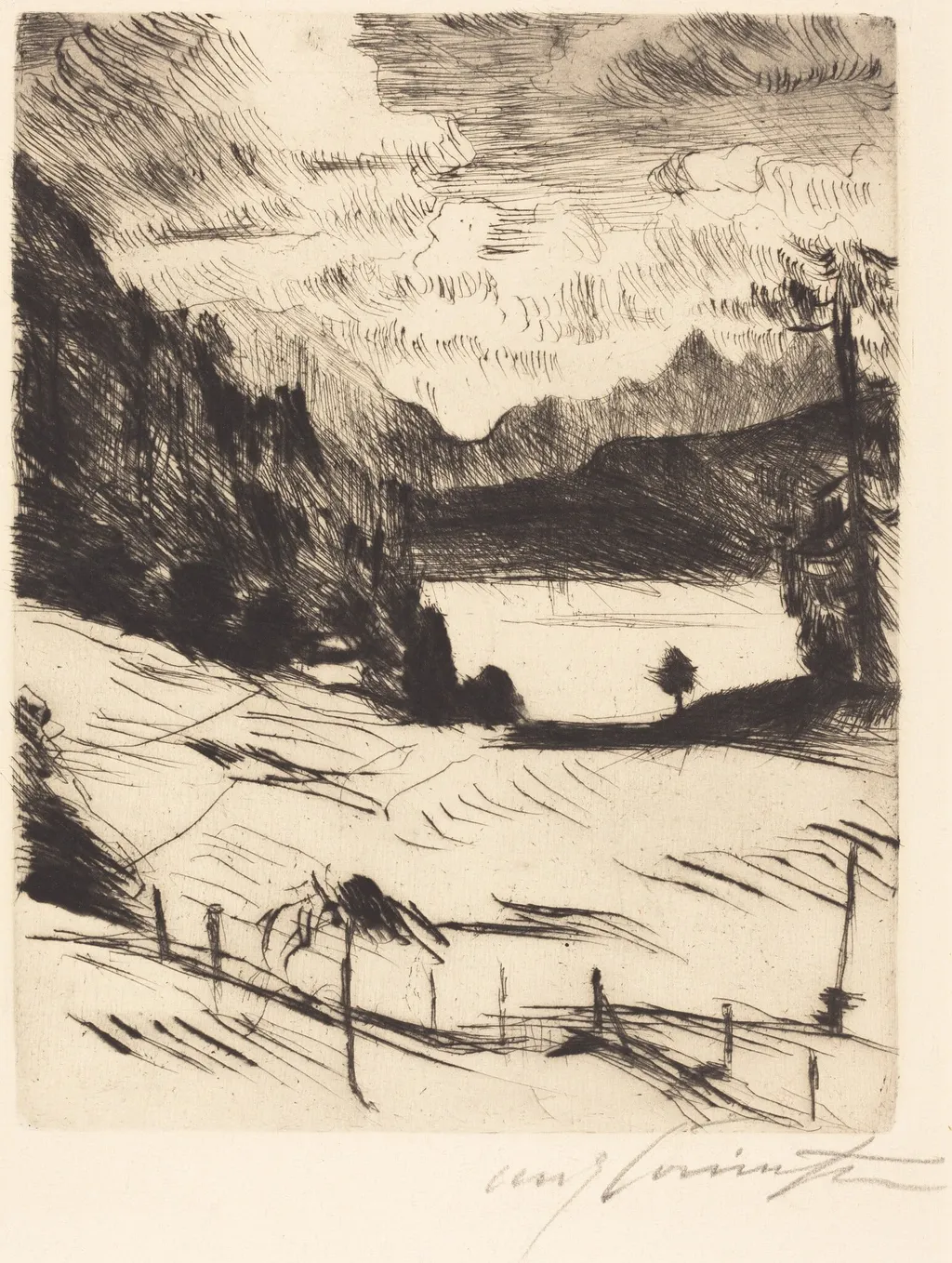
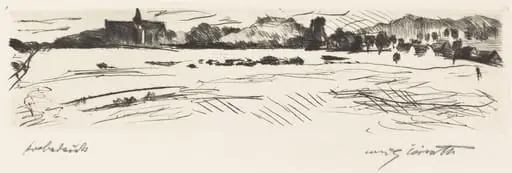
Der Walchensee (The Walchensee) is an ink print by Lovis Corinth. It dates from 1920 and is held in the collection of the National Gallery of Art.
About this work
Overview
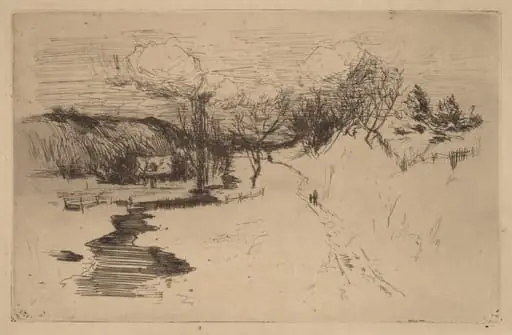
Lovis Corinth’s 1920 drypoint print, *Der Walchensee*, portrays the Bavarian lake of the same name. Executed entirely in black, the image captures a stark, rugged landscape through the incisive lines characteristic of the drypoint medium.
Subject & Meaning
The composition centers on the lake, framed by uneven hills and sparse trees, while a sky rendered in swift, gestural strokes suggests movement or wind. Bare branches in the foreground add a sense of desolation, emphasizing the raw natural environment.
Technique & Style
Corinth employed a drypoint needle to incise directly onto the paper, producing deep, velvety black lines and a textured surface. The resulting marks are jagged and expressive, reflecting his post‑stroke shift toward a looser, more emotive approach influenced by expressionism.
History & Provenance
After studying in Paris and Munich, Corinth became a leading figure in the Berlin Secession. The print dates from the period following his 1911 stroke, a time when his work moved away from strict naturalism toward a more gestural, expressive visual language.
Context
*Der Walchensee* belongs to a broader trend in early‑20th‑century German art that explored the emotional resonance of landscape. Corinth’s adoption of drypoint aligns with contemporary printmakers seeking direct, tactile means of conveying atmosphere and mood.
Own this work as a print
Artist & collection

Artist
Lovis Corinth was a German artist and writer whose mature work as a painter and printmaker realized a synthesis of impressionism and expressionism.