Artwork
Woodland Path
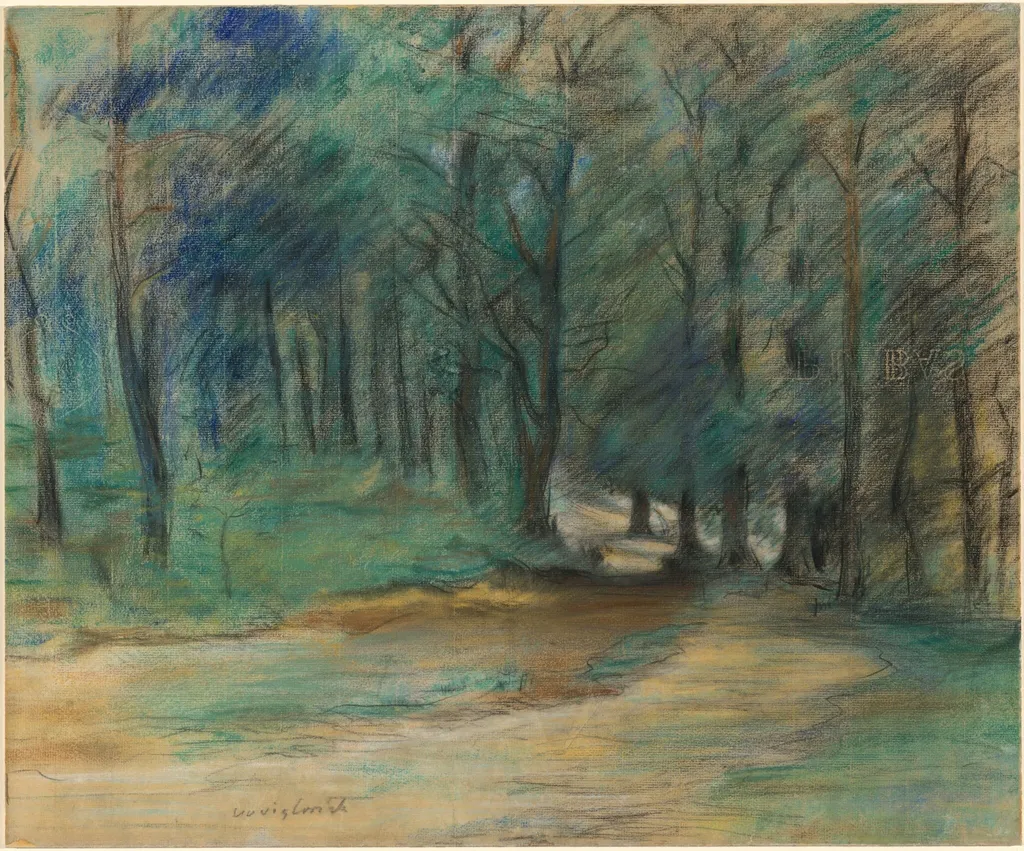
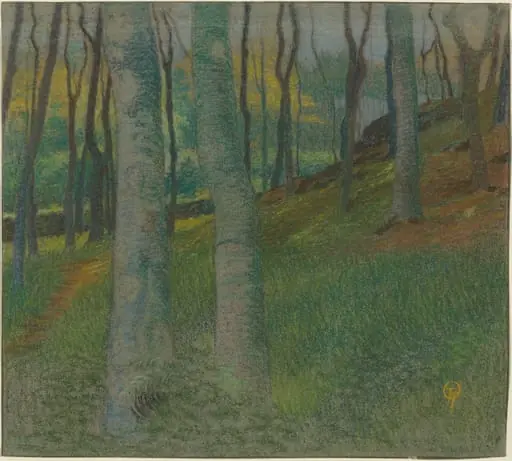
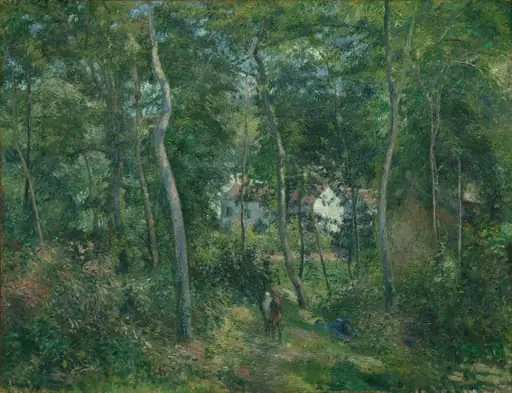
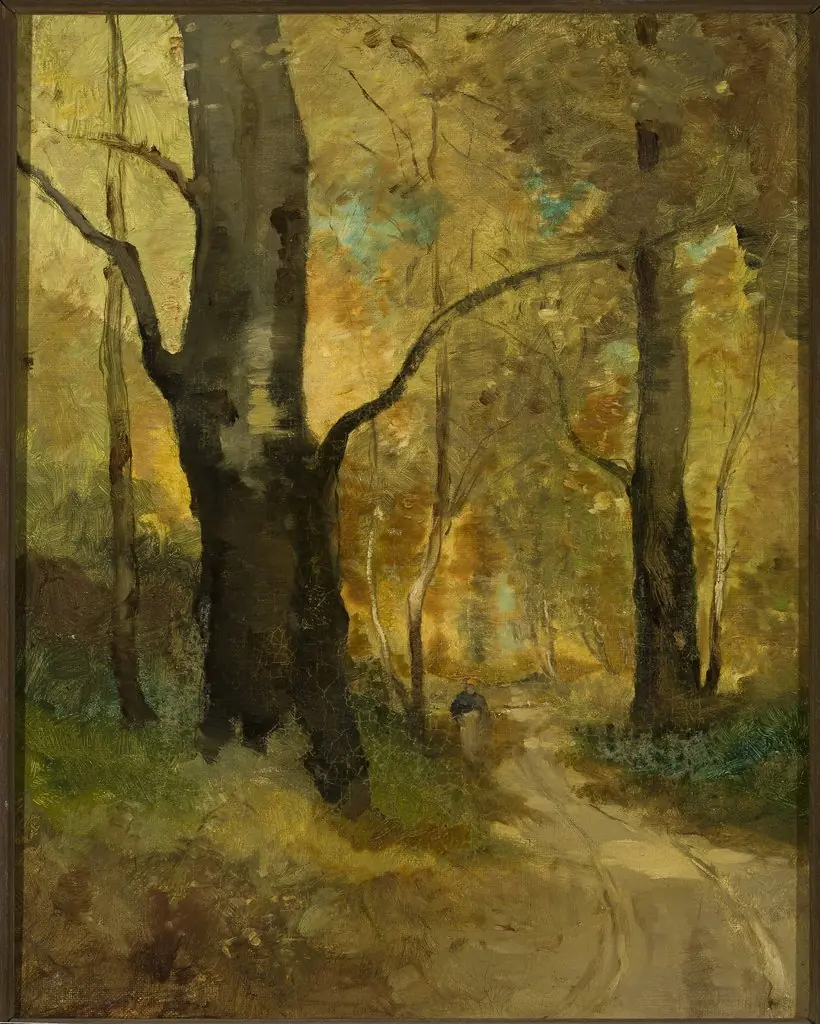
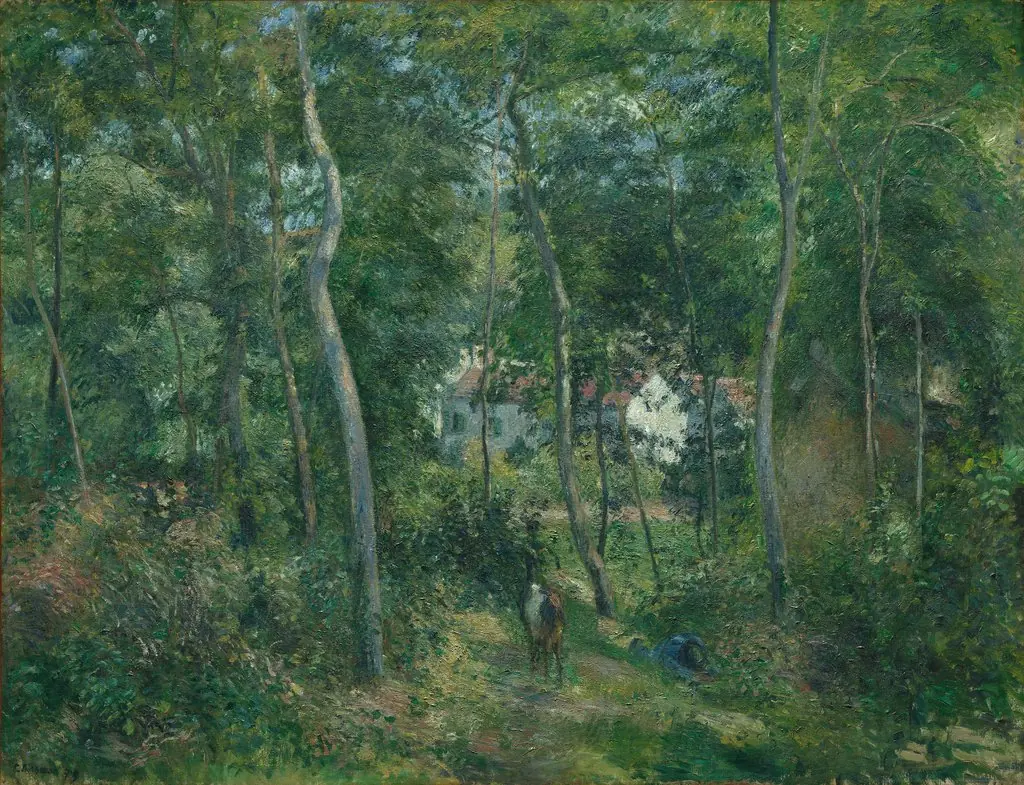
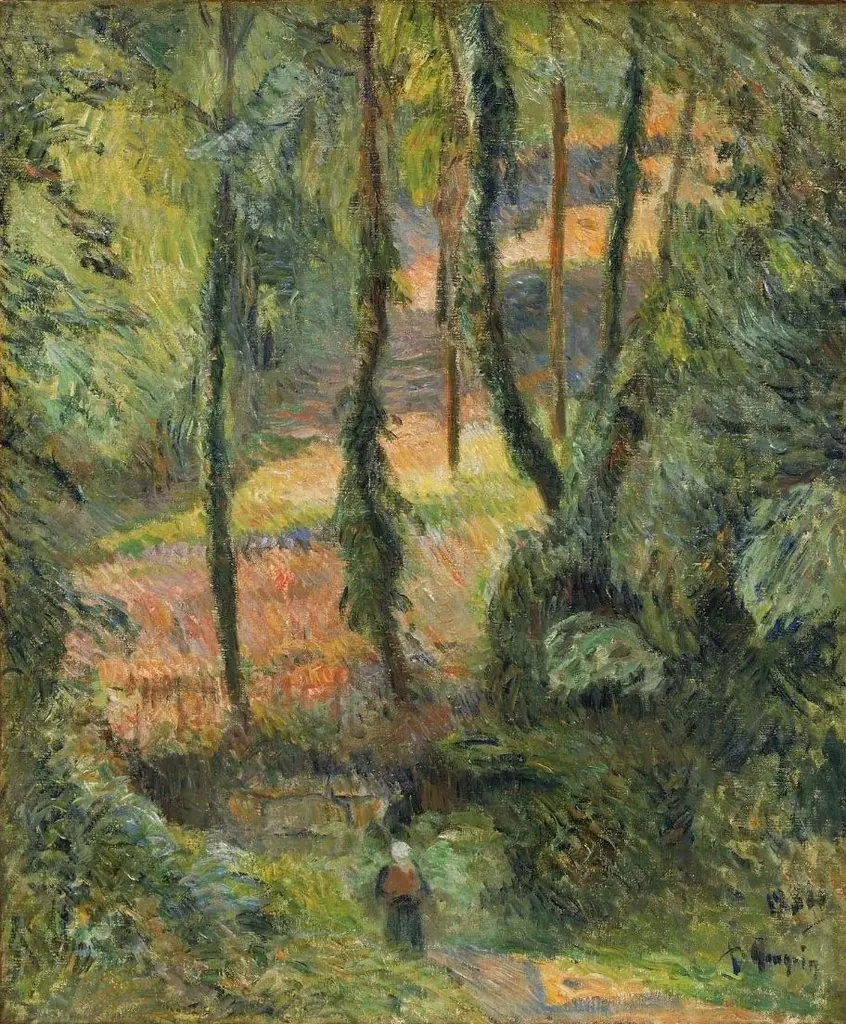
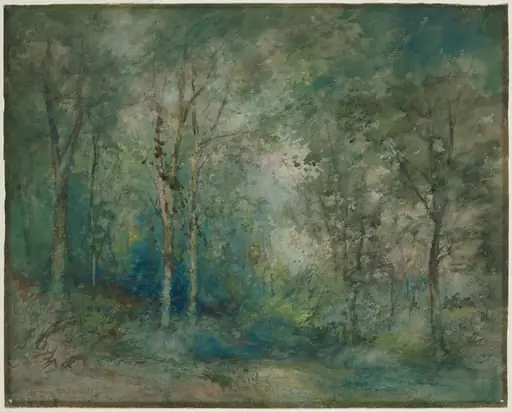
Woodland Path is a pastel drawing by the Impressionist artist Lovis Corinth. It dates from 1894 and is held in the collection of the National Gallery of Art.
About this work
Overview
Created circa 1894, *Woodland Path* is a pastel drawing on laid paper that has been mounted on cardboard for support. The work presents a forest trail winding through a stand of tall trees, with a muted sky visible through the canopy and a damp ground that catches light near a water edge.
Subject & Meaning
The composition focuses on a quiet, natural setting, emphasizing the interplay of light and shadow along the path. Dark, robust trunks contrast with soft blues and greens of the sky, while the wet ground reflects subtle tonal variations, suggesting a moment of calm within the woodland.
Technique & Style
Corinth employed soft pastel sticks, applying loose, gestural strokes that give the image a sketch‑like, atmospheric quality. The medium’s chalky texture allows for blended hues and delicate transitions, creating a dreamy, almost lyrical interpretation of the landscape rather than a precise rendering.
History & Provenance
German painter and printmaker Lovis Corinth produced the drawing during a period when he was exploring pastel as a primary medium. Having studied in Paris and Munich, he later became a leading figure in the Berlin Secession, where his style shifted from naturalism toward a hybrid of impressionist and expressionist tendencies.
Context
The work reflects Corinth’s transitional phase, when his interest in capturing fleeting impressions of nature merged with an emerging expressive approach. Pastel, favored for its immediacy, suited his desire to convey mood and atmosphere without the rigidity of oil or watercolor.
Own this work as a print
Artist & collection

Artist
Lovis Corinth was a German artist and writer whose mature work as a painter and printmaker realized a synthesis of impressionism and expressionism.