Artwork
Portrait of Johan Gerritsz van Schoterbosch (c. 1564-1654)
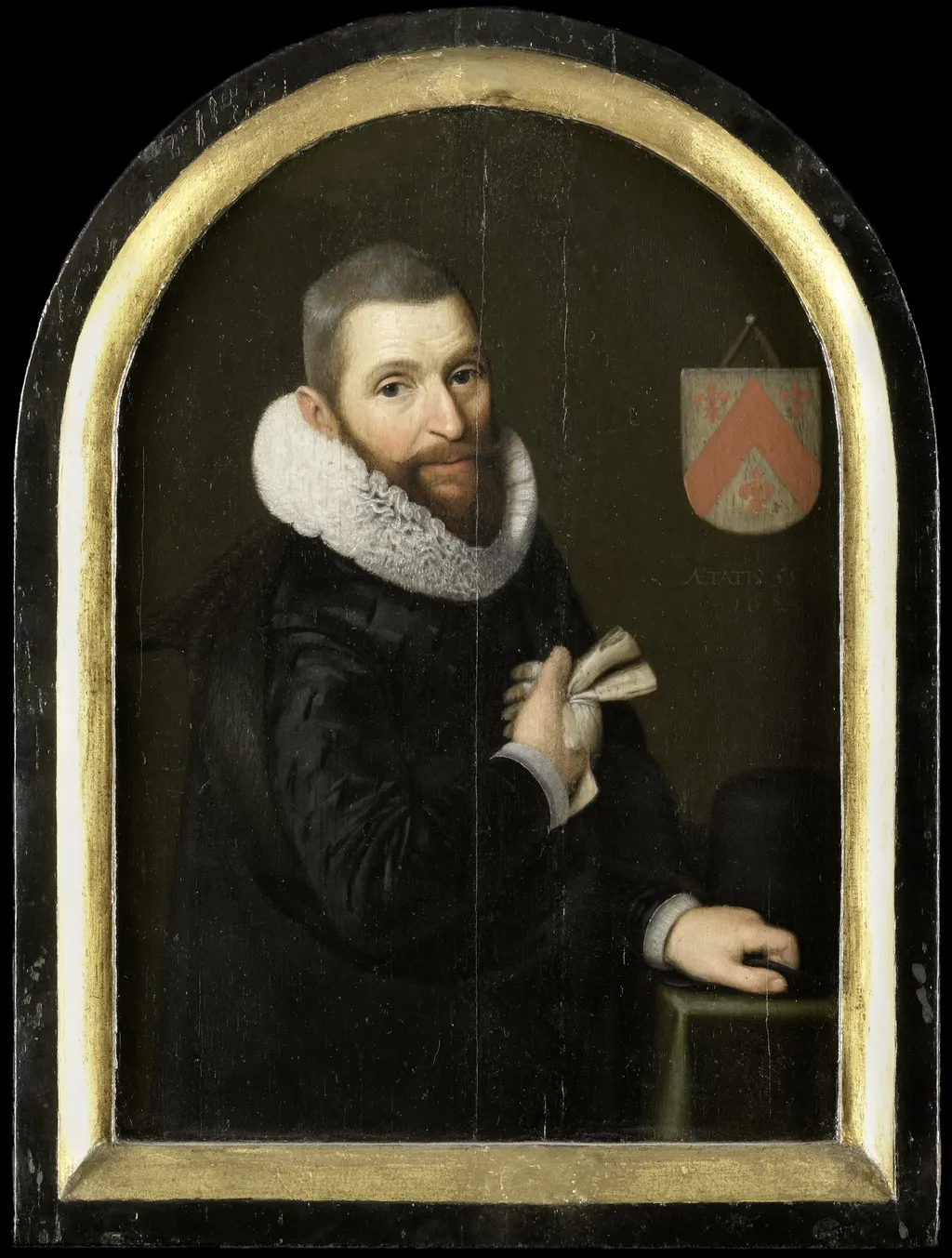
Portrait of Johan Gerritsz van Schoterbosch (c. 1564-1654) is an oil painting by the Dutch Golden Age artist Cornelis Engelsz.. It dates from 1620 and is held in the collection of the Rijksmuseum.
About this work
The painting is a great example of the work of Cornelis Engelsz, who was known for his portraits of wealthy merchants and nobles.
The painting is a portrait of a man with a beard and mustache, dressed in a black coat with a white collar. He is seated in a chair, holding a piece of paper in his right hand. The background is dark, with a small shield-like object hanging on the wall behind him.
The man's attire and the style of the painting suggest that it is from the 17th century. The use of chiaroscuro, a technique that uses strong contrasts between light and dark, adds depth and volume to the image.
The painting is a great example of the work of Cornelis Engelsz, who was known for his portraits of wealthy merchants and nobles. If you're interested in learning more about his style and technique, you can look up Cornelis Engelsz.
Overview
Cornelis Engelsz.’s oil portrait, dated 1620, presents Johan Gerritsz van Schoterbosch (c.1564‑1654). The work is part of the Rijksmuseum’s collection and exemplifies early‑17th‑century Dutch portraiture, focusing on a single seated figure rendered with careful attention to material detail.
Subject & Meaning
The sitter, a bearded gentleman in a black coat with a white collar, holds a sheet of paper in his right hand, suggesting a connection to literacy or commerce. A modest shield‑shaped object hangs behind him, adding a subtle emblem of status without overt heraldic display.
Technique & Style
Engelsz. employs chiaroscuro, contrasting illuminated facial features and clothing against a dark backdrop to model form and convey volume. The brushwork is smooth in the flesh tones, while the fabric’s texture is indicated through fine, controlled strokes, reflecting the painter’s skill in rendering materiality.
History & Provenance
Created in 1620, the portrait entered the Rijksmuseum’s holdings as part of its Dutch Golden Age collection. Its attribution to Cornelis Engelsz., a painter known for documenting affluent merchants and civic figures, aligns with the sitter’s presumed social standing.
Context
The work belongs to a period when Dutch portraiture emphasized realism and individual identity, often portraying merchants and professionals in sober attire. Engelsz.’s approach mirrors contemporary trends that favored restrained elegance over elaborate courtly ornamentation.
Artist & collection