Artwork
Portrait of Willem Fransz Overrijn van Schoterbosch (c.1510-?)
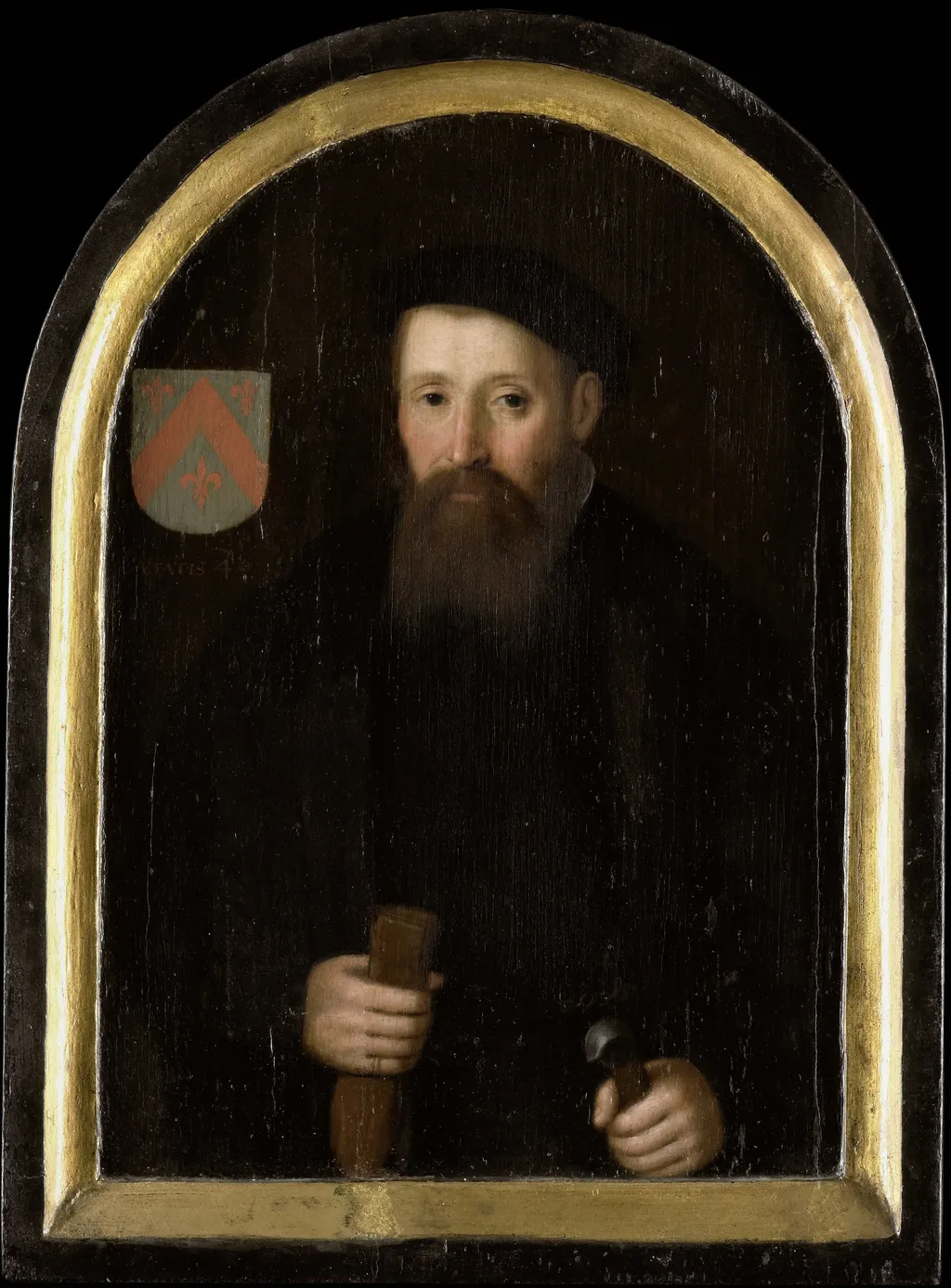
Portrait of Willem Fransz Overrijn van Schoterbosch (c.1510-?) is an oil painting by the Northern Renaissance artist Cornelis Engelsz.. It dates from 1550 and is held in the collection of the Rijksmuseum.
About this work
Overview
Cornelis Engelsz. painted this oil portrait around 1550, now part of the Rijksmuseum’s collection. The work presents a bearded gentleman framed by a dark, arched border, his features illuminated against a deep background that draws immediate attention to his face.
Subject & Meaning
The sitter is identified as Willem Fransz Overrijn van Schoterbosch, a figure whose name suggests a Dutch civic or mercantile background. He holds a small object in his right hand and a longer staff in his left, gestures that may allude to personal status, profession, or a specific role within his community.
Technique & Style
Engelsz. employs chiaroscuro, using stark contrasts between light and shadow to model the figure’s visage and attire. The dark backdrop functions like a spotlight, a common device in mid‑sixteenth‑century portraiture to emphasize the sitter’s individuality and to create a sense of three‑dimensional presence.
History & Provenance
Created circa 1550, the painting entered the Rijksmuseum’s holdings through acquisition (specific details of its earlier ownership remain undocumented). Its survival in a museum setting reflects the broader Dutch practice of preserving portraiture as records of notable individuals.
Context
The inclusion of a shield bearing a red lozenge and three gold fleurs‑de‑lis behind the sitter situates the portrait within a heraldic tradition, linking personal identity to family or civic symbols. Such emblems were frequently displayed in portraiture to assert lineage or allegiance during the period.
Artist & collection