Artwork
Avondstemming met herder
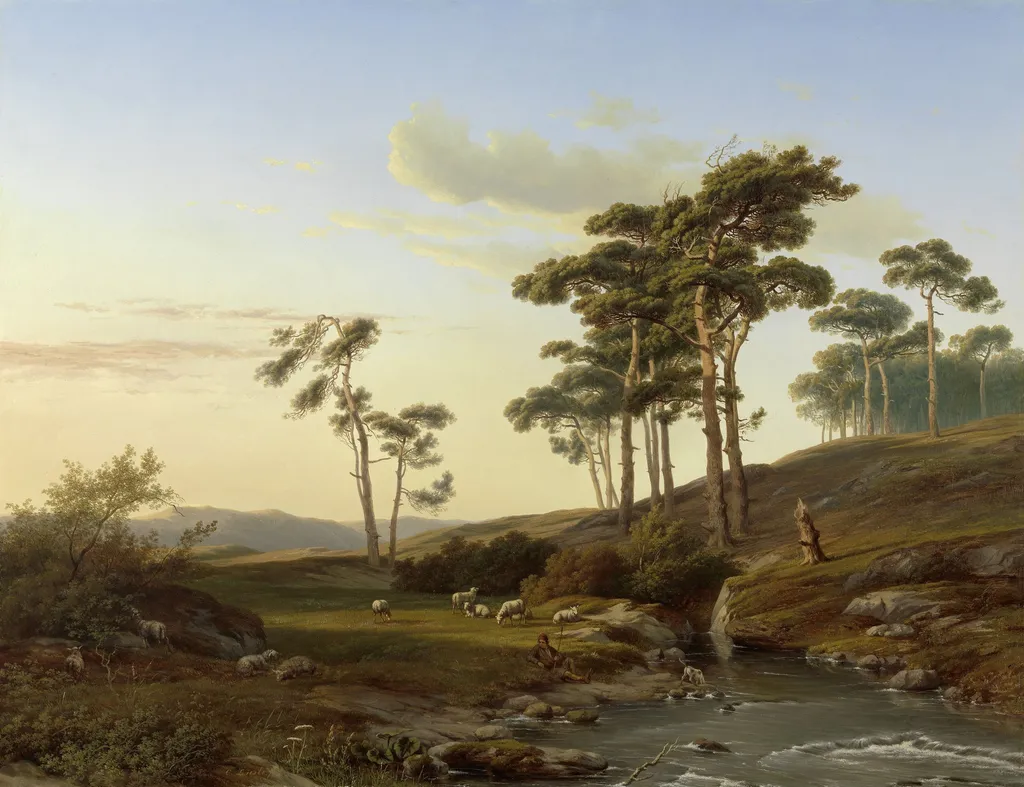
Avondstemming met herder is an oil painting by the Barbizon school artist Cornelis Lieste. It dates from 1855 and is held in the collection of the Rijksmuseum.
About this work
Overview
Painted in 1855 by Dutch artist Cornelis Lieste, *Avondstemming met herder* is an oil-on-canvas landscape that captures a tranquil rural evening.
Painted in 1855 by Dutch artist Cornelis Lieste, *Avondstemming met herder* is an oil-on-canvas landscape that captures a tranquil rural evening. Lieste, active in the mid-nineteenth century, aligned his work with the broader Romantic and Barbizon traditions, emphasizing mood and natural observation over idealized composition. The painting resides in the Rijksmuseum’s collection, where it reflects a quiet moment in the Dutch countryside during a period of growing interest in everyday nature.
Subject & Meaning
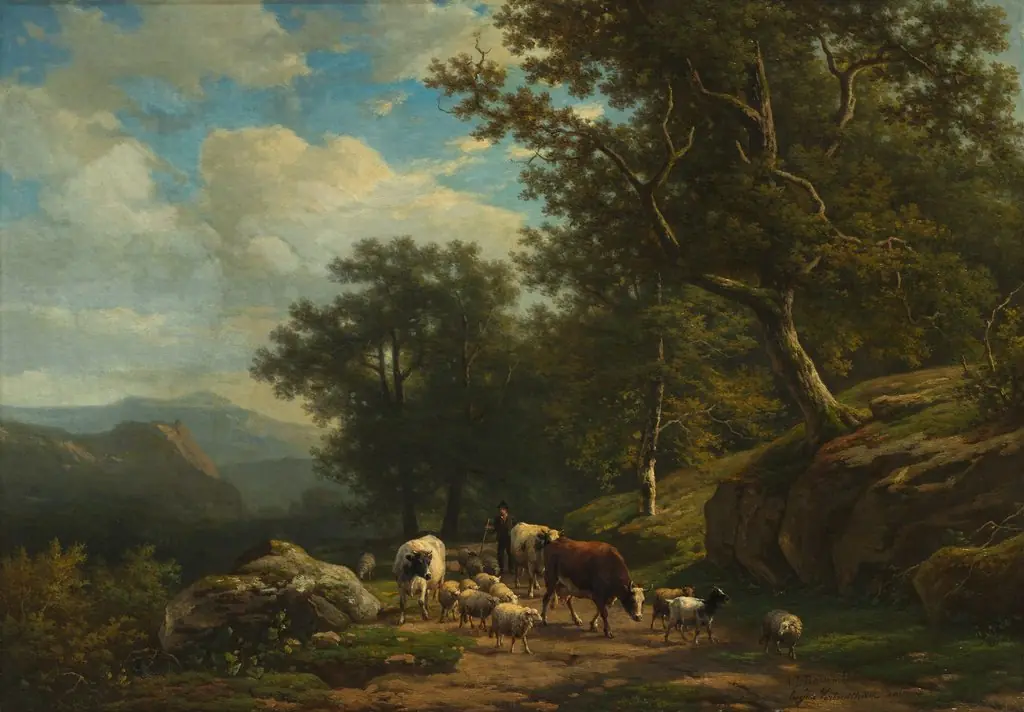
The scene centers on a solitary shepherd resting beside a shallow stream, overseeing a flock of sheep scattered across a gentle slope. The animals graze or lie still, their positions suggesting the calm of twilight. No narrative drama is present—instead, the painting conveys stillness and solitude, evoking a contemplative relationship between human, animal, and land. The absence of human activity beyond the shepherd reinforces a sense of quiet endurance in rural life.
Technique & Style
Lieste used oil paint to render subtle shifts in light and atmosphere, particularly in the dusky sky and the way it reflects on grass and stone. He employed a restrained palette of warm golds and cool purples to distinguish illuminated areas from shadowed ones, creating depth without sharp contrasts. The brushwork is soft and blended, favoring atmospheric effect over detail, aligning with the Barbizon School’s emphasis on direct observation and tonal harmony.
History & Provenance
Completed in 1855, the painting entered the Rijksmuseum’s collection in the late nineteenth or early twentieth century, likely through acquisition or donation. Lieste, though not widely known outside the Netherlands, was active in Amsterdam’s artistic circles and produced both paintings and lithographs. The work’s preservation in a national institution suggests it was recognized during its time as a representative example of Dutch Romantic landscape painting.
Context
In mid-century Europe, artists increasingly turned to rural scenes as industrialization reshaped society. The Barbizon School in France, and its Dutch counterparts like Lieste, sought to capture nature’s quiet dignity away from urban life. This painting reflects a broader cultural longing for pastoral peace, even as traditional agrarian life was fading. It stands as a quiet counterpoint to the rapid changes occurring in the Netherlands at the time.
Legacy
While Lieste did not achieve international fame, *Avondstemming met herder* remains a representative work of Dutch Romantic landscape painting. Its presence in the Rijksmuseum ensures continued access for study and appreciation. The painting contributes to understanding how Dutch artists adapted broader European trends to their own landscape and sensibility, preserving a moment of stillness in an era of transformation.
Own this work as a print
Artist & collection
Artist
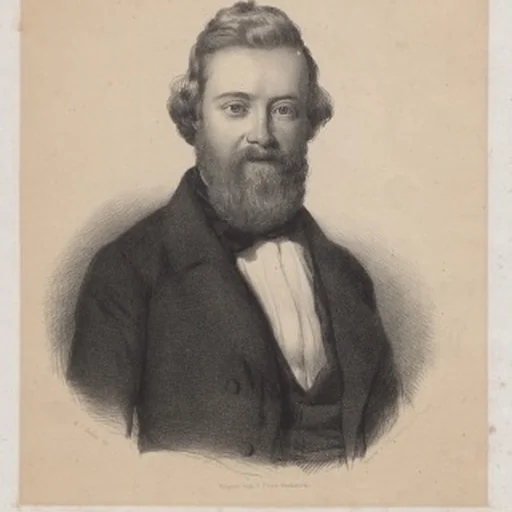
Cornelis Lieste (26 October 1817 - 24 July 1861) was a Dutch painter and lithographer. He specialized in Romantic style landscapes.

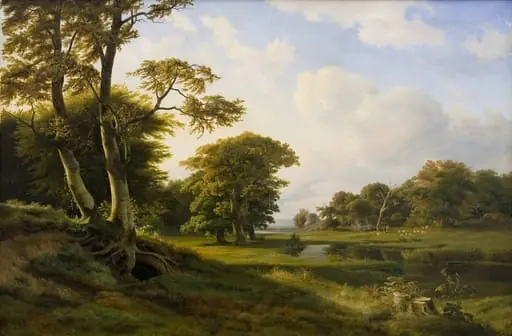 Skovlandskab ved Hellebæk. Efterår
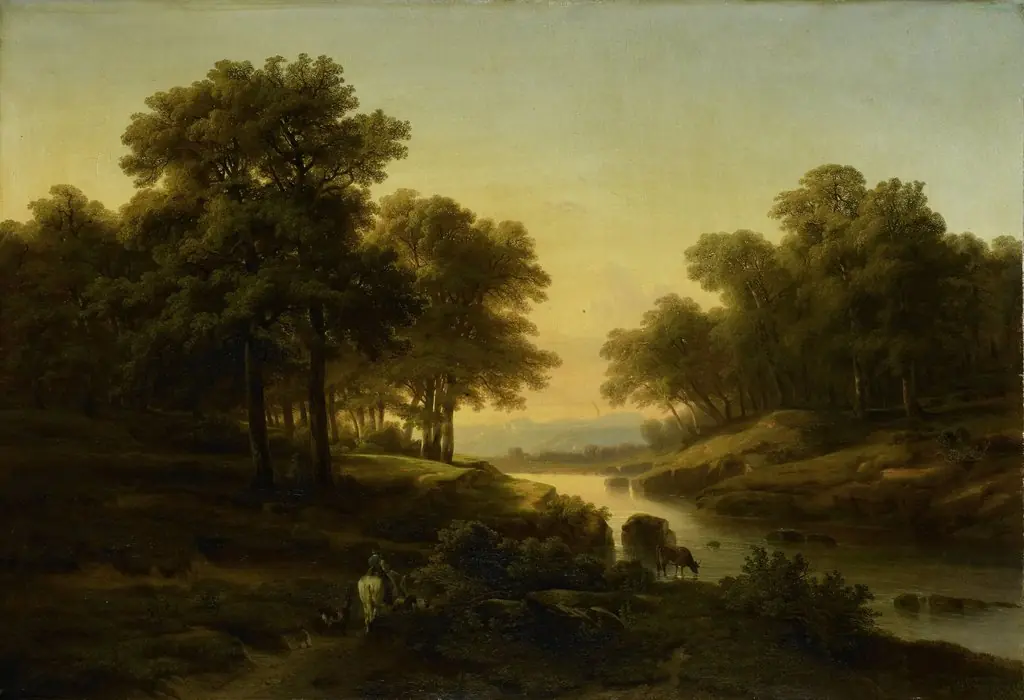 Landscape
 The Cemetery at Baden-Baden
 Forest Landscape in the High Mountains
 Landscape with a Peasant and His Flock
 Landscape with a Peasant and His Flock
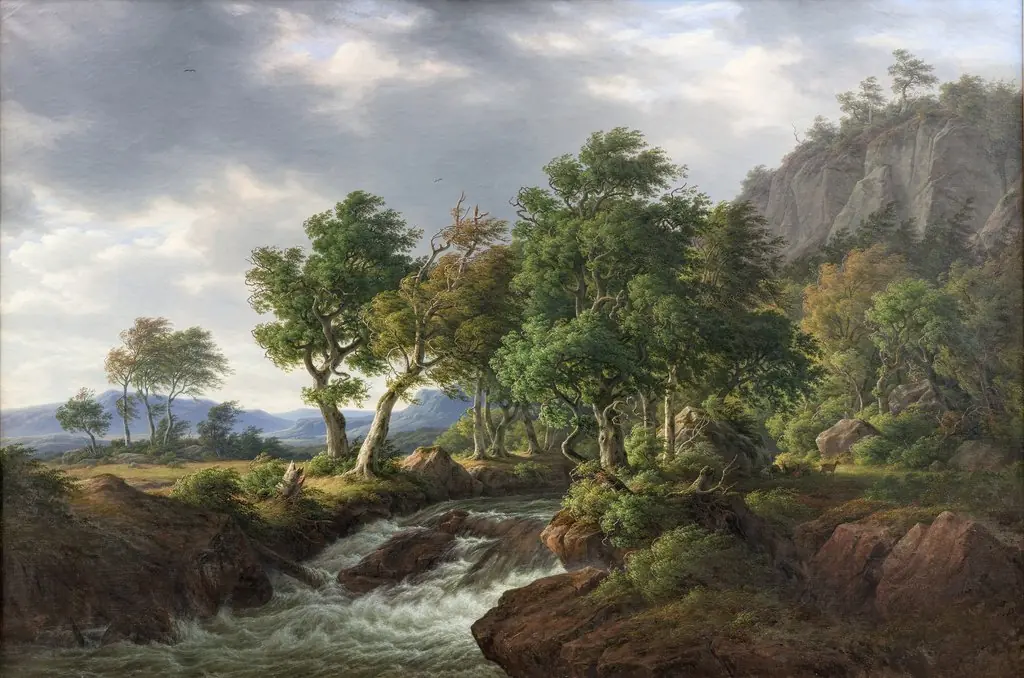 Klippelandskab. Djupadal i Bleking
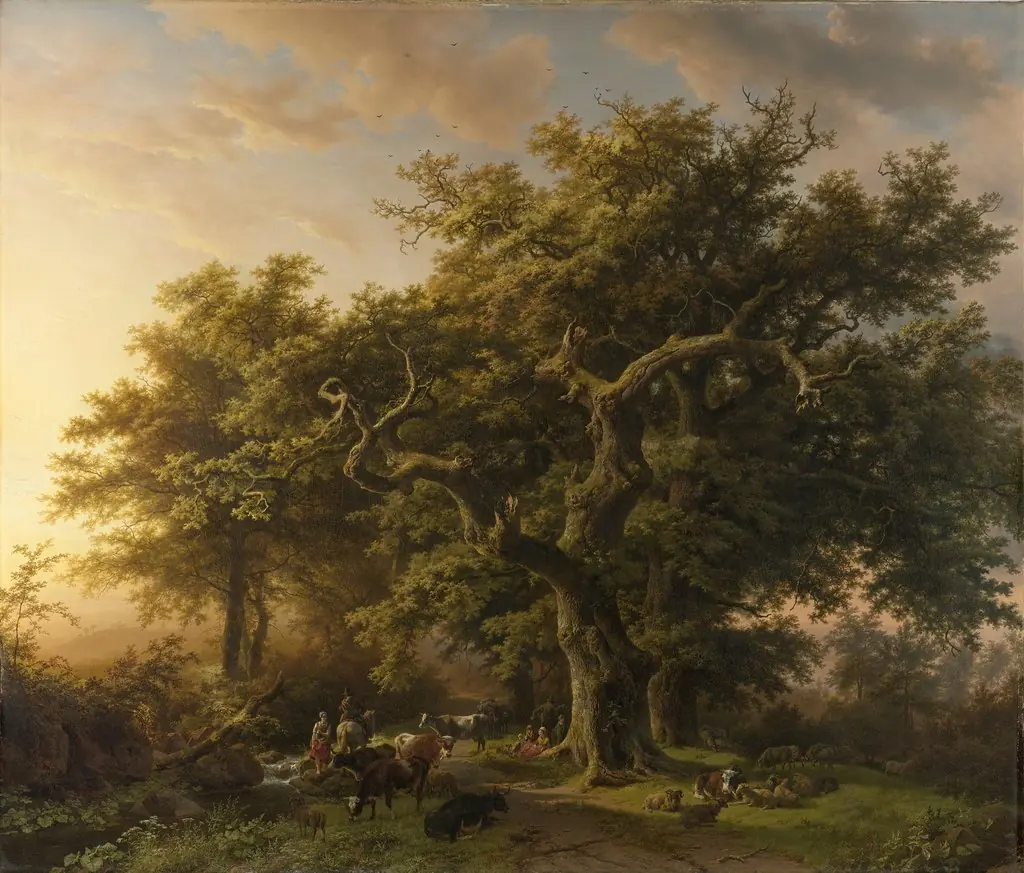 Forest Scene
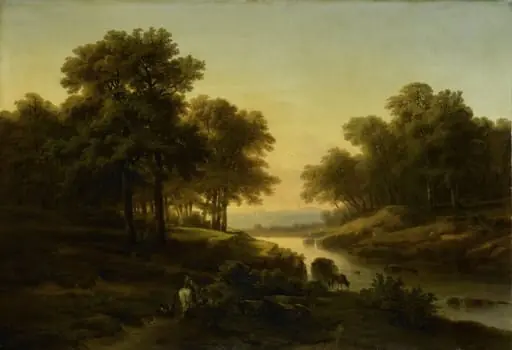 Landscape
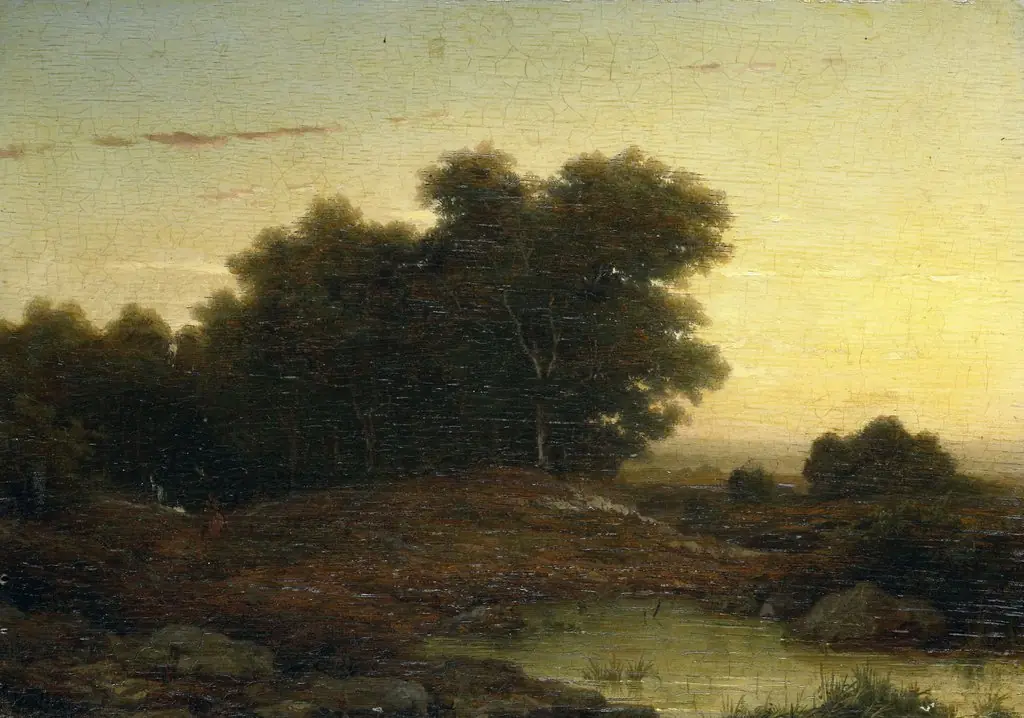 View in the Woods at Sunset
 Landscape with a Ruined Castle, Hammershus on the Island Bornholm
 Forest landscape