Artwork
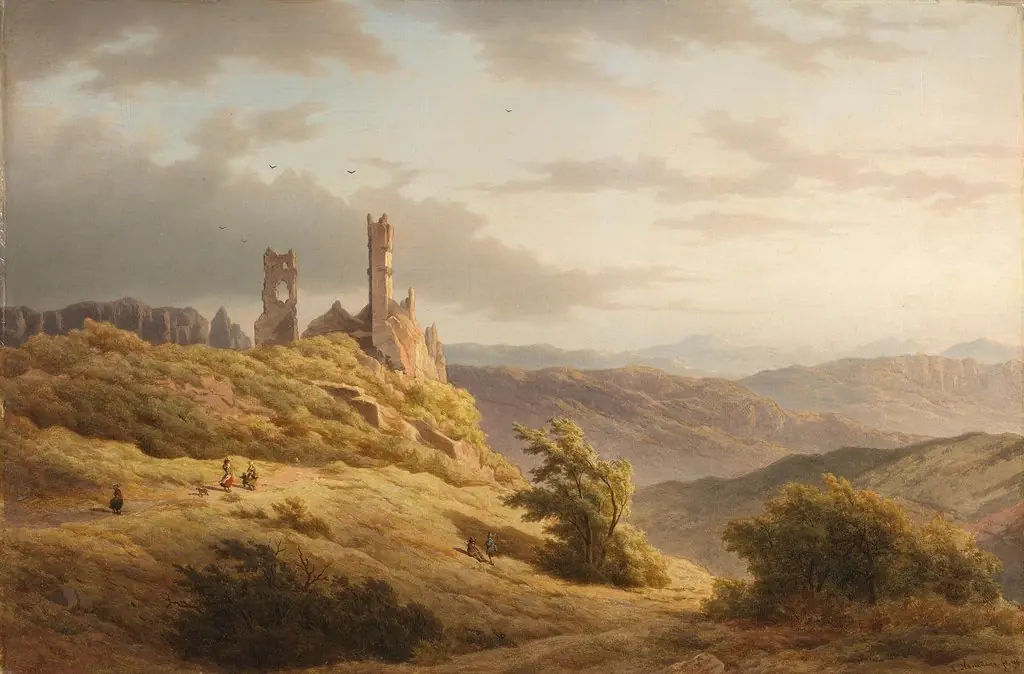
Landscape with a Ruined Castle, Hammershus on the Island Bornholm
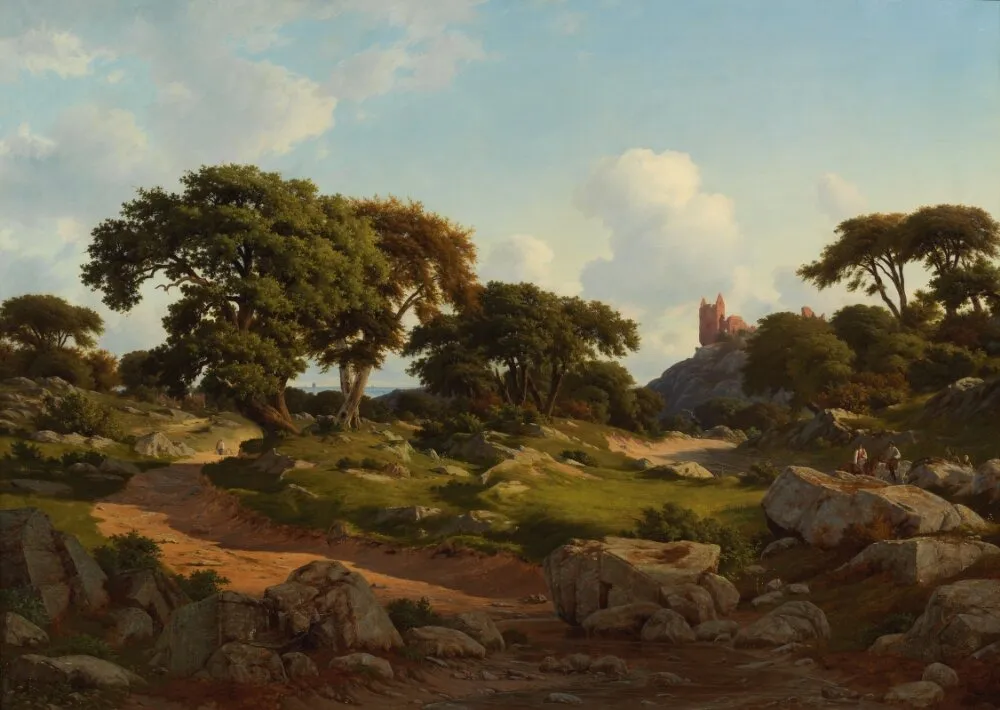
Landscape with a Ruined Castle, Hammershus on the Island Bornholm is an oil painting by Georg Emil Libert. It dates from 1845 and is held in the collection of the Nationalmuseum.
About this work
Overview
It is part of the Nationalmuseum’s collection in Denmark, reflecting the period’s interest in national heritage and topographical observation.
Painted in 1845 by Danish artist Georg Emil Libert, this oil on canvas depicts the medieval fortress of Hammershus on the island of Bornholm. The work belongs to a series of Nordic landscapes Libert produced during the mid-19th century, emphasizing quiet natural settings intertwined with historical architecture. It is part of the Nationalmuseum’s collection in Denmark, reflecting the period’s interest in national heritage and topographical observation.
Subject & Meaning
The painting centers on the crumbling remains of Hammershus, Denmark’s largest medieval fortress, perched on a rocky promontory. Rather than dramatizing its military past, Libert presents it as a silent witness to time, integrated into a tranquil, unspoiled landscape. The absence of human figures and the gentle terrain suggest contemplation over conquest, aligning with Romantic-era ideals of nature’s enduring presence over human ruins.
Technique & Style
Libert employed a restrained palette of earthy greens, browns, and soft blues to evoke calm. Brushwork is deliberate but not overly detailed, favoring atmospheric harmony over precision. Light falls evenly across the scene, with subtle tonal shifts in the sky and foreground rocks suggesting depth without strong chiaroscuro. The winding path invites the viewer’s eye toward the ruin, structuring the composition as a quiet journey through landscape and memory.
History & Provenance
Created during a period of growing Danish national identity, the painting was likely made after Libert’s travels across the Nordic region. It entered the Nationalmuseum’s collection in the 19th century, where it remains today. While no documented commission or exhibition history is known, its inclusion in the museum’s holdings signals its recognition as a representative example of Danish landscape painting from the era.
Context
In the mid-1800s, Danish artists increasingly turned to local landscapes and ruins as subjects, moving away from classical or foreign themes. Hammershus, though long abandoned, held symbolic value as a relic of medieval Danish sovereignty. Libert’s depiction aligns with this cultural shift, presenting history not as grand narrative but as integrated, weathered presence within the natural world.
Legacy
The painting contributes to a broader 19th-century Danish artistic movement that valued quiet observation over dramatic storytelling. While not widely reproduced, it remains a reference point for studies of Nordic landscape painting and the aesthetic treatment of historical ruins. Its enduring presence in the Nationalmuseum underscores its role in documenting Denmark’s visual engagement with its own past.
Artist & collection
Artist
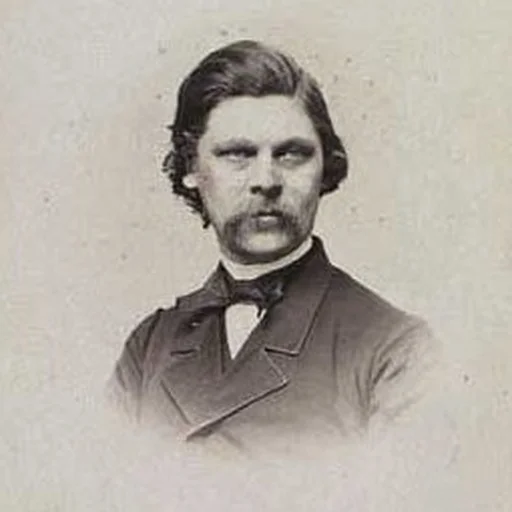
Georg Emil Libert (2 August 1820 – 19 May 1908) was a Danish landscape painter. His specialties included scenes featuring Danish, German, and Norwegian landscapes.

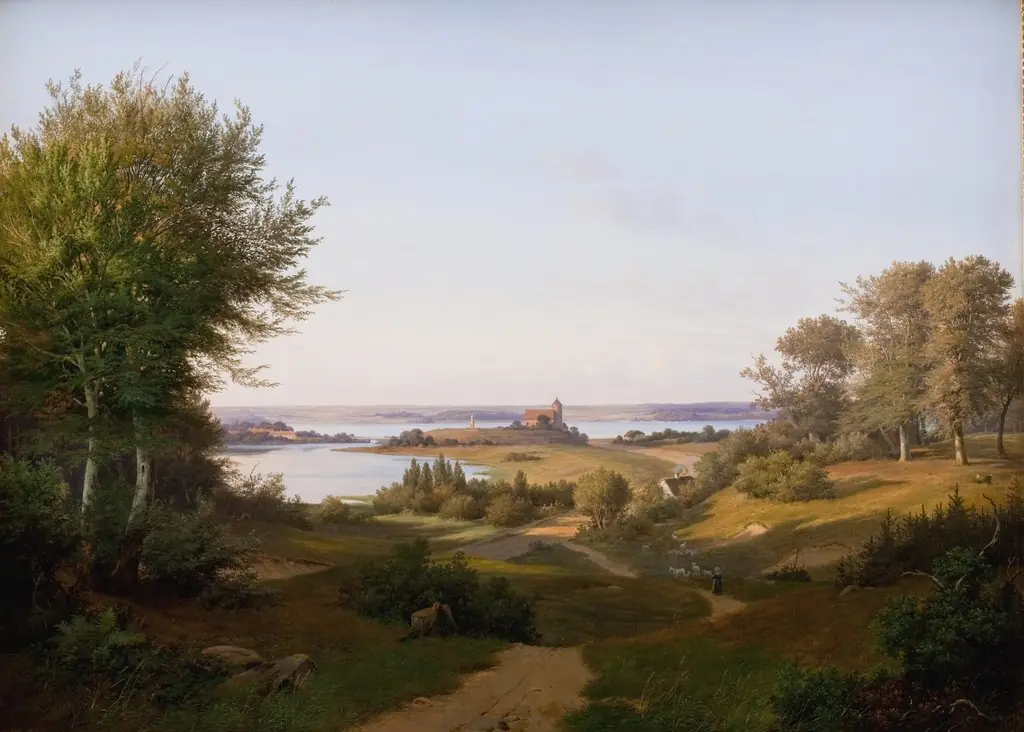 View of the Hill at Skanderborg Castle, Jutland, and the Memorial to frederik VI
 View of the Hill at Skanderborg Castle, Jutland, and the Memorial to frederik VI
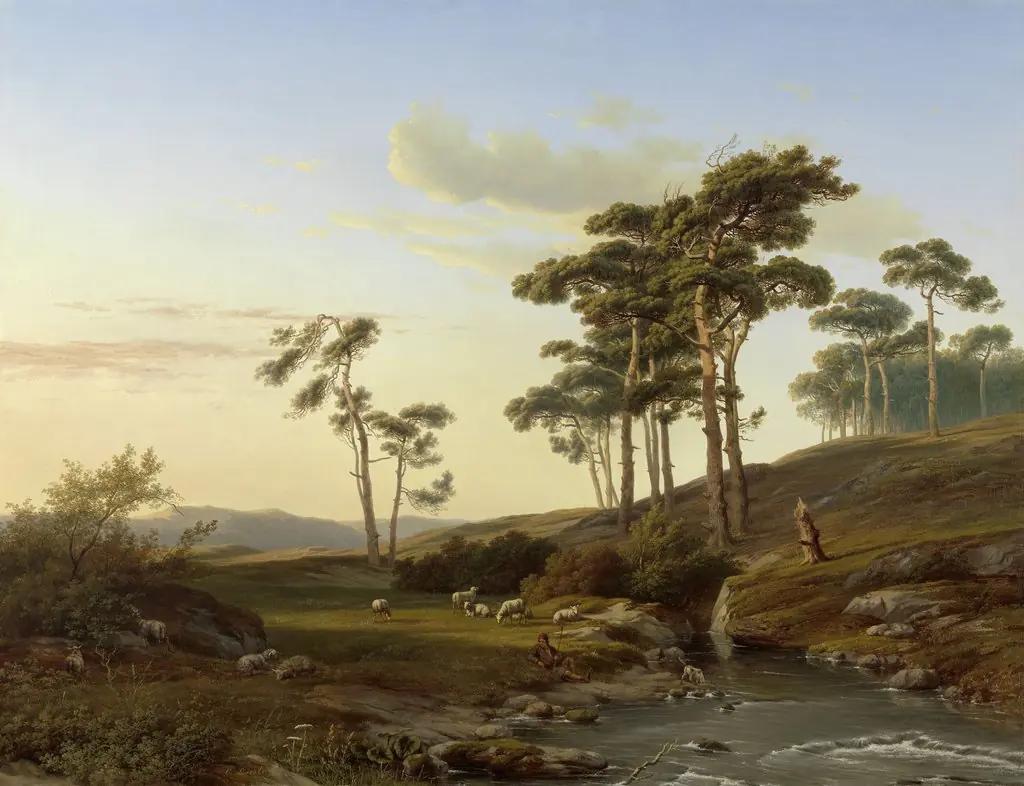 Avondstemming met herder
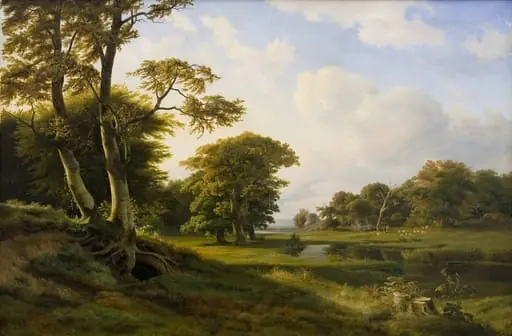 Skovlandskab ved Hellebæk. Efterår
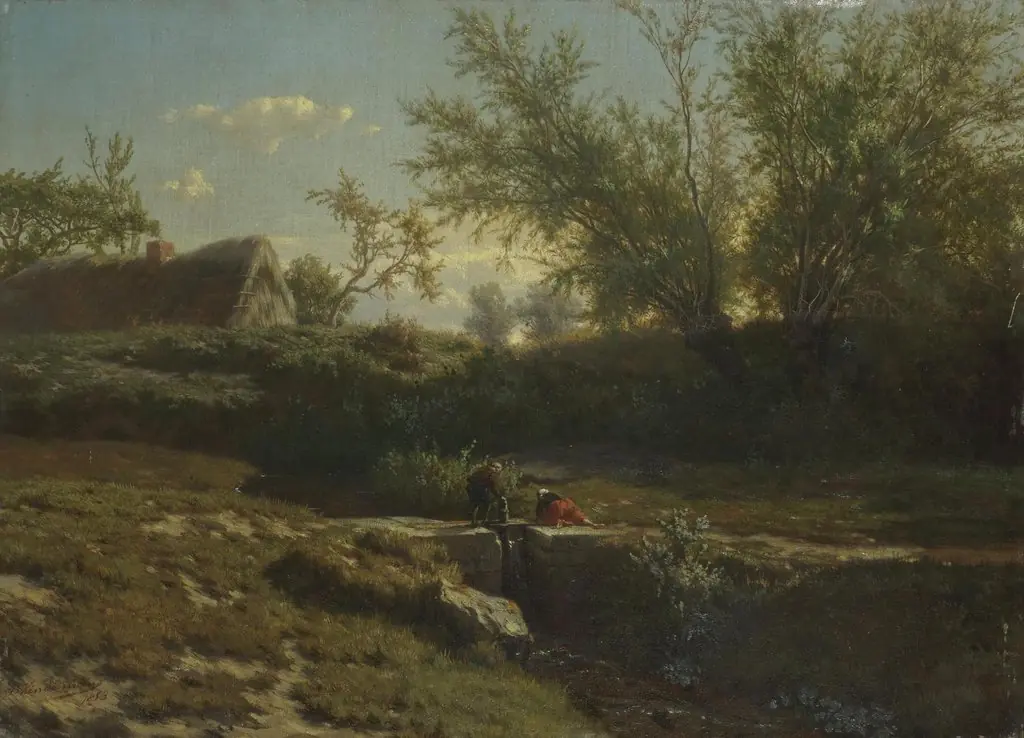 Landscape
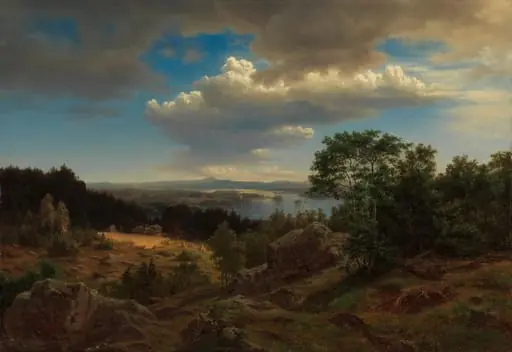 Suomalainen maisema
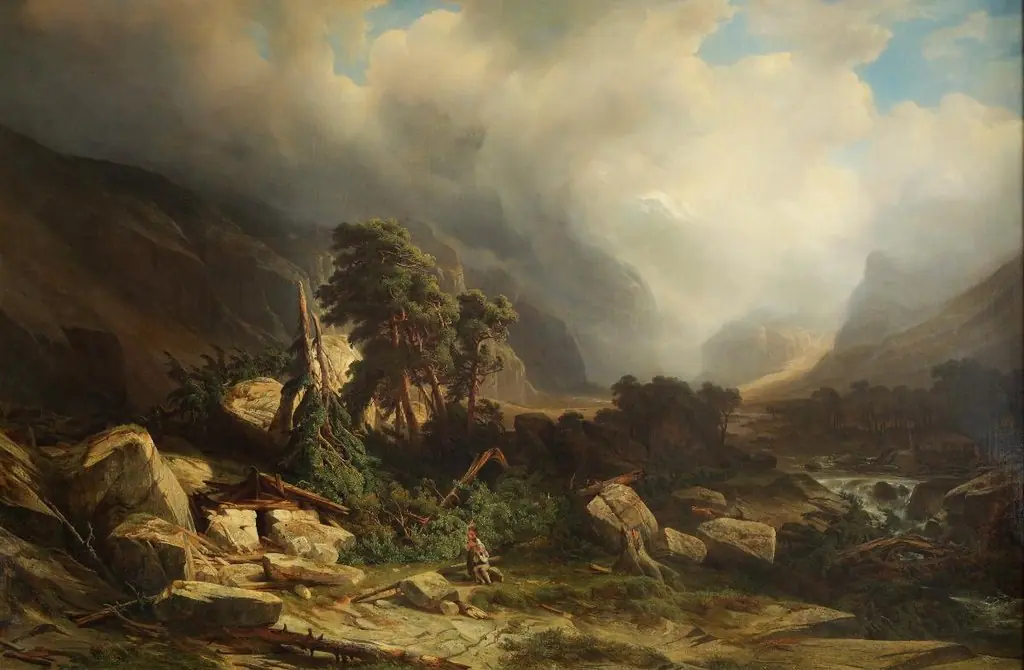 L'Éboulement (après l'orage)
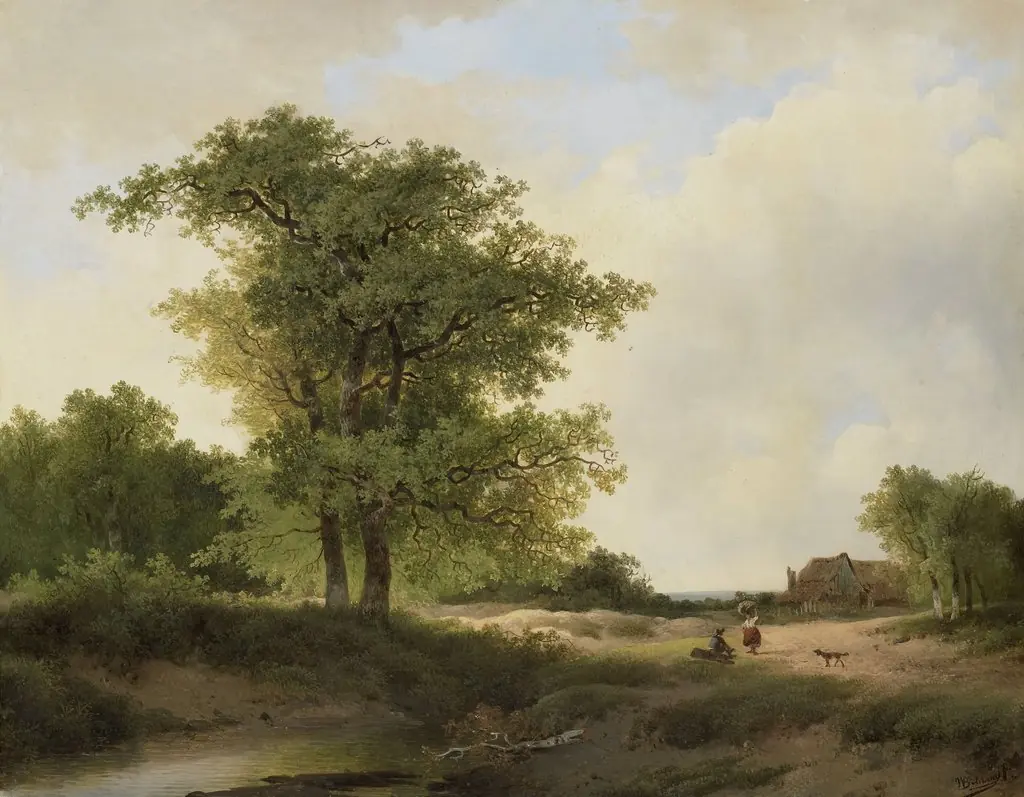 Landscape with Farmstead
 Zealand Landscape. Open Country in North Zealand
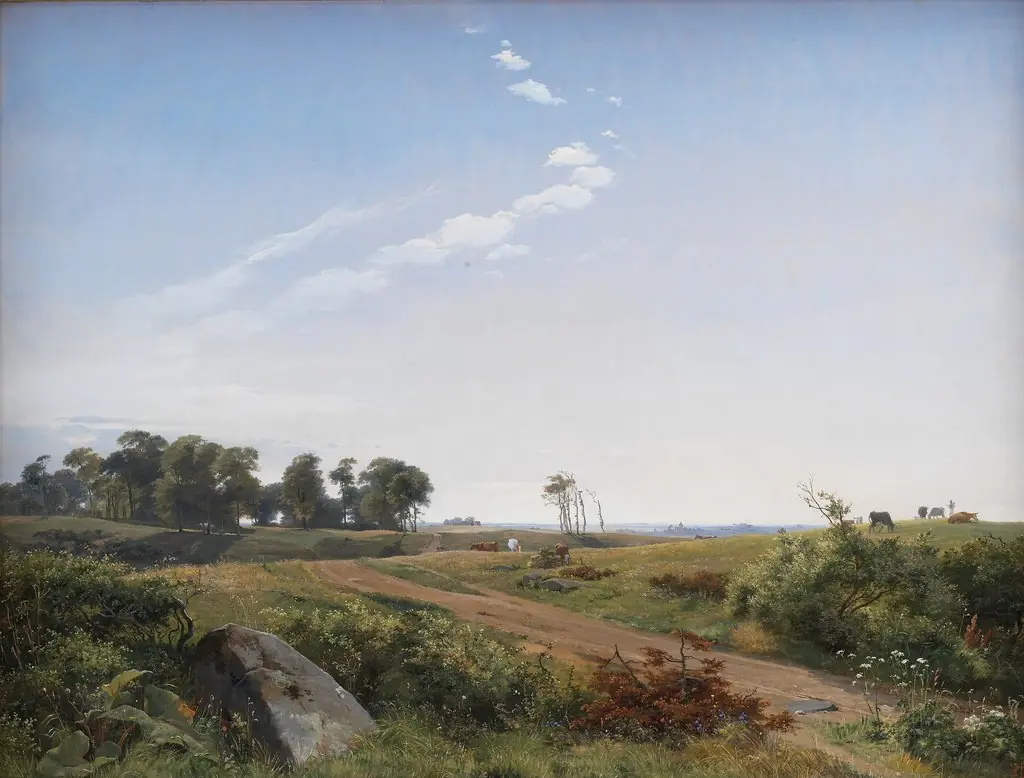 Zealand Landscape. Open Country in North Zealand
 Hilly Landscape with a Ruin
 Springtime