Artwork
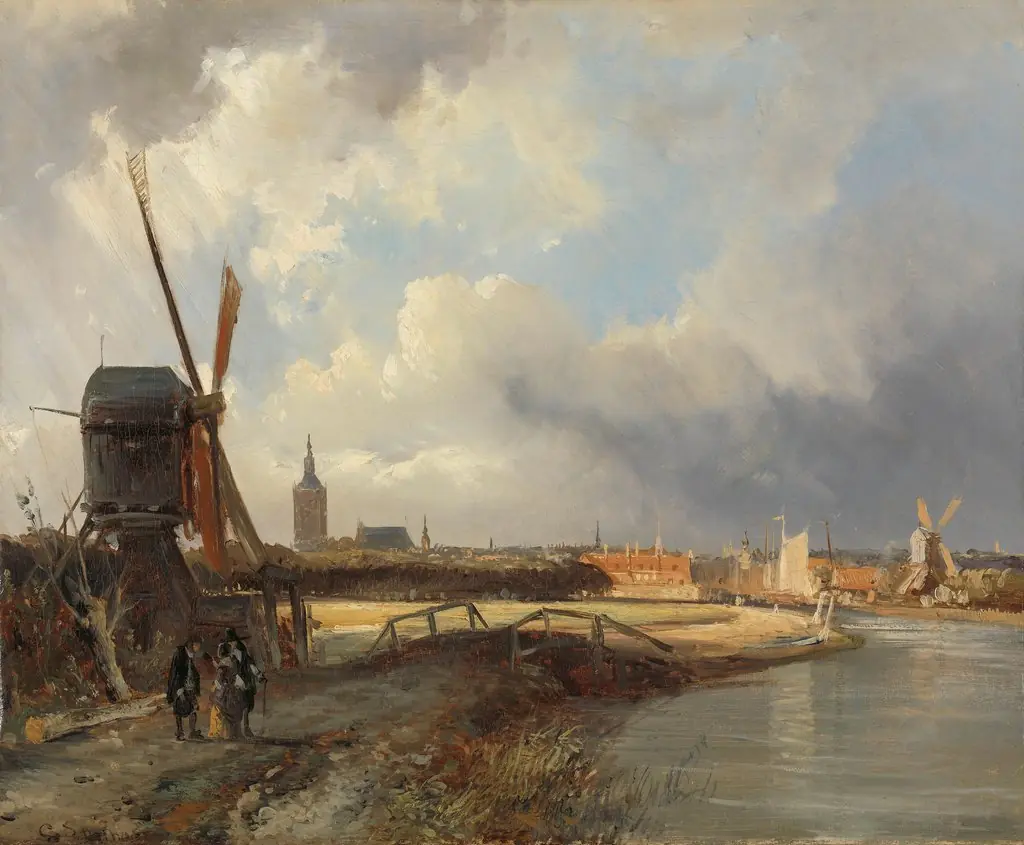
Gezicht op Den Haag
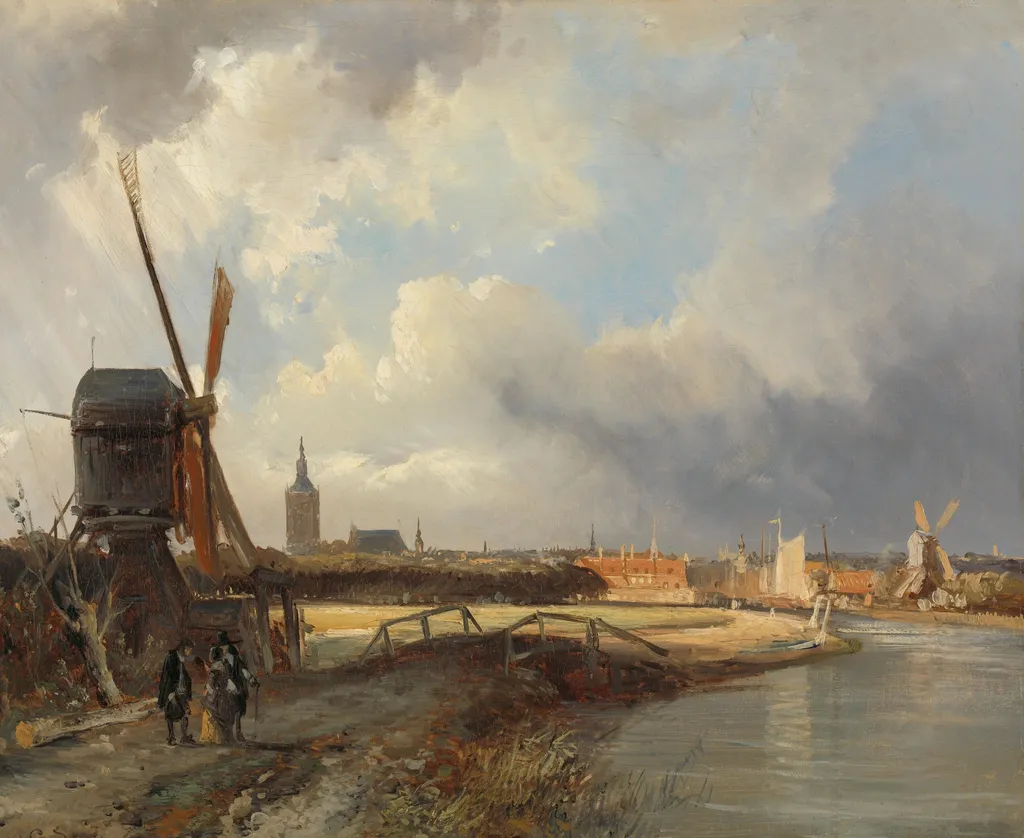
Gezicht op Den Haag is an unspecified painting by the Biedermeier artist Cornelis Springer. It dates from 1850 and is held in the collection of the Rijksmuseum.
About this work
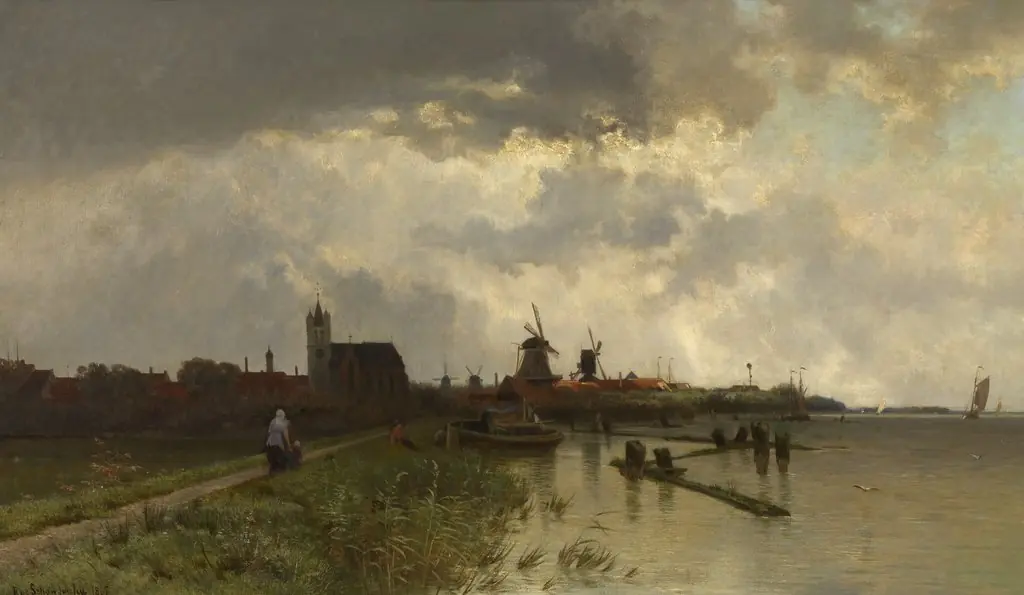
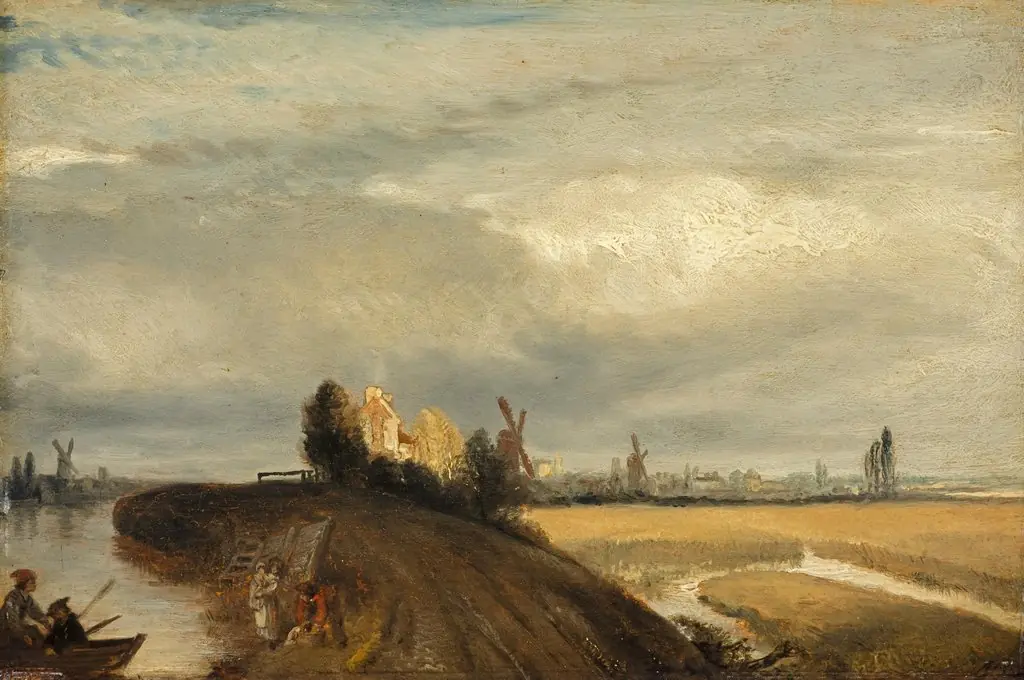
You see a small, quick sketch of The Hague: a church tower, a few roofs, and a wide sky with soft clouds.
You see a small, quick sketch of The Hague: a church tower, a few roofs, and a wide sky with soft clouds.
This isn’t just a city view—it’s a prop. In 1852, Amsterdam wanted to honor Rembrandt with a statue. They decorated the hall with giant paintings of places he *might* have worked. This is the rough draft for one of them. Later, they found out Rembrandt never even lived here.
If you like how history gets mixed up with art, look up Romanticism.
Overview
This modest watercolor sketch presents a panoramic view of The Hague, dominated by the slender spire of the Grote or Sint‑Jacobskerk and a scattering of rooftops beneath a broad, softly clouded sky. Rendered quickly, the work serves as a preparatory study rather than a finished composition.
Subject & Meaning
The drawing was intended to illustrate a larger canvas that would depict the celebrated Dutch painter Rembrandt in The Hague, a city once believed to be among his workplaces. The composition functions as a visual placeholder for a narrative linking the artist to the locale.
Technique & Style
Executed with swift brushstrokes and a limited palette, the sketch emphasizes outline over detail, capturing the city's silhouette with minimal rendering. The airy treatment of the sky and the loose handling of architectural forms reflect mid‑19th‑century academic practices for large‑scale decorative projects.
History & Provenance
Commissioned in 1852 as part of the decorative program for the unveiling of a Rembrandt statue in Amsterdam’s Parkzaal, the sketch formed part of a series of monumental paintings portraying towns associated with the master. Subsequent scholarship revealed that Rembrandt never actually worked in The Hague, rendering the premise of the series historically inaccurate.
Context
The work belongs to a Romantic‑era tendency to mythologize national figures, using grand public ceremonies and visual art to cement cultural identity. By situating Rembrandt within imagined locales, the project exemplified how 19th‑century Dutch institutions constructed a heroic narrative around the artist.
Own this work as a print
Artist & collection