Artwork
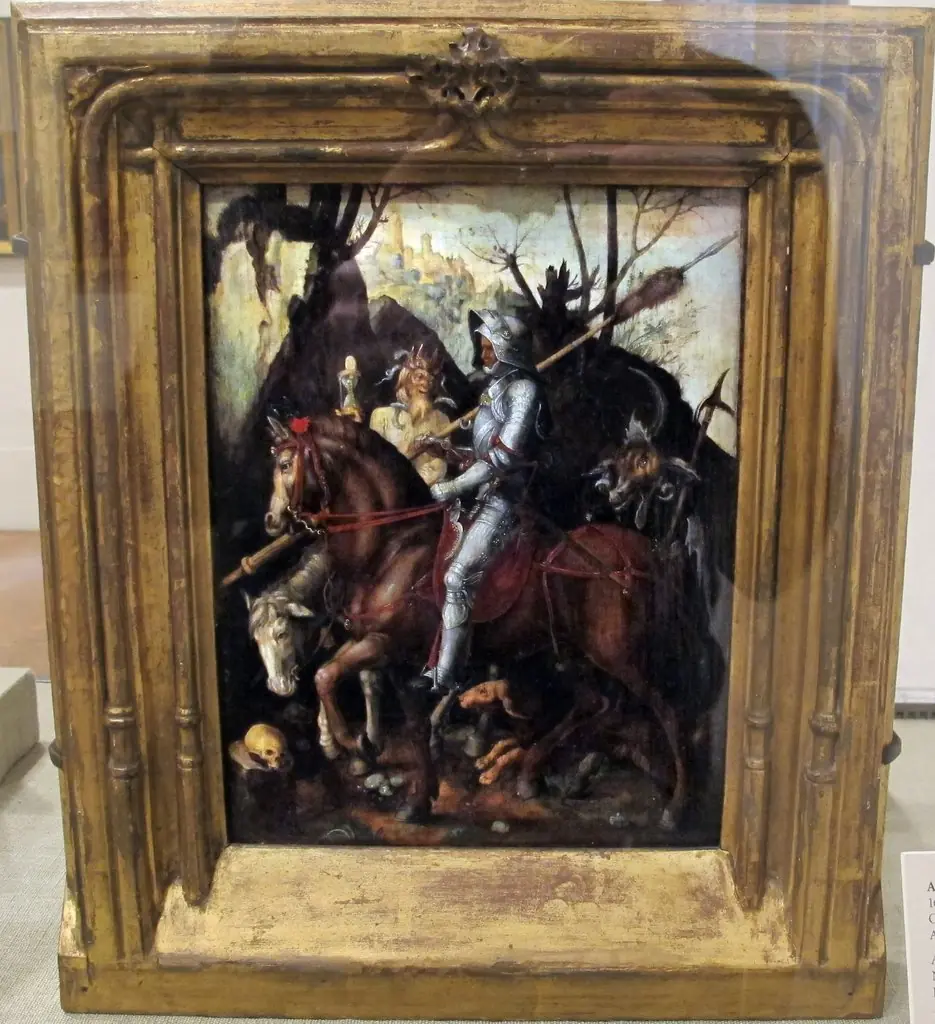
A Knight, Death, and the Devil
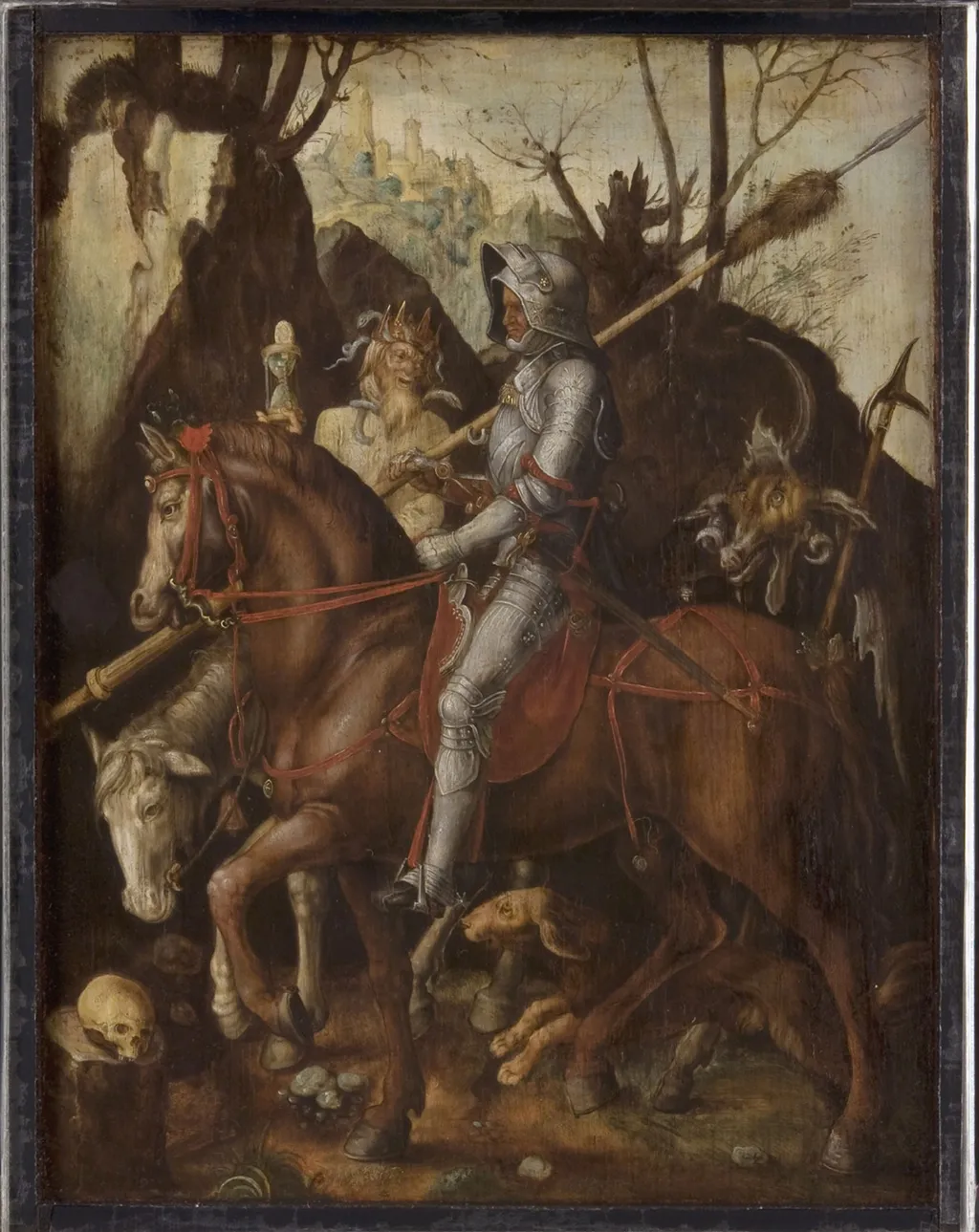
A Knight, Death, and the Devil is an oil painting by the Northern Renaissance artist Cornelis van Dalem. It dates from 1550 and is held in the collection of the Philadelphia Museum of Art.
About this work
Overview
The painting’s somber tone and symbolic figures distinguish it as a meditation on mortality and moral resolve, housed today in the Philadelphia Museum of Art.
Painted around 1550 by Cornelis van Dalem, this oil work merges landscape with allegorical narrative, reflecting the intellectual currents of the Northern Renaissance. Though less known than contemporaries, van Dalem contributed to the evolution of landscape as a serious subject in Flemish art. The painting’s somber tone and symbolic figures distinguish it as a meditation on mortality and moral resolve, housed today in the Philadelphia Museum of Art.
Subject & Meaning
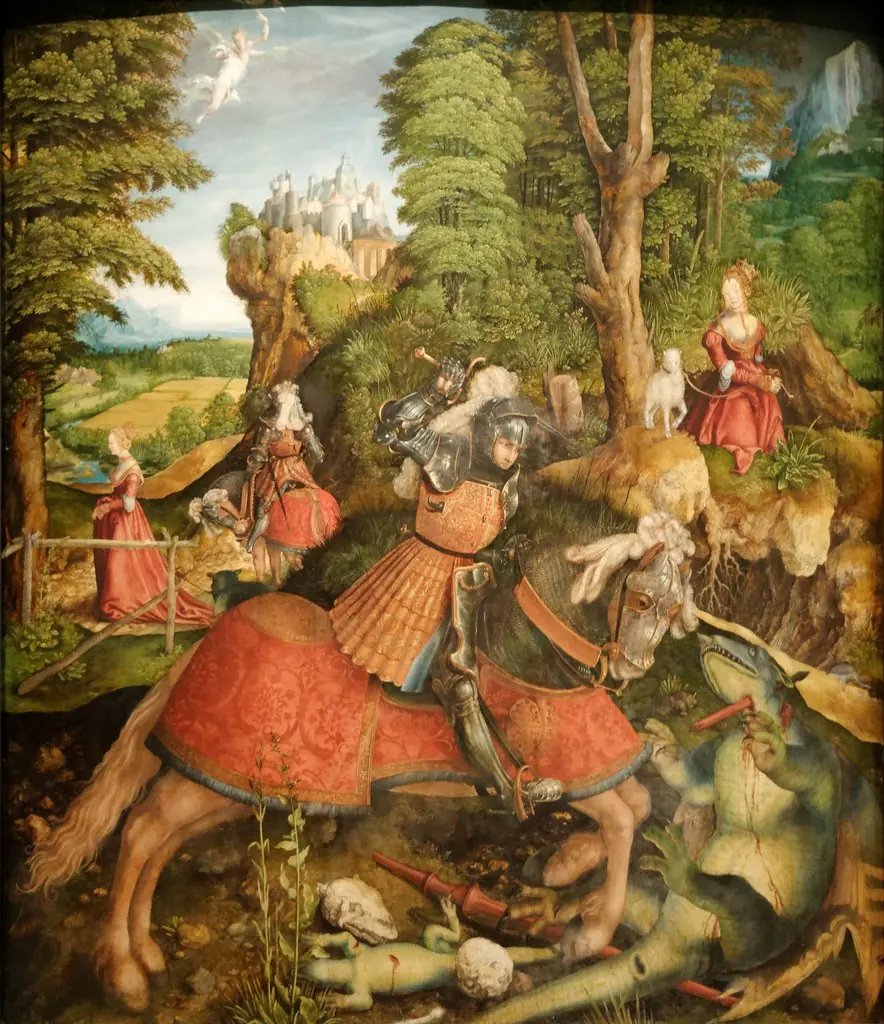
A armored knight rides steadfastly through a gloomy terrain, flanked by Death, a skeletal figure wielding a scythe, and a horned, bearded devil. The knight’s unwavering posture suggests moral fortitude amid spiritual peril. The scene draws from the Christian tradition of the 'memento mori,' urging contemplation of mortality and the persistence of virtue. The landscape, though detailed, serves as a stage for existential tension rather than mere backdrop.
Technique & Style
Van Dalem employs chiaroscuro to model forms with dramatic light and shadow, enhancing the three-dimensionality of the knight and his companions. The palette is restrained—dominated by browns, grays, and muted greens—reinforcing the painting’s solemn mood. Fine brushwork renders textures of armor, fur, and foliage with precision, characteristic of Northern Renaissance attention to detail, while the composition guides the eye along the knight’s path into a distant castle.
History & Provenance
Created during van Dalem’s active years in Antwerp, the painting reflects the humanist interests of mid-16th-century Flemish elites. Its early ownership is undocumented, but it entered the Philadelphia Museum of Art’s collection in the 20th century. Unlike more famous works of similar theme, it remained relatively obscure, preserving its status as a quiet but significant example of regional Renaissance allegory.
Context
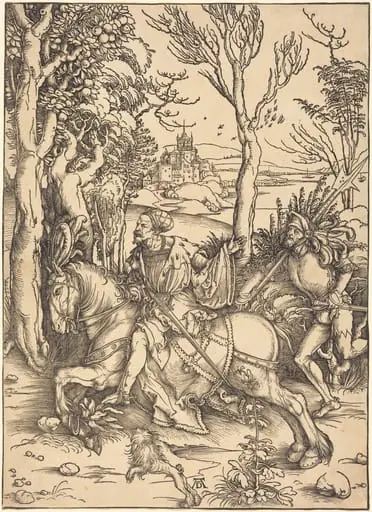
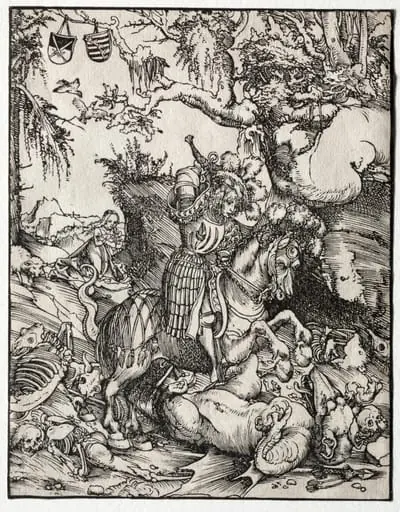
In the decades after Luther’s Reformation, Northern Europe saw a surge in art that fused moral instruction with naturalistic detail. Van Dalem’s painting aligns with this trend, echoing Albrecht Dürer’s engraving of the same title but translating its intensity into landscape form. The inclusion of a distant castle may reference earthly power, contrasting with the immediacy of spiritual threats, a theme resonant in a time of religious upheaval.
Legacy
Though not widely replicated or cited in major art histories, the painting stands as a testament to the breadth of Northern Renaissance allegory beyond its most famous practitioners. Its integration of landscape and moral symbolism influenced later Dutch and Flemish painters who sought to embed philosophical themes within natural settings, contributing to the gradual elevation of landscape as a vehicle for deeper meaning.
Artist & collection
Artist
Cornelis van Dalem (1530/35 – 1573 or 1576) was a Flemish painter and draughtsman active in Antwerp in the middle of the 16th century.