Artwork
St. George Slaying the Dragon
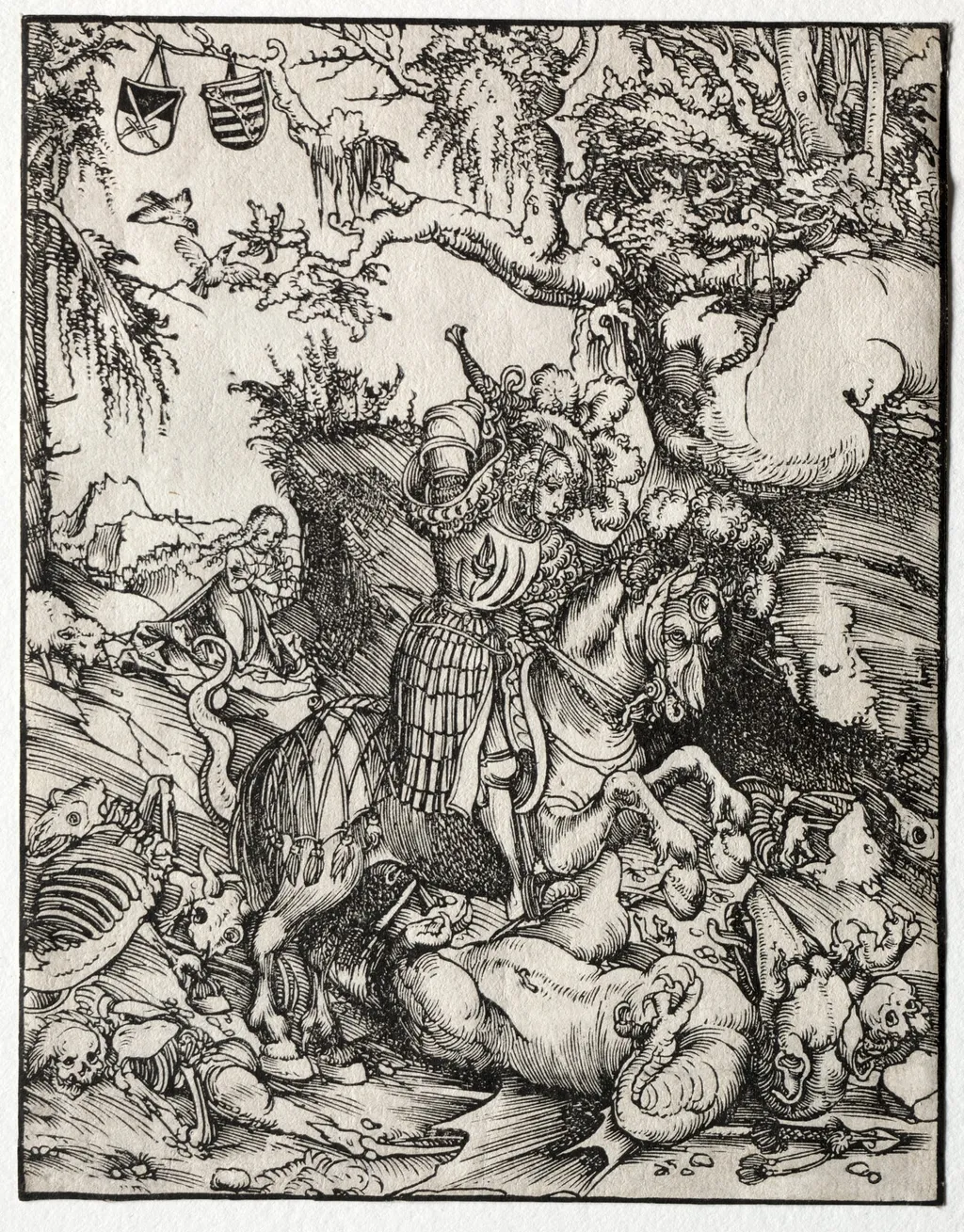
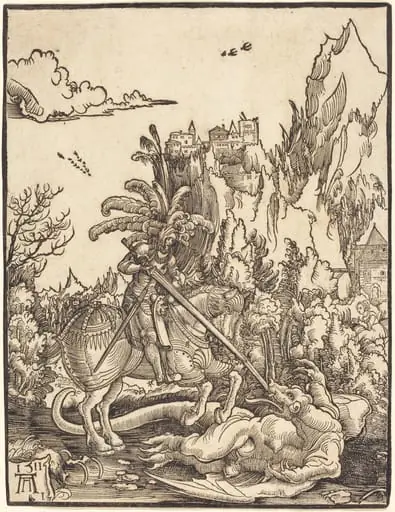
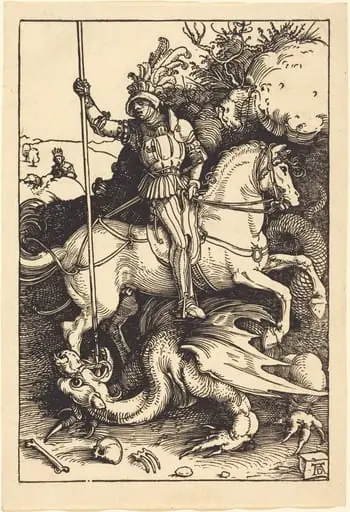
St. George Slaying the Dragon is a print by the Renaissance artist Lucas Cranach the Elder. It dates from 1504 and is held in the collection of the Cleveland Museum of Art.
About this work
Overview
This print exemplifies his early engagement with narrative imagery, blending popular hagiography with the visual language of Northern European printmaking.
Created around 1504 by Lucas Cranach the Elder, this black-and-white print depicts the legendary tale of Saint George defeating a dragon. As a leading German Renaissance artist and court painter to the Electors of Saxony, Cranach produced numerous religious and allegorical works. This print exemplifies his early engagement with narrative imagery, blending popular hagiography with the visual language of Northern European printmaking.
Subject & Meaning
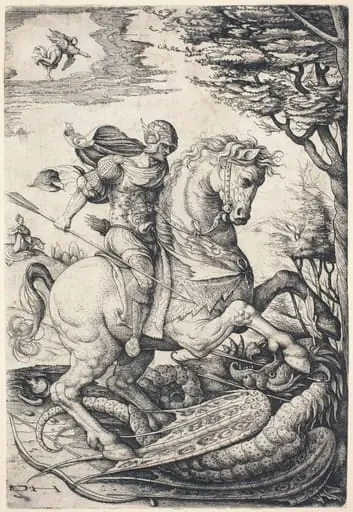
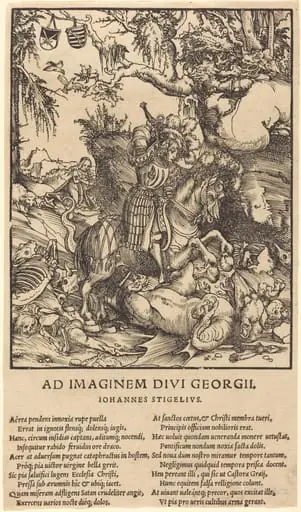
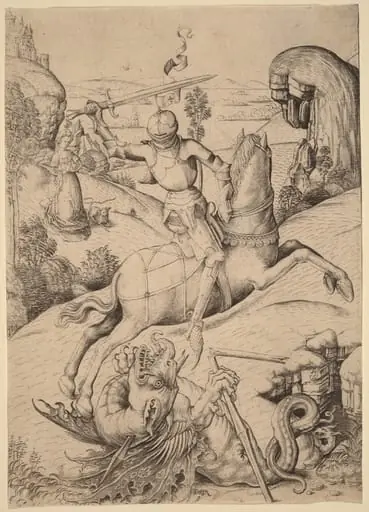
The scene illustrates Saint George, a Christian martyr and soldier-saint, rescuing a captive woman by slaying a dragon. The woman, positioned near the base of a tree, symbolizes innocence under threat, a conventional motif in medieval and Renaissance iconography. The dragon, entwined around the trunk, represents evil subdued by divine will. The narrative reinforces moral and spiritual victory, aligning with devotional themes prevalent in early 16th-century Germany.
Technique & Style
Executed in fine, dense lines typical of woodcut printing, the composition is densely packed with detail—trees, rocks, distant figures, and intricate armor textures. Cranach employs sharp, rhythmic contours to convey movement and tension, avoiding depth in favor of flat, decorative patterning. The lack of shading and the crowded background reflect the conventions of Northern printmaking, prioritizing clarity and narrative immediacy over naturalistic space.
History & Provenance
Produced during Cranach’s tenure at the Saxon court, the print likely circulated among religious and noble patrons in Saxony. Its production coincided with the early years of the Reformation, though the subject remains traditional rather than doctrinal. No definitive early ownership records survive, but similar prints by Cranach were widely distributed, suggesting this image was part of a broader market for devotional imagery in print form.
Context
In early 16th-century Germany, printed images of saints served both devotional and educational purposes, especially where literacy was limited. Cranach’s version draws from medieval legends but adapts them with the precision and linear energy characteristic of his workshop. The print’s style aligns with other Northern European woodcuts of the period, which favored dynamic composition and symbolic clarity over Renaissance ideals of perspective or anatomical realism.
Legacy
Though not among Cranach’s most famous works, this print reflects his role in shaping the visual culture of the German Reformation era. His ability to translate religious narratives into accessible, widely distributed prints influenced later generations of Northern artists. The image’s enduring structure—knight, dragon, damsel—remains a recognizable archetype in Western iconography, preserved through the medium of print.
Own this work as a print
Artist & collection
Artist
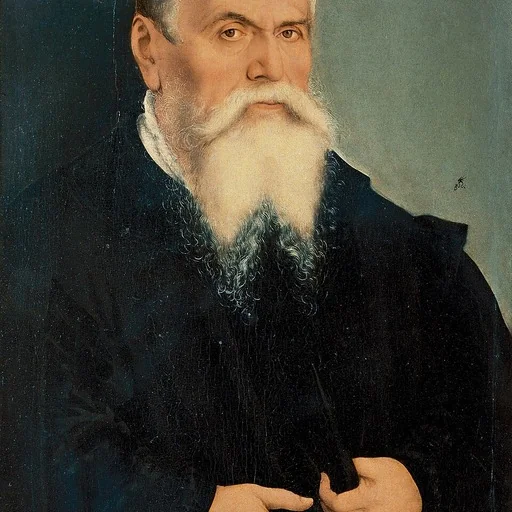
Lucas Cranach the Elder was a German Renaissance painter and printmaker in woodcut and engraving.