Artwork
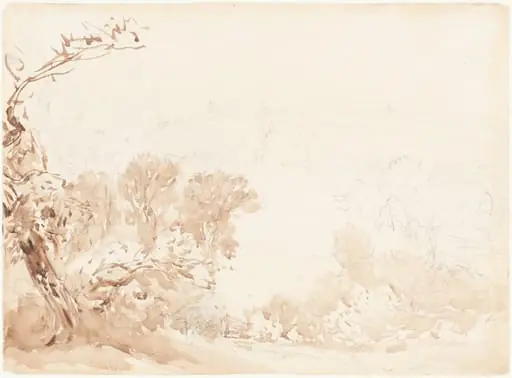
Clump of Trees at Civita Castellana
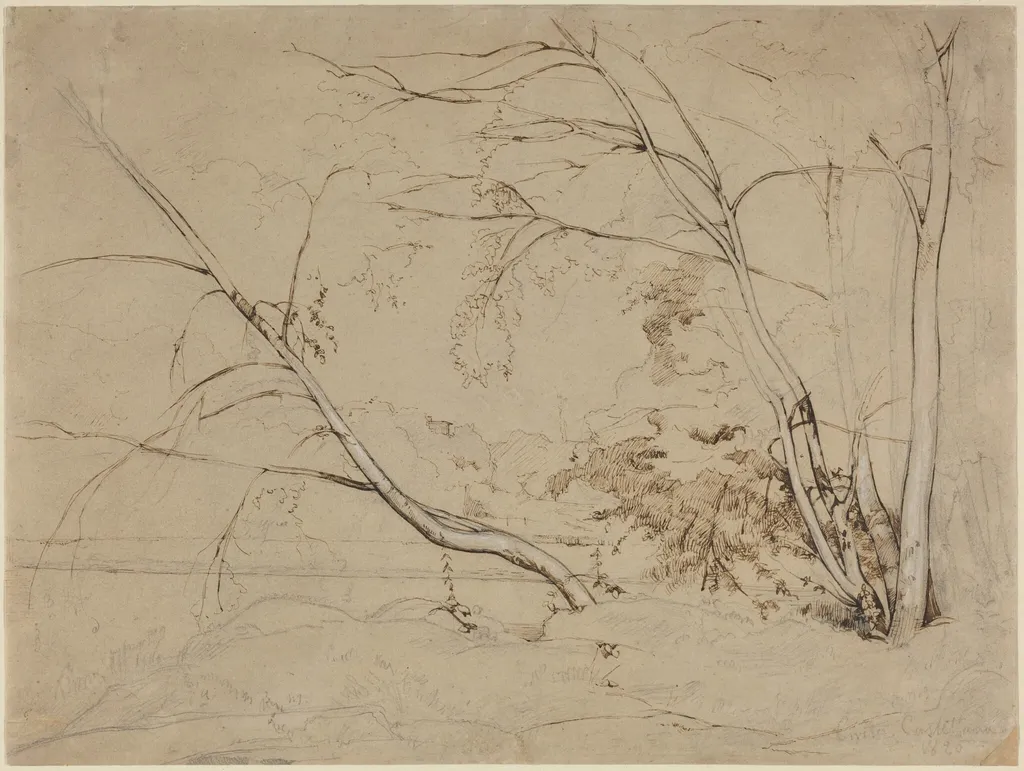
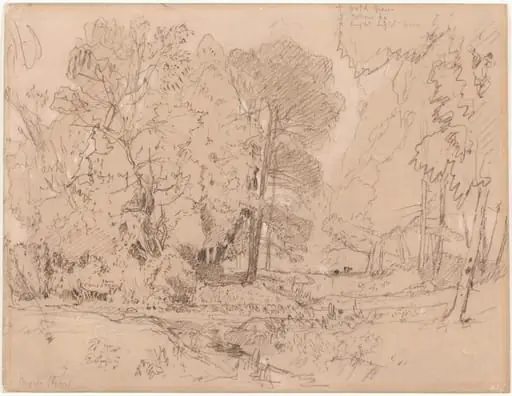
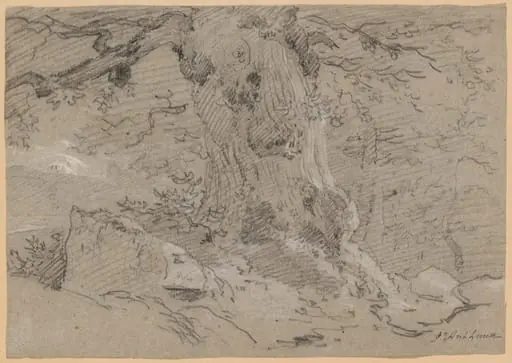
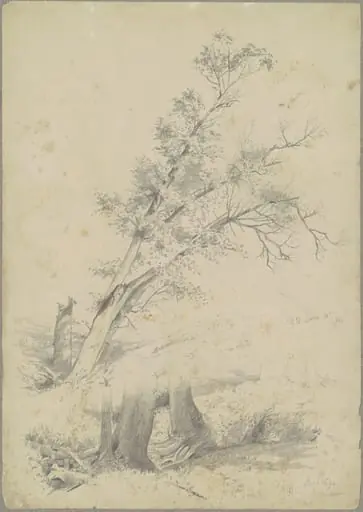
Clump of Trees at Civita Castellana is an ink drawing by the Romanticist artist Jean Baptiste Camille Corot. It dates from 1826 and is held in the collection of the National Gallery of Art. Created in 1826, this drawing by Jean-Baptiste-Camille Corot captures a quiet grove near Civita Castellana, Italy.
About this work
Overview
Executed in pen and brown ink with graphite and selective white heightening on brown wove paper, it reflects Corot’s early engagement with outdoor sketching.
Created in 1826, this drawing by Jean-Baptiste-Camille Corot captures a quiet grove near Civita Castellana, Italy. Executed in pen and brown ink with graphite and selective white heightening on brown wove paper, it reflects Corot’s early engagement with outdoor sketching. The work belongs to a series of Italian studies made during his formative travels, where he refined his approach to natural light and spatial harmony.
Subject & Meaning
The composition centers on a dense cluster of trees in the foreground, their branches subtly reaching into the space before the viewer. Behind them, a low hill recedes into the distance, punctuated by scattered foliage and a faint architectural form. The scene conveys no narrative, but rather a meditative stillness, emphasizing the quiet dignity of the natural world as observed directly from life.
Technique & Style
Corot employed fine pen lines to define tree trunks and limbs, layered with soft graphite washes to suggest volume and shadow. White heightening was applied sparingly to highlight areas struck by light, enhancing the illusion of atmosphere. The brown paper ground contributes warmth and depth, allowing the ink and graphite to resonate with natural tonal variation rather than stark contrast.
History & Provenance
This drawing was made during Corot’s first extended stay in Italy, a pivotal period for his artistic development. Like many of his Italian sketches, it was likely created on-site as a study, later serving as reference for studio compositions. Its survival in good condition reflects its value to collectors and institutions interested in the evolution of 19th-century landscape drawing.
Context
In the 1820s, French artists were increasingly turning to direct observation of nature, moving beyond idealized classical landscapes. Corot’s work in Italy aligned with this shift, blending academic discipline with emerging sensitivity to transient effects of light. His sketches from this time helped lay groundwork for later plein-air practices, even as they retained a structured, contemplative quality.
Legacy
Corot’s Italian drawings, including this one, influenced generations of landscape artists who sought authenticity in observation. Though not widely exhibited in his lifetime, such works became essential references for understanding the transition from Neoclassical conventions to the more spontaneous modes of Impressionism. Their quiet precision continues to inform discussions on the role of sketching in artistic practice.
Artist & collection
Artist
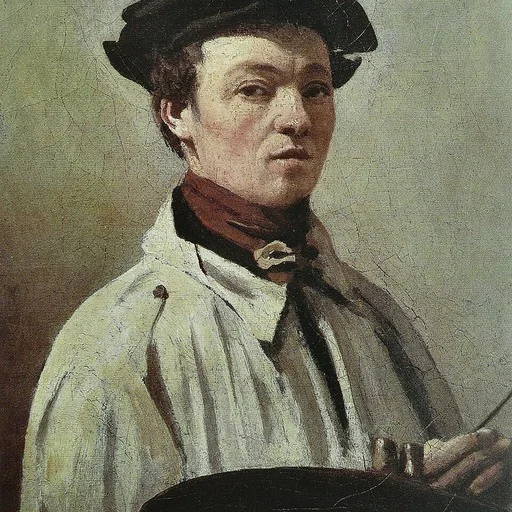
Jean-Baptiste-Camille Corot (UK: KORR-oh, US: kə-ROH, kor-OH; French: ; 16 July 1796 – 22 February 1875), or simply Camille Corot, was a French landscape and portrait painter as well as a printmaker in etching.

![Grove of Trees [verso], by Friedrich Salathé](https://artifactworldgallery.com/img/friedrich-salathe--grove-of-trees-verso--4013b539bd981a94-w320.webp)