Artwork
Italian Landscape (Paysage d'Italie)
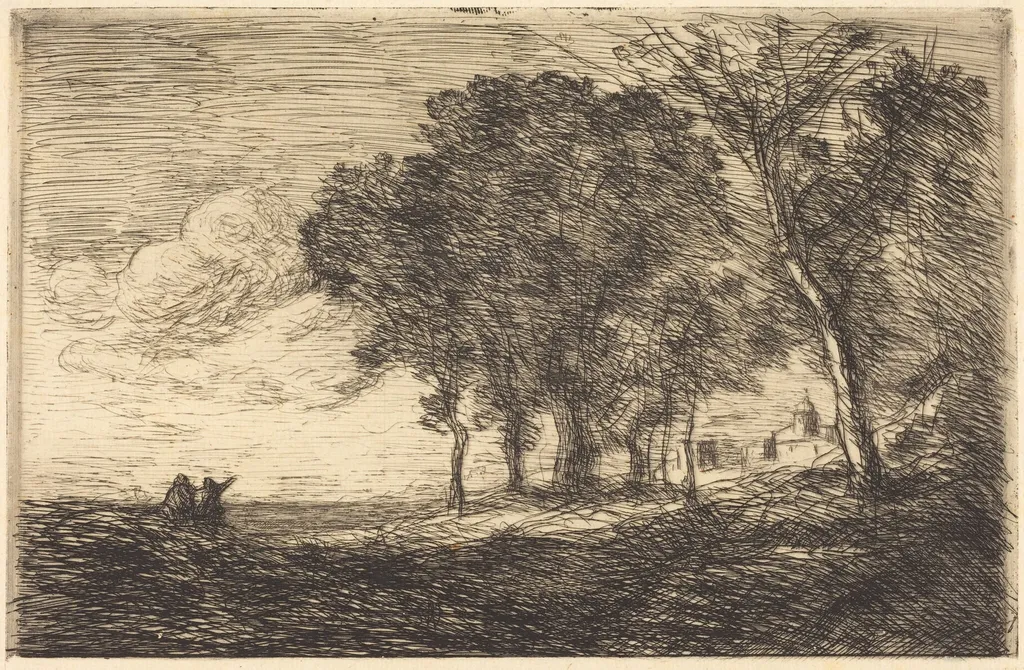
Italian Landscape (Paysage d'Italie) is an ink print by the Impressionist artist Jean Baptiste Camille Corot. It dates from 1865 and is held in the collection of the National Gallery of Art.
About this work
Overview
Created around 1865, *Italian Landscape (Paysage d'Italie)* is an etching by the French artist Jean-Baptiste-Camille Corot.
Created around 1865, *Italian Landscape (Paysage d'Italie)* is an etching by the French artist Jean-Baptiste-Camille Corot. Though primarily known as a painter, Corot also explored printmaking with quiet precision. This work captures a rural Italian scene through the delicate interplay of line and tone, reflecting his lifelong engagement with natural light and spatial harmony. The medium of etching allowed him to translate atmospheric effects into subtle gradations of gray.
Subject & Meaning
The scene presents a quiet rural setting—scattered trees in the foreground, a distant structure likely a farmhouse or barn, and open space suggesting stillness. No human figures appear, emphasizing solitude and the quiet rhythm of the land. Corot avoids narrative, instead inviting contemplation through composition and mood. The absence of dramatic action reinforces a sense of enduring peace, aligned with his poetic approach to landscape.
Technique & Style
Corot employed etching to achieve nuanced tonal variation, using fine, controlled lines to suggest texture in bark, foliage, and stone. The building’s lighter walls and darker roof, along with the gradations in tree trunks and leaves, are rendered not through solid shapes but through layered hatching and soft washes. This method captures the diffused light typical of his outdoor studies, merging structural clarity with atmospheric softness.
History & Provenance
The print was made during Corot’s later years, following his travels in Italy decades earlier. Though he visited Italy in the 1820s, he returned to its landscapes in memory and sketchbooks throughout his career. This etching likely derives from those early studies, reworked in his Paris studio. It was produced in a small edition, typical of his printmaking practice, and circulated among collectors of graphic art.
Context
In the mid-19th century, French artists were redefining landscape art beyond idealized classical forms. Corot stood between tradition and innovation: his compositions retained compositional balance reminiscent of Poussin, while his sensitivity to light and transient effects anticipated Impressionist concerns. Etching, once dominated by reproductive work, became a vehicle for personal expression under his hand.
Legacy
Corot’s etchings, including this one, influenced later printmakers who sought to capture mood over detail. His ability to convey atmosphere with minimal marks demonstrated the expressive potential of the medium beyond illustration. Though less celebrated than his paintings, these prints remain key to understanding his holistic vision of landscape as a quiet, enduring presence.
Own this work as a print
Artist & collection
Artist
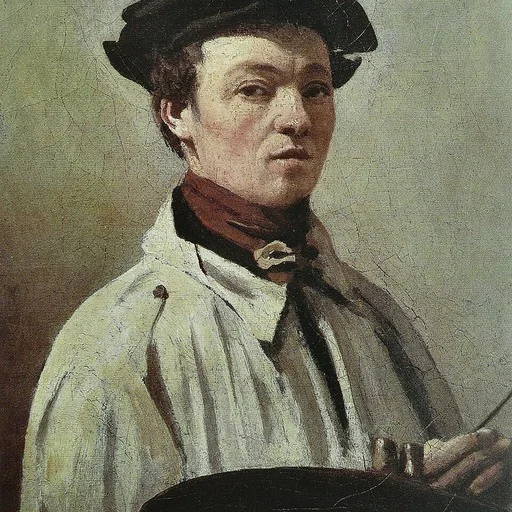
Jean-Baptiste-Camille Corot (UK: KORR-oh, US: kə-ROH, kor-OH; French: ; 16 July 1796 – 22 February 1875), or simply Camille Corot, was a French landscape and portrait painter as well as a printmaker in etching.

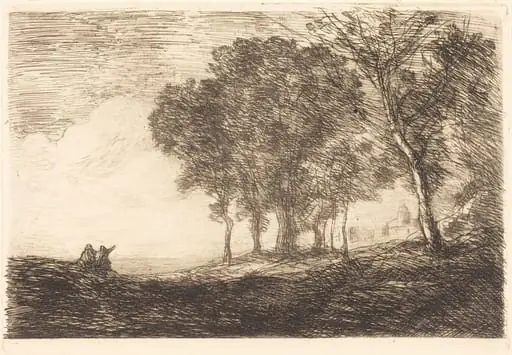 Italian Landscape
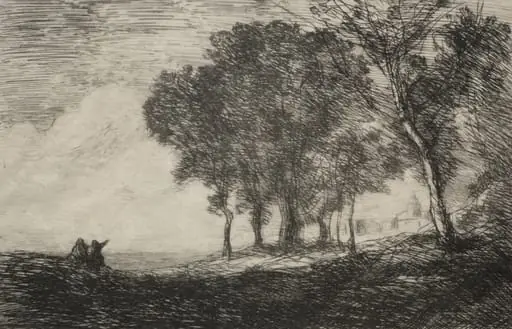 Italian Landscape
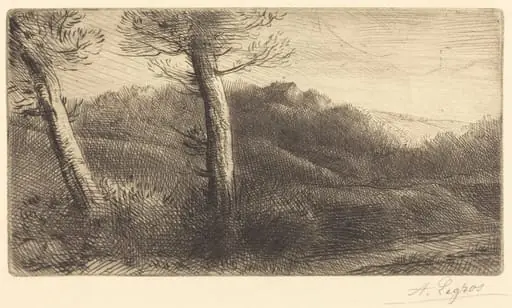 Sunset (Coucher du soleil)
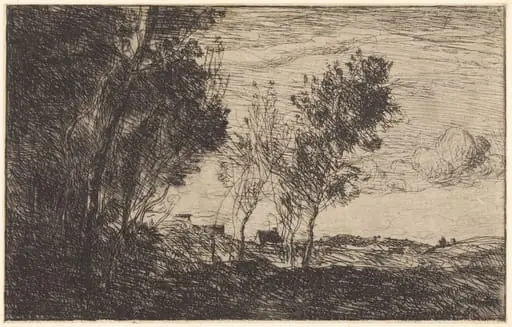 In the Dunes: Souvenir of The Hague (Dans les dunes: Souvenir du bois de La Haye)
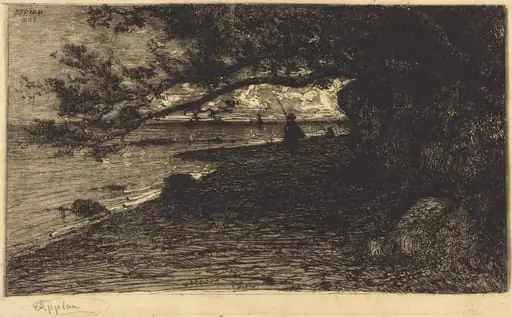 A Villefranche-sur-Mer
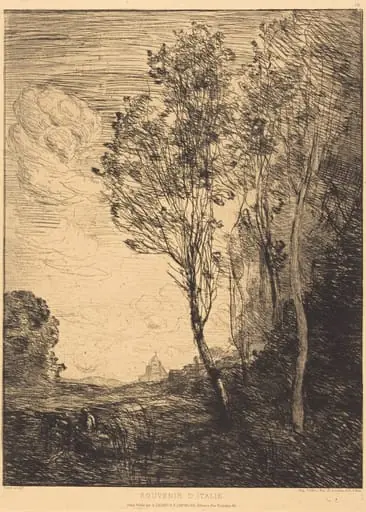 Souvenir of Italy (Souvenir d'Italie)
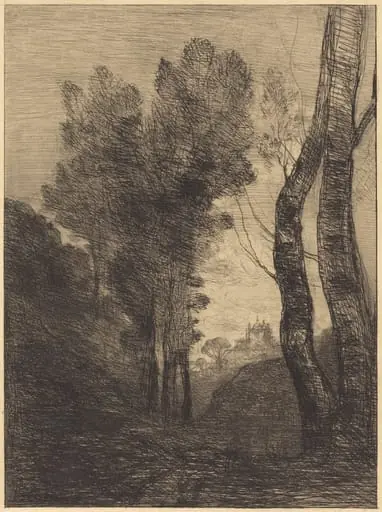 Environs of Rome (Environs de Rome)
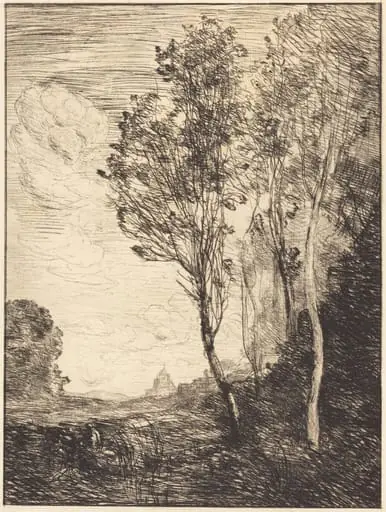 Souvenir of Italy (Souvenir d'Italie)
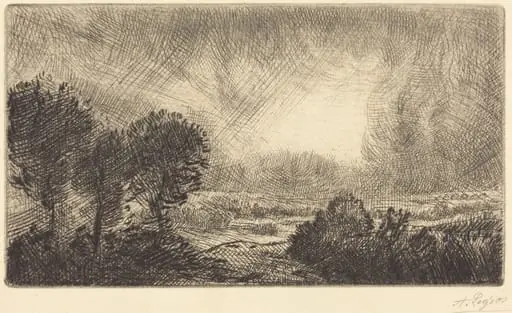 Landscape with Storm (Paysage d'orage)
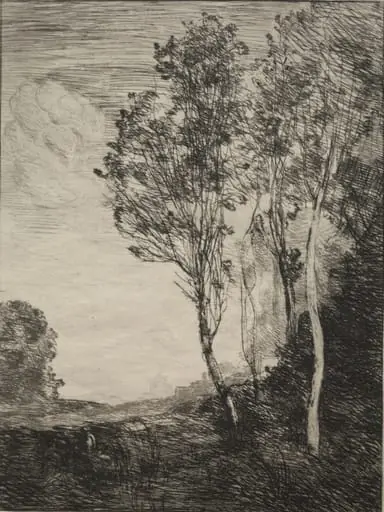 Souvenir of Italy
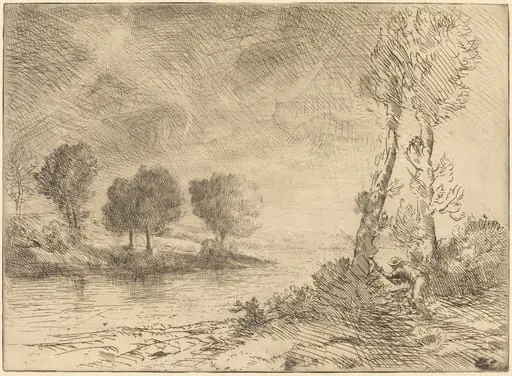 Salmon Fisher (Le pecheur de saumon)
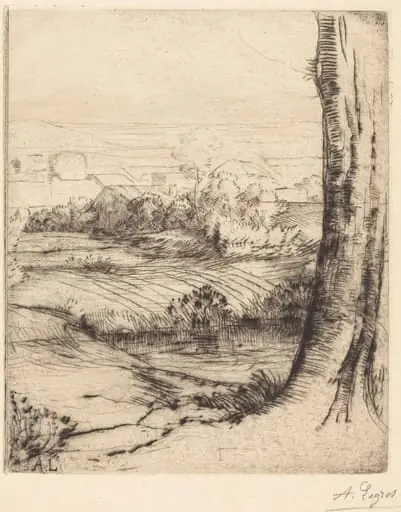 View of Reeds (Coin de roseau)