Artwork
View of Reeds (Coin de roseau)
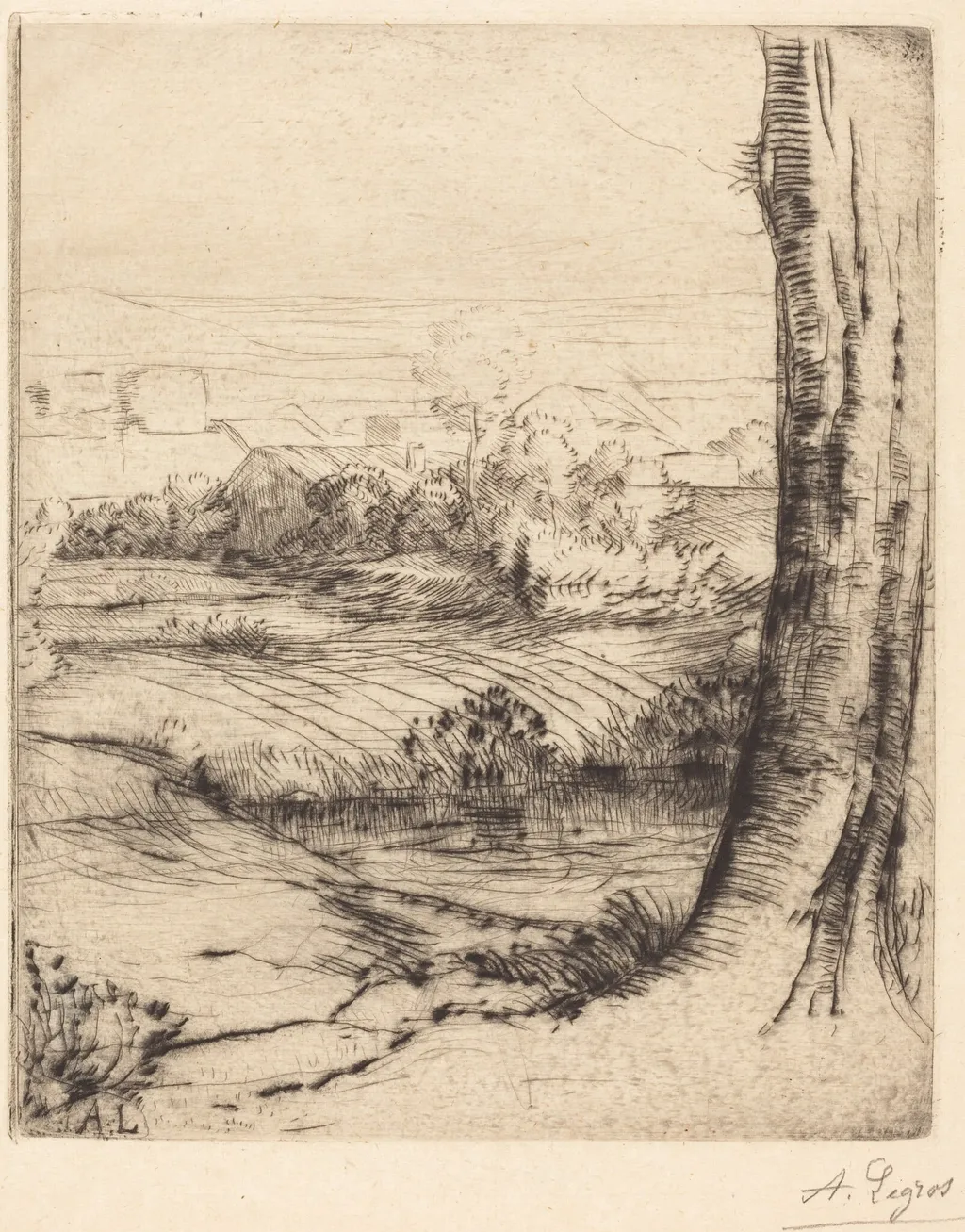
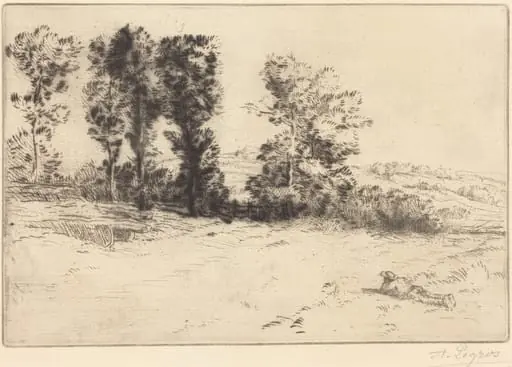
View of Reeds (Coin de roseau) is an ink print by the Romanticist artist Alphonse Legros. It dates from 1874 and is held in the collection of the National Gallery of Art.
About this work
Overview
Created in 1874, *View of Reeds (Coin de roseau)* is a drypoint print by Alphonse Legros, a French artist who moved to London in 1863.
Created in 1874, *View of Reeds (Coin de roseau)* is a drypoint print by Alphonse Legros, a French artist who moved to London in 1863. The work belongs to a broader revival of etching in Britain during the late nineteenth century, in which Legros was instrumental. Unlike his paintings and sculptures, this piece showcases his mastery of intaglio printmaking, using fine, incised lines to capture quiet natural forms with precision and subtlety.
Subject & Meaning
The scene presents a tranquil stretch of reeds along a water’s edge, with a distant village faintly visible beyond. The composition invites contemplation, emphasizing stillness and the quiet interplay between nature and human habitation. There is no narrative or dramatic event—instead, the focus lies in the atmospheric quietude, suggesting a meditative observation of the everyday landscape rather than an idealized or symbolic vision.
Technique & Style
Legros employed drypoint, a technique involving direct scratching into a metal plate, to generate rich, velvety lines. The reeds in the foreground are rendered with dense, angular strokes, while the background village fades into softer, lighter tones through selective ink retention. The contrast between sharp foreground detail and hazy distance creates depth without relying on traditional perspective, reflecting a preference for tonal modulation over linear clarity.
History & Provenance
Produced during Legros’s early years in London, the print reflects his transition from French academic training to engagement with British artistic circles. It was likely made for private circulation among print collectors, as drypoint was then experiencing renewed interest among artists seeking alternatives to mass-produced illustrations. The work remains part of institutional collections, valued for its technical refinement and historical significance in print revival movements.
Context
In the 1870s, British art institutions were reevaluating printmaking as a serious medium, moving away from its association with reproduction. Legros, alongside figures like James McNeill Whistler, championed etching as an expressive form. His focus on modest, unidealized landscapes aligned with emerging realist tendencies, even as the Romantic tradition lingered in its emotional tone—though without overt sentimentality or mythological reference.
Legacy
Legros’s drypoints, including *View of Reeds*, influenced a generation of British printmakers who sought to elevate etching beyond illustration. His emphasis on direct handwork and atmospheric tone became a model for later artists in the Etching Revival. Though less widely known today, his prints remain touchstones in the study of nineteenth-century printmaking, valued for their quiet integrity and technical discipline.
Own this work as a print
Artist & collection

Artist
Alphonse Legros (French pronunciation: ; 8 May 1837 – 8 December 1911) was a French, later British, painter, etcher, sculptor, and medallist.

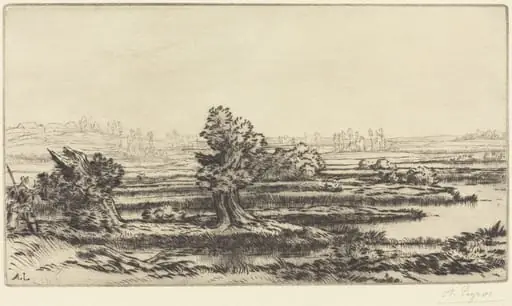 Peat-bogs (Les Tourbieres)
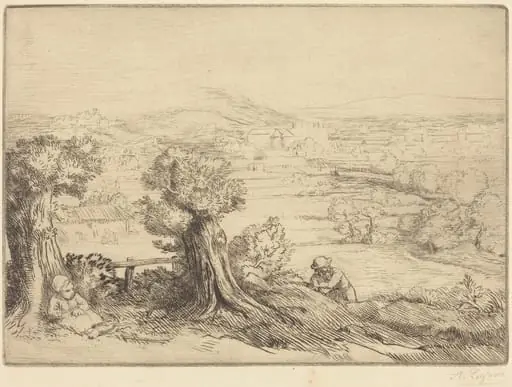 Remembrance of a Valley in Bourgogne (Souvenir d'une vallee en Bourgogne)
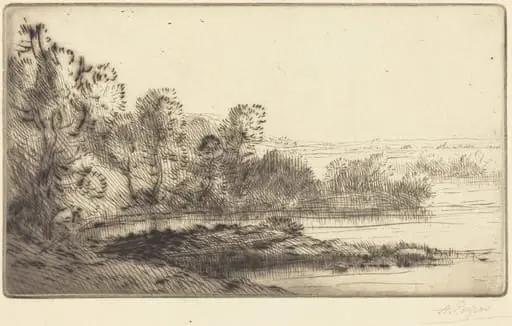 Along the Terne (Sur la terne)
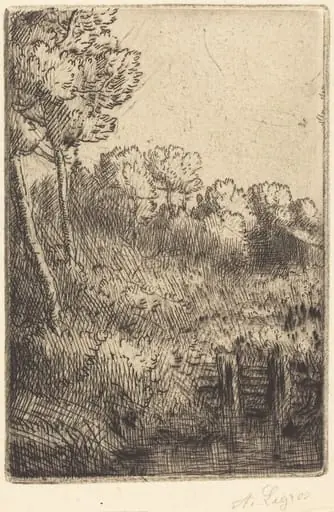 Along the Marne (Sur la Marne)
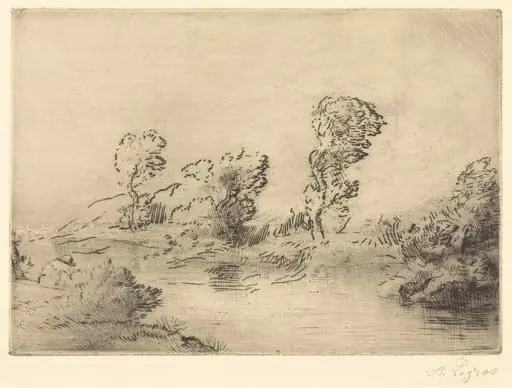 Banks of the Marne (Bord de la Marne)
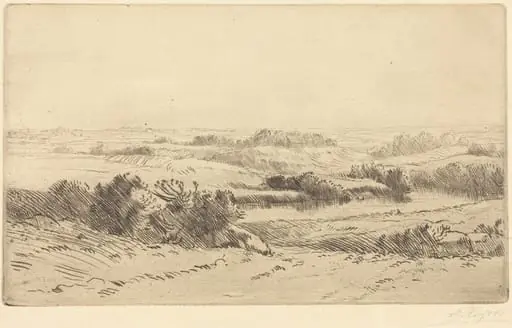 Banks of the Yanne (Les bords de la Yanne)
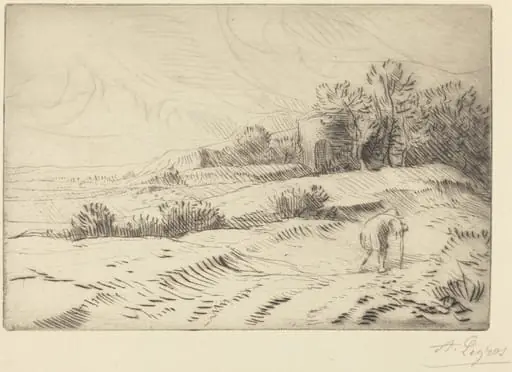 Tower (La tour)
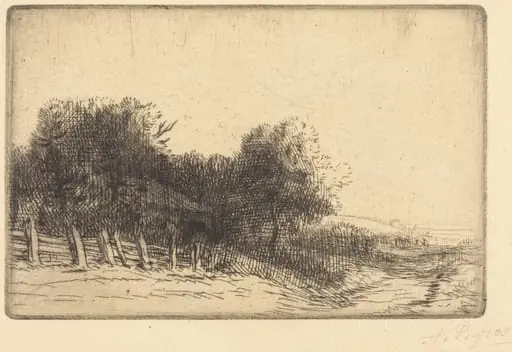 Landscape (Un paysage)
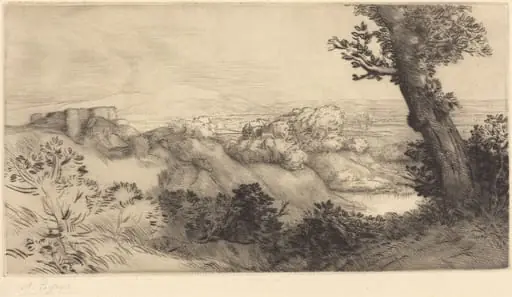 Top of the Hill (Le haut de la colline)
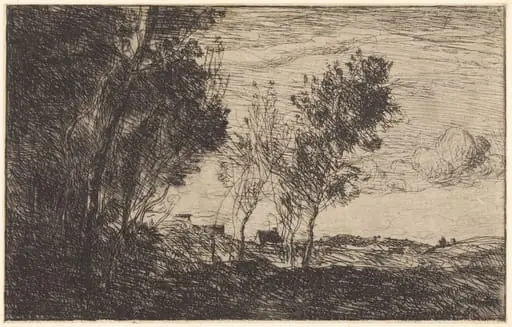 In the Dunes: Souvenir of The Hague (Dans les dunes: Souvenir du bois de La Haye)
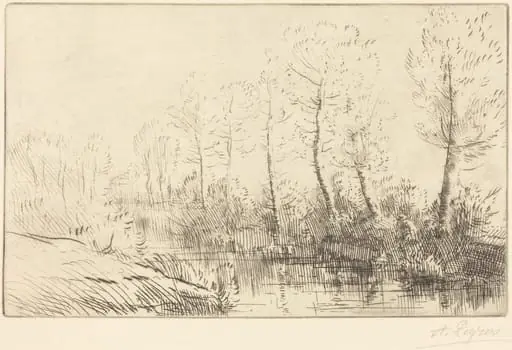 Birch Trees: Water's Edge Seen in Morning Light (Les bouleaux: Bord de l'eau, effet du matin
 Meadow in Sunshine (Le pre ensoleille)