Artwork
Portrait of Lady Harriet Acland
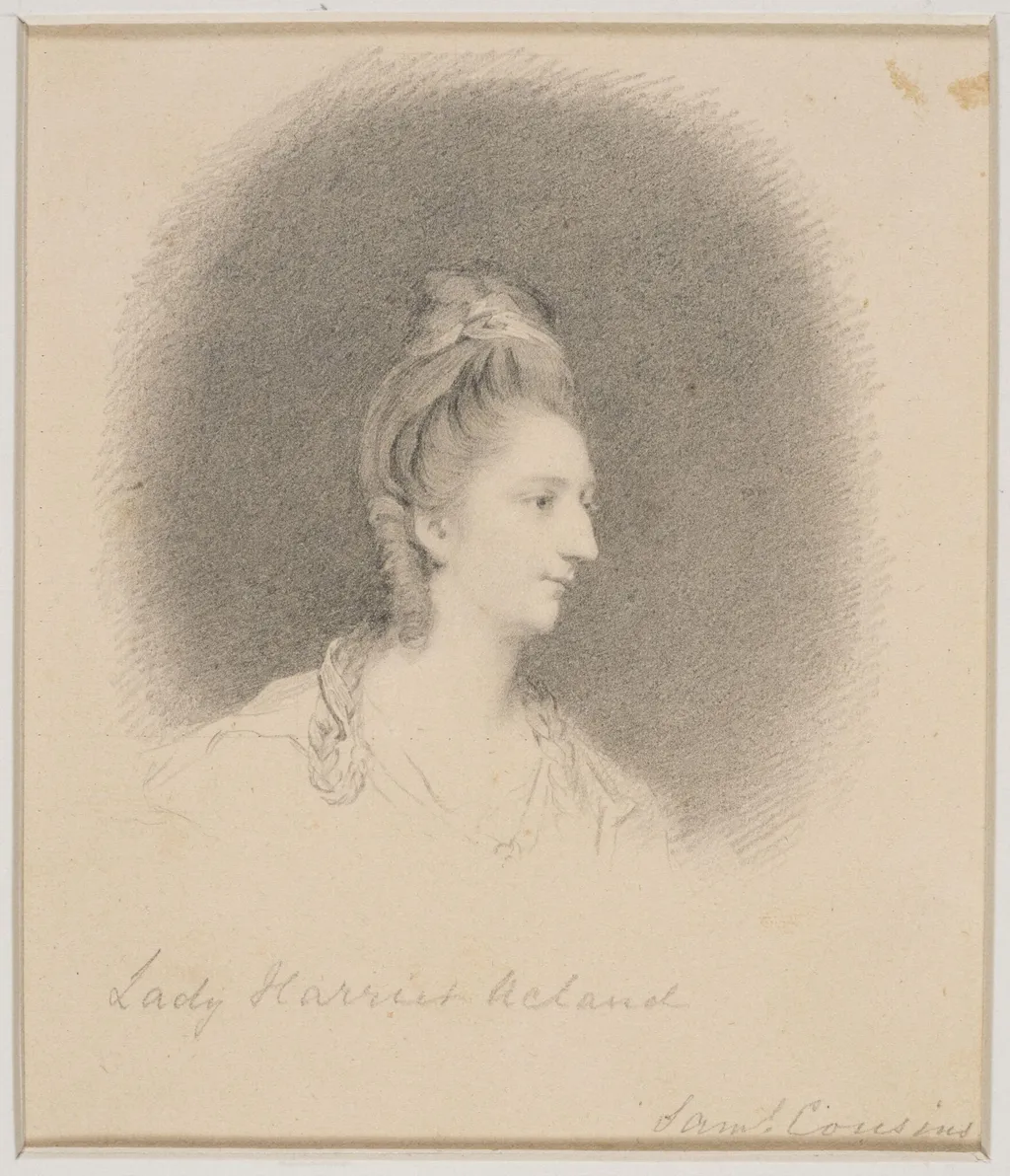
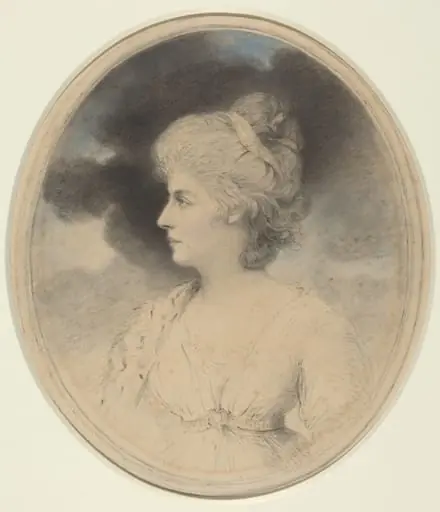
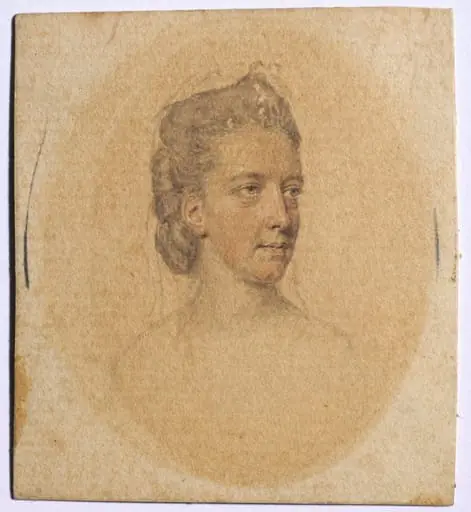
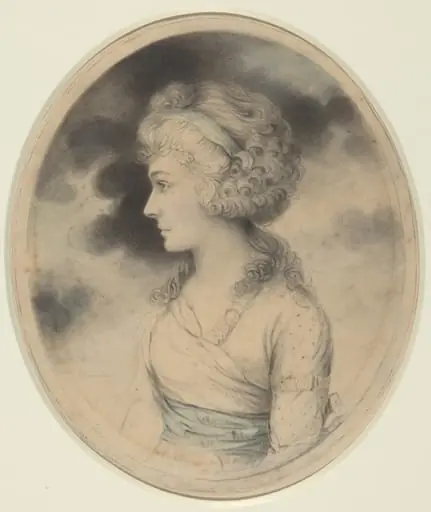
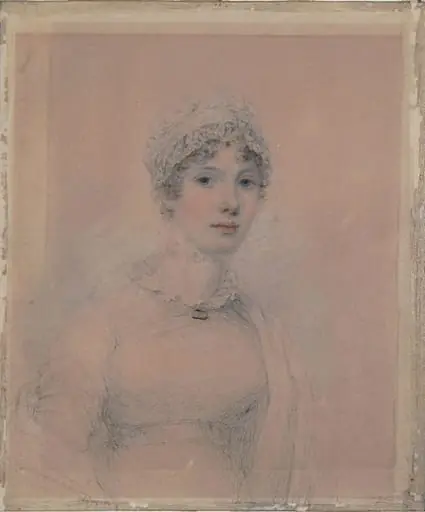
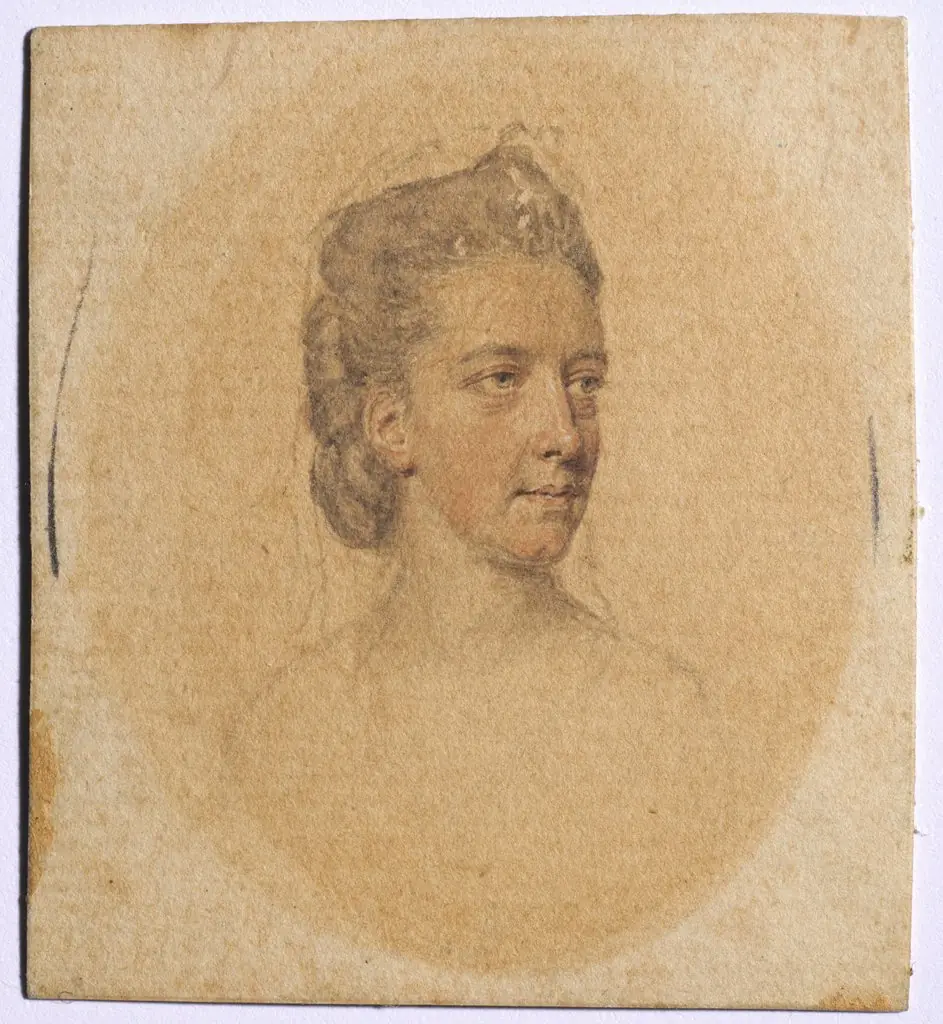
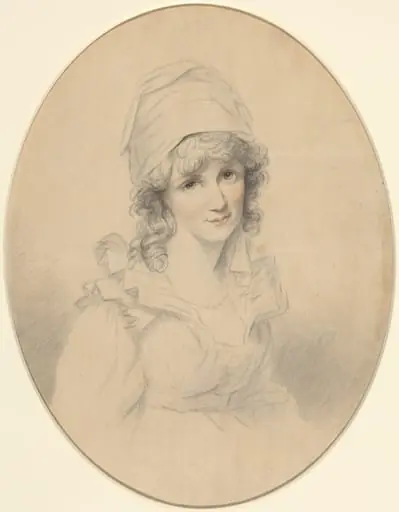
Portrait of Lady Harriet Acland is a drawing by the Romanticist artist Cousins. It dates from 1820 and is held in the collection of the Victoria and Albert Museum. This 1820 drawing depicts Lady Harriet Acland in a restrained, intimate format.
About this work
Overview
Executed in monochrome, the work emphasizes tone over detail, using soft gray washes and delicate lines to suggest form.
This 1820 drawing depicts Lady Harriet Acland in a restrained, intimate format. Executed in monochrome, the work emphasizes tone over detail, using soft gray washes and delicate lines to suggest form. The artist’s hand appears swift and intuitive, capturing a fleeting glance rather than a formal pose. The signature and inscription confirm identity, grounding the sketch in a specific time and person.
Subject & Meaning
Lady Harriet Acland is portrayed in quiet repose, her face turned slightly from the viewer, suggesting introspection or a momentary pause. Her simple attire and unadorned hairstyle reflect modesty, aligning with early 19th-century ideals of feminine restraint. The absence of elaborate props or background shifts focus entirely to her presence, implying a personal, perhaps private, record rather than a public statement.
Technique & Style
The artist employs loose, fluid lines and subtle gradations of gray to model the face and fabric. Edges dissolve into the paper’s texture, creating a hazy, atmospheric effect. Cross-hatching is used sparingly to define shadow beneath the chin and collar, avoiding heavy contrast. The overall approach favors immediacy over finish, characteristic of preparatory or observational studies rather than polished portraiture.
History & Provenance
The drawing is dated 1820 and bears the artist’s signature alongside the subject’s name, indicating intentional documentation. While its early ownership is unrecorded, its preservation suggests it was valued within the Acland family or by a collector familiar with the sitter. No evidence points to public exhibition, reinforcing its private, personal character.
Context
In the early 1800s, informal portrait sketches in graphite or chalk were common among the British gentry as personal mementos. Artists often used such drawings to study likeness before painting. Lady Acland’s depiction aligns with this tradition, reflecting a culture where portraiture served familial memory rather than public display.
Legacy
The drawing survives as a quiet testament to the practice of informal portraiture in Regency England. Its modest scale and unembellished style offer insight into how individuals of the time wished to be remembered—not through grandeur, but through subtle, human presence. It remains a representative example of domestic artistic practice in the period.
Artist & collection
Artist
This British artist made delicate pencil drawings of sitters in the early 1800s. Their surviving pages—like the crisp Portrait of Col. Acland (1820) and the poised Portrait of Lady Harriet Acland—capture military men…