Artwork
Cottage Gardens, Dalham, Suffolk
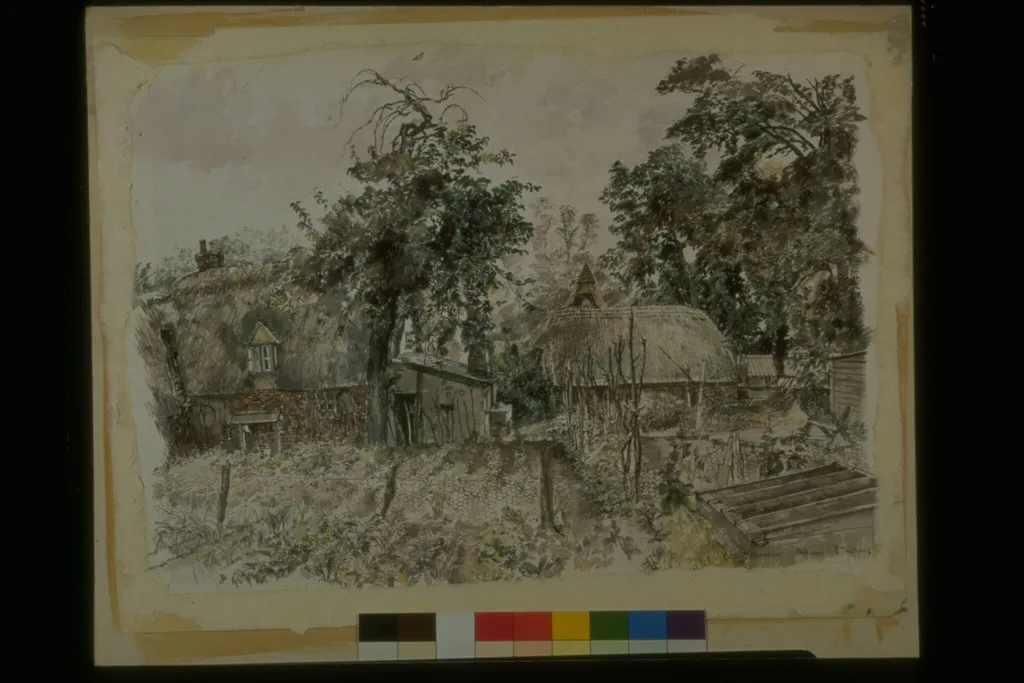
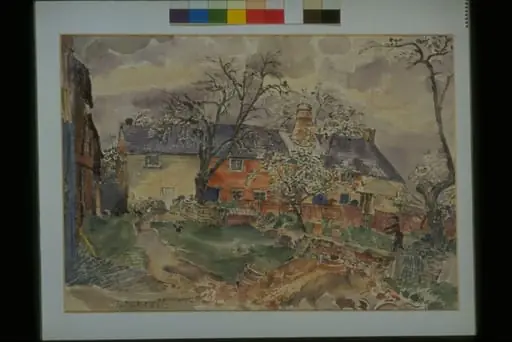
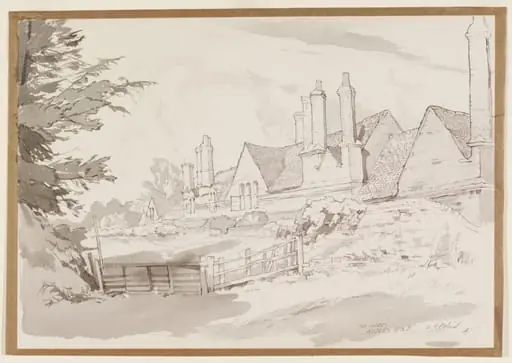
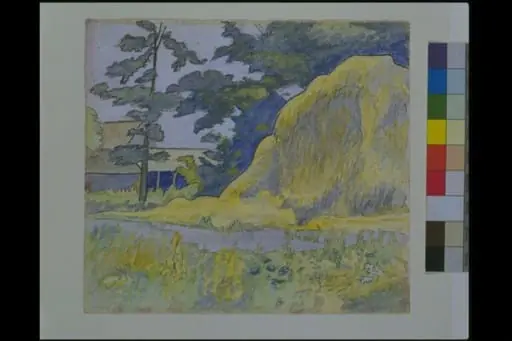
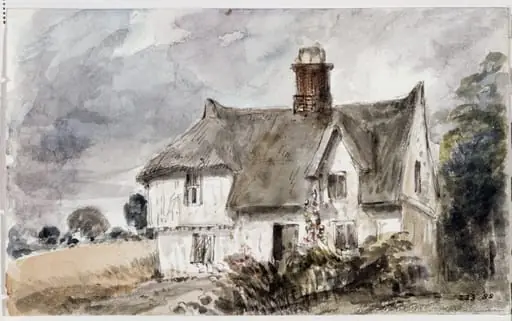
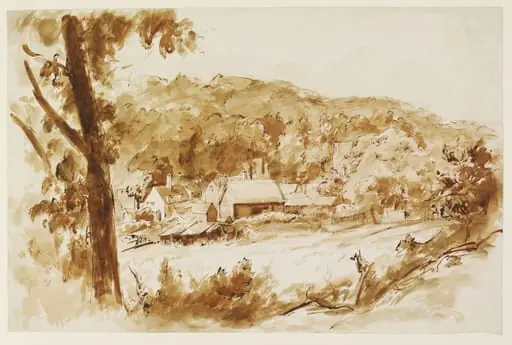
Cottage Gardens, Dalham, Suffolk is a watercolor work on paper by Raymond Cowern. It dates from 1940 and is held in the collection of the Victoria and Albert Museum.
About this work
The painting is called Cottage Gardens, Dalham, Suffolk.
It shows a village scene from around 1940.
The gardens in the painting are true cottage gardens, used for growing fruit, vegetables, and herbs, which is different from how we think of cottage gardens today.
You can learn more about this style of painting by looking at the work of Cowern, Raymond.
Overview
Raymond Cowern’s watercolour depicts a rural scene in Dalham, Suffolk, circa 1940, capturing the unidealized fabric of village life. The composition focuses on modest dwellings clustered with functional outbuildings, their forms shaped by necessity rather than design. The work reflects a pre-war English countryside where domestic space and subsistence farming were inseparable.
Subject & Meaning
The painting portrays working cottage gardens—plots devoted to food production, with herbs, vegetables, and fruit trees dominating the landscape. Flowers appear sparingly, as incidental rather than intentional. This contrasts sharply with later romanticized notions of cottage gardens as floral displays, revealing how post-war ideals reshaped rural aesthetics into decorative fantasies.
Technique & Style
Cowern employs transparent watercolour washes to convey the soft textures of weathered brick, overgrown foliage, and uneven ground. Loose, observational brushwork avoids idealization, emphasizing the irregularity of structures and the organic sprawl of cultivated land. The muted palette reinforces the practical, unadorned character of the scene.
History & Provenance
Created around 1940, the work emerged during a period when traditional rural economies were still intact but under pressure from modernization. Cowern’s focus on everyday vernacular architecture suggests an interest in documenting a way of life that was rapidly changing, preserving a record of pre-industrial domestic space.
Context
In the early 20th century, cottage gardens were functional extensions of working-class homes, not ornamental displays. The post-war rise of commuter culture and middle-class nostalgia transformed the cottage garden into a symbol of quaintness, replacing utility with aesthetics. Cowern’s painting stands as a counterpoint to this mythologized version.
Legacy
The painting contributes to a visual record of pre-war rural England, offering a corrective to later romanticized depictions of cottage life. Cowern’s unembellished approach preserves the authenticity of subsistence gardening, reminding viewers that the cottage garden’s original purpose was survival, not spectacle.
Artist & collection
Artist
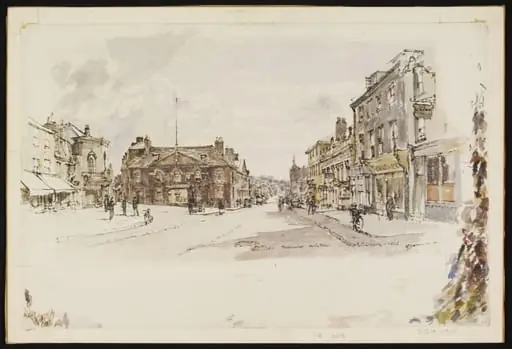
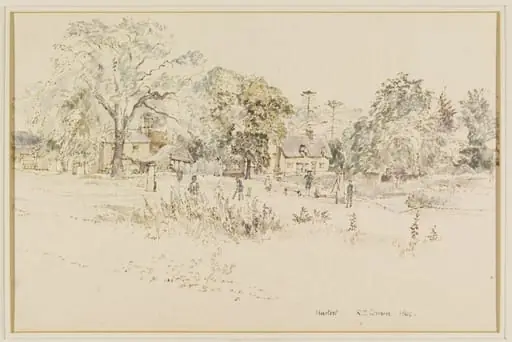
Raymond Cowern painted quiet English life in watercolour during the 1940s. His brush captured High Street and the Rutland Arms in Newmarket, the neat gardens of Dalham in Suffolk, and the village of Hartest bathed in…