Artwork
Trees near Sorrento, Bay of Naples
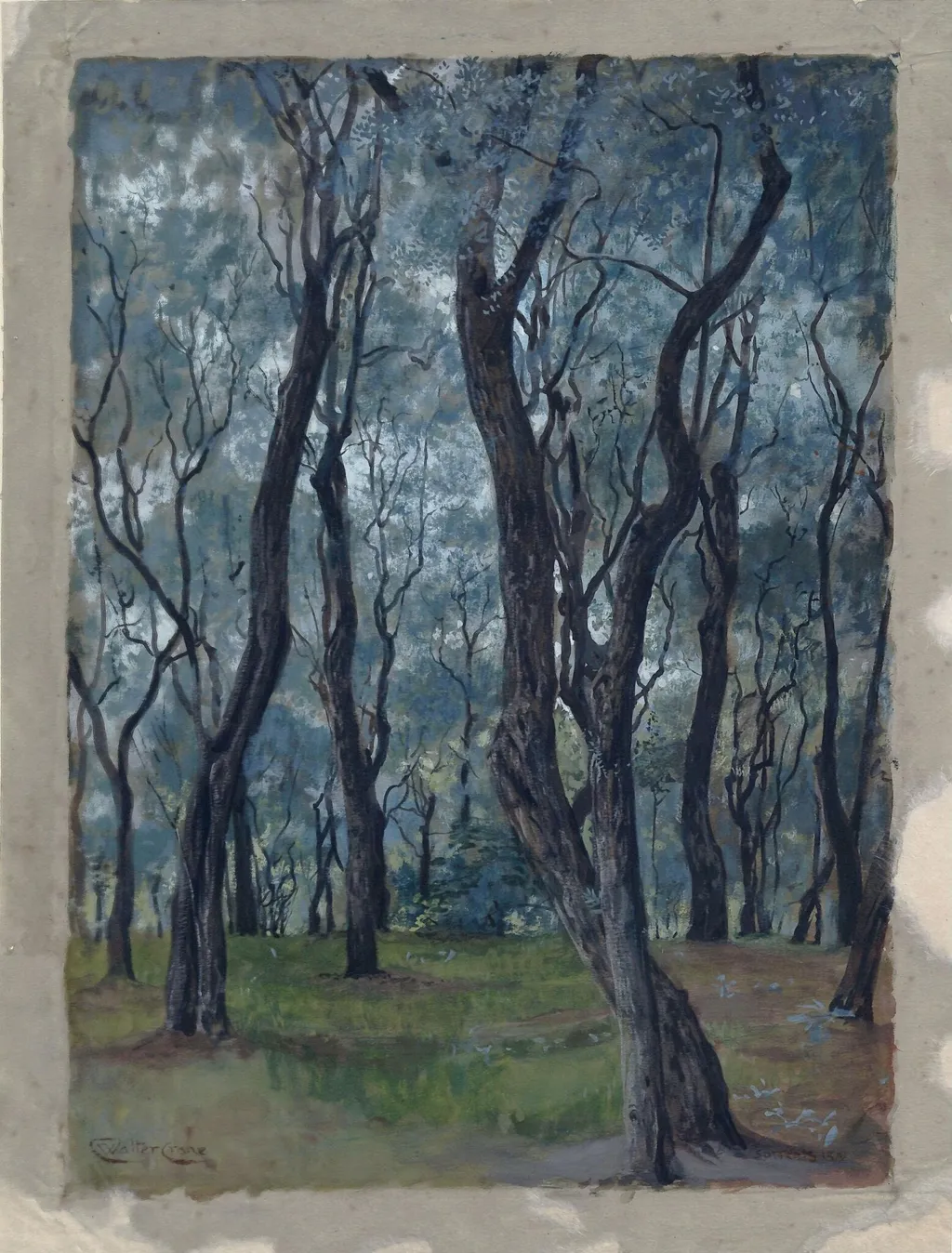
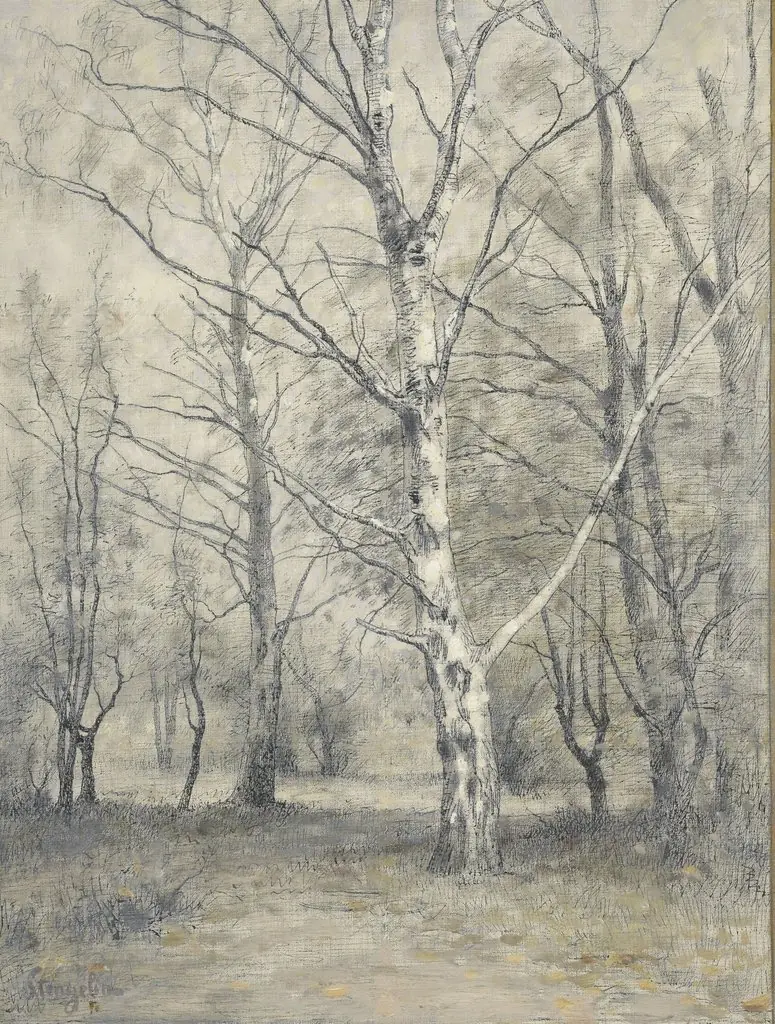
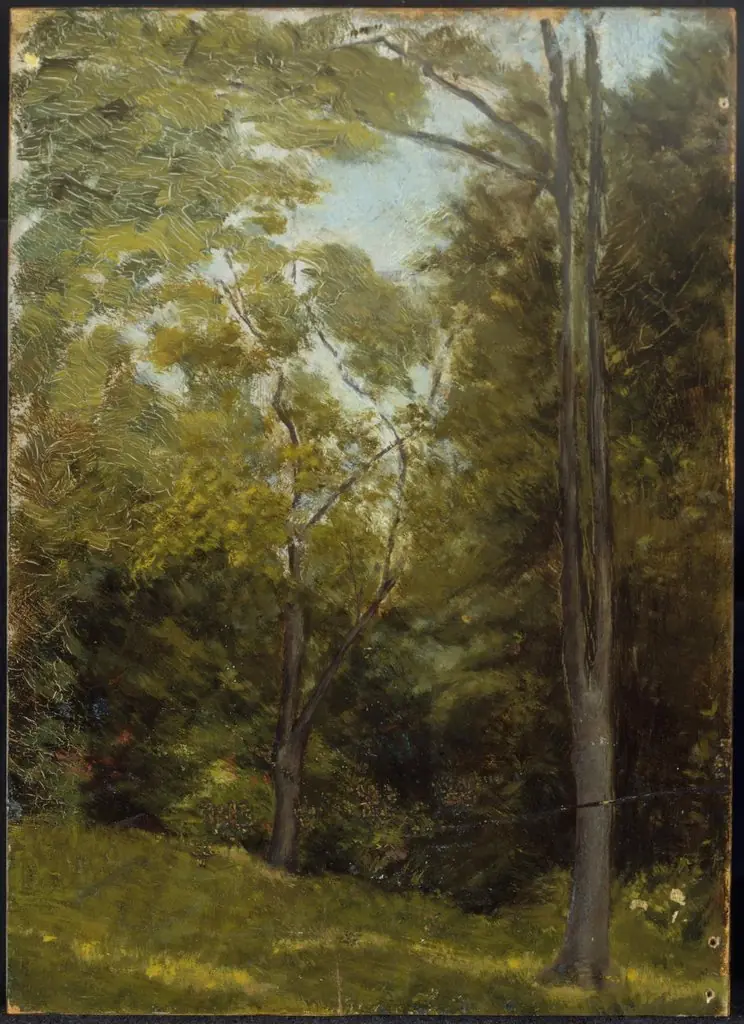
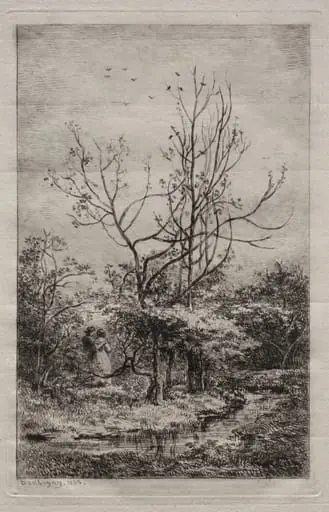
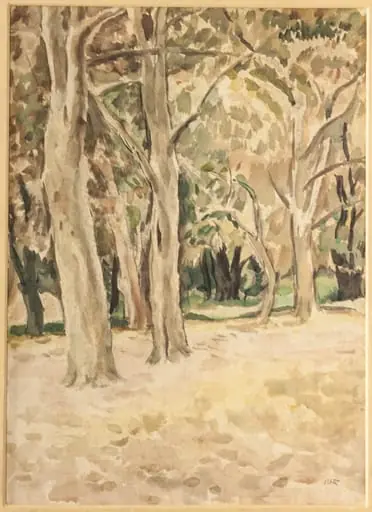
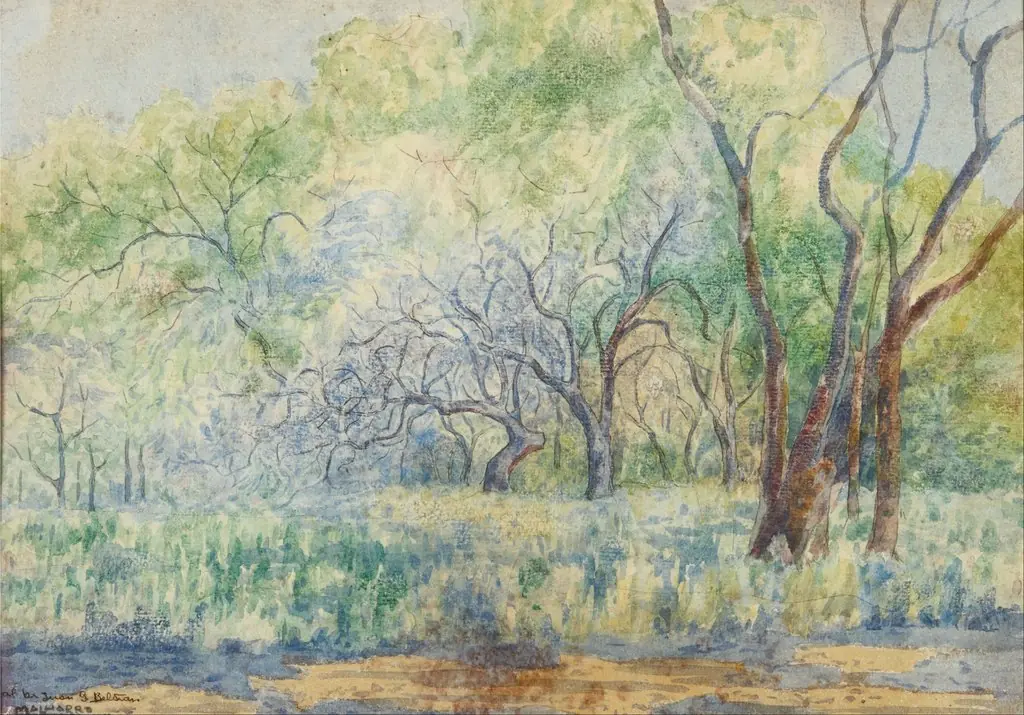
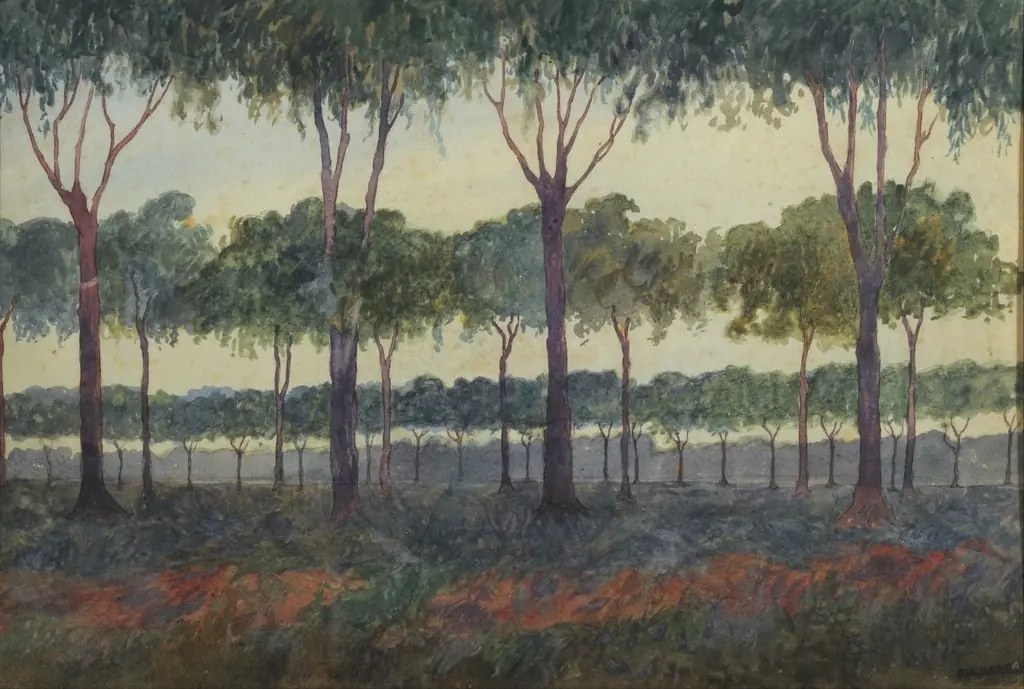
Trees near Sorrento, Bay of Naples is a watercolor work on paper by the Impressionist artist Walter RWS Crane. It dates from 1872 and is held in the collection of the Victoria and Albert Museum. Painted in 1872, this watercolour captures a quiet stretch of coastline near Sorrento along the Bay of Naples.
About this work
Overview
Painted in 1872, this watercolour captures a quiet stretch of coastline near Sorrento along the Bay of Naples. The artist signed the work, affirming its personal and observational nature. Executed with delicate washes, the piece conveys a sense of stillness and seasonal transition, avoiding dramatic detail in favor of subtle atmospheric effects.
Subject & Meaning
The scene features a row of bare, twisted tree trunks standing against a muted backdrop of soft blues and greens. The damp earth, patches of sparse grass, and a narrow stream suggest winter’s lingering presence. There is no human presence or narrative—only the quiet persistence of nature, observed with quiet attention rather than idealization.
Technique & Style
The artist employed transparent watercolour washes to achieve a light, airy quality, allowing the paper’s whiteness to suggest highlights and atmosphere. Dark, fluid lines define the gnarled trunks, while the background is rendered with loose, blended tones. The technique favors immediacy over finish, aligning with a sketch-like approach that values observation over polish.
History & Provenance
The work dates from 1872, a period when artists increasingly traveled to southern Italy to study light and landscape. Though its early ownership is undocumented, its signature and date suggest it was created during a personal journey. It remained in private hands until entering a public collection, where it is now preserved as a record of 19th-century plein air practice.
Context
In the late 19th century, artists across Europe turned to naturalistic depictions of everyday landscapes, moving away from romanticized or historical subjects. This watercolour reflects that shift—its unadorned view of a coastal grove aligns with Realist tendencies, valuing direct observation over embellishment, even in a medium often associated with leisure.
Legacy
Though not widely exhibited, the work stands as a quiet example of how watercolour was used for serious landscape study in the 1870s. Its restrained palette and focus on natural form contribute to a broader understanding of how artists engaged with the Italian countryside—not as a tourist spectacle, but as a subject worthy of patient, unembellished attention.
Own this work as a print
Artist & collection
Artist
Walter RWS Crane painted soft, luminous watercolors of southern Italy in the 1870s.