Artwork
Saint Mark the Evangelist and Saint Sinibaldus Venerated by Members of a Lay Confraternity
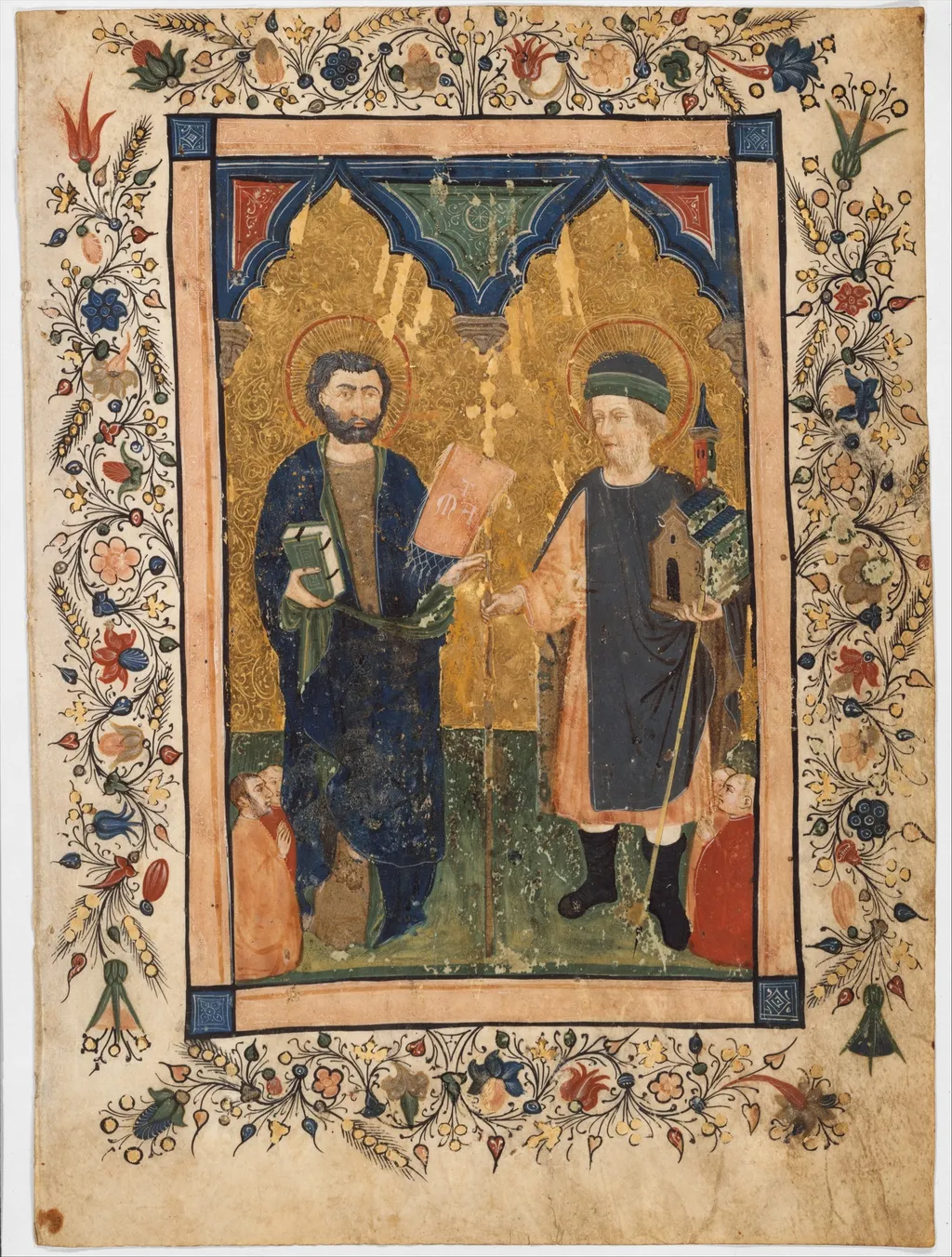
Saint Mark the Evangelist and Saint Sinibaldus Venerated by Members of a Lay Confraternity is an unspecified painting by the Early Renaissance artist Cristoforo Cortese. It dates from 1425 and is held in the collection of the Metropolitan Museum of Art.
About this work
Overview
This painting, titled Saint Mark the Evangelist and Saint Sinibaldus Venerated by Members of a Lay Confraternity, was created by Cristoforo Cortese in 1425. It is a religious work depicting two prominent saints receiving devotion from a group of individuals. The artwork is currently housed in The Metropolitan Museum of Art, offering insight into early 15th-century Venetian devotional art.
Subject & Meaning
Beside him, Saint Sinibaldus carries a model of a building, likely symbolizing his patronage or a specific foundation.
The composition centers on two robed male figures, identified by their halos as saints. Saint Mark the Evangelist, on the left, is recognizable by the book and scroll he holds, traditional attributes. Beside him, Saint Sinibaldus carries a model of a building, likely symbolizing his patronage or a specific foundation. At their feet, smaller kneeling figures represent the lay confraternity members offering their veneration.
Technique & Style
Cortese employed a distinct visual language in this panel. The saints' robes are rendered in flat, vibrant colors, accentuated with gold details, contributing to a sense of sacred opulence. Their faces appear stiff and stylized, characteristic of the period's artistic conventions. A golden background further emphasizes their divine status, while an elaborate border of flowers and leaves frames the entire scene, suggesting a decorative or liturgical purpose.
Context
The elaborate floral border and the devotional subject matter suggest this painting likely served a specific function within a religious setting, possibly as an altarpiece fragment or a component of a larger illuminated manuscript. The depiction of a lay confraternity indicates the work was commissioned by or for such a group, underscoring their communal piety and their chosen patron saints during the early Renaissance period in Italy.
Artist & collection
Artist
Cristoforo Cortese painted delicate angels and saints in the early 1400s, using fine gold lines and soft colors.