Artwork
Huis ten Bosch -linnan puisto
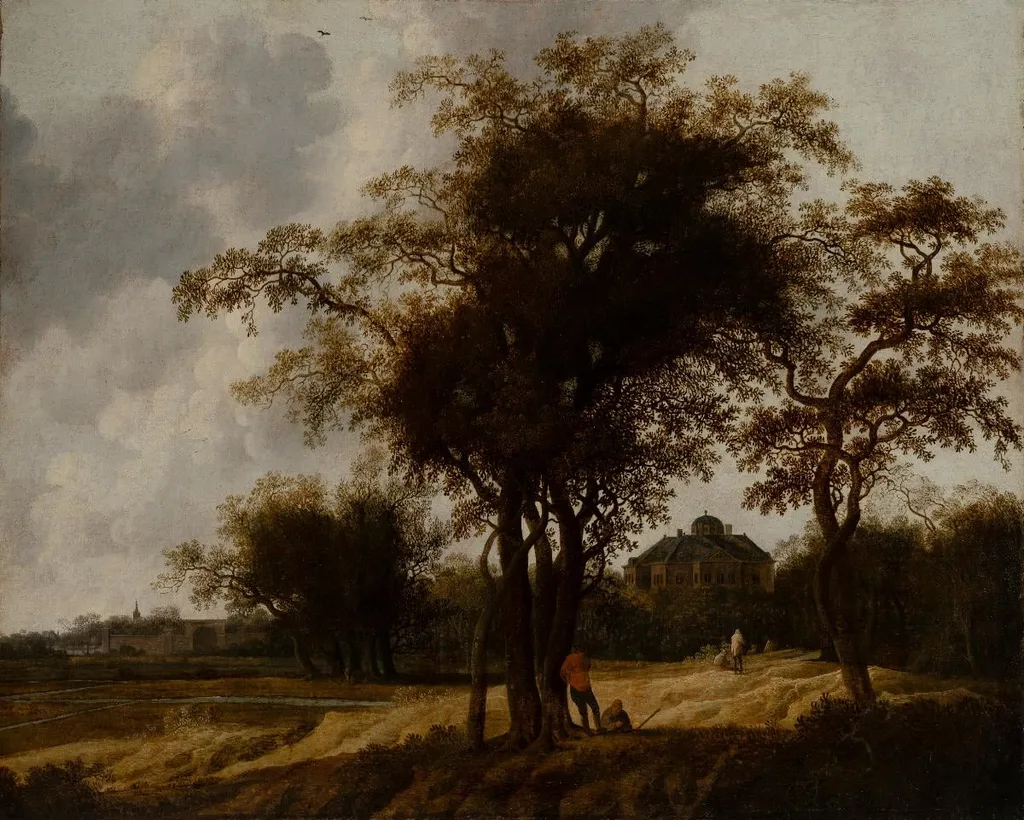
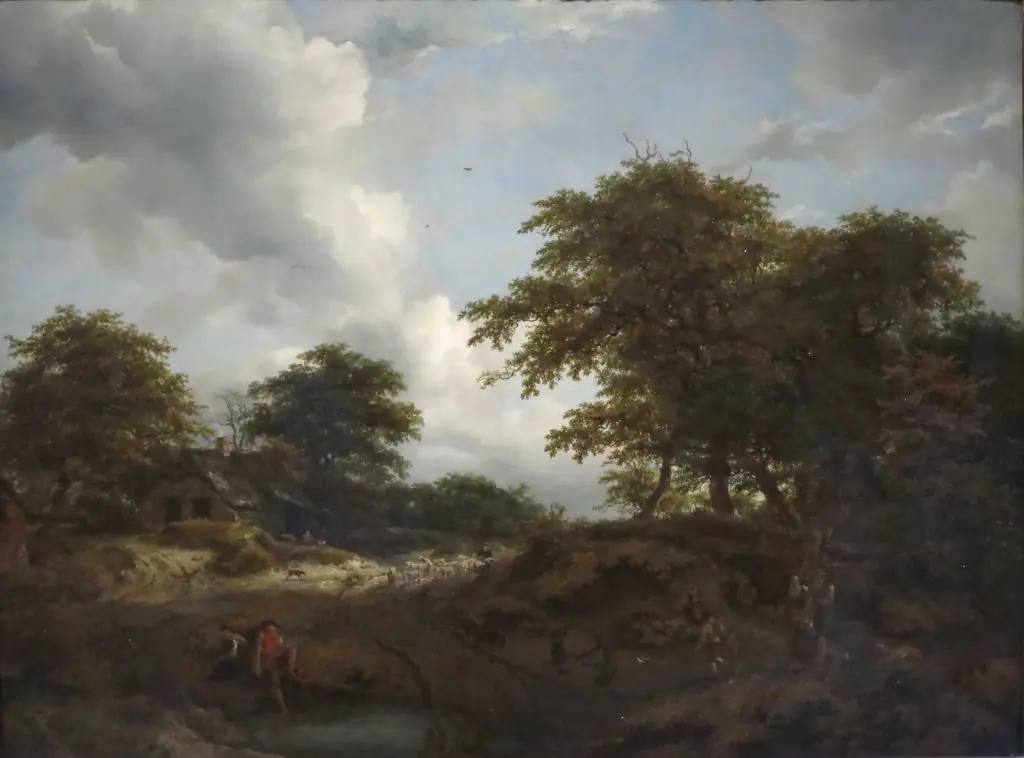
Huis ten Bosch -linnan puisto is an unspecified painting by Antonie Jansz. van der Croos. It is held in the collection of the Finnish National Gallery. This painting depicts a quiet park adjacent to a grand building with a dome and a church spire, set beneath a brooding sky.
About this work
Overview
The scene conveys stillness, with no indication of movement beyond the pedestrians, and an atmosphere of quiet anticipation.
This painting depicts a quiet park adjacent to a grand building with a dome and a church spire, set beneath a brooding sky. Two figures walk along a path near a large tree, their forms softened by the ambient light. The ground is dry and earth-toned, contrasting with the heavy clouds above. The scene conveys stillness, with no indication of movement beyond the pedestrians, and an atmosphere of quiet anticipation.
Subject & Meaning
The two figures, one in a vivid red-orange coat and the other in muted tones, appear as solitary observers within the landscape. Their presence suggests a moment of pause, perhaps contemplation, against the backdrop of institutional architecture. The storm-laden sky introduces tension, yet the dry earth and lack of rain imply a suspended moment—neither fully serene nor chaotic, but quietly unresolved.
Technique & Style
The artist employs subtle chiaroscuro to define the tree’s form, with selective highlights catching the upper branches while lower foliage sinks into shadow. The contrast between the bright coat and the dim surroundings draws the eye without disrupting the scene’s calm. Brushwork is restrained, favoring atmospheric gradations over detail, reinforcing the mood through tonal harmony rather than narrative clarity.
History & Provenance
The painting is associated with Huis ten Bosch, a palace in the Netherlands, and its surrounding parkland. Though exact dates and ownership records are not provided, the architectural elements align with 17th-century Dutch landscape traditions. It likely originated as a private commission or study, reflecting the era’s interest in integrating architecture with natural settings under variable weather conditions.
Context
Created during a period when Dutch artists increasingly turned to landscape as a subject in its own right, this work reflects a shift from grand historical scenes to intimate, observational moments. The inclusion of a palace and church hints at the intersection of private leisure and public authority, a common theme in Dutch Golden Age painting, where nature and power coexisted in quiet tension.
Legacy
The painting contributes to a broader tradition of Dutch landscape art that values mood over spectacle. Its restrained use of light and shadow influenced later artists exploring atmospheric effects. Though not widely exhibited, it remains a quiet example of how everyday scenes, rendered with sensitivity to light and weather, can evoke emotional depth without dramatic intervention.
Artist & collection
Artist
Antonie Jansz. van der Croos painted quiet, precise Dutch landscapes in the 17th century. His brush captured *Huis ten Bosch -linnan puoto*, the grand estate of the Dutch royal family near The Hague, framed by low light…

 Flat Landscape
 Landscape with Two Oaks
 A Landscape with a Farmstead
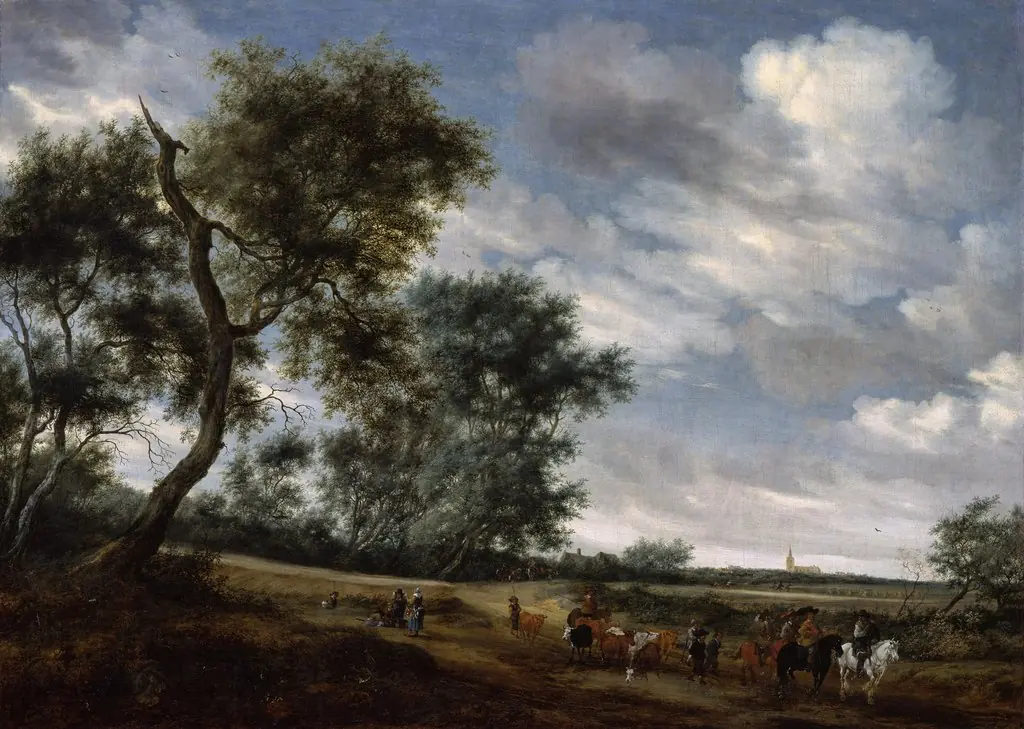 Landscape with robbers and their booty on a track
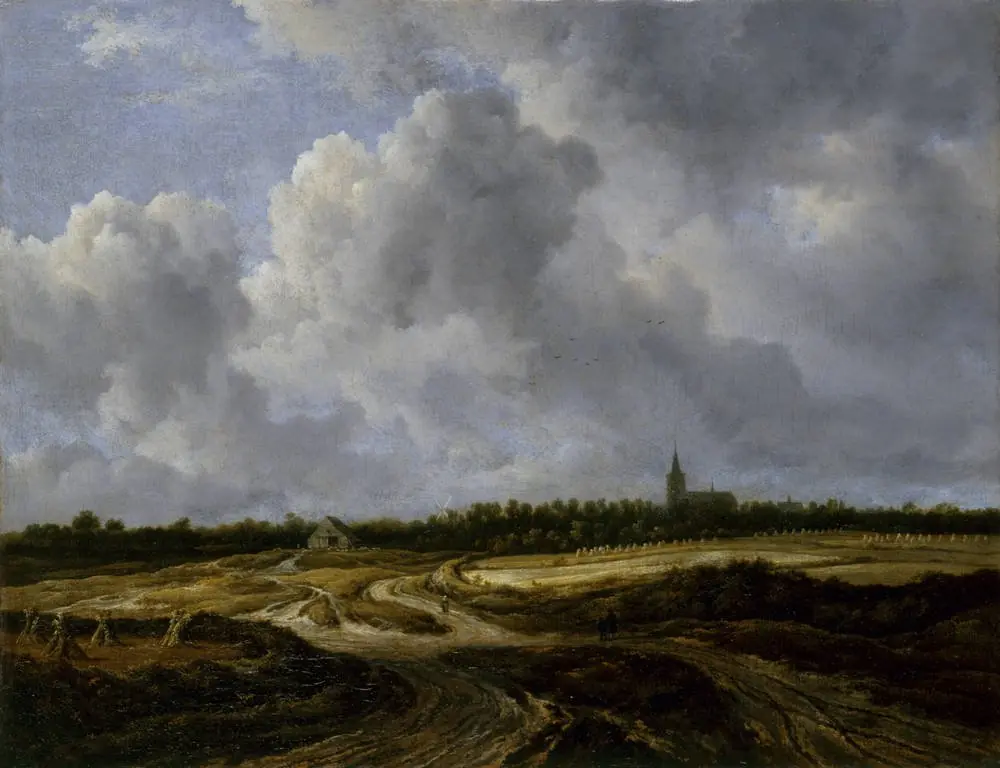 Extensive field landscape with a track and a church in the distance
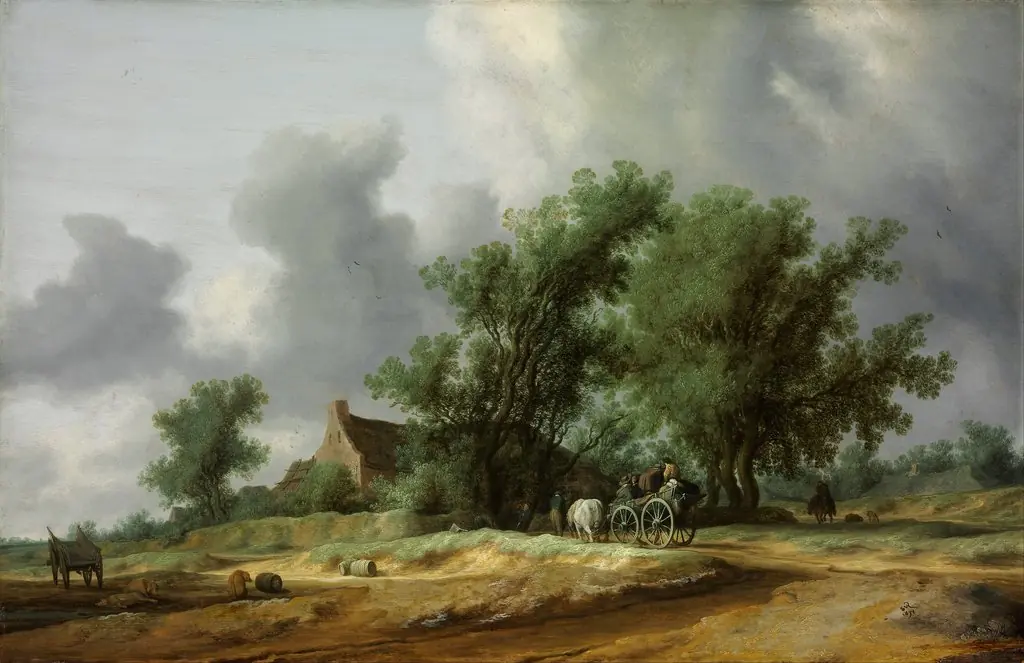 Road in the Dunes
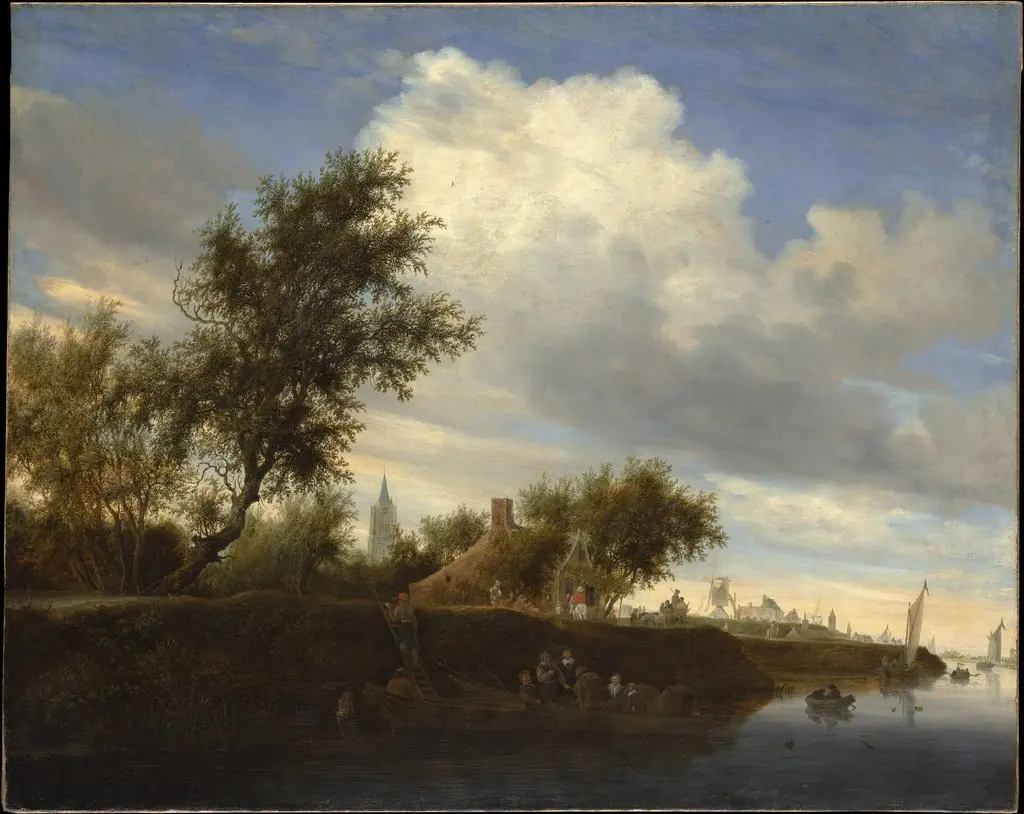 Ferry near Gorinchem
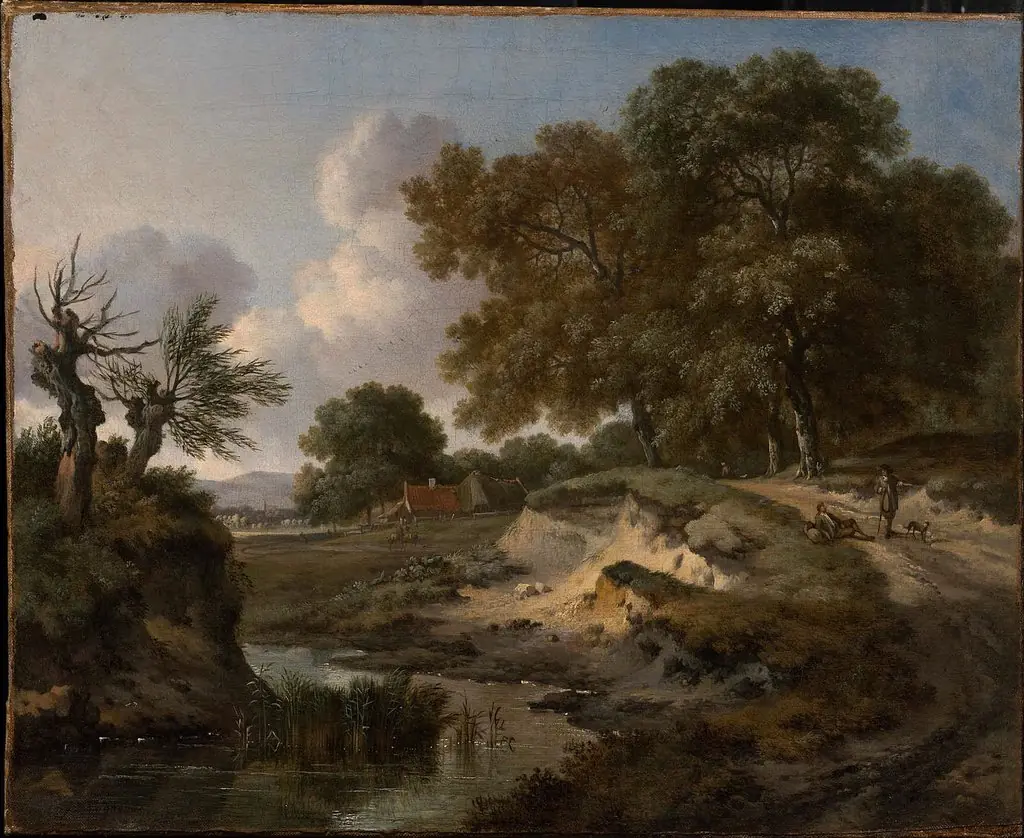 A Wooded Landscape with Travelers and a Dog on a Path
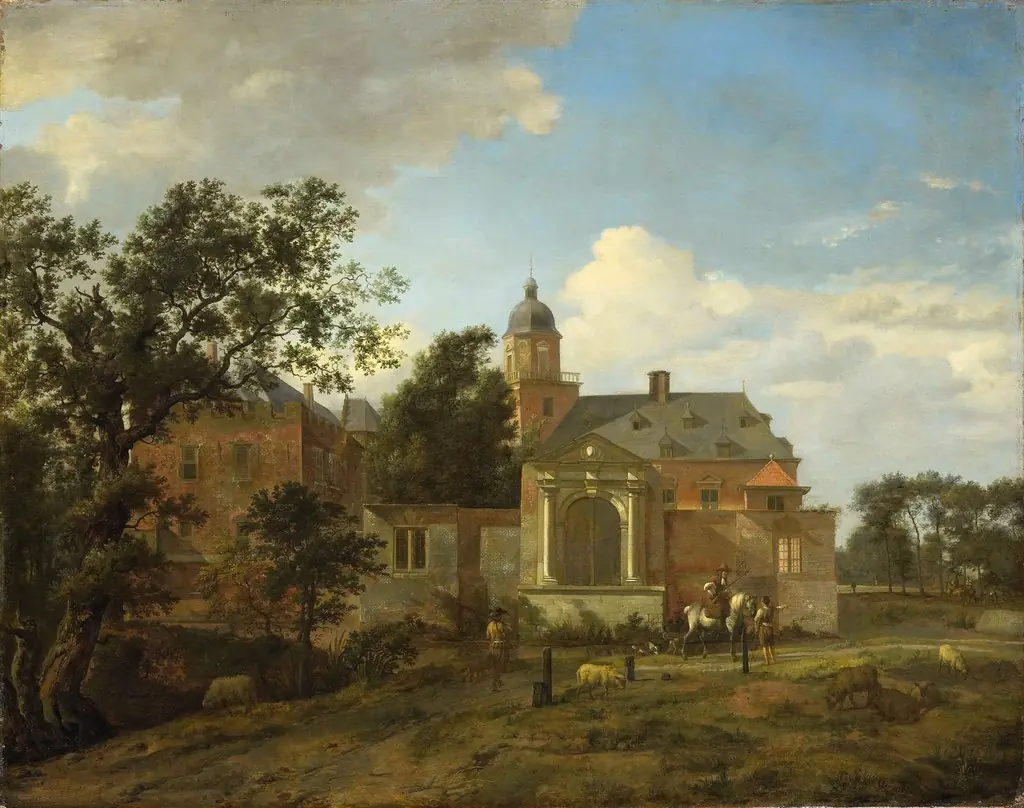 View of Nyenrode Castle
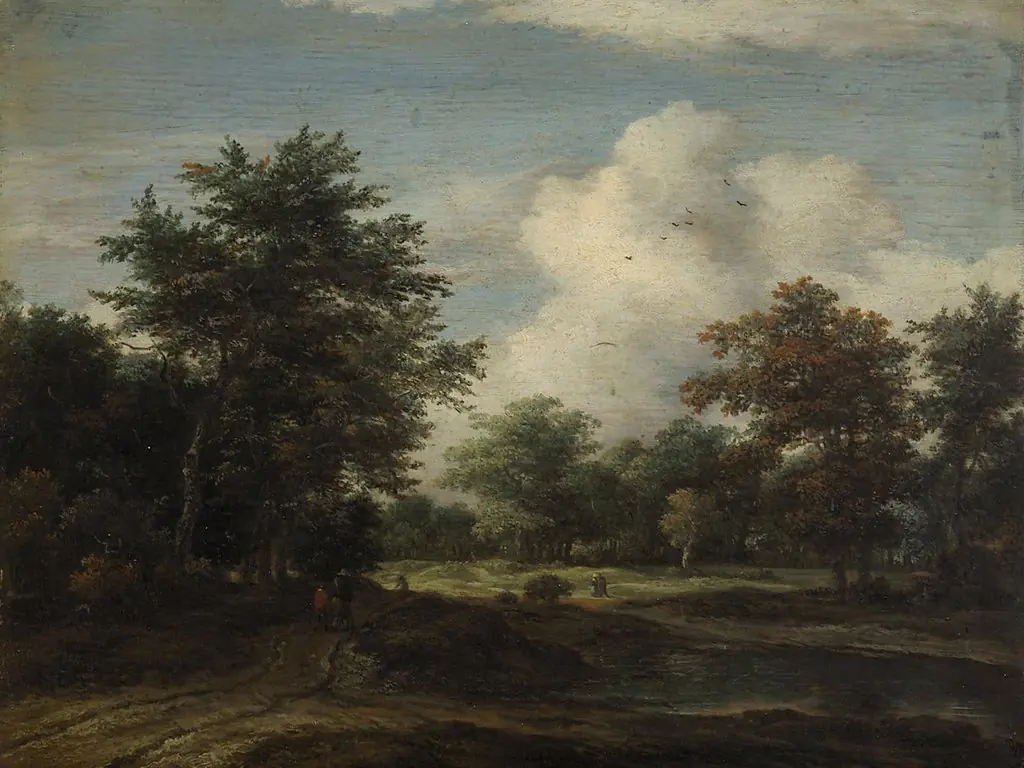 Small Woodland Landscape
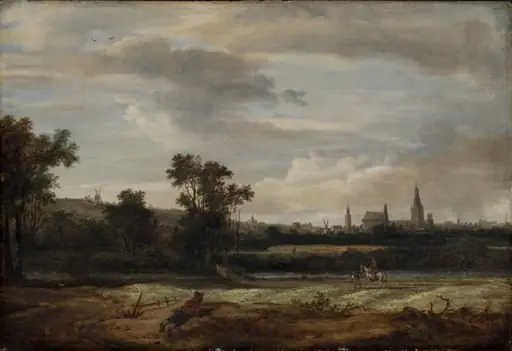 Landscape with a View Towards a Town
 Wooded Landscape with a Pool and Figures