Artwork
Peisaj de iarnă din Sibiu
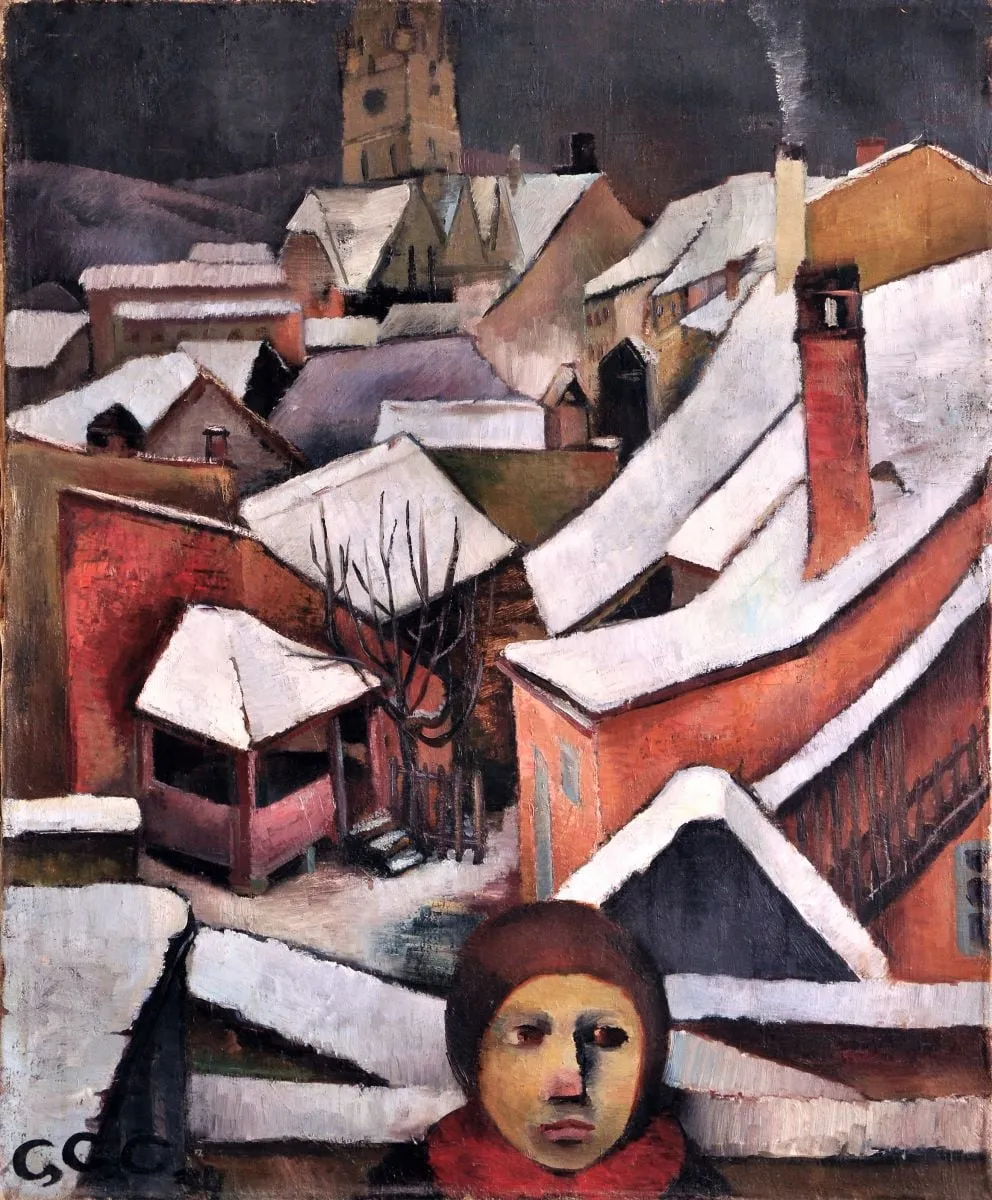
Peisaj de iarnă din Sibiu is an unspecified painting by Grete Csáki-Kopony. It is held in the collection of the Brukenthal National Museum.
About this work
Overview
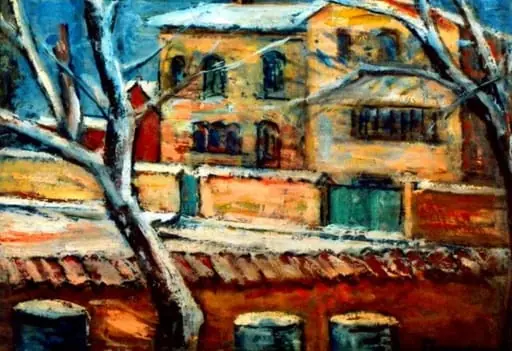
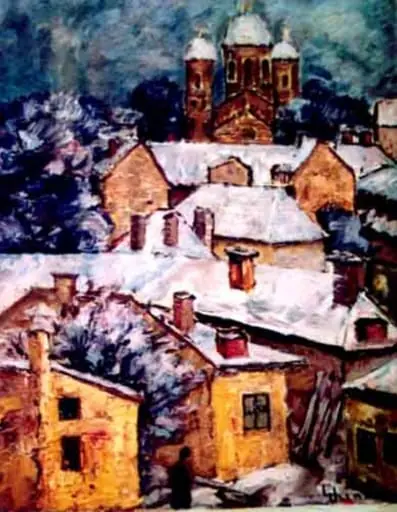
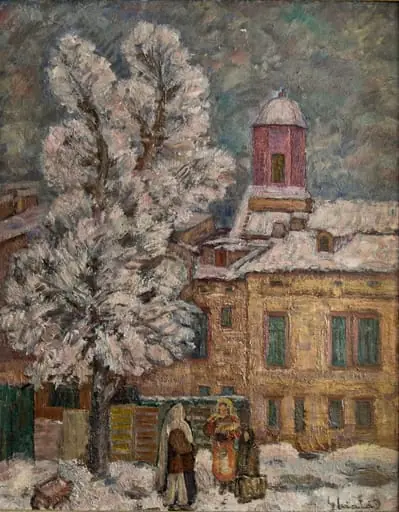
This artwork depicts a winter landscape of Sibiu, a town in Transylvania, rendered in a muted palette dominated by snow-white roofs and darkened skies. A solitary figure in a red scarf and brown hat stands in the foreground, subtly anchoring the scene. The composition relies on strong tonal contrasts to evoke stillness and cold, with no overt narrative or movement suggested.
Subject & Meaning
The scene captures an ordinary winter day in a Transylvanian town, focusing on quietude rather than event. The lone figure, minimally detailed, suggests human presence without personal identity, reinforcing a sense of solitude within the frozen environment. The emphasis on architecture and weather implies a meditation on endurance and the rhythm of seasonal life.
Technique & Style
The artist employs chiaroscuro to define form through light and shadow, particularly in the way snow reflects ambient light against the deep tones of the sky and tree lines. Brushwork is restrained, avoiding fine detail in favor of broad, tonal areas. This approach heightens the atmospheric mood, prioritizing emotional resonance over topographical accuracy.
History & Provenance
The work is attributed to an unnamed artist associated with regional Romanian painting traditions of the late 19th or early 20th century. Its origin is tied to Sibiu, a cultural center where artists often documented local landscapes. No documented exhibition or ownership history is publicly available, suggesting it may have remained in private or regional collections.
Context
This piece aligns with a broader trend in Romanian art that turned to rural and small-town scenes during a period of national identity formation. While urban modernism gained traction elsewhere, artists in Transylvania continued to explore intimate, weather-bound landscapes as expressions of cultural continuity and quiet resilience.
Legacy
Though not widely reproduced or studied in major institutions, the painting reflects a regional aesthetic that valued subdued realism and atmospheric tone. Its preservation in collections like the Museum of Ethnography underscores its role as a document of everyday life, rather than as a celebrated artistic achievement.
Artist & collection
Artist
A twentieth-century printmaker and painter, Grete Csáki-Kopony made delicate still lifes and quiet genre scenes in oil and on paper.