Artwork
Copil în cărucior
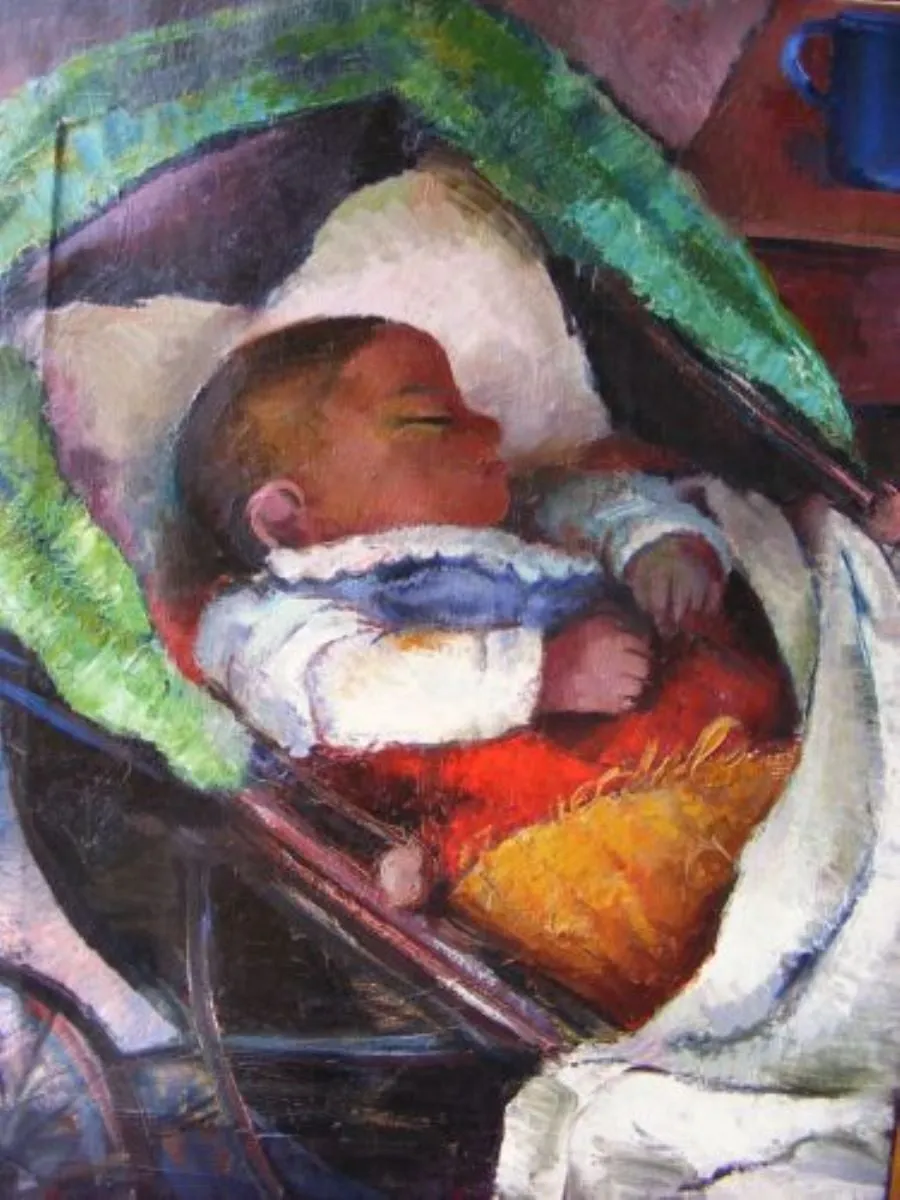
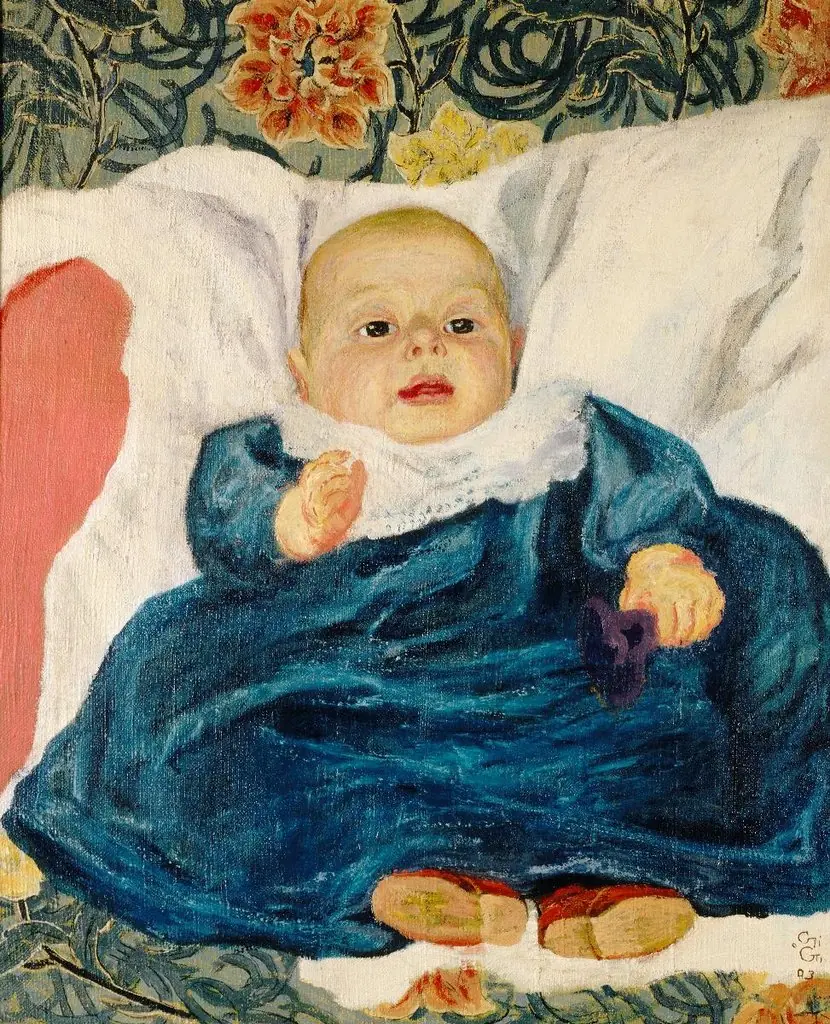
Copil în cărucior is an unspecified painting by Grete Csáki-Kopony. It dates from 1949 and is held in the collection of the Székely National Museum.
About this work
Overview
Though modest in size, the painting conveys a sense of quiet domestic life through its vivid composition and tactile brushwork.
Copil în cărucior, painted around 1949 by Grete Csáki-Kopony, is a small-scale oil work depicting an infant in a woven basket. The piece resides in the collection of the Museum of Ethnography, where it is valued for its intimate portrayal of rural childhood and its expressive use of color and texture. Though modest in size, the painting conveys a sense of quiet domestic life through its vivid composition and tactile brushwork.
Subject & Meaning
The painting portrays a sleeping infant wrapped in a striped textile, resting in a wicker basket, a common item in rural Romanian households. The child’s white cap and relaxed posture suggest a moment of rest, possibly after being carried. The absence of adult figures emphasizes solitude and vulnerability, while the surrounding colors may hint at the natural or domestic environment—offering a quiet meditation on early life within traditional settings.
Technique & Style
Csáki-Kopony employs thick, textured brushstrokes to build the background, creating a dynamic interplay of red, yellow, and green that resembles woven cloth or dense foliage. The impasto technique gives the surface a physical presence, contrasting with the smoother rendering of the baby’s face. This deliberate contrast draws attention to the child while infusing the scene with rhythmic energy, bridging realism and expressive abstraction.
History & Provenance
The painting was created in the late 1940s, during a period when Csáki-Kopony was actively documenting folk life in Romania. It entered the Museum of Ethnography’s collection shortly after its completion, likely acquired as part of a broader effort to preserve visual records of everyday traditions. Its preservation reflects institutional interest in regional culture during the early years of postwar Romania.
Context
In the late 1940s, Romania underwent significant social change, yet rural customs remained central to cultural identity. Artists like Csáki-Kopony turned to domestic and folk scenes to capture enduring practices amid modernization. This work aligns with a broader movement to record traditional child-rearing methods, textiles, and domestic spaces, offering a visual archive of a world slowly fading from daily life.
Legacy
Copil în cărucior remains a quiet but significant example of mid-century Romanian figurative painting focused on vernacular life. It is not widely reproduced, but within its institutional context, it contributes to scholarly understanding of how artists engaged with rural themes during a time of national transformation. Its preservation ensures continued access to a personal, unidealized view of childhood in mid-20th century Romania.
Artist & collection
Artist
A twentieth-century printmaker and painter, Grete Csáki-Kopony made delicate still lifes and quiet genre scenes in oil and on paper.