Artwork
Untitled
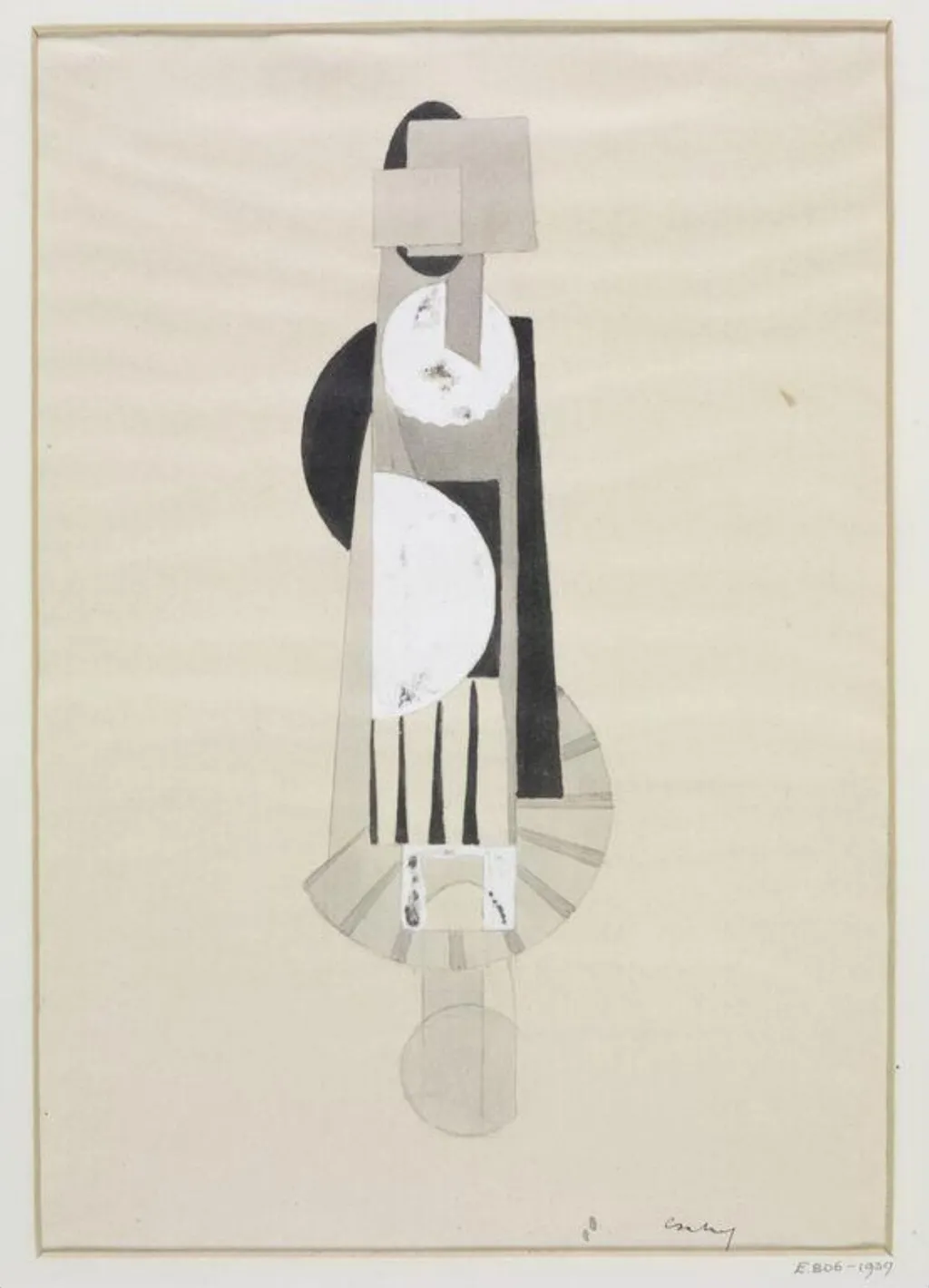
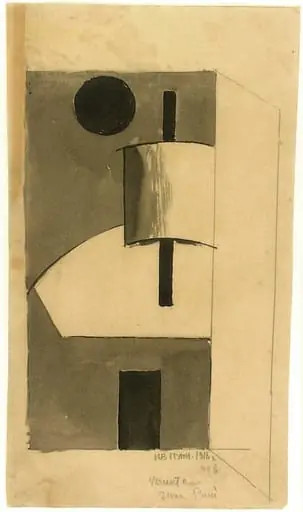
Untitled is a drawing by Joseph Csaky. It dates from 1919 and is held in the collection of the Victoria and Albert Museum.
About this work
Overview
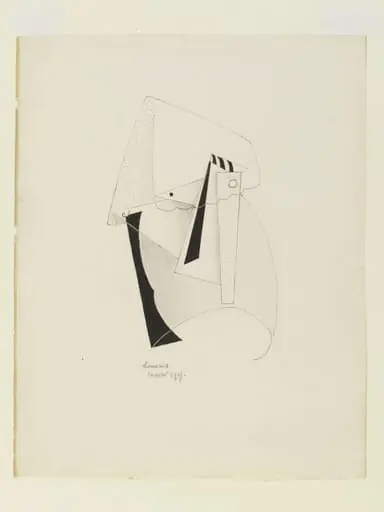
The composition is vertically oriented, with shapes arranged to suggest structural tension and depth without relying on traditional perspective.
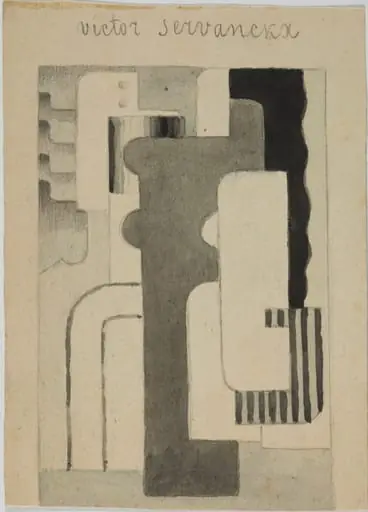
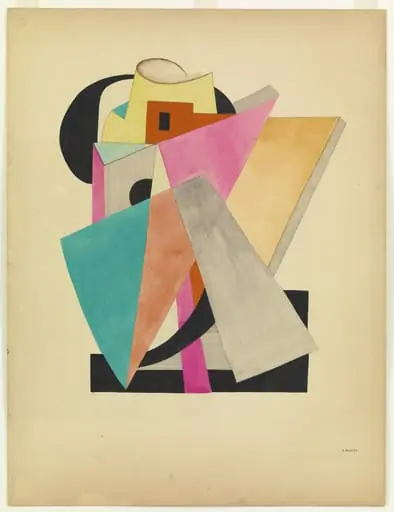
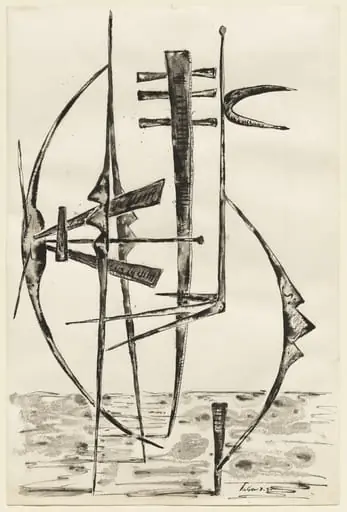
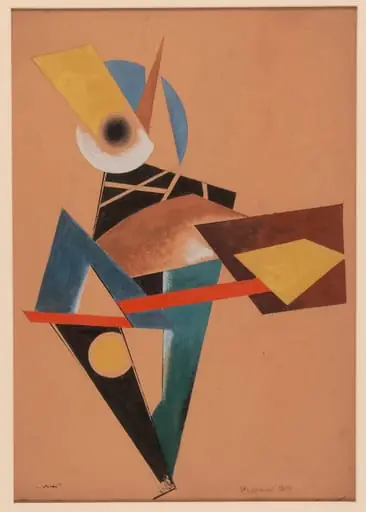
This 1919 drawing by Joseph Csaky serves as a preparatory study for a proposed Constructivist sculpture. Executed in monochrome, it explores spatial relationships through layered geometric forms. The composition is vertically oriented, with shapes arranged to suggest structural tension and depth without relying on traditional perspective. The work reflects Csaky’s engagement with modernist abstraction during a period of intense experimentation in Paris.
Subject & Meaning
The drawing does not depict recognizable objects but instead proposes an abstract architectural form. Its interlocking planes and shifting contours imply motion and structural complexity, aligning with Constructivist ideals that valued industrial aesthetics and dynamic composition. The absence of color directs focus to form and volume, emphasizing the sculpture’s potential physical presence rather than symbolic content.
Technique & Style
Csaky employed graded washes of gray ink and pencil to differentiate planes and suggest relief. Angular and curved edges coexist, creating rhythmic contrast within the composition. Overlapping shapes generate a sense of depth, while the light gray background anchors the forms without competing for attention. The technique is precise yet fluid, balancing control with the spontaneity of sketching.
History & Provenance
Created in Paris during Csaky’s active years in the avant-garde circles of the early 20th century, this drawing is part of a series of studies for unrealized sculptural projects. It likely remained in the artist’s possession until later acquisition by a private collector or institution. Its survival offers insight into Csaky’s creative process during a pivotal moment in modernist sculpture.
Context
In 1919, Paris was a hub for artists redefining sculpture through abstraction and industrial forms. Csaky, influenced by Cubism and emerging Constructivist ideas, sought to translate two-dimensional studies into three-dimensional structures. This drawing reflects broader trends among artists exploring geometry as a language for modernity, distancing themselves from traditional representation.
Legacy
Though the intended sculpture was never built, this drawing remains a significant record of Csaky’s conceptual approach. It contributes to the understanding of how early modernist sculptors used drawing not merely as preparation, but as an independent medium for exploring spatial innovation. The work continues to inform scholarship on the intersection of drawing and sculpture in avant-garde practice.
Artist & collection

Artist
Joseph Csaky was a Hungarian avant-garde artist, sculptor, and graphic artist, best known for his early participation in the Cubist movement as a sculptor.