Artwork
Untitled
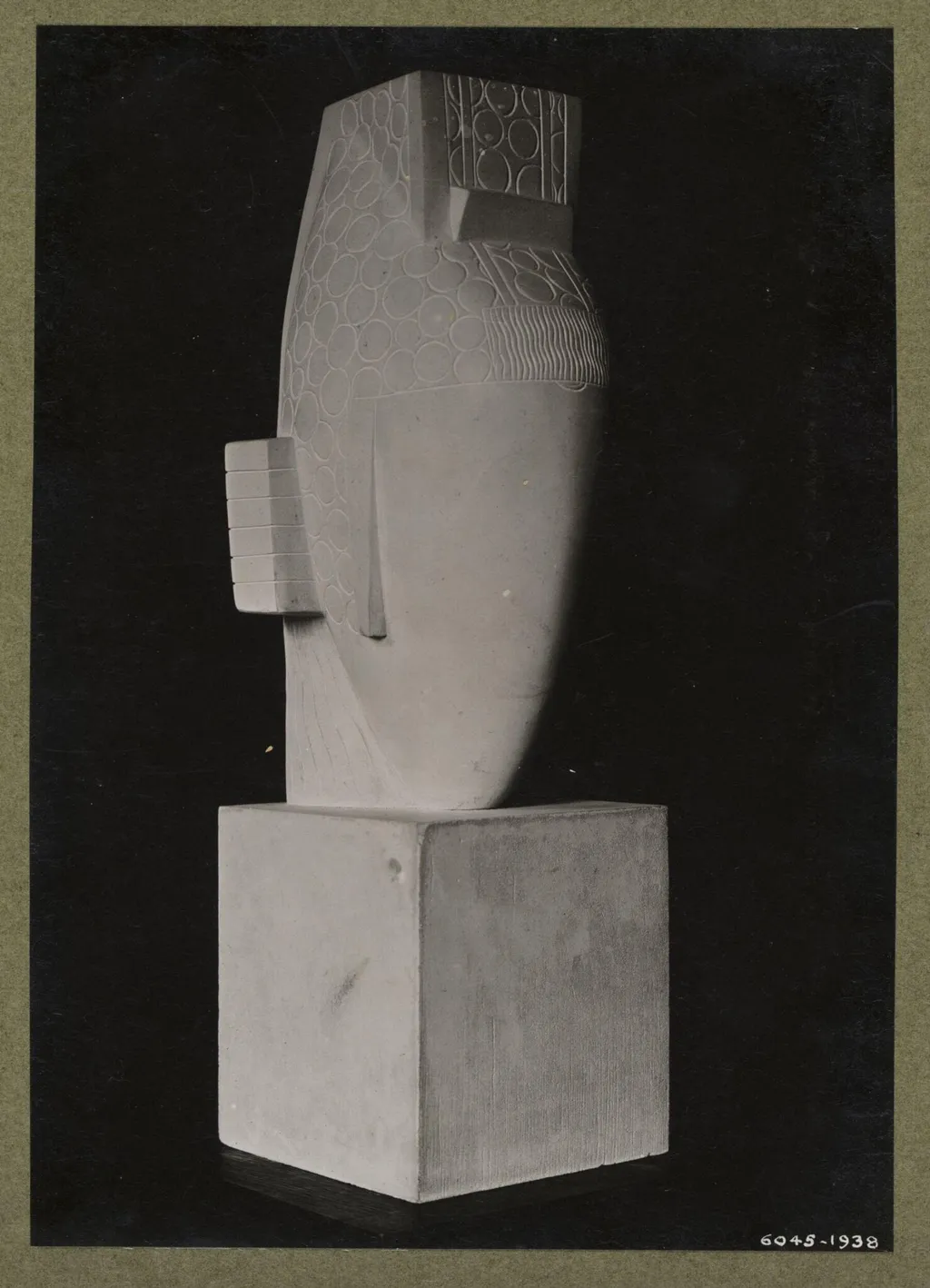
Untitled is a photographic photography by Joseph Csaky. It is held in the collection of the Victoria and Albert Museum.
About this work
Overview
Acquired in the 1920s through direct correspondence with artists, the image documents a three-dimensional work now preserved in the Archive of Art and Design.
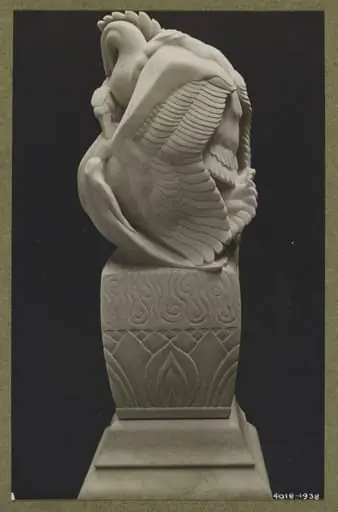
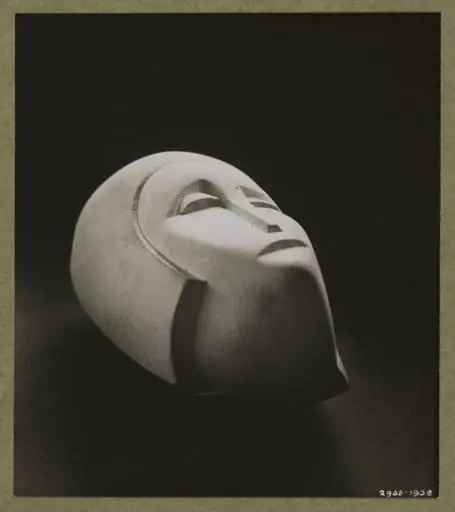
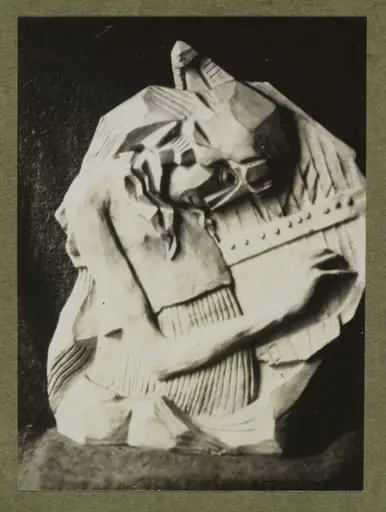
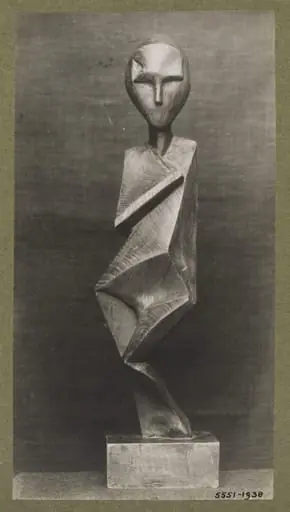
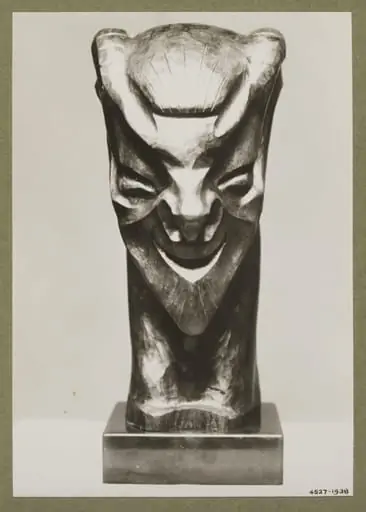
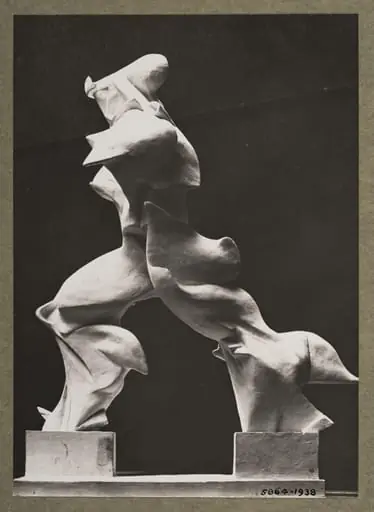
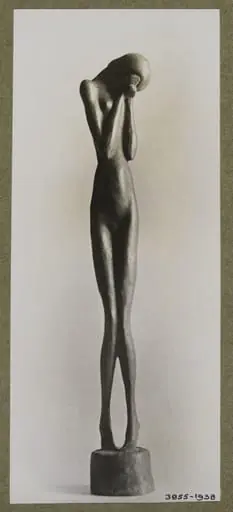
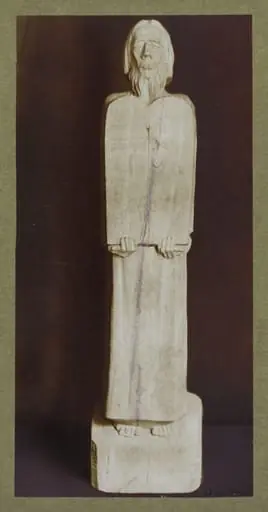
This photograph captures a sculptural form by Joseph Csaky, mounted on green card as part of William Kineton Parkes’s archival collection. Acquired in the 1920s through direct correspondence with artists, the image documents a three-dimensional work now preserved in the Archive of Art and Design. The photograph serves as a record of Csaky’s early abstract experimentation, preserved not as the original sculpture but as a visual reference compiled by a scholar deeply engaged with modernist sculpture.
Subject & Meaning
The sculpture depicts a stylized human figure, reduced to geometric volumes—angular shoulders, a blocky torso, and a head defined by sharp planes. Deep incisions suggest facial features without naturalism, while concentric rings around the neck introduce rhythmic contrast. The form avoids realism, instead proposing a structural interpretation of the human presence. It reflects an interest in abstraction as a means to convey essence rather than appearance, aligning with early 20th-century explorations of form.
Technique & Style
Carved from a solid material, likely stone or wood, the sculpture employs sharp, planar cuts to construct volume. Surfaces are deliberately flattened and intersected, creating a sense of constructed space rather than organic modeling. The deep linear incisions and geometric stacking suggest influence from Cubist principles, while the flat base grounds the form in physical stability. The technique prioritizes clarity of shape over texture or surface refinement, emphasizing structure over illusion.
History & Provenance
The photograph was collected by William Kineton Parkes during the 1920s as part of a systematic effort to document contemporary sculptors. He mailed questionnaires to artists, including Csaky, requesting images and descriptions of their work. This particular image, along with others, became part of Parkes’s personal archive, later bequeathed to the Victoria and Albert Museum in 1938. The original sculpture’s current location is unconfirmed, making the photograph a key surviving record.
Context
Created during the height of Cubist influence in European sculpture, this work reflects Csaky’s engagement with fragmented form and spatial reconfiguration. His contemporaries, including Lipchitz and Laurens, pursued similar paths, moving away from traditional modeling toward constructed, faceted compositions. Parkes’s archival project captured this shift in real time, documenting how sculptors were redefining the human figure through abstraction, often in response to broader modernist currents in art and thought.
Legacy
Though the original sculpture is unlocated, the photograph endures as evidence of Csaky’s contribution to early modernist sculpture. Parkes’s collection remains a vital resource for understanding how artists documented and disseminated their work before widespread photographic reproduction. This image, among others, helps trace the transition from figurative tradition to geometric abstraction in interwar European art, preserving a moment of formal innovation now central to art-historical study.
Artist & collection

Artist
Joseph Csaky was a Hungarian avant-garde artist, sculptor, and graphic artist, best known for his early participation in the Cubist movement as a sculptor.