Artwork
Les Rougebleus
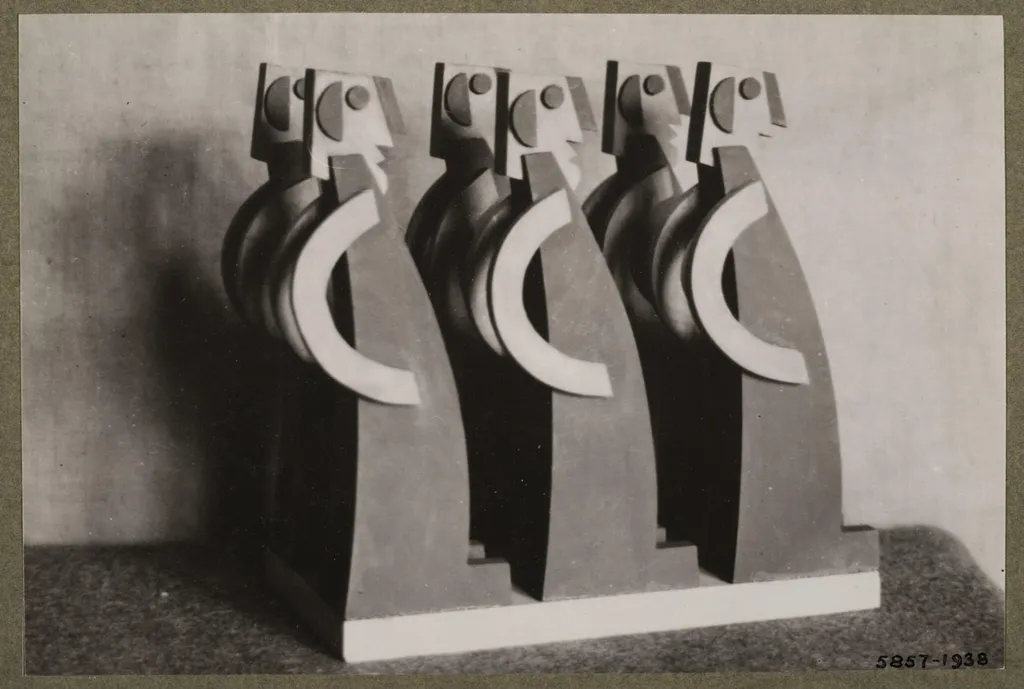
Les Rougebleus is a photographic photography by Fortunato Depero. It dates from 1936 and is held in the collection of the Victoria and Albert Museum.
About this work
Overview
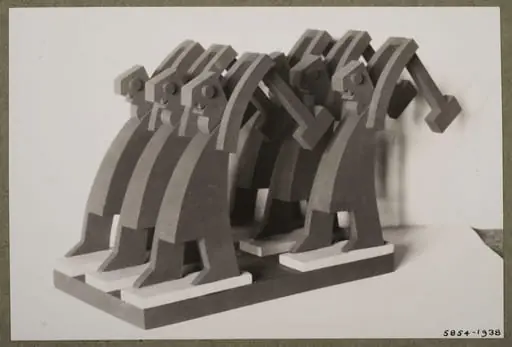
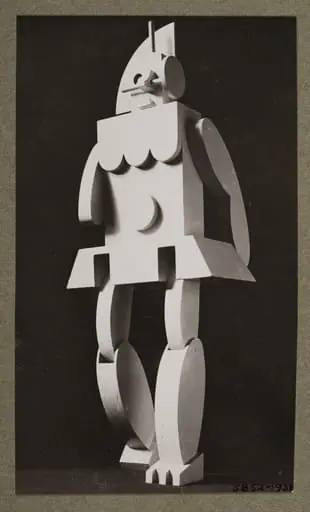
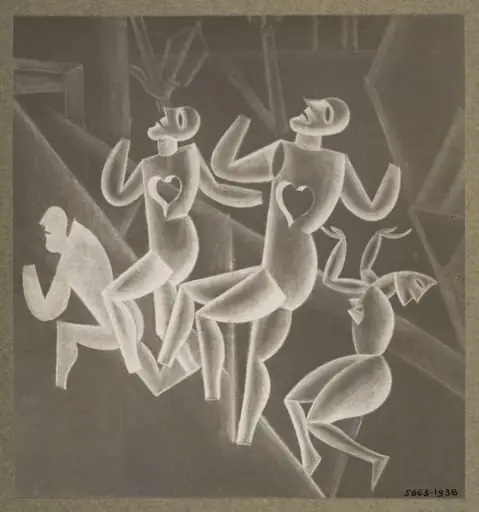
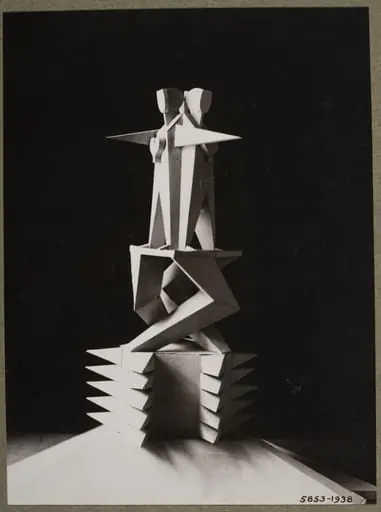
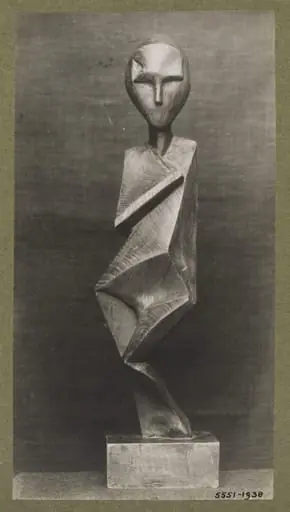
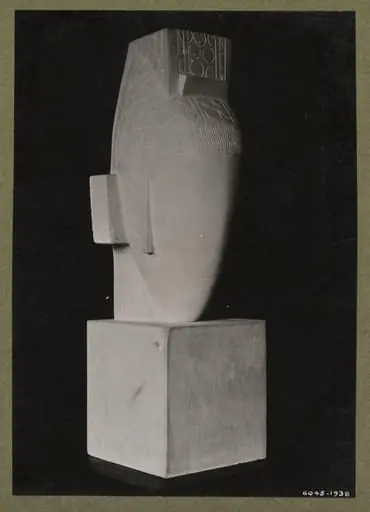
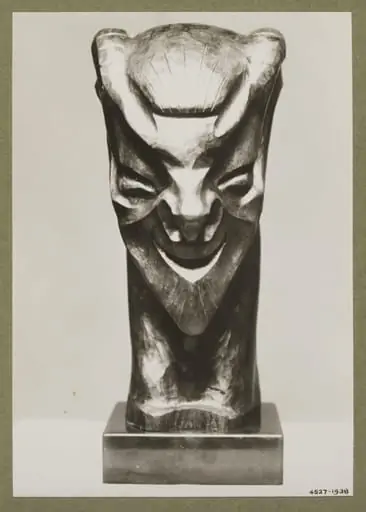
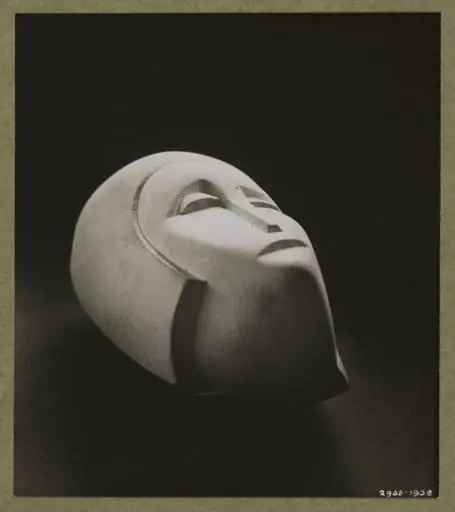
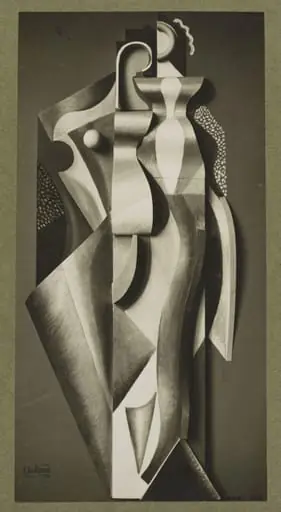
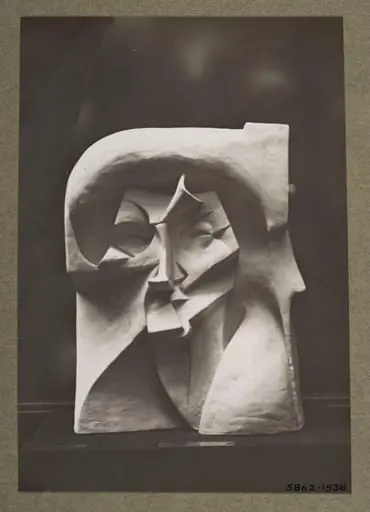
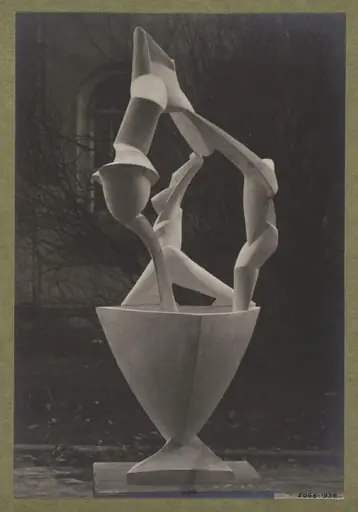
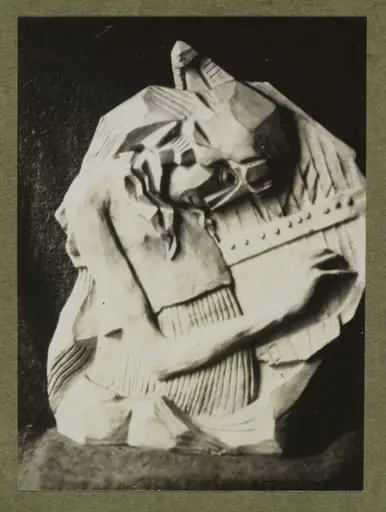
A 1936 black-and-white photograph by Fortunato Depero captures a sculptural composition of three stylized figures.
A 1936 black-and-white photograph by Fortunato Depero captures a sculptural composition of three stylized figures. Mounted on green card, the image was part of a collection donated to the Archive of Art and Design in 1938 by William Kineton Parkes, who collected responses from artists following mailed questionnaires in the 1920s. The photograph serves as documentation rather than a standalone artwork, reflecting Depero’s engagement with modernist form through a medium not typically associated with his primary practice.
Subject & Meaning
The sculpture depicted shows three identical, abstract figures standing in a row. Each has a geometric head with circular eyes and a simplified, angular body, suggesting a mechanized or symbolic human form. Their rigid, outstretched arms imply motion or gesture without clear purpose, evoking themes of repetition and anonymity. The lack of detail and uniformity across the figures may reflect Depero’s interest in mass production and the reduction of the human figure to essential shapes.
Technique & Style
The figures appear constructed from flat, cut-out planes rather than modeled volume, emphasizing line and silhouette over texture or depth. The photograph’s grain enhances the stark, angular qualities of the forms, reinforcing their industrial aesthetic. Sharp shadows cast behind the figures heighten their two-dimensionality, aligning the image with the graphic sensibilities of Depero’s Futurist background. The composition is deliberately flat, prioritizing design over naturalism.
History & Provenance
The photograph was sent to William Kineton Parkes in the 1920s or early 1930s as part of his research into contemporary sculpture. Parkes, an art historian and librarian, solicited visual responses from artists to understand their methods and aesthetics. Depero’s submission, later mounted on green card, became part of Parkes’s personal archive, which he bequeathed to the Archive of Art and Design in 1938, preserving it as a record of artist correspondence rather than a finished work.
Context
Depero’s work in this period intersected with the Italian Futurist movement’s fascination with mechanical forms and dynamic geometry. Though best known for his paintings and stage designs, his engagement with sculpture—especially through photographic documentation—reveals an interest in translating avant-garde principles into three-dimensional objects. The image reflects a broader trend among modernists to use photography as a tool for disseminating experimental art beyond traditional exhibition spaces.
Legacy
The photograph remains a fragment of Depero’s lesser-known sculptural experiments, preserved not as a celebrated object but as archival evidence of artistic exchange. Its inclusion in Parkes’s collection underscores the role of correspondence and documentation in shaping modern art history. Today, it offers insight into how avant-garde ideas were communicated informally among artists and scholars during the interwar period.
Artist & collection
Artist
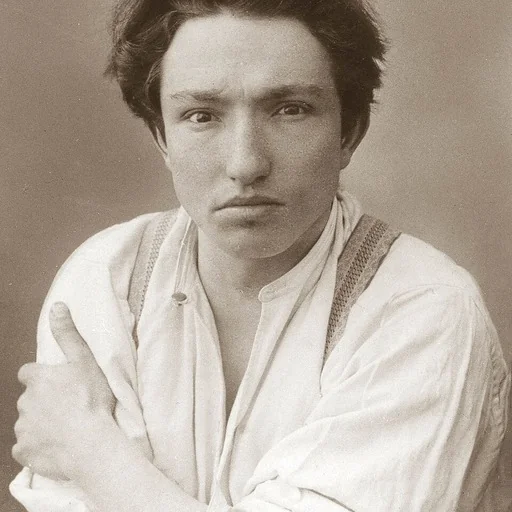
Fortunato Depero (30 March 1892 – 29 November 1960) was an Italian futurist painter, writer, sculptor, and graphic designer.