Artwork
Düblin, Jacques - Malerei, Badende
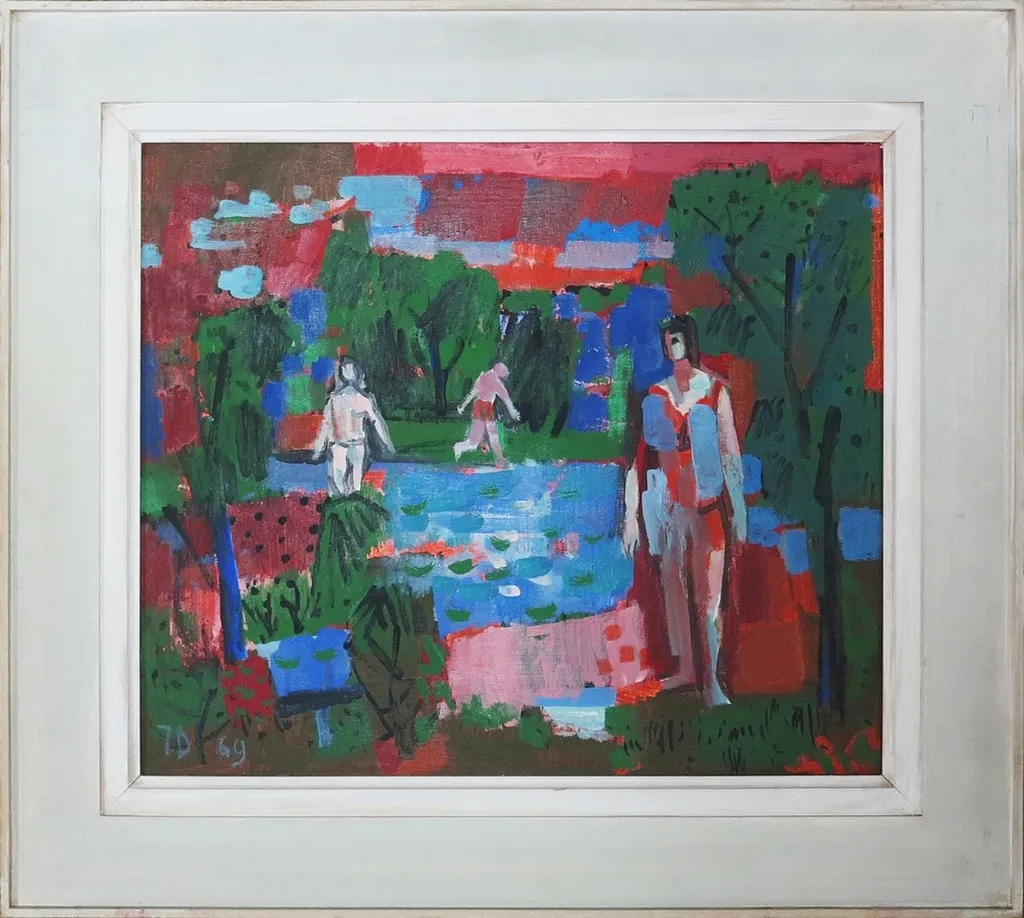
Düblin, Jacques - Malerei, Badende is an unspecified painting by Jacques Düblin. It dates from 1969 and is held in the collection of the Archaeology and Museum Baselland.
About this work
Overview
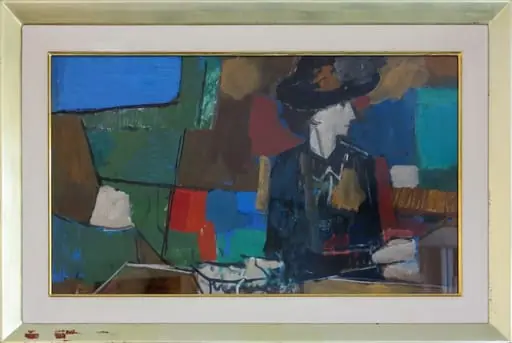
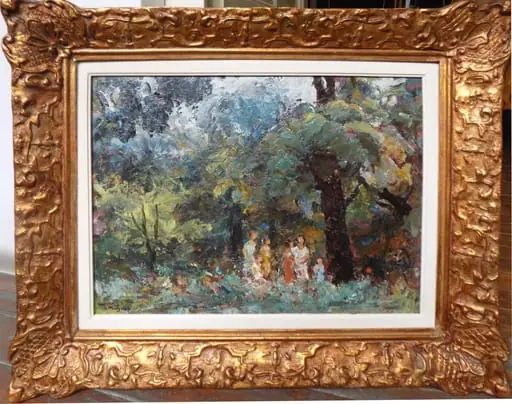
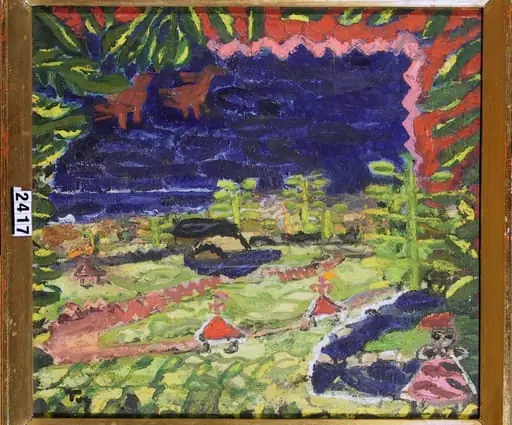
The composition emphasizes flat planes of unblended color, with distinct areas of red, blue, green, and pink arranged in bold, adjacent sections.
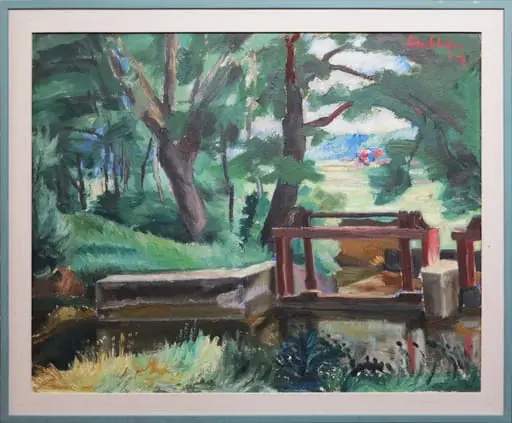
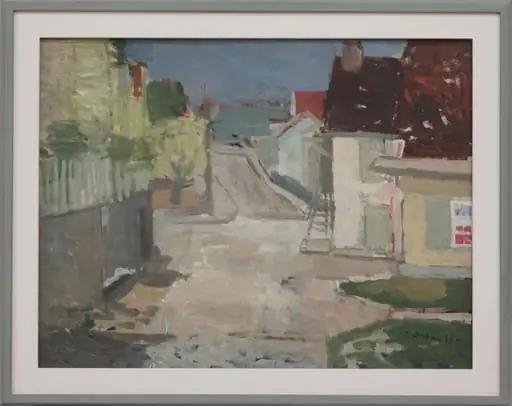
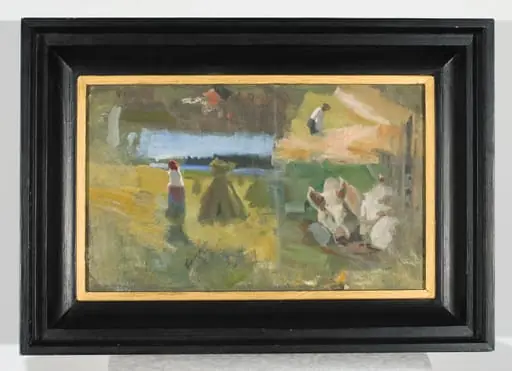
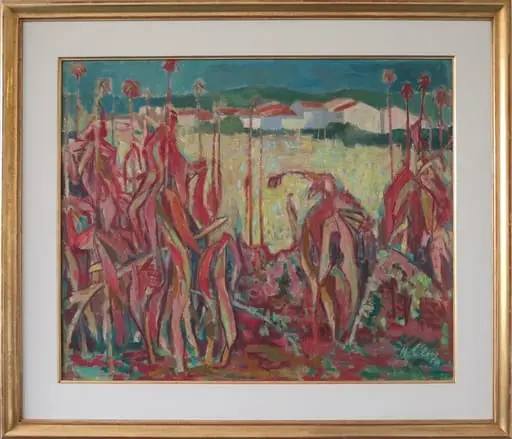
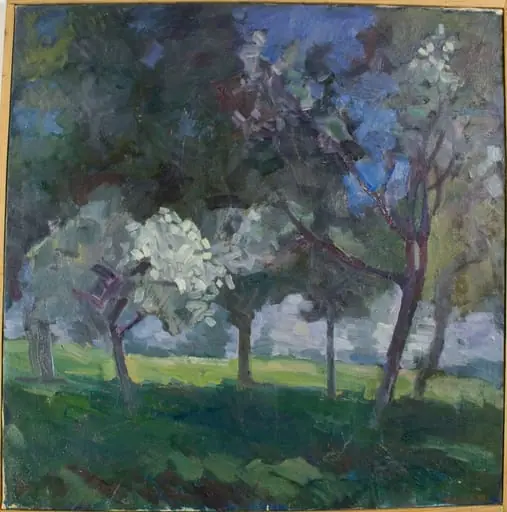
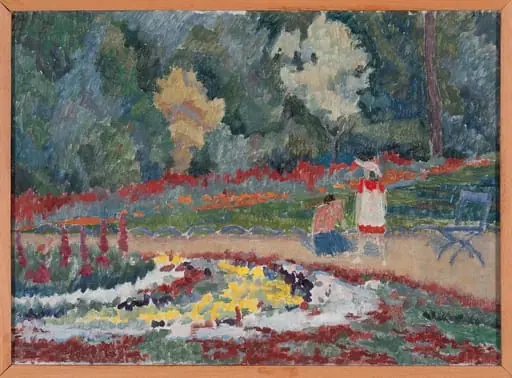
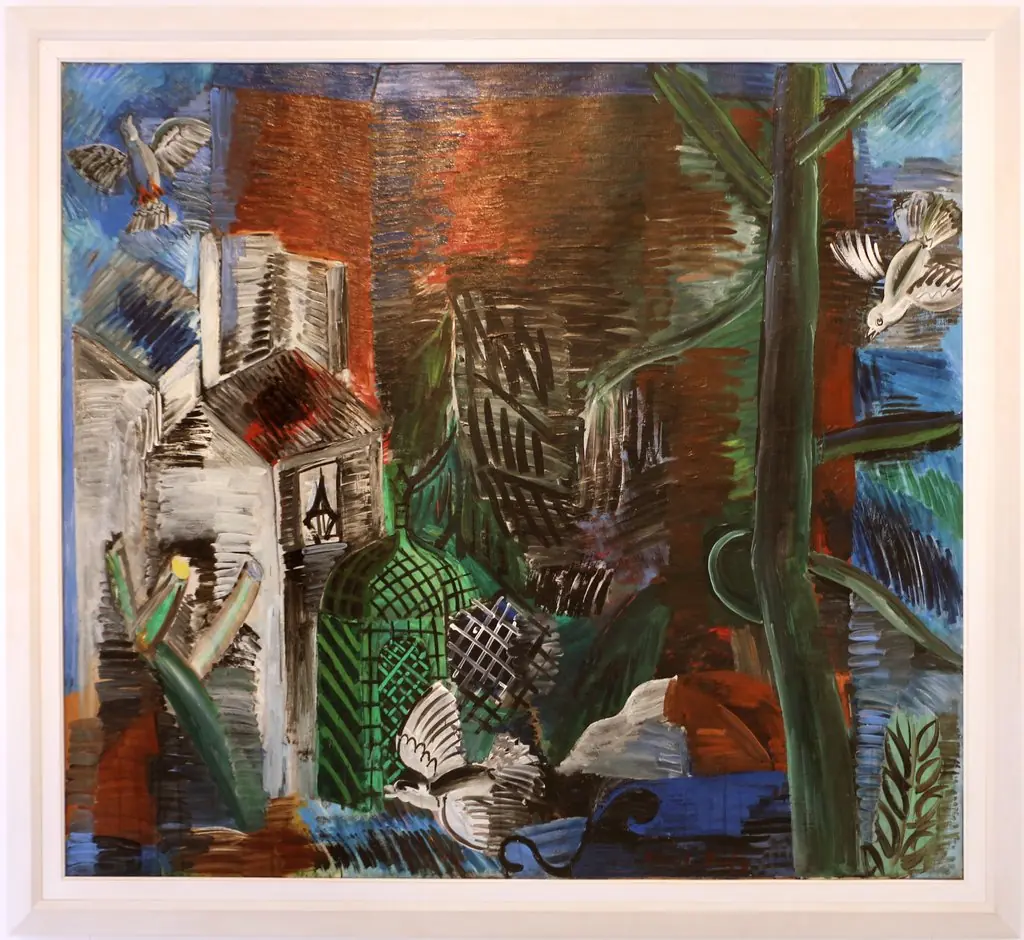
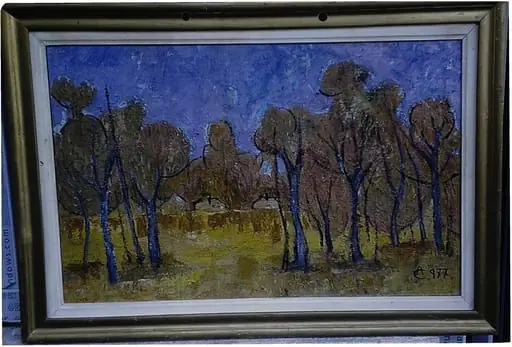
Jacques Düblin's 1969 painting 'Malerei, Badende' depicts a quiet garden scene centered on a pond surrounded by foliage. Three figures are present, positioned near the water’s edge. The composition emphasizes flat planes of unblended color, with distinct areas of red, blue, green, and pink arranged in bold, adjacent sections. The work is held in the collection of the Museum of Ethnography, reflecting its placement within a broader anthropological or cultural context rather than a traditional fine art framework.
Subject & Meaning
The painting portrays three individuals in a natural setting, two nude and one dressed in red, suggesting a contrast between social norms and bodily freedom. Their stillness and the enclosed garden imply a moment of private contemplation or ritual. The absence of narrative detail or interaction between figures invites interpretation as a symbolic representation of human presence in nature, rather than a literal scene. The red garment may signify distinction, identity, or cultural markers within an otherwise unadorned environment.
Technique & Style
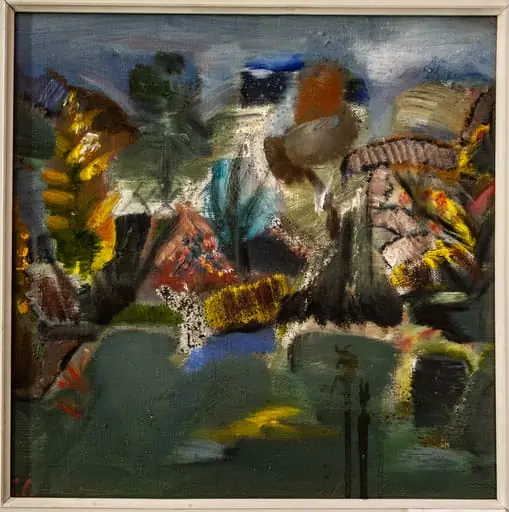
Düblin employs a non-naturalistic approach, using large, unmodulated fields of color separated by sharp edges. Brushwork is deliberate and flat, avoiding gradients or blending. This technique aligns with mid-20th century tendencies toward simplification and formal clarity, reminiscent of certain modernist or primitivist styles. The palette is vivid but restrained, with colors chosen for visual contrast rather than atmospheric realism, reinforcing the painting’s abstracted, symbolic character.
History & Provenance
Created in 1969, the work entered the collection of the Museum of Ethnography shortly after its completion. Its acquisition suggests the institution’s interest in artworks that engage with cultural themes of the body, nature, and social behavior. No public record details its exhibition history prior to museum acquisition, and Düblin’s broader oeuvre remains relatively understudied, contributing to the painting’s enigmatic status within institutional archives.
Context
Emerging during a period of heightened interest in non-Western aesthetics and bodily autonomy, the painting reflects broader cultural dialogues of the late 1960s. Its stylized figures and garden setting echo influences from folk art, ethnographic imagery, and modernist simplification. While not overtly political, the depiction of nudity in a domesticated landscape subtly engages with contemporary debates on freedom, propriety, and the human relationship to nature.
Legacy
Düblin’s 'Malerei, Badende' remains a singular work within his known output and the Museum of Ethnography’s holdings. It has not been widely reproduced or critically analyzed, limiting its influence on broader art historical discourse. Nevertheless, its formal clarity and thematic ambiguity continue to offer a quiet counterpoint to more dominant narratives of 1960s painting, preserving its role as a subtle, understated artifact of its time.
Artist & collection
Artist
Jacques Düblin painted scenes from everyday life in mid-20th-century Europe. His works include garden taverns like *Gartenwirtschaft Neuwil*, quiet riverbanks in *Bach bei Oberwil*, and a self-portrait of the artist at…