Artwork
La Băneasa
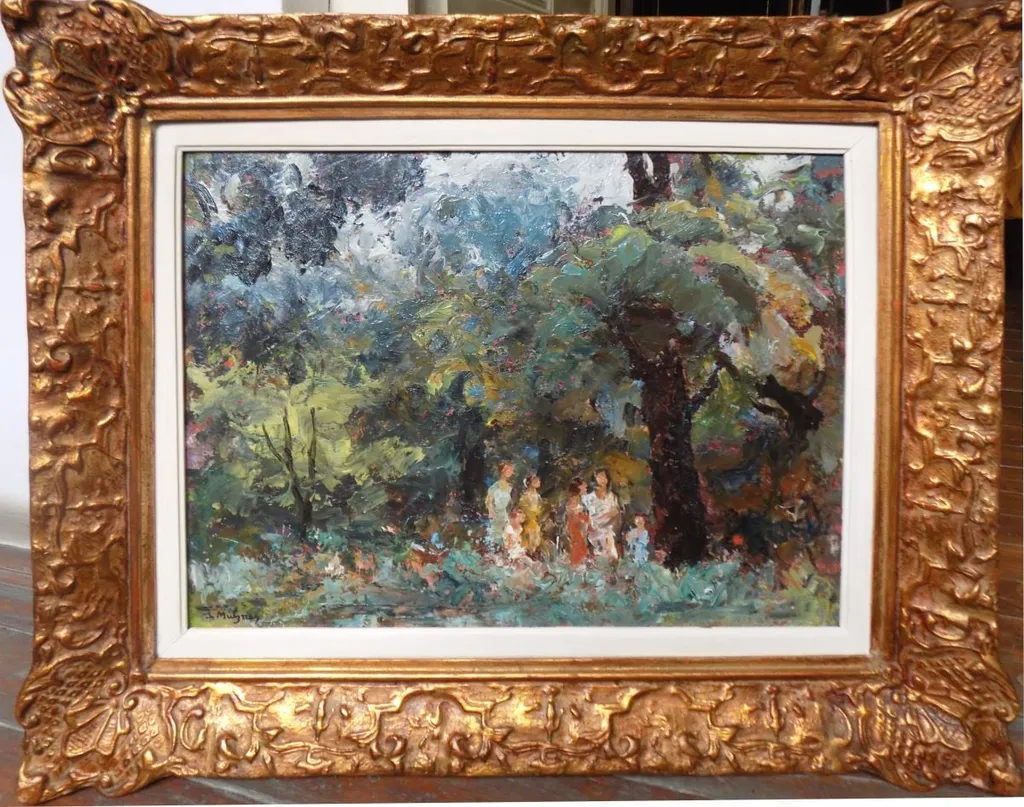
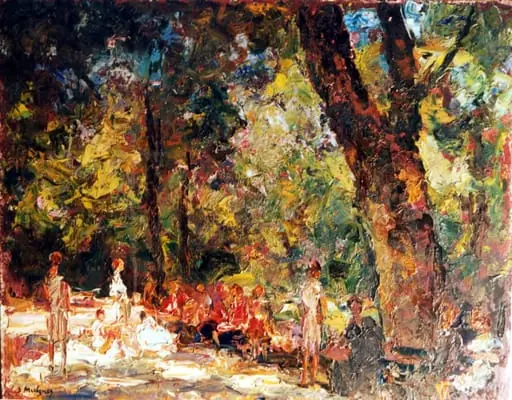
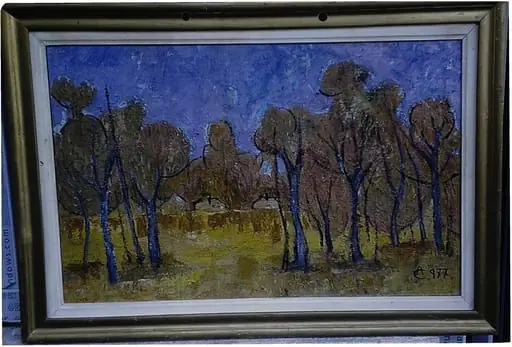
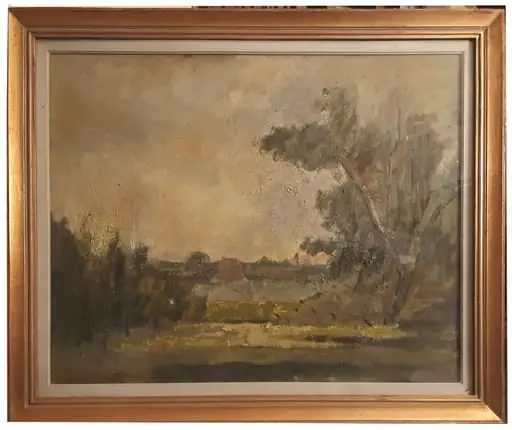
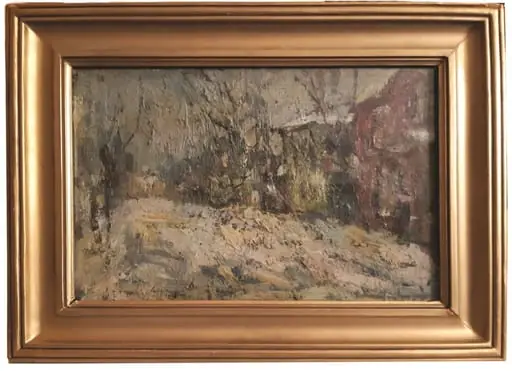
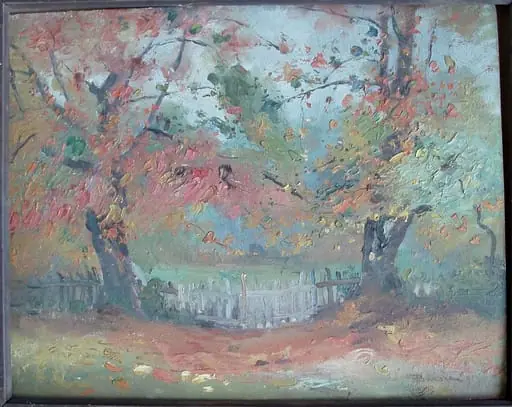
La Băneasa is an unspecified painting by Samuel Mützner. It dates from 1931 and is held in the collection of the Bucharest Municipality Museum.
About this work
Overview
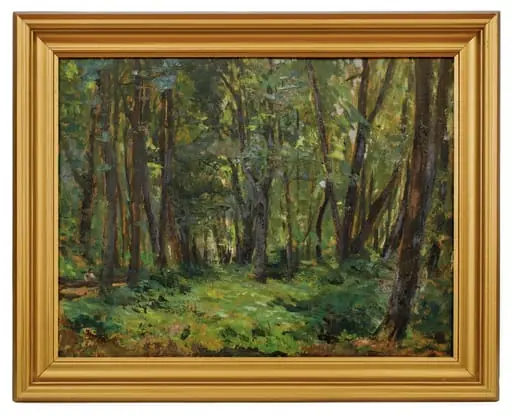
The palette is dominated by muted greens, yellows, browns and the pale tones of the figures’ clothing, creating a balanced yet unsettled atmosphere.
Samuel Mützner’s oil work titled La Băneasa, executed around 1931, is part of the collection of the Museum of Ethnography. The composition depicts a compact group of figures gathered beneath a dense canopy of trees, set against a somber, cloud‑filled sky. The palette is dominated by muted greens, yellows, browns and the pale tones of the figures’ clothing, creating a balanced yet unsettled atmosphere.
Subject & Meaning
The scene presents a small assembly of people standing close together in a forest clearing. Their light‑colored garments contrast with the dark foliage, suggesting a moment of communal pause or ritual within a natural setting. The juxtaposition of human presence against the overwhelming vegetation hints at themes of shelter, gathering, and the relationship between society and the environment.
Technique & Style
Mützner employs a vigorous, impasto application, laying thick layers of paint that remain visibly textured on the canvas. Broad, loose brushstrokes convey movement and immediacy, while the heavy pigment builds a tactile surface. This approach emphasizes the density of the foliage and the atmospheric weight of the sky, lending the work a dynamic, almost tactile quality.
History & Provenance
Created in the early 1930s, La Băneasa entered the Museum of Ethnography’s holdings sometime after its completion, though precise acquisition details remain undocumented. The painting’s presence in an ethnographic institution reflects its relevance to cultural or regional studies, linking the visual record to broader investigations of Romanian rural life during the interwar period.
Context
The early 1930s in Romania were marked by social change and a growing interest in documenting folk traditions. Mützner’s focus on a modest group within a forest aligns with contemporary artistic efforts to capture everyday scenes and the natural landscape, echoing the period’s emphasis on national identity and the preservation of rural customs.
Artist & collection