Artwork
Christ before Annas
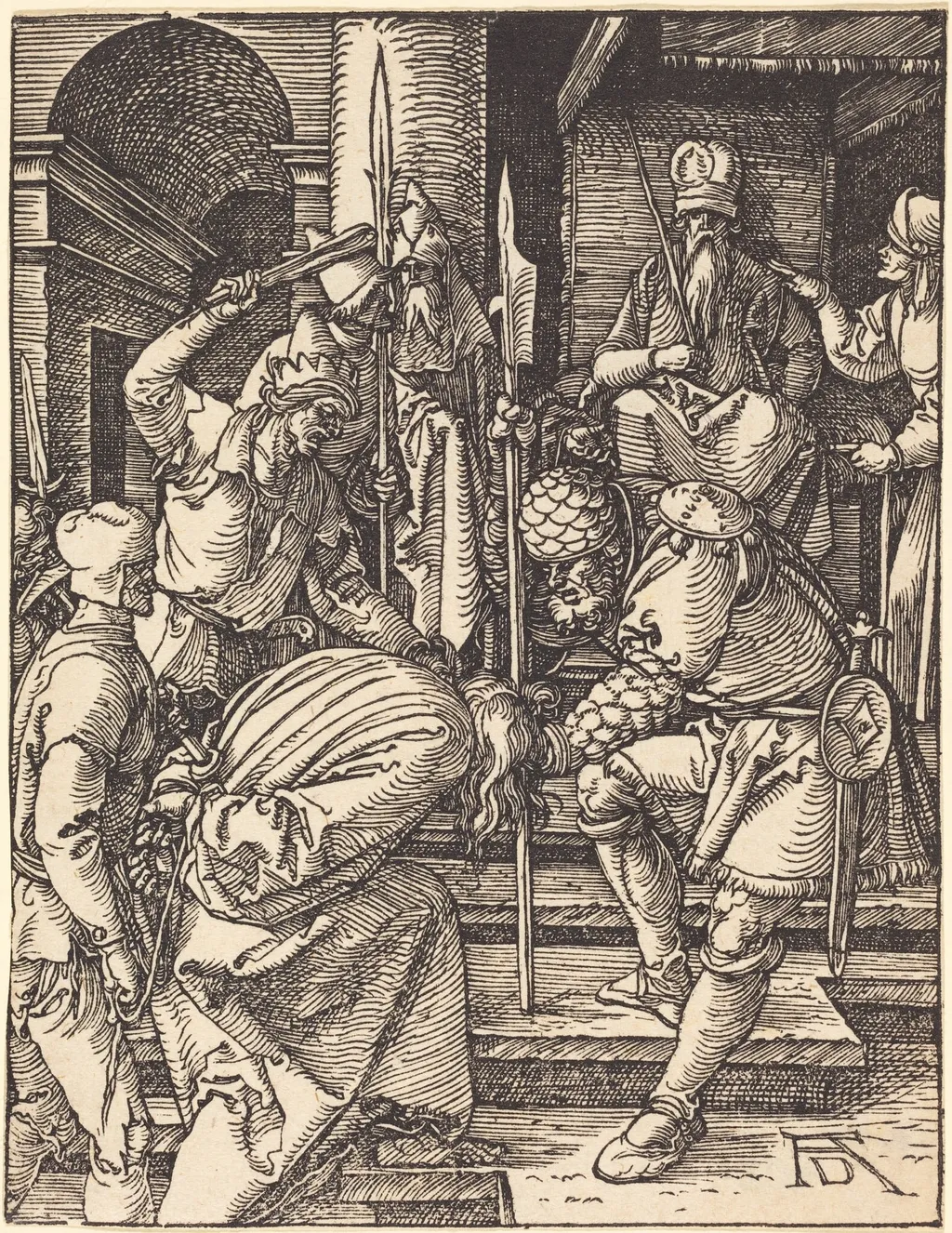
Christ before Annas is an ink print by the Northern Renaissance artist Albrecht Dürer. It dates from 1510 and is held in the collection of the British Museum.
About this work
Overview
Christ before Annas is a 1510 woodcut by the German Renaissance master Albrecht Dürer, depicting the biblical interrogation of Jesus by the high priest Annas.
Christ before Annas is a 1510 woodcut by the German Renaissance master Albrecht Dürer, depicting the biblical interrogation of Jesus by the high priest Annas. The composition captures a moment of intense psychological confrontation, with Christ standing calmly in the center while Annas, seated and gesturing aggressively, embodies the authority of the accusers. Dürer utilizes the woodcut medium to achieve remarkable tonal range and textural detail, employing dense cross-hatching and varied line weights to model the figures' drapery and the architectural setting. This work is part of Dürer's extensive series on the Passion of Christ, created during his mature period when he had fully synthesized Italian Renaissance principles of proportion and perspective with Northern European attention to naturalistic detail. The print serves as a narrative illustration, condensing the dramatic tension of the Gospel account into a single, static image that emphasizes the spiritual gravity of the scene. It exemplifies Dürer's technical mastery in printmaking, where the stark contrast of black and white ink on laid paper directs the viewer's focus to the emotional dynamics between the figures rather than decorative elements.
Subject & Meaning
The scene captures the interrogation of Jesus by Annas, a figure identified in the New Testament as a former high priest. Dürer emphasizes the emotional charge by portraying Annas with an angry, confrontational gaze, while Christ remains composed yet vulnerable. The work reflects the theological focus on Christ’s suffering and the moral authority of the religious leaders of the time.
Technique & Style
Created as a woodcut, the image was carved from a single block of wood, allowing Dürer to manipulate line weight and cross‑hatching to suggest depth and texture. The use of laid paper provides a subtle grain that interacts with the ink, enhancing the contrast between light and shadow. Dürer’s precise incisions demonstrate his mastery of the medium’s capacity for expressive detail.
History & Provenance
The print emerged in the early sixteenth century, a period when Dürer was consolidating his reputation as a leading Northern Renaissance artist. While the original block has not survived, several impressions are held in major European collections, attesting to the work’s circulation among collectors of religious prints during and after Dürer’s lifetime.
Artist & collection
Artist
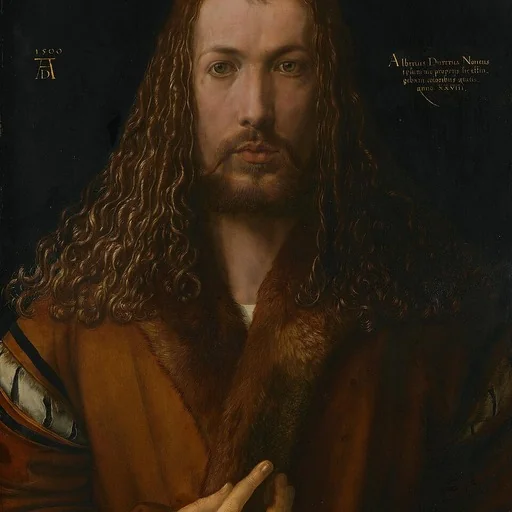
Albrecht Dürer spent his life in Nuremberg, a busy German city where artists traded prints like currency.

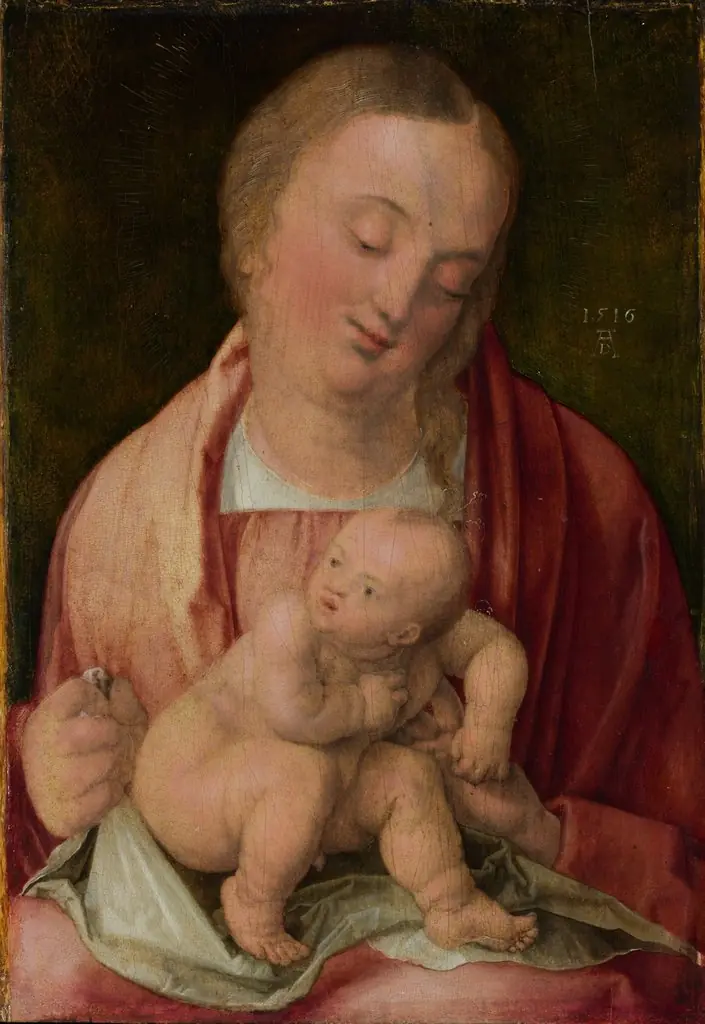
![Madonna and Child [obverse], by Albrecht Dürer](https://artifactworldgallery.com/img/albrecht-durer--madonna-and-child-obverse--d7b8ebf05d22ebe5-w320.webp)
![Lot and His Daughters [reverse], by Albrecht Dürer](https://artifactworldgallery.com/img/albrecht-durer--lot-and-his-daughters-reverse--b4ebf9b282faa17a-w320.webp)