Art Museum
British Museum

Image: Wikimedia Commons.
British Museum is an art museum in London Borough of Camden, United Kingdom. 10 works from its collection are in this catalog, including Joseph Mallord William Turner and Sandro Botticelli.
About British Museum
Overview & Identity
The British Museum, located in the Bloomsbury district of London, is a comprehensive national museum dedicated to human history, art, and culture. Established by an Act of Parliament in 1753, it was the first national public museum in the world, founded on the principle of being open to all 'studious and curious persons' regardless of status. Today, it houses a collection of over eight million objects, spanning two million years of human history from every continent, making it one of the largest and most comprehensive museums globally. Its mission is to hold a collection of world art and artefacts and to interpret it for a global audience.
History & Founding
The museum was established in 1753, largely based on the collections of the Anglo-Irish physician and scientist Sir Hans Sloane, which consisted of around 71,000 objects including books, manuscripts, and natural specimens. It also incorporated the collections of Sir Robert Cotton and Robert Harley, 1st Earl of Oxford. King George II gave royal assent to the British Museum Act on June 7, 1753. The museum opened to the public in 1759 at Montagu House, a 17th-century mansion in Great Russell Street. It was the first of a new kind of museum: national, belonging to neither church nor king, and freely open to the public.
Building & Architecture
The museum's current building was designed in the Greek Revival style by Sir Robert Smirke and constructed on the site of Montagu House between 1823 and 1852. The construction included the East Wing, the King's Library, and the famous Round Reading Room, which was built in the 1850s under a copper dome. In the late 19th century, the museum purchased surrounding houses to expand, leading to the construction of the Northern Wing. A major modern addition is the Great Court, designed by Norman Foster and opened in 2000, which covers the former bookstacks in the central courtyard with a spectacular glass roof, creating the largest covered public square in Europe.
Collection Highlights & Notable Holdings
The museum's collection includes over 100,000 objects on display, with major highlights including the Rosetta Stone, crucial for deciphering Egyptian hieroglyphs, and the Elgin Marbles (Parthenon Sculptures) from ancient Greece. Other significant holdings include the Bayeux Tapestry, the Lewis Chessmen, the Waddesdon Bequest in Room 2a, and the world's largest collection of Egyptian antiquities outside Cairo. The museum also holds extensive collections of Assyrian reliefs, the Sutton Hoo treasures, and the Wendorf Collection of prehistoric tools. The seven permanent Egyptian galleries alone can display only 4% of its Egyptian holdings.
Significance & Evolution
The British Museum is significant as a pioneer of the public museum concept, evolving from a private collection to a national institution. In 1881, its natural history collections were transferred to South Kensington to form the Natural History Museum, and in 1973, its library collections were separated to form the British Library, which moved to St Pancras in 1997. The departure of the library allowed for the redevelopment of the central courtyard. The museum continues to be a leading center for research and public engagement, receiving over 6 million visitors annually, and remains a focal point for debates on cultural heritage and repatriation.
What to see at British Museum
Start with The Nativity by Albrecht Dürer.
Works from British Museum
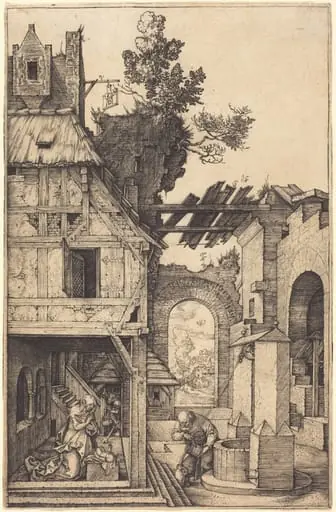 The Nativity
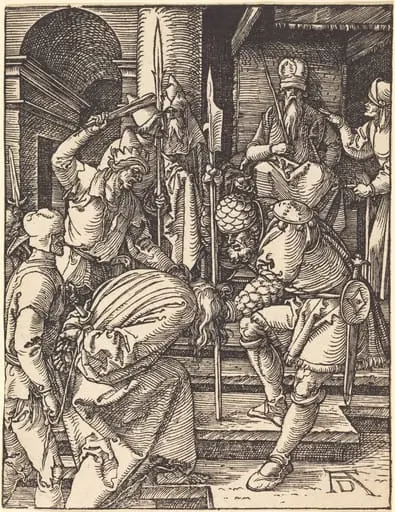 Christ before Annas
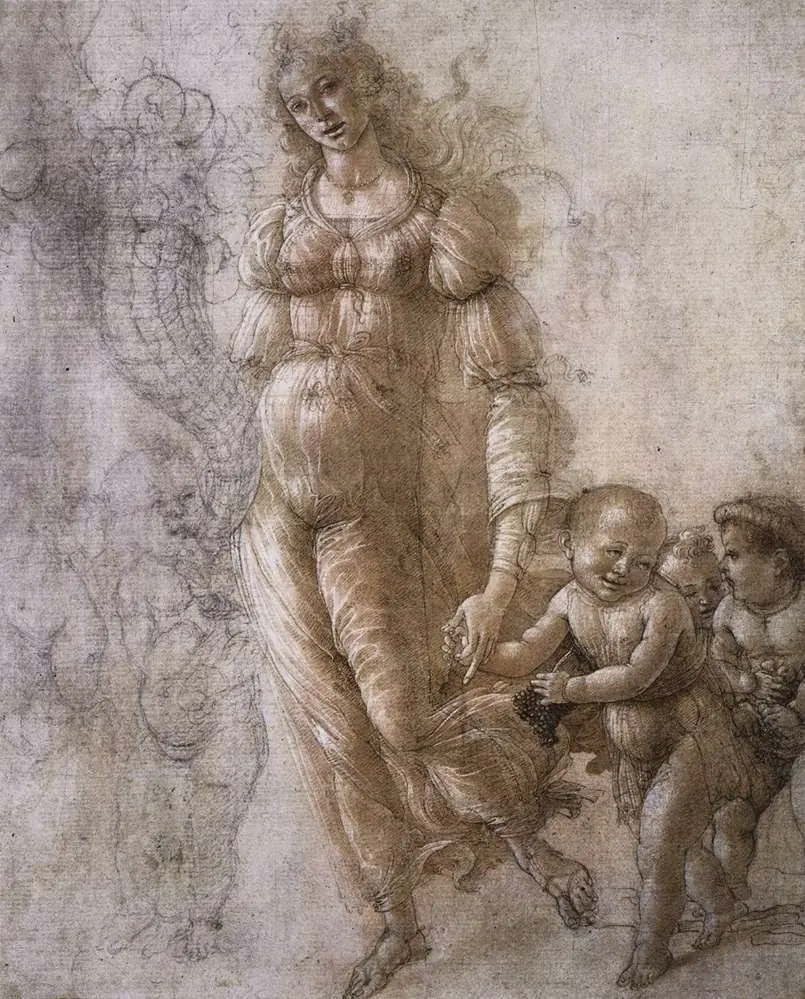 Allegory of Abundance
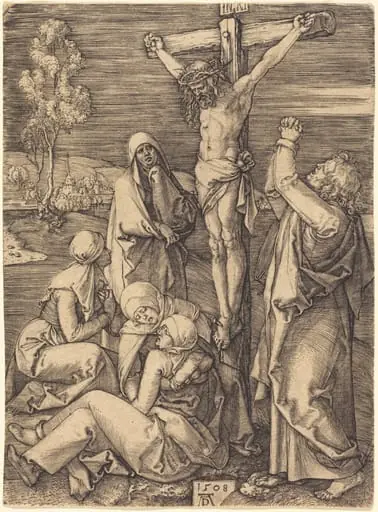 The Crucifixion
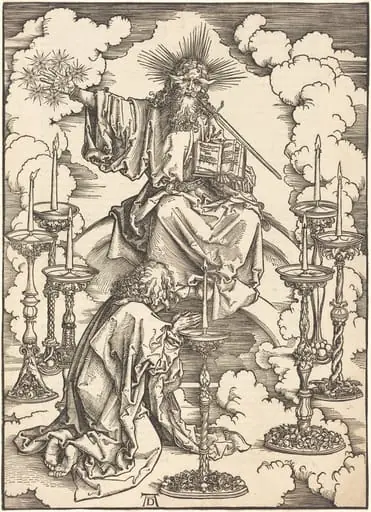 The Vision of the Seven Candlesticks
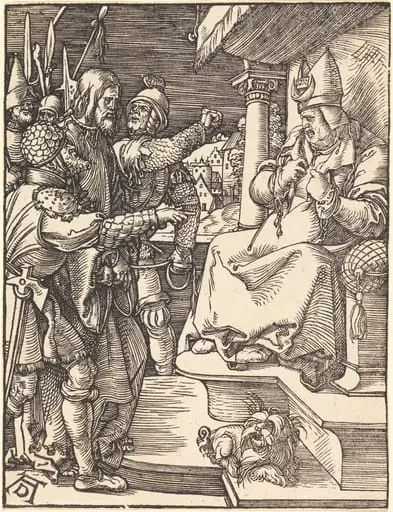 Christ before Caiaphas
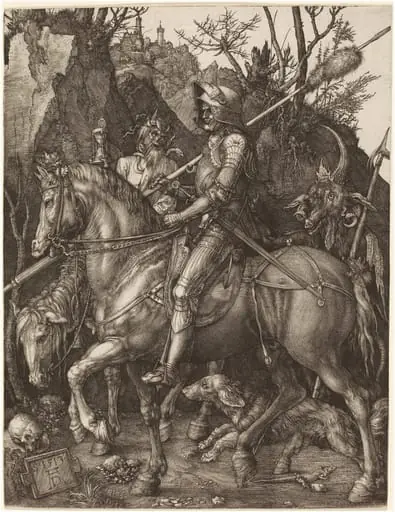 Knight, Death and Devil
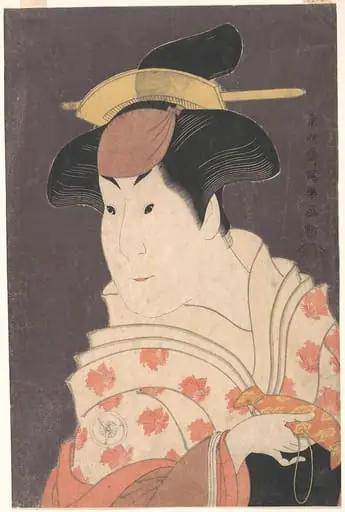 東洲斎写楽画 四代岩井半四郎の重の井 『恋女房染分手綱』|Iwai Hanshirō IV as Shigenoi in the Play "Koinyōbō Somewake Tazuna"
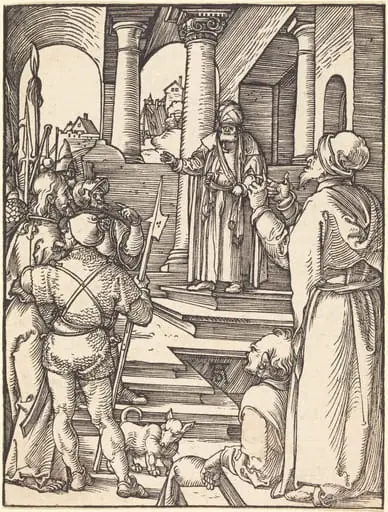 Christ before Pilate
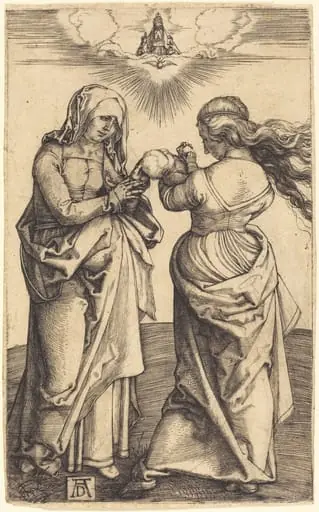 The Virgin and Child with Saint Anne
Plan your visit
British Museum
- Website
- britishmuseum.org