Artwork
Christ before Caiaphas
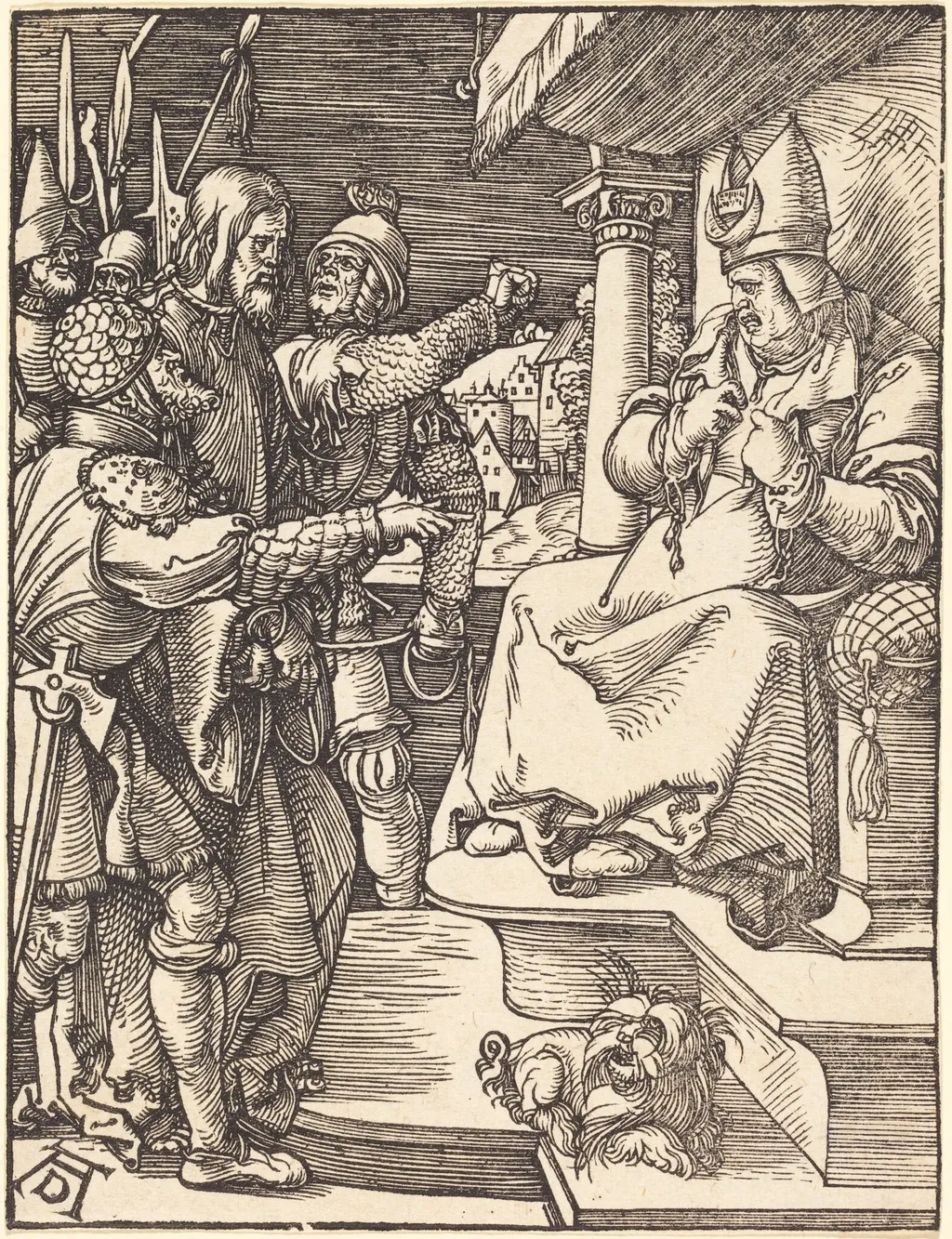
Christ before Caiaphas is an ink print by the Northern Renaissance artist Albrecht Dürer. It dates from 1510 and is held in the collection of the British Museum.
About this work
Overview
To the right, a man in a tall hat gestures accusingly, while others push and crowd the scene, creating a dynamic sense of movement and tension.
Christ before Caiaphas is a 1510 woodcut by the German Renaissance master Albrecht Dürer, depicting the moment Jesus stands trial before the high priest Caiaphas. The composition centers on the calm, white-robed figure of Christ, who contrasts sharply with the agitated, dark-clad figures surrounding him. To the right, a man in a tall hat gestures accusingly, while others push and crowd the scene, creating a dynamic sense of movement and tension. Dürer utilizes the woodcut medium to achieve exceptional linear precision, employing dense cross-hatching to render deep shadows and dramatic chiaroscuro that isolates the protagonist. Created during the height of Dürer's printmaking career, this work exemplifies his ability to infuse religious narrative with psychological depth and anatomical realism. The piece is part of a series of Passion scenes that solidified his reputation across Europe, demonstrating how the reproducibility of woodcuts allowed complex theological themes to reach a broad audience while maintaining the intricate detail characteristic of his graphic style.
Subject & Meaning
The scene portrays the trial of Jesus before the Sanhedrin, with Caiaphas presiding over the accusation. Jesus stands serenely in a white robe, contrasting with the dark, crowded surroundings and the aggressive gestures of the surrounding men, one of whom points a finger while wearing a tall hat. The composition emphasizes the moral calm of the Christ figure amid hostile authority.
Technique & Style
Cut from a single block of wood, the print employs fine, sharply defined lines that convey both texture and emotional intensity. Dürer’s handling of chiaroscuro on laid paper creates a stark contrast between the illuminated figure of Christ and the surrounding gloom. The precision of the incisions allows for repeated impressions while retaining the immediacy of hand‑drawn detail.
History & Provenance
Created during a period of rapid artistic transition in early sixteenth‑century Germany, the woodcut was part of Dürer’s effort to disseminate his designs widely. The reproducibility of the medium enabled the image to circulate among devotional audiences, contributing to the spread of his reputation as a master of both engraving and woodcut.
Context
The work aligns with the broader Reformation‑era interest in accessible religious imagery. By rendering a biblical episode in a format suitable for multiple copies, Dürer addressed the growing demand for visual aids to personal piety, situating the piece within the shift from exclusive manuscript illumination to mass‑produced prints.
Artist & collection
Artist
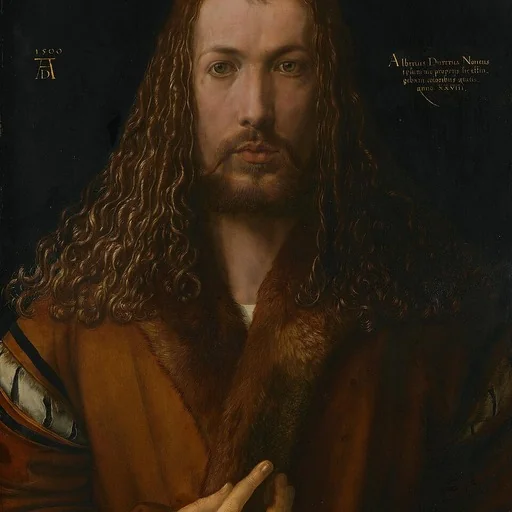
Albrecht Dürer spent his life in Nuremberg, a busy German city where artists traded prints like currency.

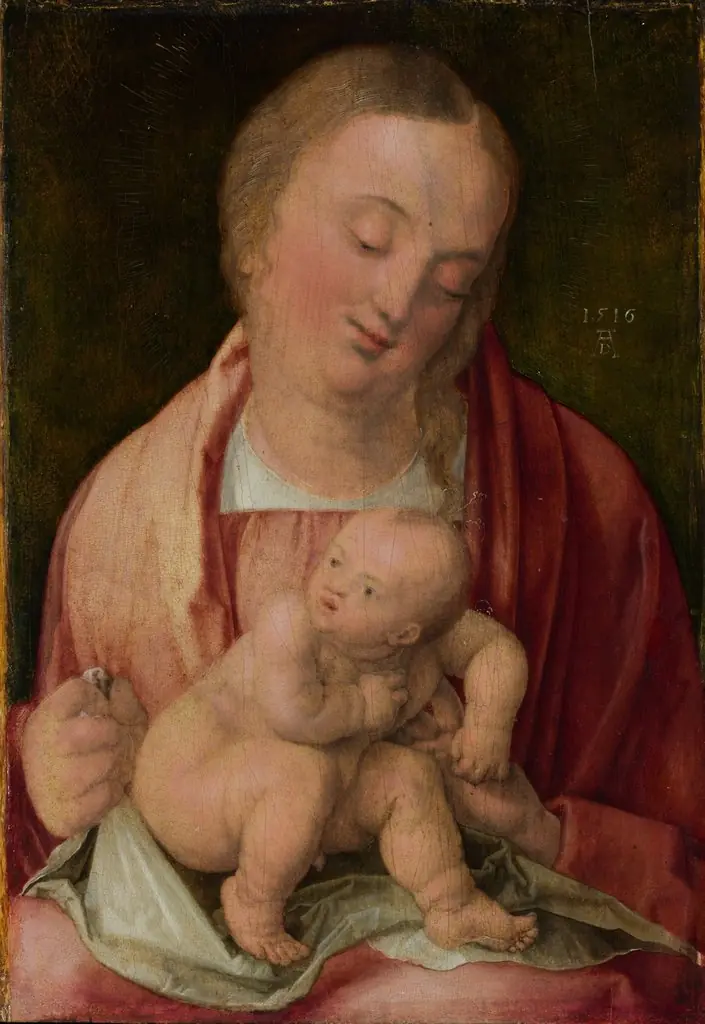
![Madonna and Child [obverse], by Albrecht Dürer](https://artifactworldgallery.com/img/albrecht-durer--madonna-and-child-obverse--d7b8ebf05d22ebe5-w320.webp)
![Lot and His Daughters [reverse], by Albrecht Dürer](https://artifactworldgallery.com/img/albrecht-durer--lot-and-his-daughters-reverse--b4ebf9b282faa17a-w320.webp)