Artwork
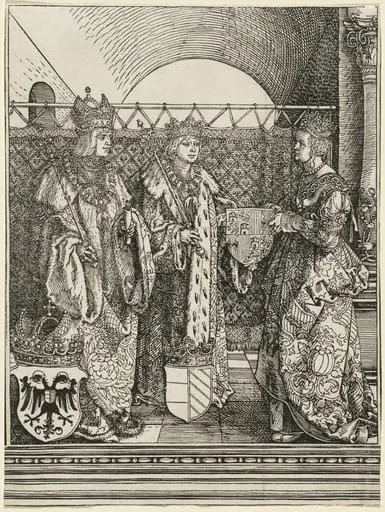
The Betrothal of Maximilian with Mary of Burgundy
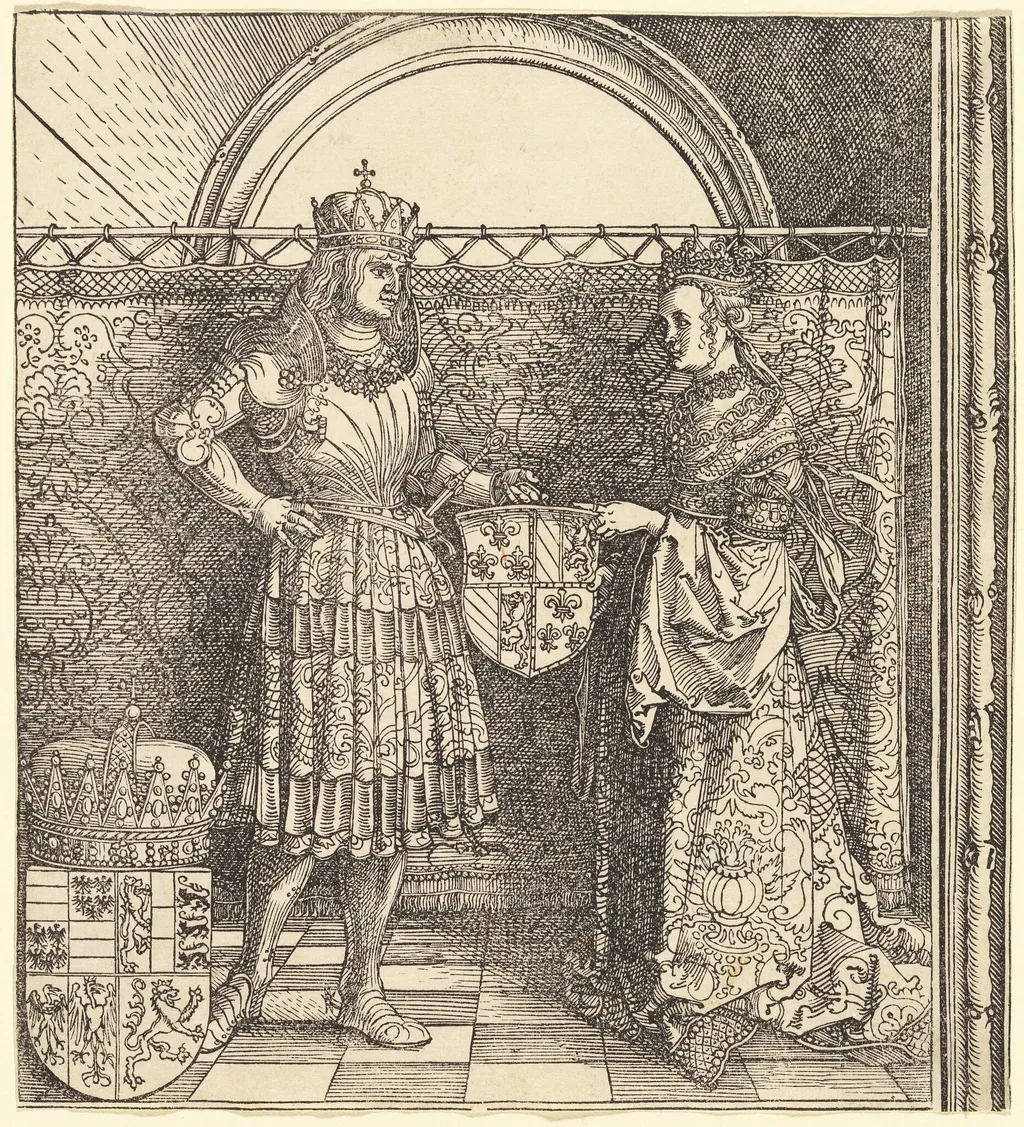
The Betrothal of Maximilian with Mary of Burgundy is an ink print by the Northern Renaissance artist Albrecht Dürer. It dates from 1511 and is held in the collection of the National Gallery of Art.
About this work
Overview
This 1511 woodcut by Albrecht Dürer records the ceremonial betrothal of Holy Roman Emperor Maximilian I to Mary of Burgundy. Executed on laid paper, the print condenses a pivotal dynastic alliance into a single, meticulously structured scene. Its linear precision and hierarchical composition reflect the conventions of early sixteenth-century Northern European printmaking.
Subject & Meaning
The image captures the formal exchange of vows between Maximilian I and Mary of Burgundy, sealing the union of Habsburg and Burgundian territories. Their rigid postures and sumptuous attire underscore the political gravity of the occasion. Every element—from the embroidered garments to the architectural backdrop—serves to legitimize the match as a cornerstone of imperial strategy.
Technique & Style
Dürer’s woodcut relies on crisp, controlled lines to define figures, textiles, and architectural details. The medium’s inherent contrast between inked ridges and unprinted paper heightens the scene’s clarity and monumentality. Balanced symmetry and meticulous cross-hatching create a restrained yet opulent visual order characteristic of the artist’s mature printmaking.
History & Provenance
Produced in 1511, the print commemorates an event that occurred decades earlier, in 1477. It circulated within networks of humanist patrons and collectors, reinforcing Maximilian’s cultivated image as a unifier of European courts. Surviving impressions reside in major print rooms, including the Albertina in Vienna and the British Museum.
Context
The betrothal symbolized the consolidation of Burgundian inheritance under Habsburg rule, a maneuver critical to Maximilian’s ambitions. By revisiting the moment in print, Dürer aligned his craft with the propagandistic needs of the imperial court, transforming a private ceremony into a public emblem of dynastic continuity and power.
Legacy
The woodcut exemplifies Dürer’s ability to distill complex historical narratives into compelling visual form. Its influence extended across subsequent generations of printmakers, who adopted its disciplined linearity and symbolic density. Today, it remains a key document in the study of Renaissance political imagery and print culture.
Artist & collection
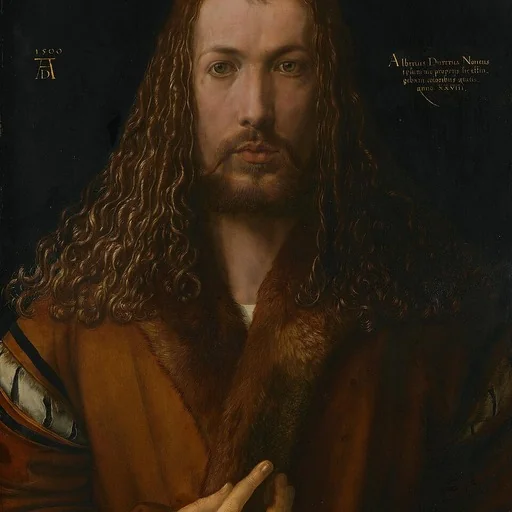
Artist
Albrecht Dürer spent his life in Nuremberg, a busy German city where artists traded prints like currency.

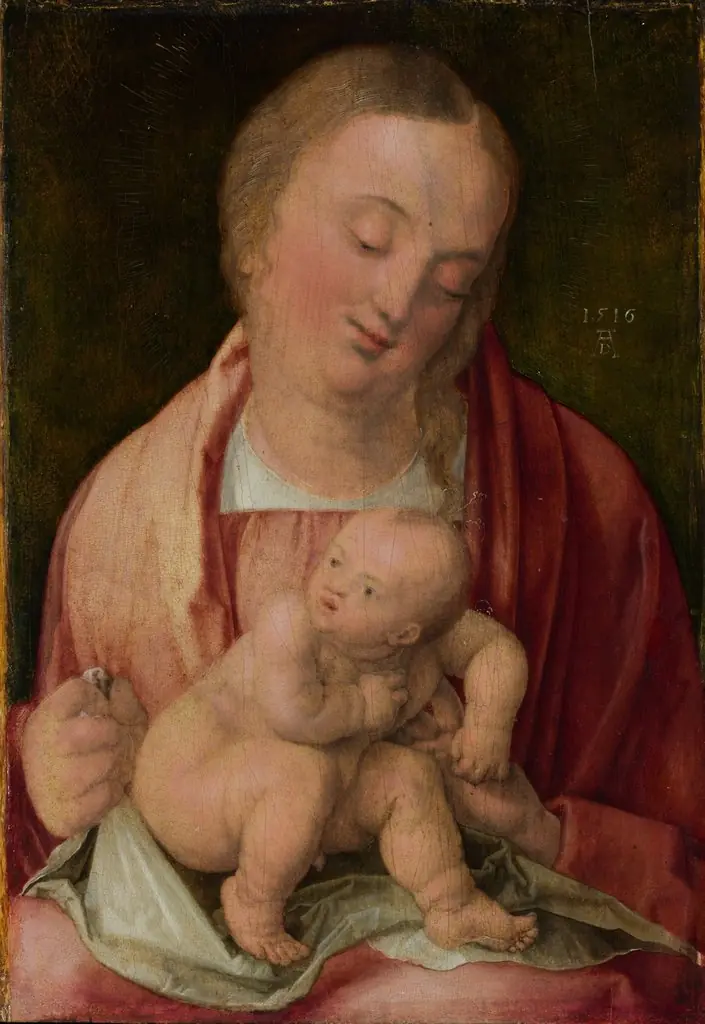
![Madonna and Child [obverse], by Albrecht Dürer](https://artifactworldgallery.com/img/albrecht-durer--madonna-and-child-obverse--d7b8ebf05d22ebe5-w320.webp)
![Lot and His Daughters [reverse], by Albrecht Dürer](https://artifactworldgallery.com/img/albrecht-durer--lot-and-his-daughters-reverse--b4ebf9b282faa17a-w320.webp)