Artwork
Assembly of Four Kings, in the foreground Four Men
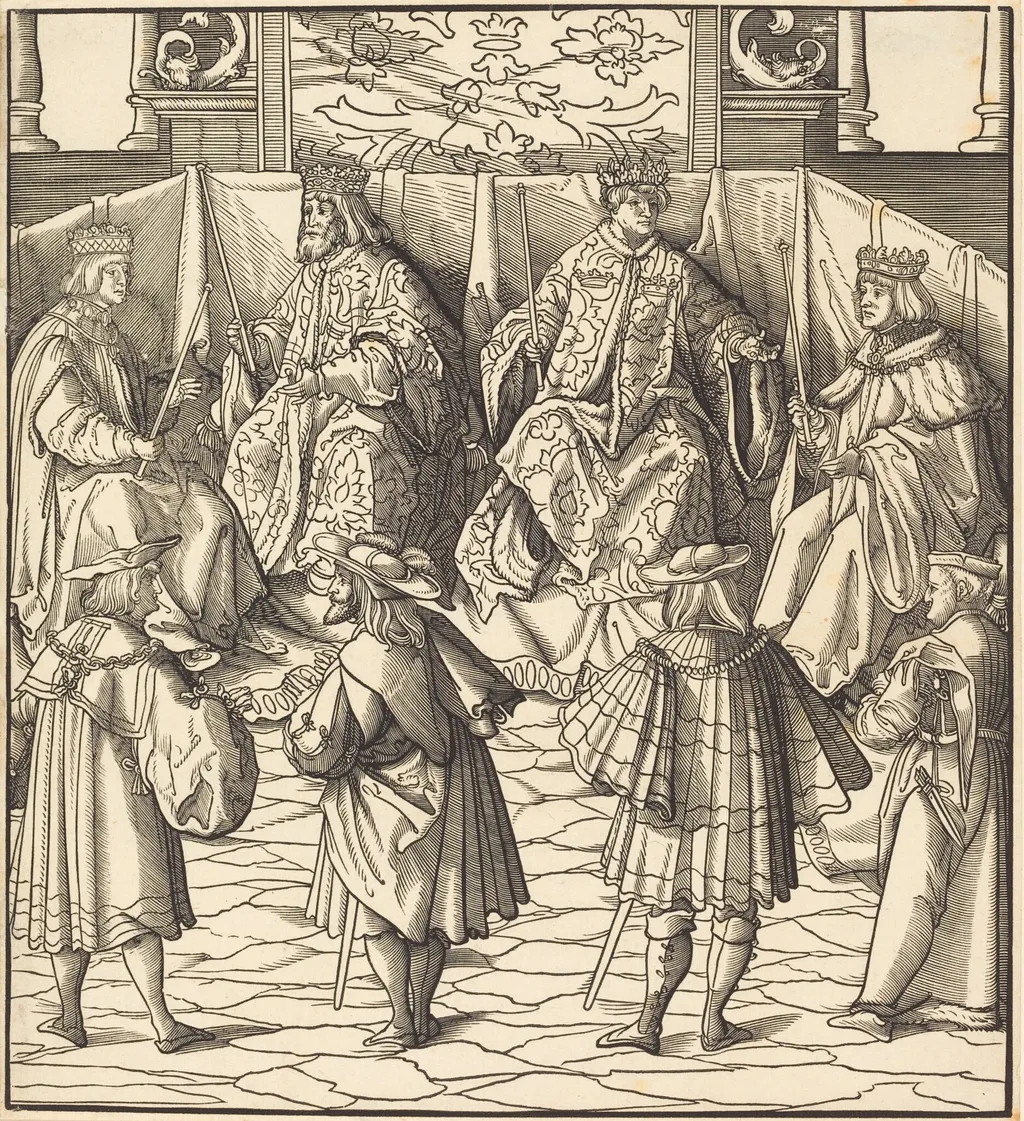
Assembly of Four Kings, in the foreground Four Men is an ink print by the Renaissance artist Leonhard Beck. It dates from 1515 and is held in the collection of the National Gallery of Art.
About this work
Overview
The composition is densely packed, with sharply incised lines that emphasize the elaborate costumes and the architectural setting of tall windows.
Leonhard Beck’s woodcut, dated 1515, presents a compact interior scene in which four crowned figures dominate the background while four robed men support their heavy regalia in the foreground. The composition is densely packed, with sharply incised lines that emphasize the elaborate costumes and the architectural setting of tall windows. The print exemplifies early sixteenth‑century German graphic art, balancing narrative clarity with ornamental complexity.
Subject & Meaning
The image portrays a ceremonial gathering of four monarchs, each seated beneath a lofty crown that is being lifted by four attendants. The juxtaposition of the regal figures and their servants may allude to themes of authority, the burdens of rulership, or the collaborative nature of imperial pageantry. The men’s humble postures contrast with the kings’ elevated status, inviting reflection on the relationship between power and service.
Technique & Style
Executed as a woodcut, the design was incised into a block of wood, inked, and pressed onto paper, a process that yields crisp, high‑contrast lines and a slightly uneven texture. Beck’s handling of the medium showcases fine detailing in the swirling fabrics and architectural elements, while the overall effect retains the characteristic roughness of the technique, reinforcing the work’s tactile immediacy.
History & Provenance
Leonhard Beck, the son of miniaturist Georg Beck, trained with Hans Holbein the Elder before joining the workshop of Emperor Maximilian I. His involvement in the emperor’s visual propaganda program situates the woodcut within a broader program of self‑representation. The print likely originated as part of a series intended to celebrate Maximilian’s lineage and political ambitions, though its exact original distribution remains undocumented.
Context
Produced in Augsburg, a major center for printmaking in the early 1500s, the work reflects the city’s thriving workshop culture and the demand for portable, reproducible images. Within Maximilian’s court, woodcuts served as a means to disseminate imperial imagery across the Holy Roman Empire, reinforcing dynastic legitimacy through visual narratives that could reach a wide audience.
Artist & collection
Artist
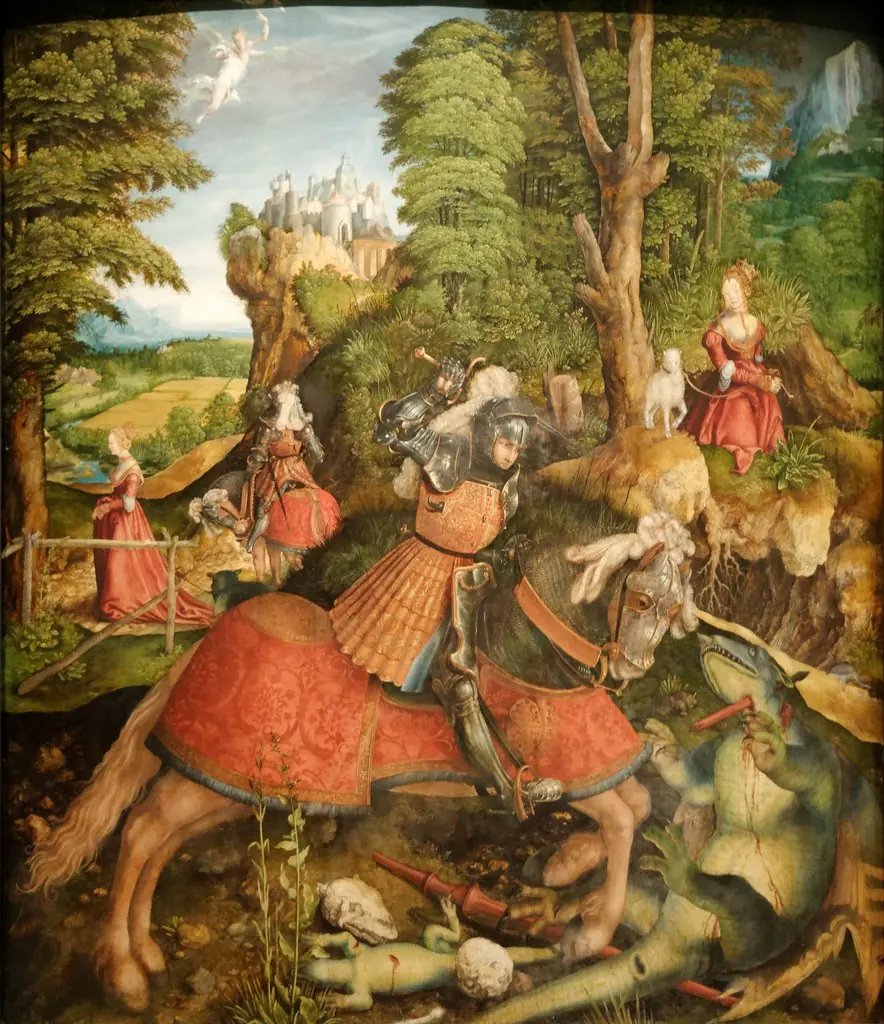
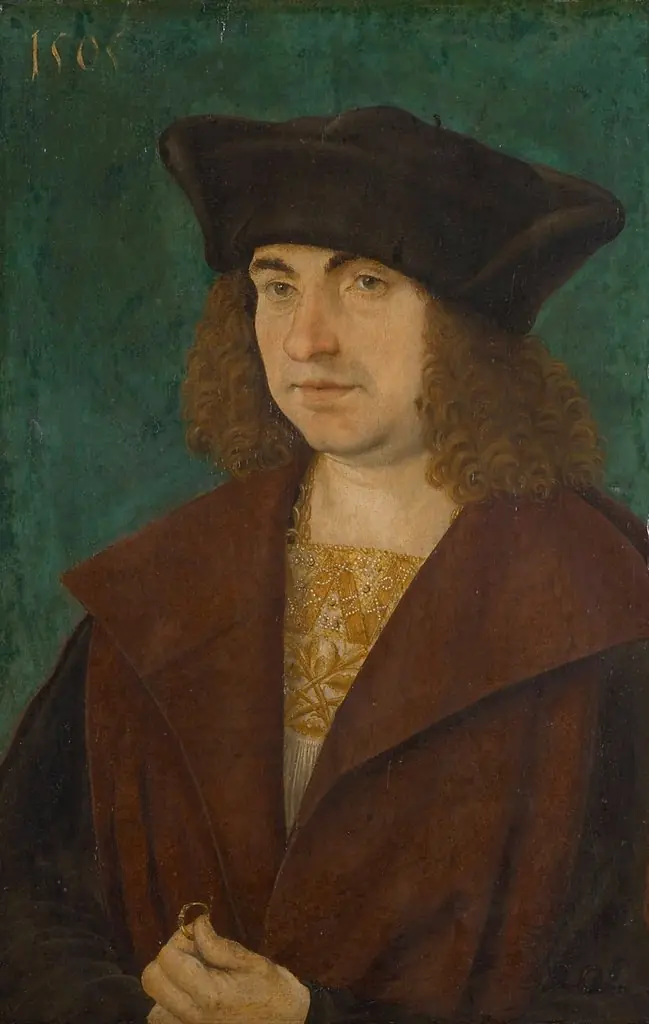
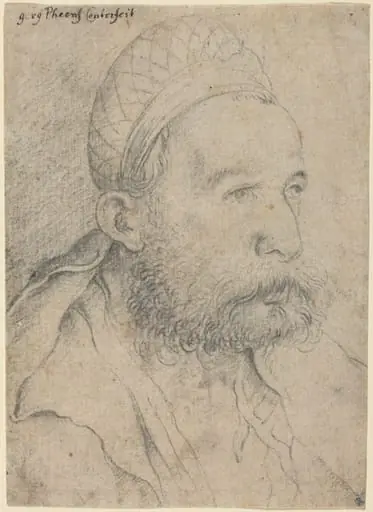
Leonhard Beck (c. 1480 – 1542) was a painter and woodcuts designer in Augsburg, Germany. He was the son of Georg Beck, a miniaturist who was active in Augsburg c. 1490–1512/15. Leonhard collaborated with his father on…

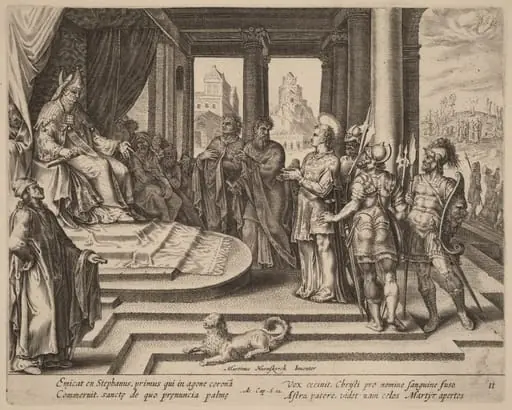 Saint Stephen before the Council
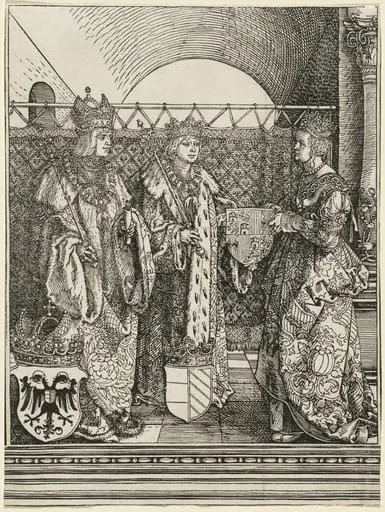 The Betrothal of Philip the Fair with Joan of Castile
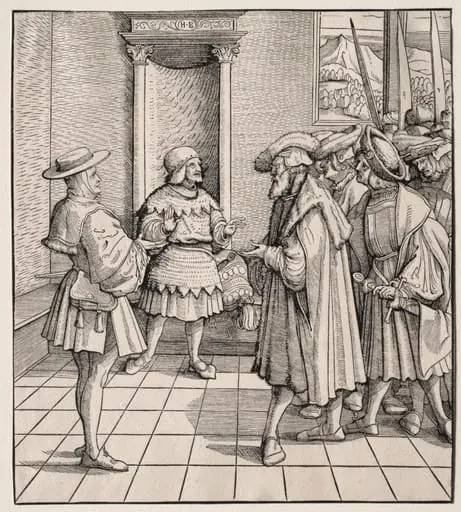 The Bad Advice of One Little Man to Another
 A Message Concerning the White King's Marriage
 The Archbishop Blessing the Child after the Baptism
 The Congress of Princes at Vienna
 Meeting of Margaret of Austria and Philip III
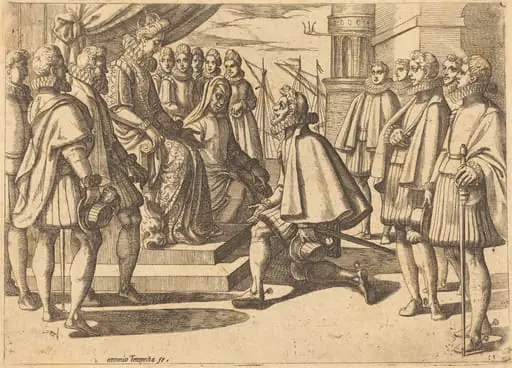 Spanish Duke before Margaret of Austria
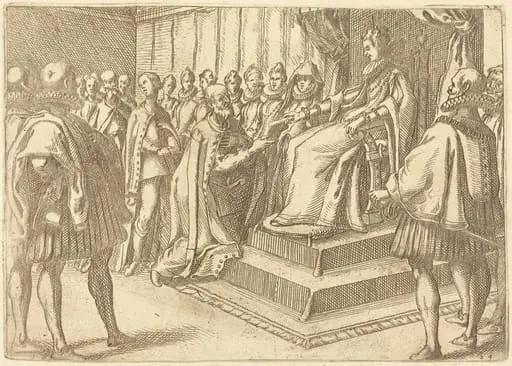 Reception of the Envoy of Poland