Artwork
The Crucifixion called the Sword Pommel of Maximilian
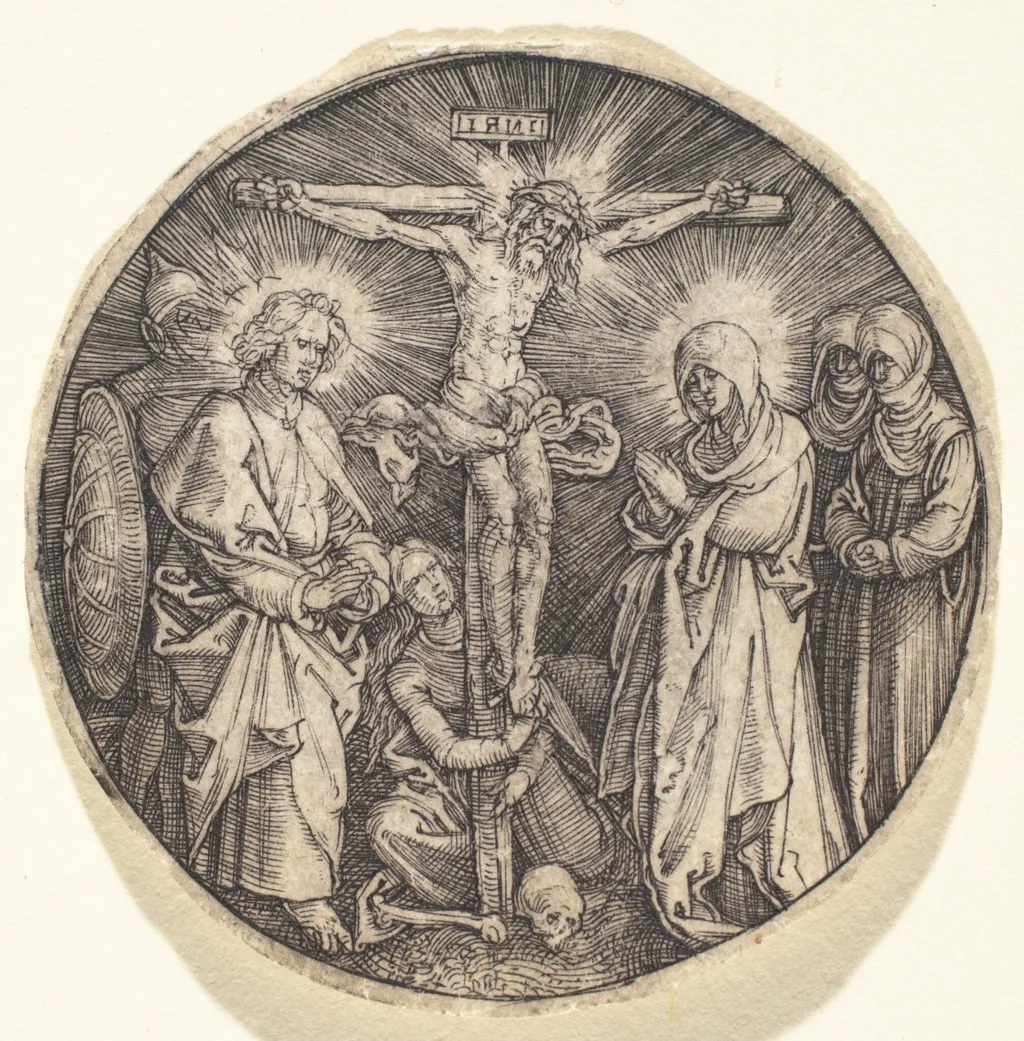
The Crucifixion called the Sword Pommel of Maximilian is an ink print by the Northern Renaissance artist Albrecht Dürer. It dates from 1518 and is held in the collection of the Metropolitan Museum of Art.
About this work
Overview
Albrecht Dürer’s small religious print, dated around 1518, portrays the Crucifixion scene on laid paper. The work, known as the Sword Pommel of Maximilian, presents the central figure of Christ on the cross surrounded by three mourners: the Apostle John, the Virgin Mary, and Mary Magdalene. Its compact size and fine detail reflect Dürer’s mature printmaking practice.
Subject & Meaning
The composition focuses on the emotional response to the crucifixion, emphasizing the sorrow of the three figures at the foot of the cross. John the Apostle is shown supporting Mary, while the Virgin Mary leans forward in grief, and Mary Magdalene is depicted in a posture of lament. The grouping underscores themes of devotion, loss, and the human connection to the divine sacrifice.
Technique & Style
Executed as an engraving, the image was incised into a copper plate, allowing Dürer to achieve precise lines and subtle tonal variations on the laid paper.
Executed as an engraving, the image was incised into a copper plate, allowing Dürer to achieve precise lines and subtle tonal variations on the laid paper. The technique demands meticulous control, evident in the delicate rendering of drapery, facial expressions, and the intricate background. Dürer’s handling of line and cross‑hatching demonstrates his command of the medium during his later period.
History & Provenance
The print acquired the nickname Sword Pommel of Maximilian because a surviving example was once mounted on the pommel of a sword belonging to the Habsburg emperor Maximilian I. This association links the work to a specific historical object, indicating its circulation among elite collections in the early sixteenth century.
Context
Created in the final decade of Dürer’s career, the engraving reflects the artist’s continued interest in religious subjects and his mastery of print media as a means of disseminating devotional images. The work aligns with contemporary Northern Renaissance trends that combined detailed naturalism with expressive religious narrative.
Artist & collection
Artist
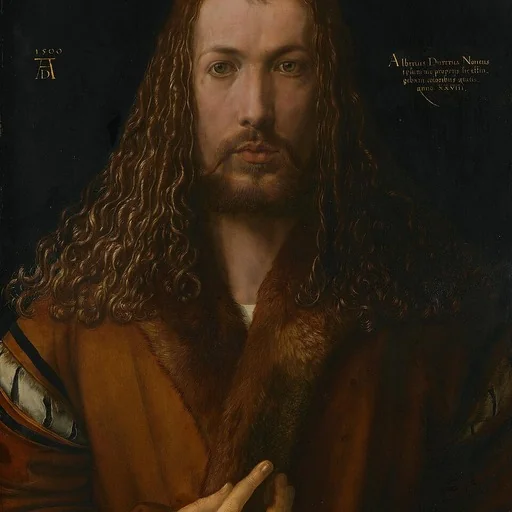
Albrecht Dürer spent his life in Nuremberg, a busy German city where artists traded prints like currency.

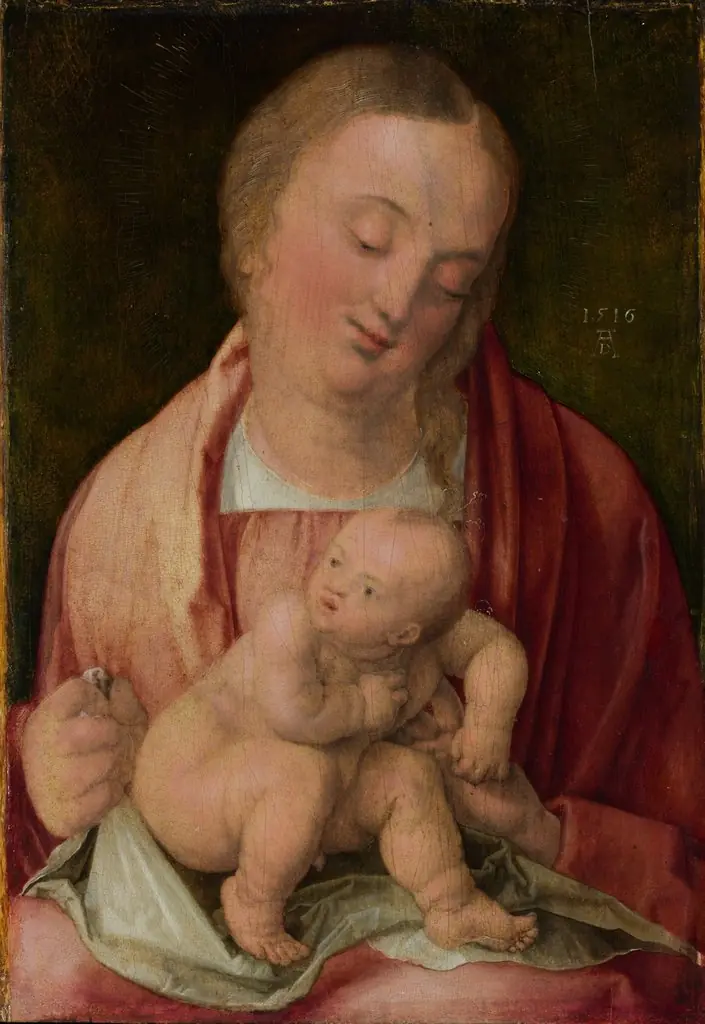
![Madonna and Child [obverse], by Albrecht Dürer](https://artifactworldgallery.com/img/albrecht-durer--madonna-and-child-obverse--d7b8ebf05d22ebe5-w320.webp)
![Lot and His Daughters [reverse], by Albrecht Dürer](https://artifactworldgallery.com/img/albrecht-durer--lot-and-his-daughters-reverse--b4ebf9b282faa17a-w320.webp)