Artwork
The Vision of the Seven Candlesticks
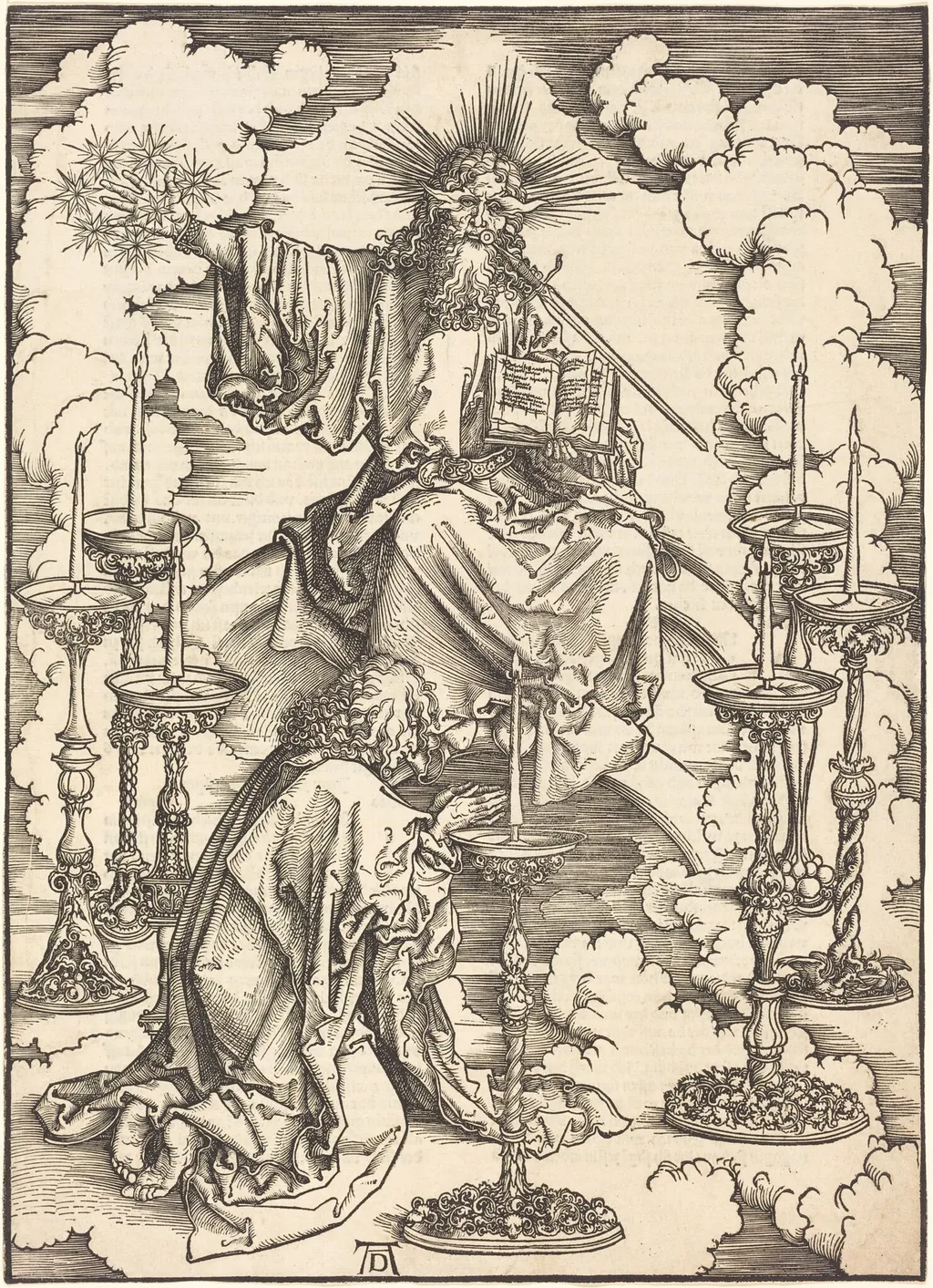
The Vision of the Seven Candlesticks is an ink print by the Northern Renaissance artist Albrecht Dürer. It dates from 1497 and is held in the collection of the British Museum.
About this work
Overview
Albrecht Dürer’s woodcut, titled The Vision of the Seven Candlesticks, was produced around 1497. Executed on laid paper, the print presents a compact, narrative scene drawn from the apocalyptic visions of the Book of Revelation. The composition centers on a luminous figure of Christ holding a cluster of seven candlesticks, attended by a kneeling John the Evangelist.
Subject & Meaning
The juxtaposition of light and shadow underscores the tension between fear and hope inherent in the text.
The image visualizes John’s Revelation of Christ appearing among the seven churches of Asia Minor. Christ’s radiant presence, illuminated by the candlesticks, symbolizes divine authority and the promise of salvation, while John’s kneeling posture conveys reverence and the awe‑inspiring nature of the prophetic vision. The juxtaposition of light and shadow underscores the tension between fear and hope inherent in the text.
Technique & Style
Dürer employed the woodcut medium with meticulous line work, carving fine, intersecting strokes that generate sharp contrasts of dark shadow and bright highlight. The use of laid paper enhances the texture of the print, while the precise incisions allow for delicate detailing of the figures’ drapery and the glowing aura surrounding Christ, creating a dramatic, almost theatrical effect.
History & Provenance
The print was originally part of an illustrated edition interpreting Revelation, likely commissioned for a devotional audience in late‑15th‑century Germany. Surviving copies are held in several European collections, reflecting the work’s circulation among early print collectors and its role in disseminating Dürer’s religious iconography during the Northern Renaissance.
Context
Created at the height of Dürer’s early career, the woodcut reflects the period’s growing interest in biblical exegesis and the use of print technology to reach a broader audience. Its emphasis on precise line and symbolic content aligns with contemporary humanist approaches to scripture, while the dramatic lighting anticipates later developments in Northern European religious art.
Artist & collection
Artist
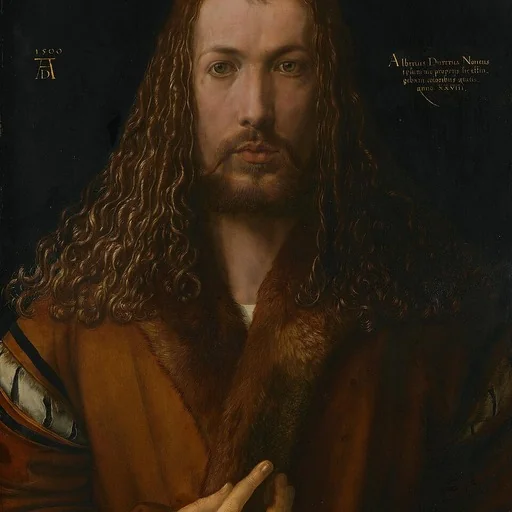
Albrecht Dürer spent his life in Nuremberg, a busy German city where artists traded prints like currency.

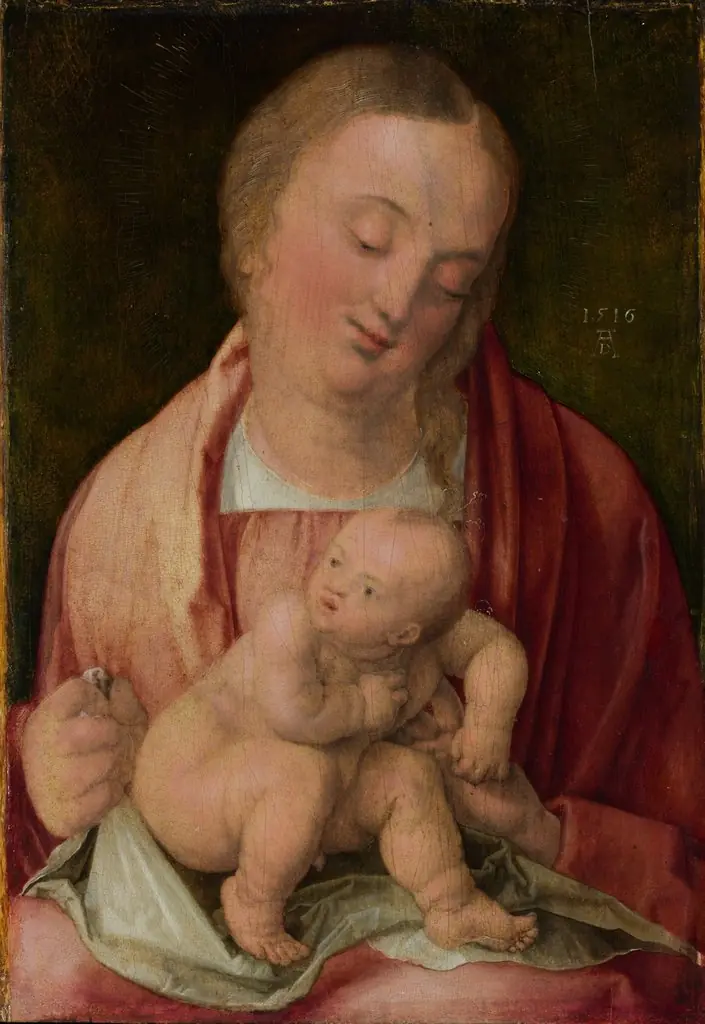
![Madonna and Child [obverse], by Albrecht Dürer](https://artifactworldgallery.com/img/albrecht-durer--madonna-and-child-obverse--d7b8ebf05d22ebe5-w320.webp)
![Lot and His Daughters [reverse], by Albrecht Dürer](https://artifactworldgallery.com/img/albrecht-durer--lot-and-his-daughters-reverse--b4ebf9b282faa17a-w320.webp)