Artwork
Portret van een vrouw
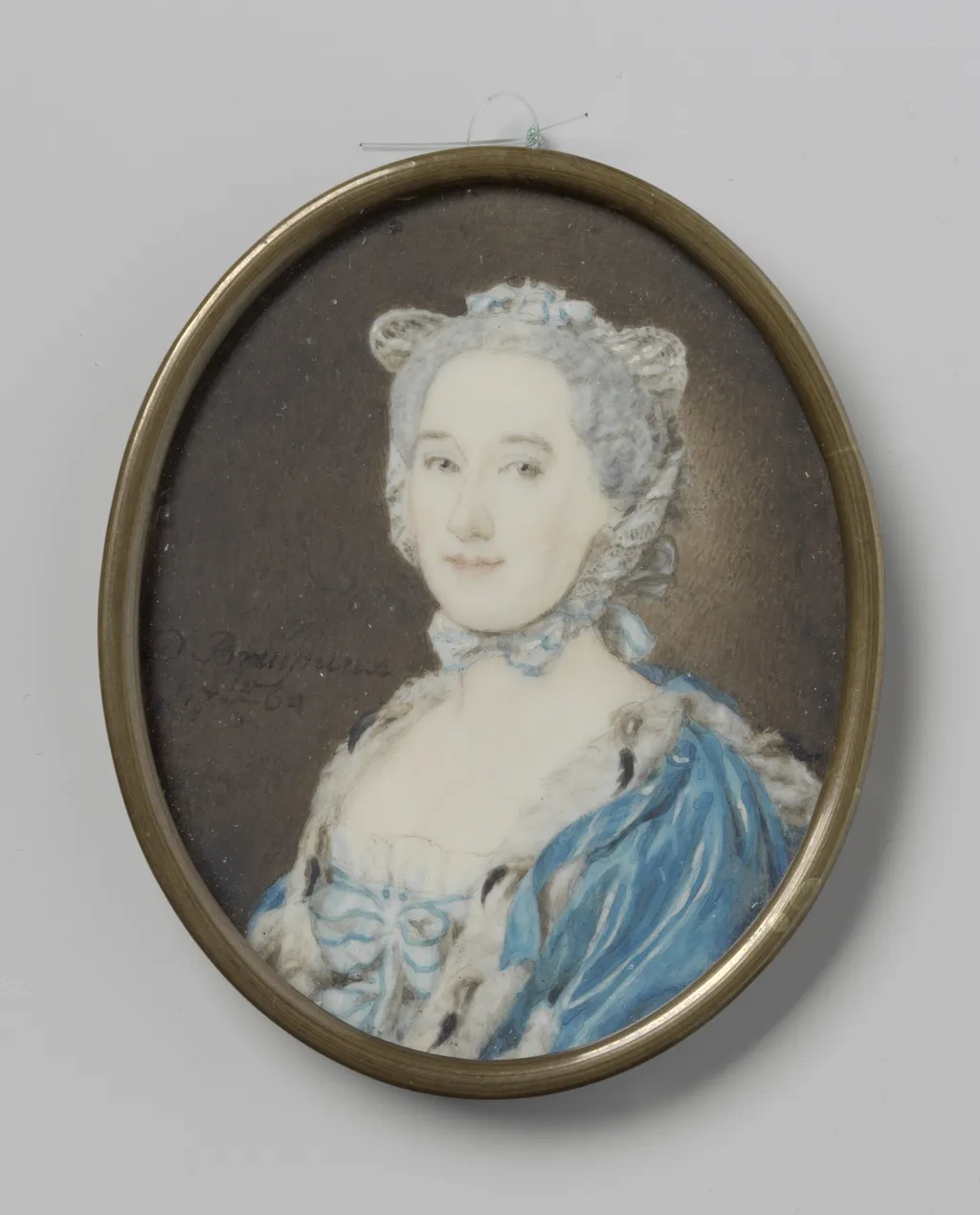
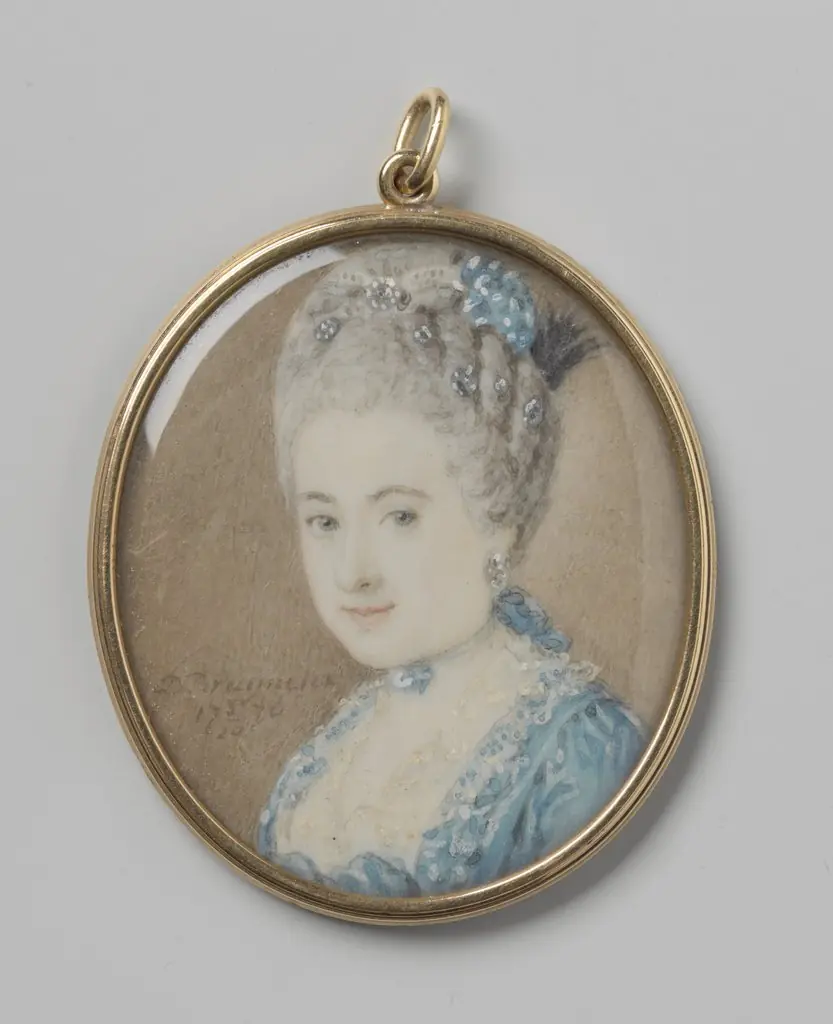
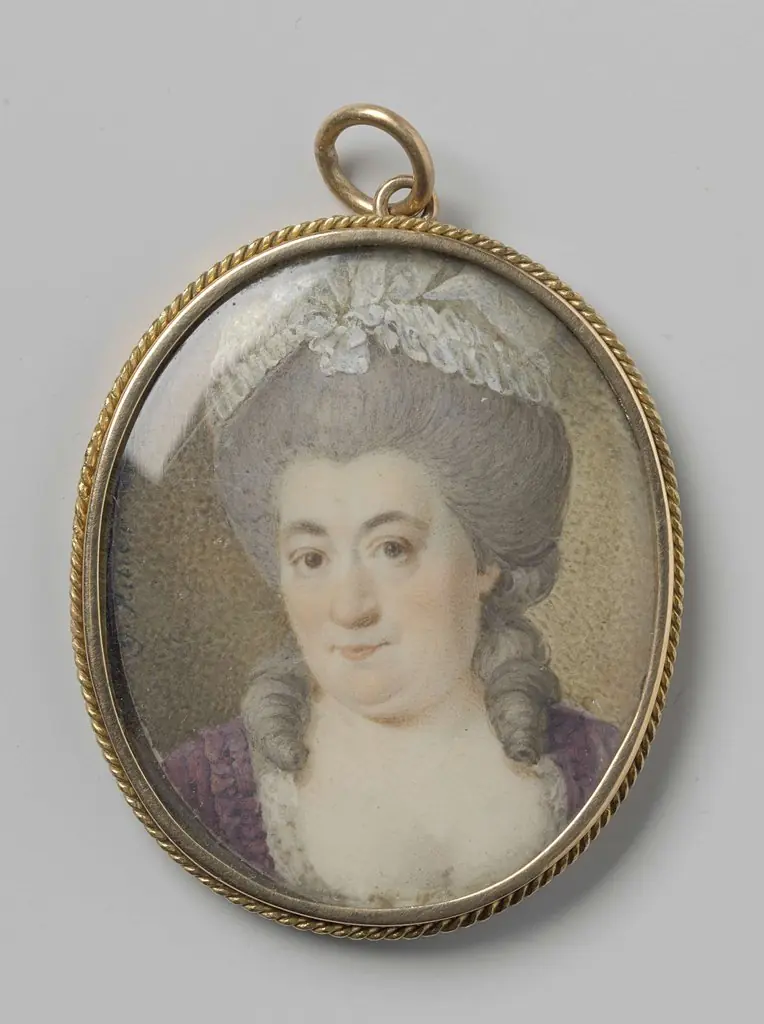
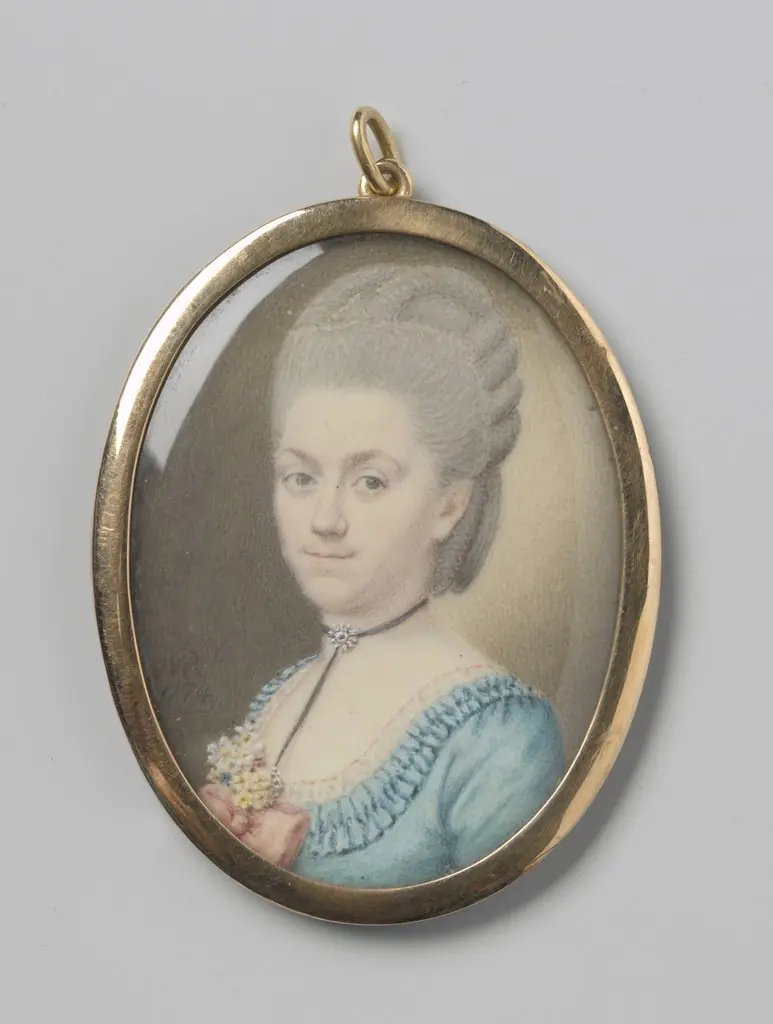
Portret van een vrouw is an ivory painting by the Rococo painting artist Daniël Bruyninx. It dates from 1764 and is held in the collection of the Rijksmuseum.
About this work
Overview
Created in 1764, this intimate oval portrait by Dutch artist Daniël Bruyninx presents a young woman rendered on a sheet of ivory. The work measures only a few centimeters across and is part of the Rijksmuseum’s collection. Bruyninx’s signature appears discreetly in the lower corner, confirming its authorship.
Subject & Meaning
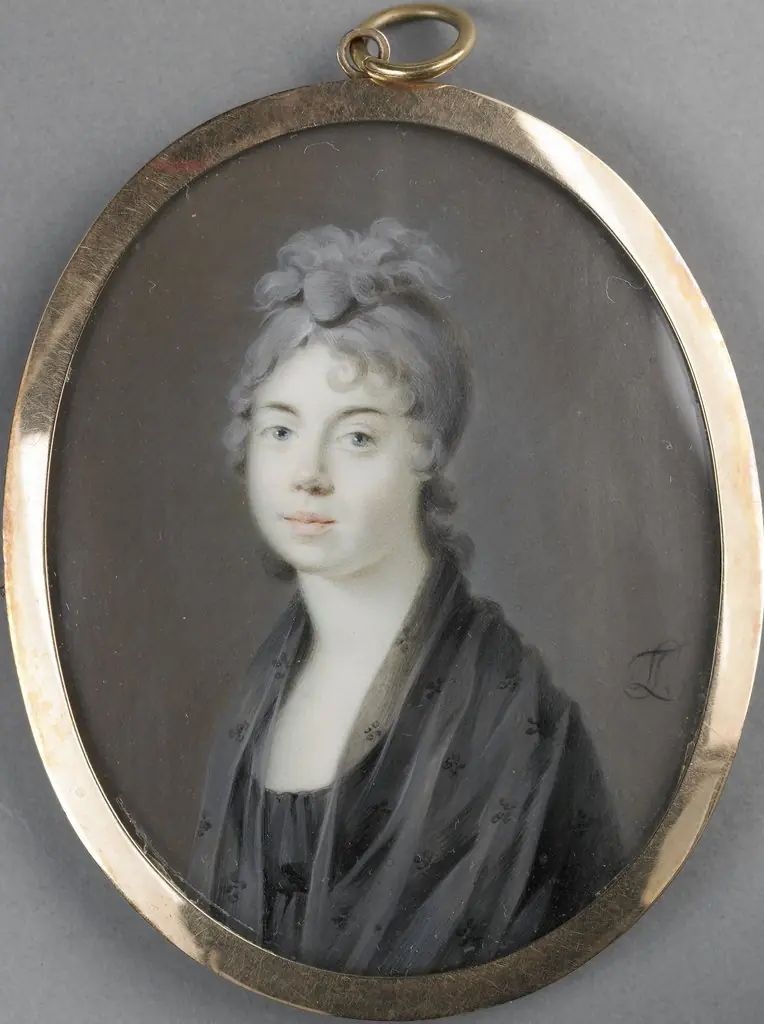
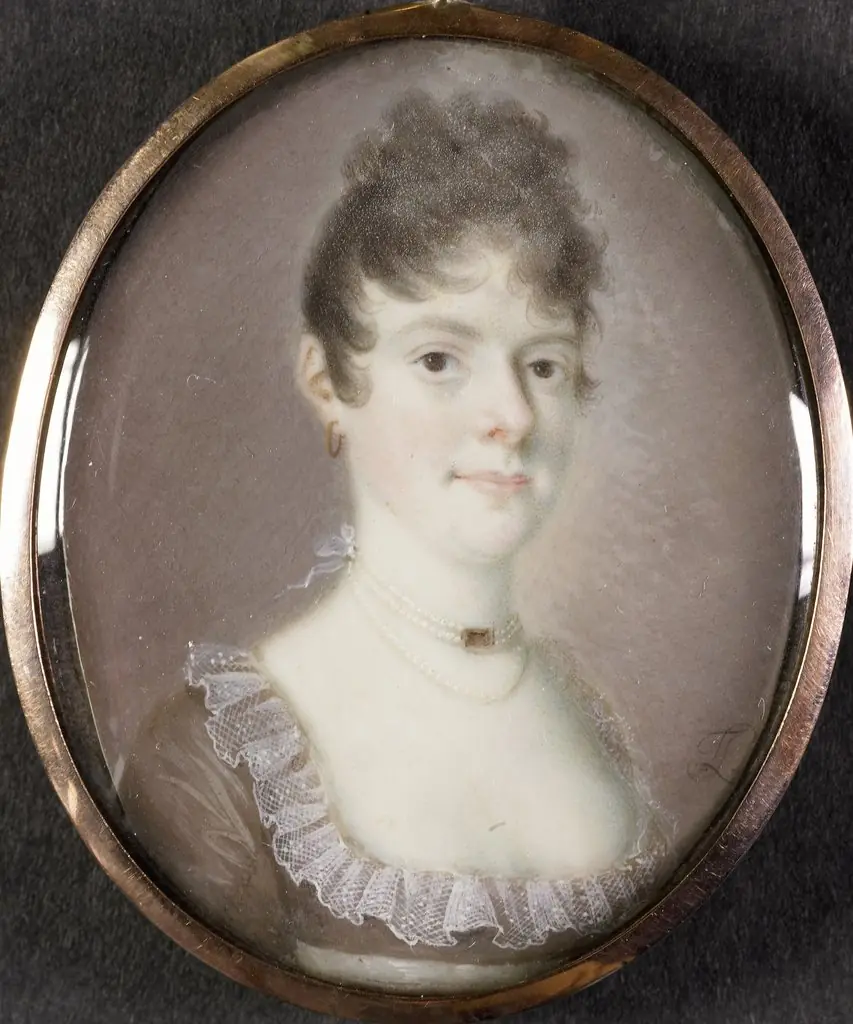
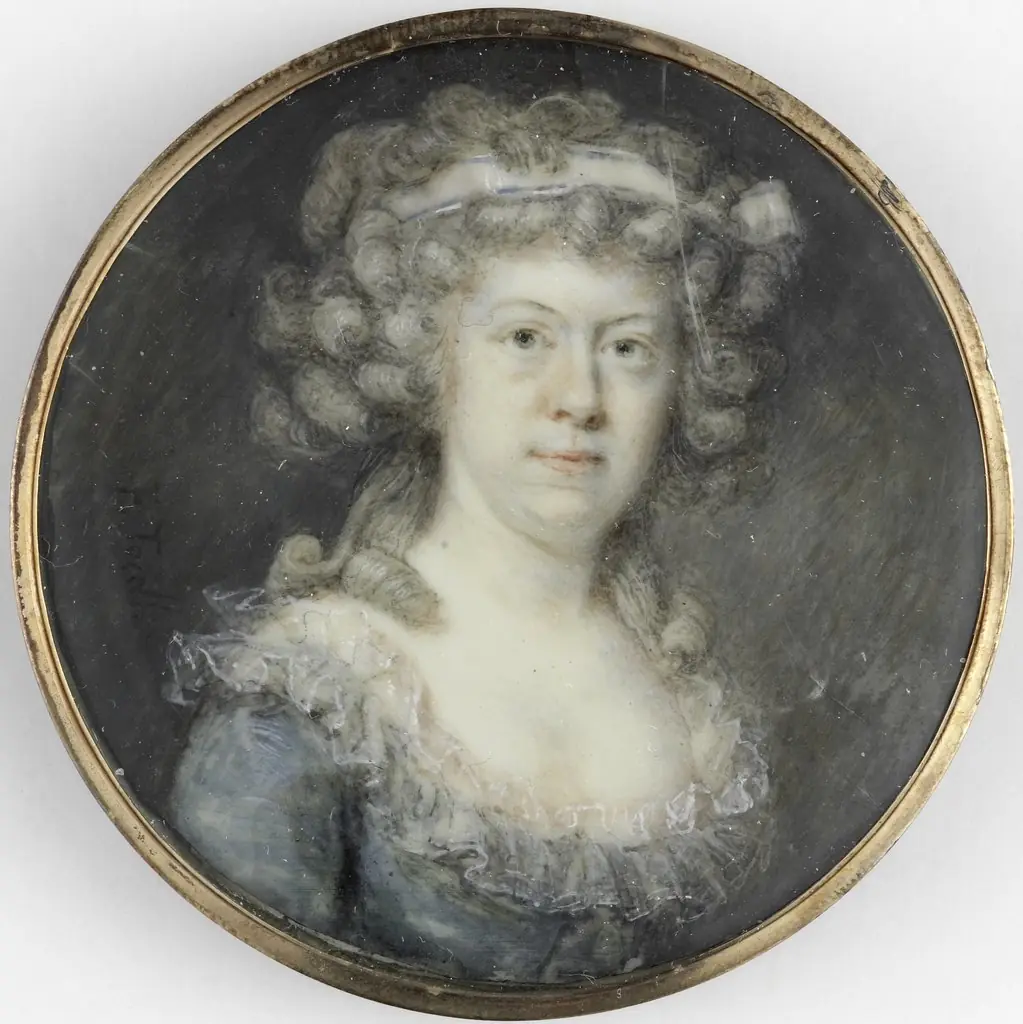
The sitter is shown with a pallid complexion and light-colored hair, dressed in a modest blue-and-white ensemble. A soft, fur-trimmed collar frames her shoulders, while a delicate lace cap rests on her head. The composition’s focus on her serene expression and restrained attire suggests a private, possibly familial, representation rather than a public commission.
Technique & Style
Working on ivory—a material prized for its smooth surface—Bruyninx achieves a gentle tonal range, allowing the blues and whites of the costume to appear muted against the dark, unadorned background. The medium’s translucency contributes to the subtle modeling of facial features, while the fine brushwork in the lace and fur details demonstrates the artist’s meticulous hand.
History & Provenance
Since its creation, the portrait has remained in the Netherlands, eventually entering the Rijksmuseum’s holdings where it is displayed among other 18th‑century Dutch works. Documentation records the painting’s continuous attribution to Bruyninx, and its provenance reflects typical museum acquisition practices for small, medium‑format portraits of the period.
Artist & collection