Artwork
Vineclad Trees
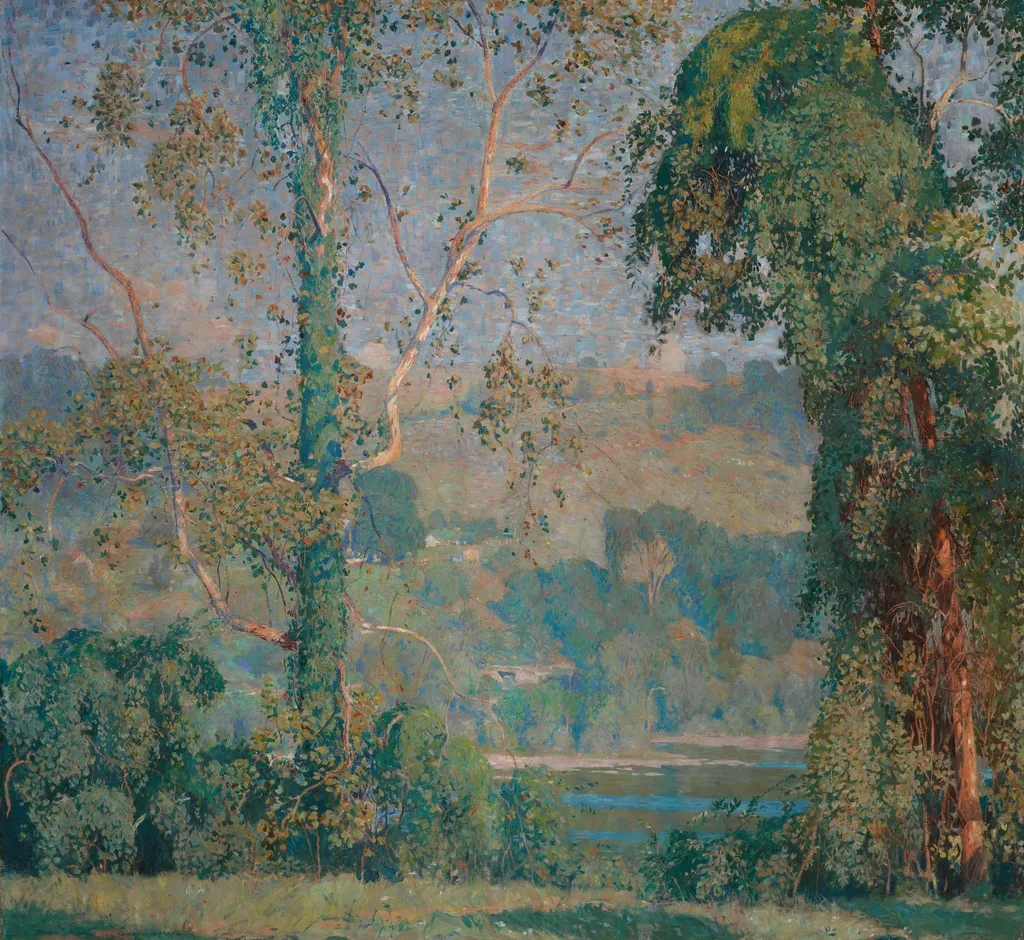
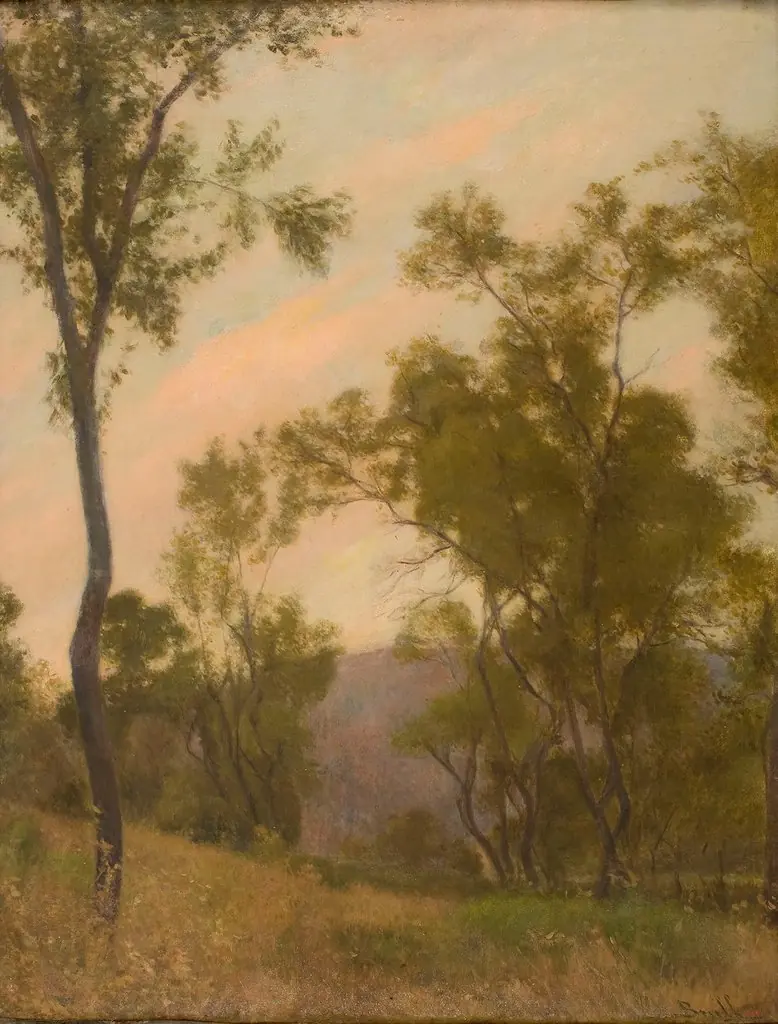
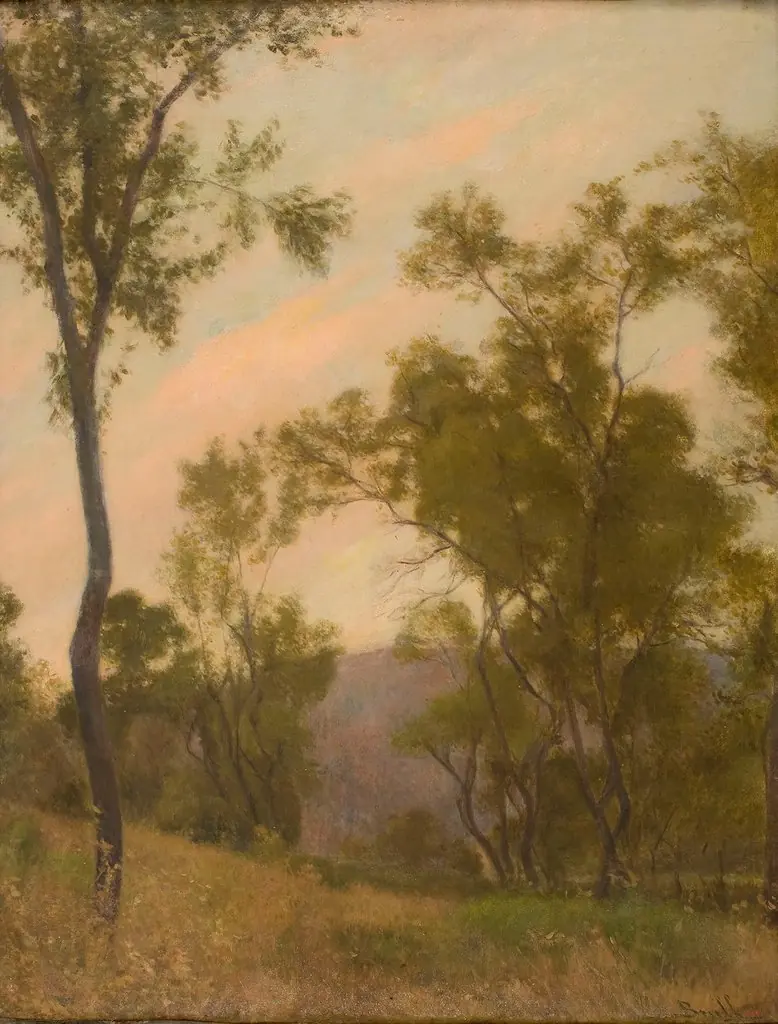
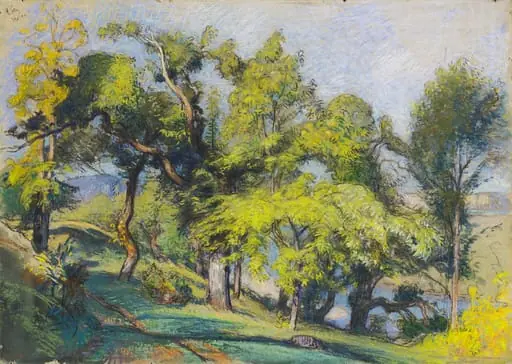
Vineclad Trees is an oil painting by the American Impressionist artist Daniel Garber. It dates from 1916 and is held in the collection of the Detroit Institute of Arts.
About this work
Overview
Daniel Garber painted *Vineclad Trees* in 1916 using oil on canvas, capturing a quiet woodland scene in the New Hope region of Pennsylvania.
Daniel Garber painted *Vineclad Trees* in 1916 using oil on canvas, capturing a quiet woodland scene in the New Hope region of Pennsylvania. A central figure in the local art colony, Garber focused on natural landscapes shaped by seasonal light and atmospheric conditions. The work reflects his long-standing commitment to depicting the Pennsylvania countryside with sensitivity and precision, avoiding dramatic narratives in favor of observed tranquility.
Subject & Meaning
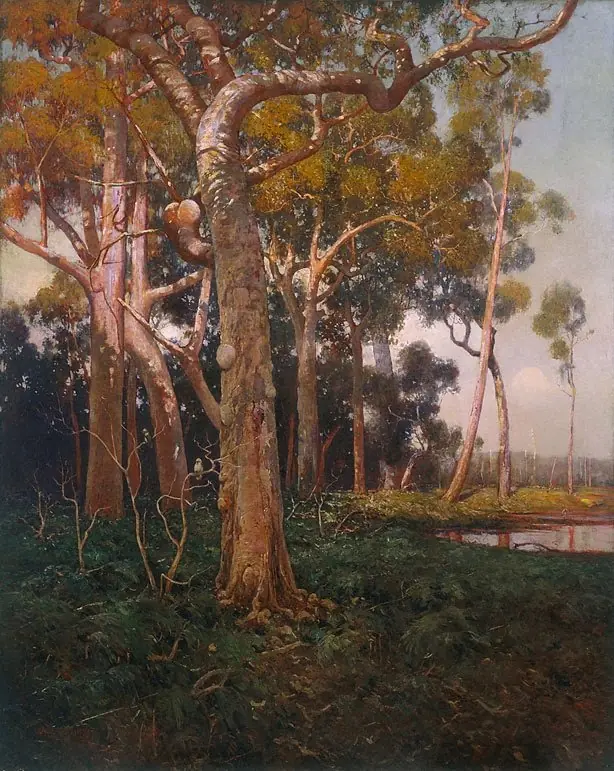
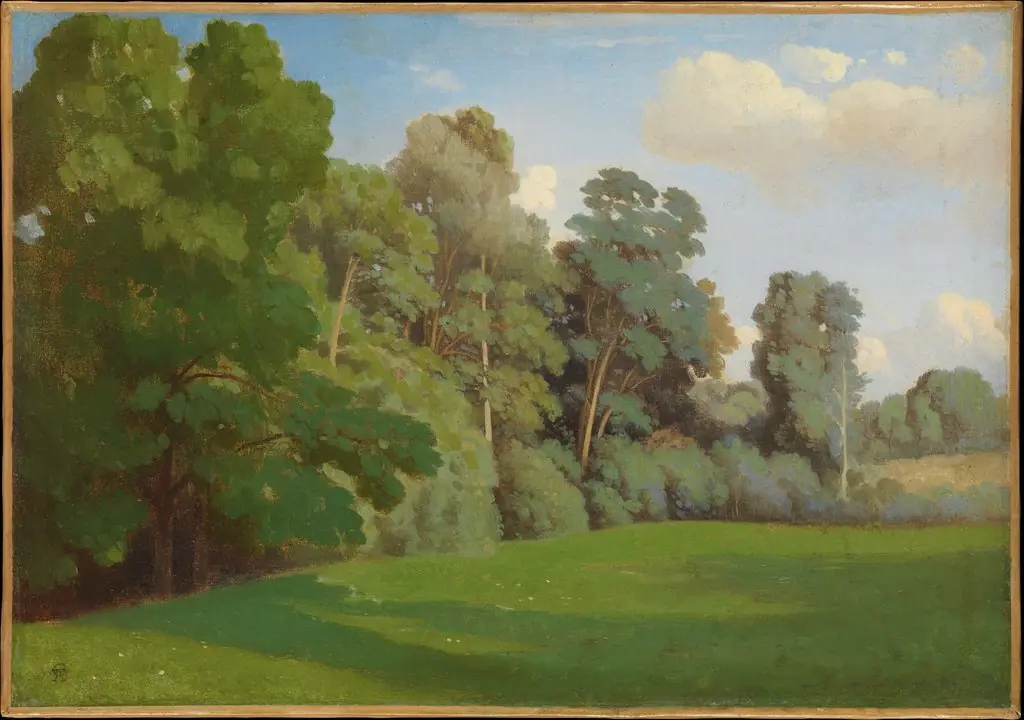
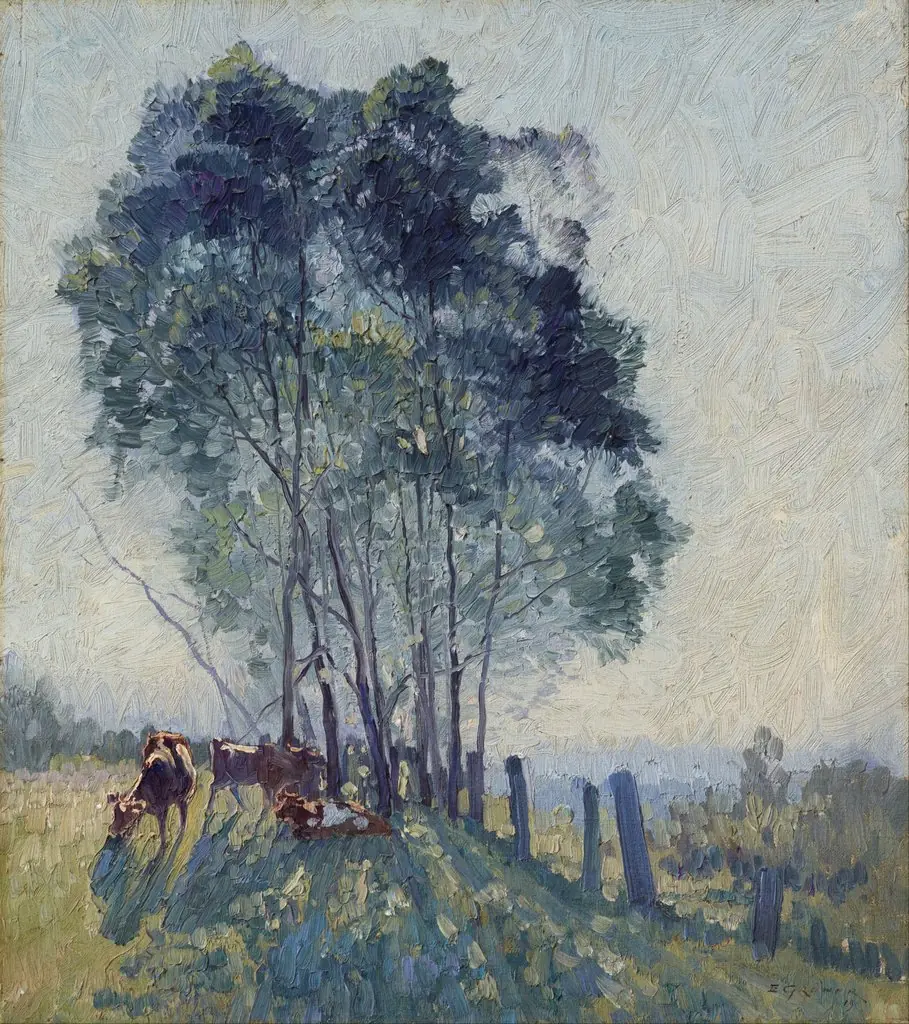
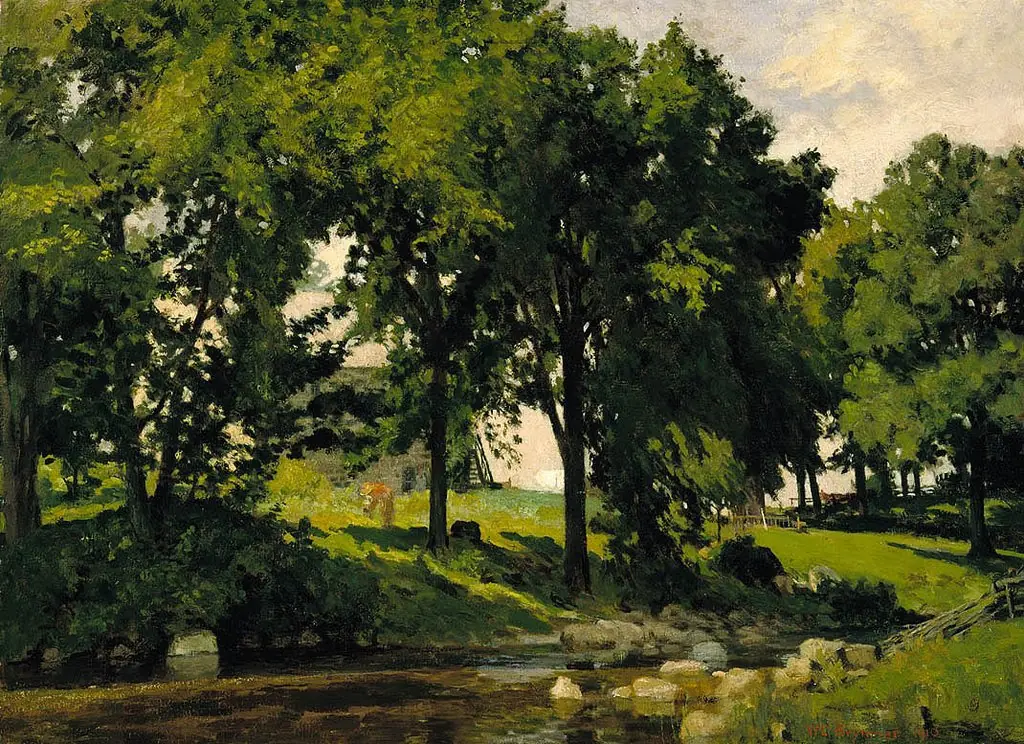
The painting presents tall, slender trees entwined with climbing vines, their foliage dense and luminous under dappled sunlight. A reflective body of water in the background mirrors the green canopy, deepening the sense of stillness. There is no human presence; the scene conveys solitude and the quiet rhythm of nature. Garber’s choice of subject emphasizes harmony between plant life and environment, suggesting reverence for the natural world without overt symbolism.
Technique & Style
Garber employed loose, textured brushwork to render foliage and bark, capturing the play of light through leaves without sacrificing structural clarity. Colors are muted yet vibrant, with greens varying in tone to suggest depth and movement. The surface shows careful modulation of light and shadow, particularly where sunlight filters through the canopy. Though rooted in Impressionist observation, the painting retains a controlled realism in its rendering of form and spatial recession.
History & Provenance
Created during Garber’s mature period, *Vineclad Trees* entered the collection of the Detroit Institute of Arts in the 20th century. It reflects the broader interest in American landscape painting during the early 1900s, when regional art colonies like New Hope gained recognition. The work has remained in public hands since its acquisition, consistently exhibited as an example of early 20th-century American Impressionism.
Context
Garber was part of a generation of American artists who turned away from urban themes to explore rural landscapes, influenced by European Impressionism but grounded in local topography. The New Hope colony, centered along the Delaware River, fostered a community of painters committed to plein air work. Garber’s dedication to this subject, alongside his decades-long teaching role at the Pennsylvania Academy of the Fine Arts, helped shape a distinctly American approach to landscape painting.
Legacy
Garber’s body of work, including *Vineclad Trees*, contributed to the institutional recognition of American Impressionism outside major coastal centers. His emphasis on quiet observation and technical discipline influenced later regional painters. Though less widely known today than some contemporaries, his paintings remain important for their sustained engagement with the natural world and their role in documenting early 20th-century American artistic values.
Artist & collection
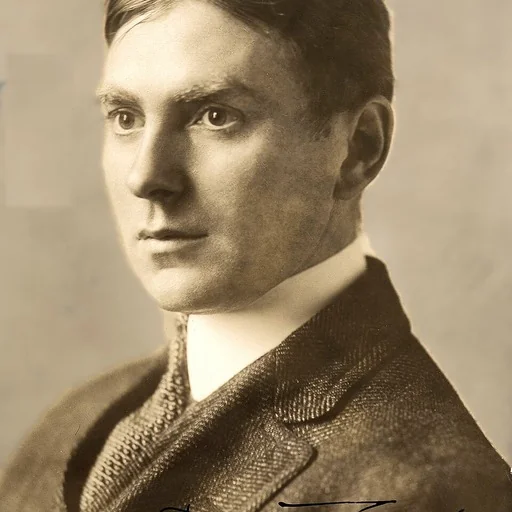
Artist
Daniel Garber (April 11, 1880 – July 5, 1958) was an American Impressionist landscape painter and member of the art colony at New Hope, Pennsylvania.