Artwork
Merry Christmas in the Baron's Hall
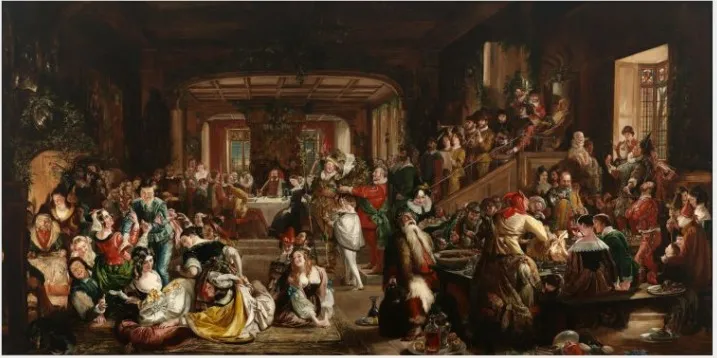
Merry Christmas in the Baron's Hall is an oil painting by Daniel Maclise. It dates from 1838 and is held in the collection of the National Gallery of Ireland.
About this work
Merry Christmas in the Baron's Hall is a historical genre painting. It was created by Daniel Maclise in 1838.
The painting depicts a scene in the great hall of an English country estate. This scene is inspired by the poem Marmion by Sir Walter Scott, which adds a literary layer to the work.
To learn more about the artist behind this painting, look up Daniel Maclise.
Overview
Painted in 1838 by Irish artist Daniel Maclise, this oil-on-canvas work portrays a festive gathering in the great hall of a rural English manor. The scene reflects a romanticized vision of seasonal tradition among the landed gentry and their tenants, capturing a moment of communal celebration during the Christmas season in a historical setting.
Subject & Meaning
The painting illustrates a Christmas feast hosted by a baron for his tenants, evoking ideals of paternalistic harmony between social classes. Though not a literal illustration, the scene draws thematic inspiration from Sir Walter Scott’s poem Marmion, which romanticized medieval and early modern English customs, reinforcing a nostalgic view of hierarchical society during festive occasions.
Technique & Style
The style blends historical accuracy with theatrical staging, characteristic of mid-19th-century academic genre painting.
Maclise employed detailed figure grouping and rich, warm lighting to animate the crowded hall. His brushwork emphasizes texture in fabrics, wood, and candlelight, while the composition guides the viewer’s eye through layers of activity—from musicians to servers to seated guests. The style blends historical accuracy with theatrical staging, characteristic of mid-19th-century academic genre painting.
History & Provenance
Completed in 1838, the painting was exhibited in London shortly after its creation and later entered a private collection in Ireland. It remained in the possession of the Maclise family until the mid-20th century, when it was acquired by a public institution. Its journey reflects growing interest in 19th-century British and Irish historical genre works during the Victorian era.
Context
In the 1830s, as industrialization reshaped British society, artists like Maclise turned to idealized pasts for cultural reassurance. The revival of interest in medieval and Tudor customs, fueled by Romantic literature and antiquarianism, made scenes like this one resonate with audiences seeking continuity amid social change.
Legacy
Though less widely known today than Maclise’s larger murals, this painting exemplifies his early skill in narrative composition and historical reconstruction. It contributed to a broader 19th-century trend of using domestic and seasonal themes to explore social relationships, influencing later genre painters who sought to humanize historical settings.
Artist & collection
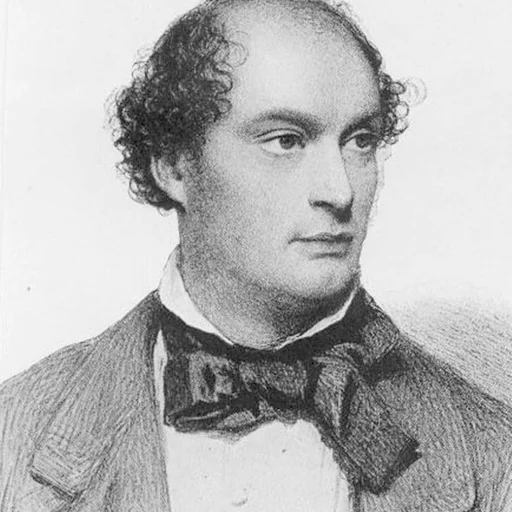
Artist
Daniel Maclise (25 January 1806 – 25 April 1870) was an Irish history painter, literary and portrait painter, and illustrator, who worked for most of his life in London, England.

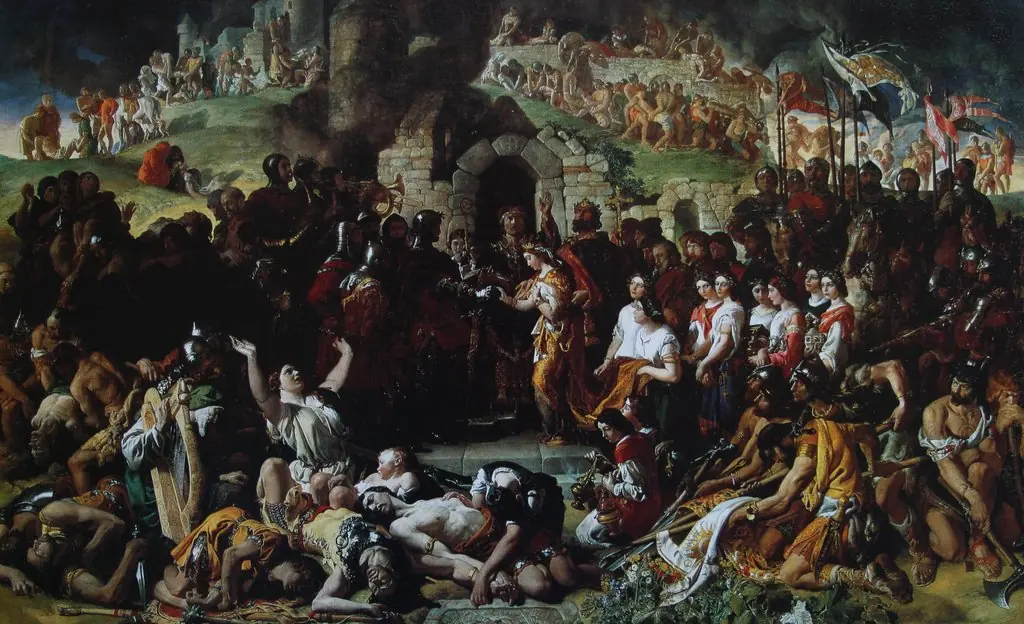
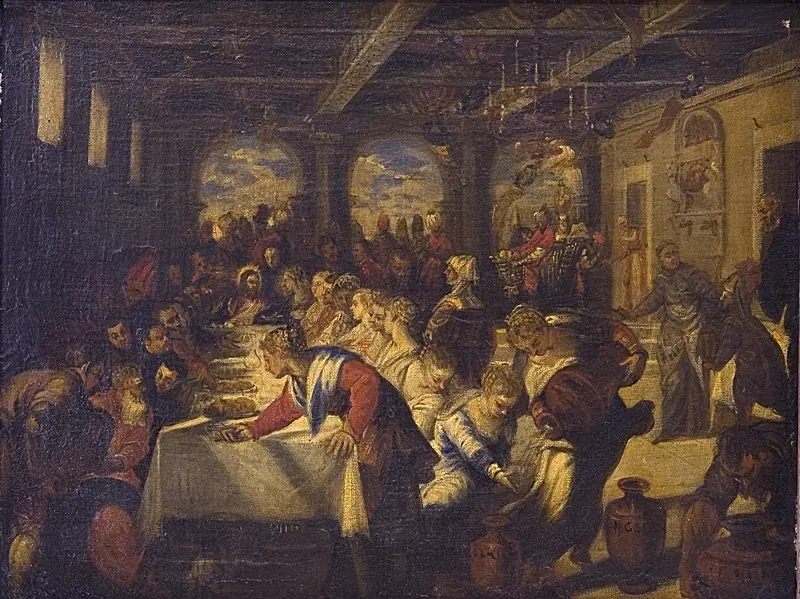 The Marriage at Cana
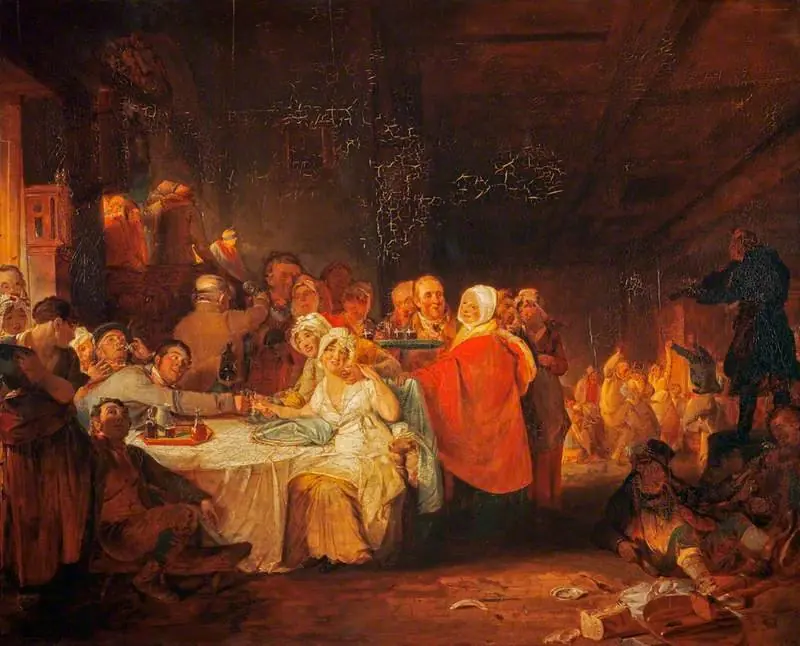 A Scotch Wedding
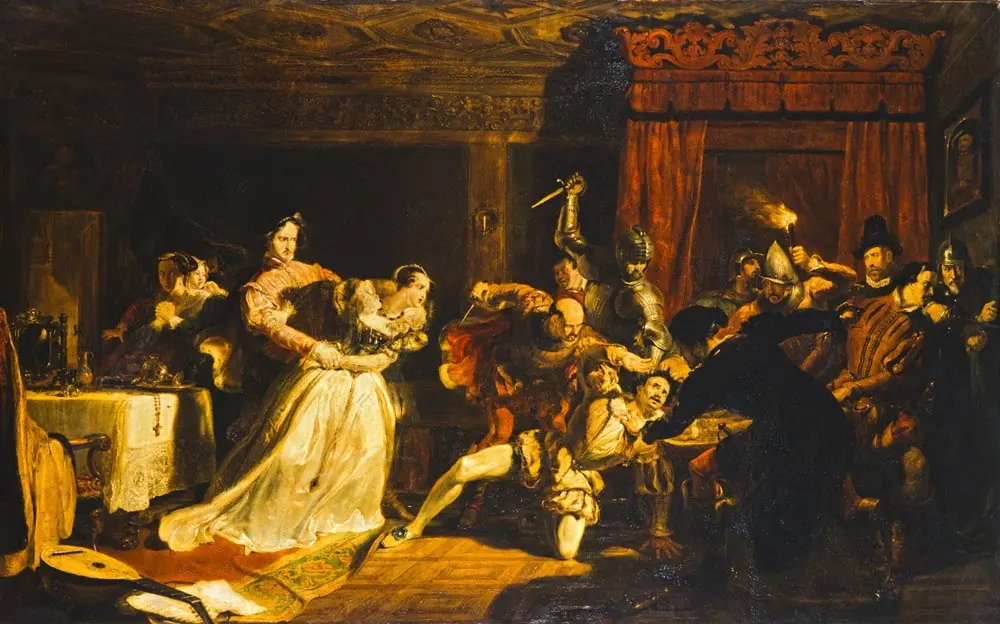 The Murder of David Rizzio
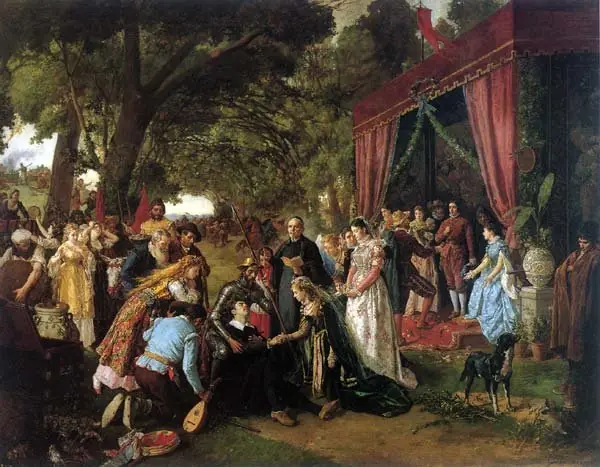 Casamiento de Basilio y Quiteria (Don Quijote capítulo XXI)
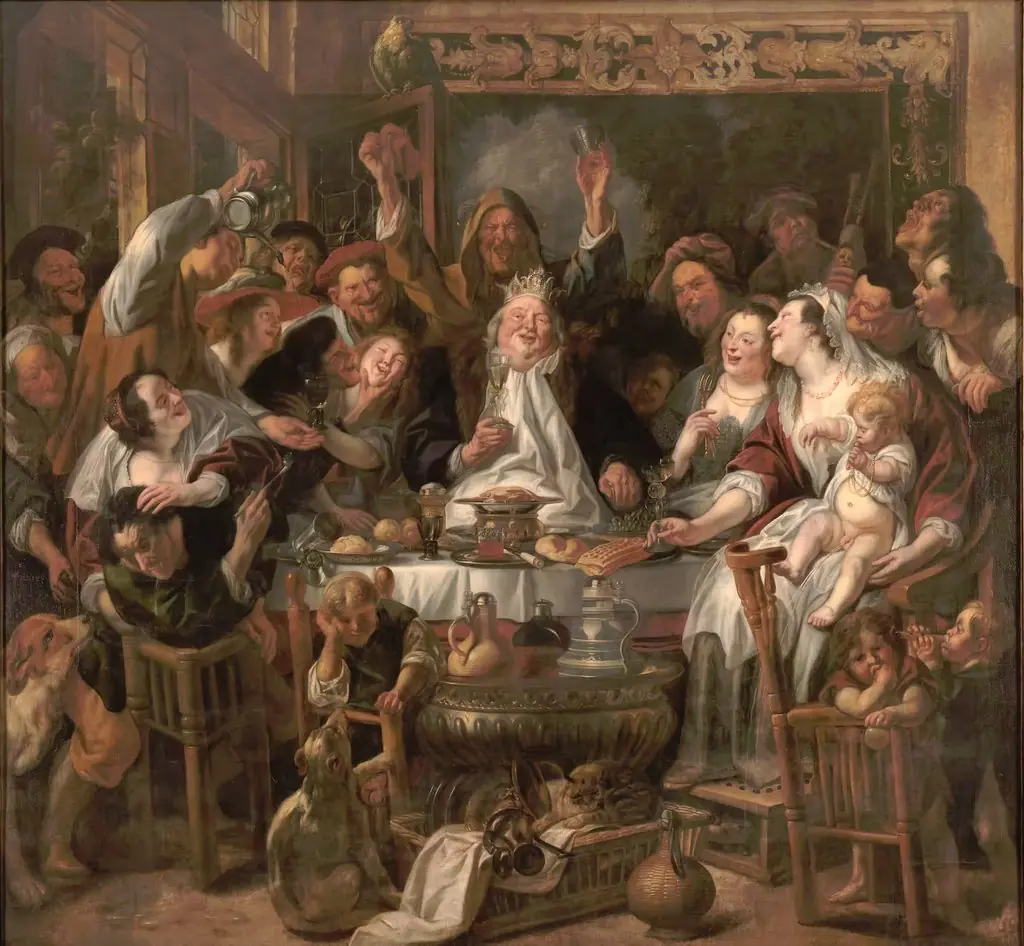 The King Drinks
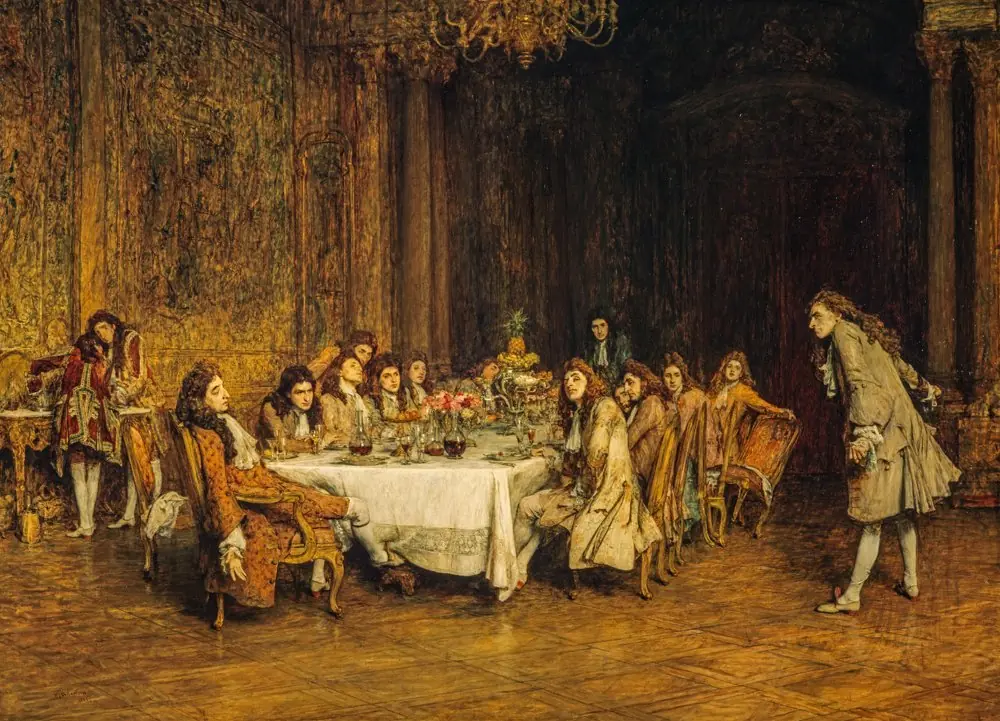 Voltaire (1694 - 1778)
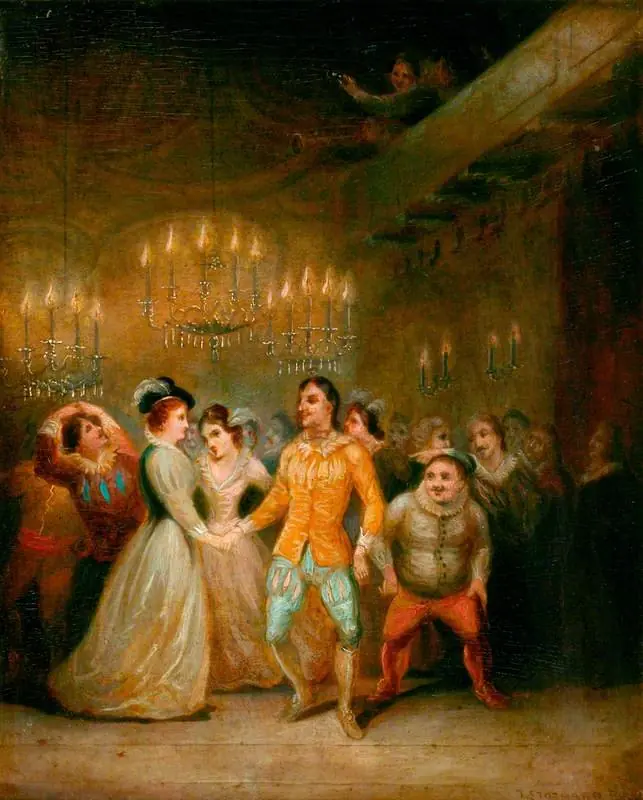 Scene from Cervantes' 'Don Quixote' (Part II, Chapter 31)
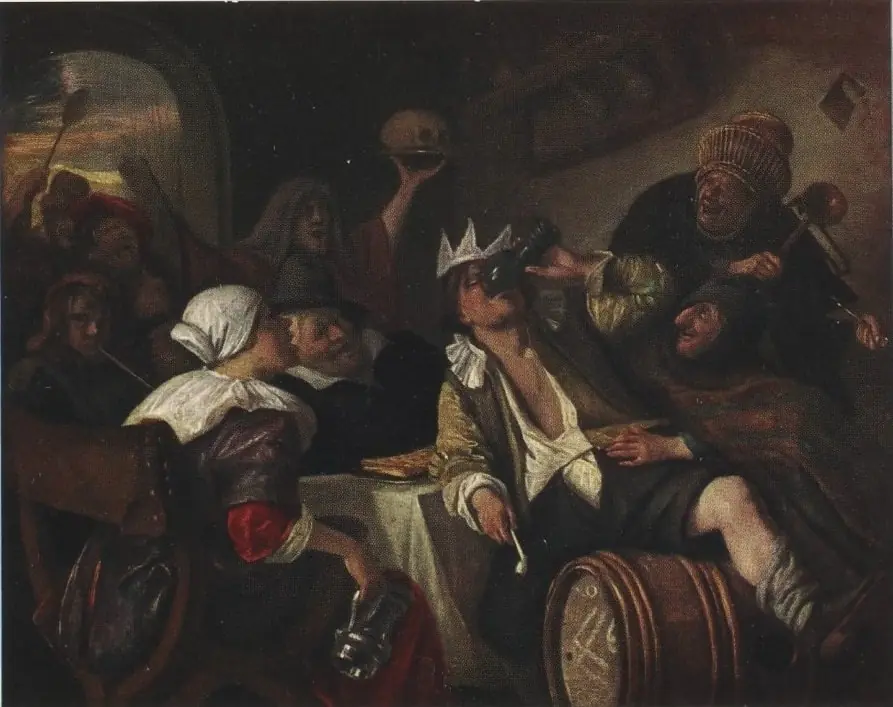 Twelfth-Night Feast
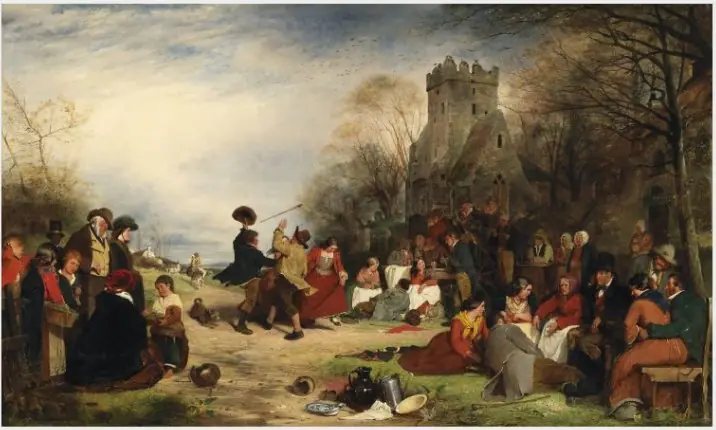 The 16th, 17th (St Patrick’s Day), and 18th March
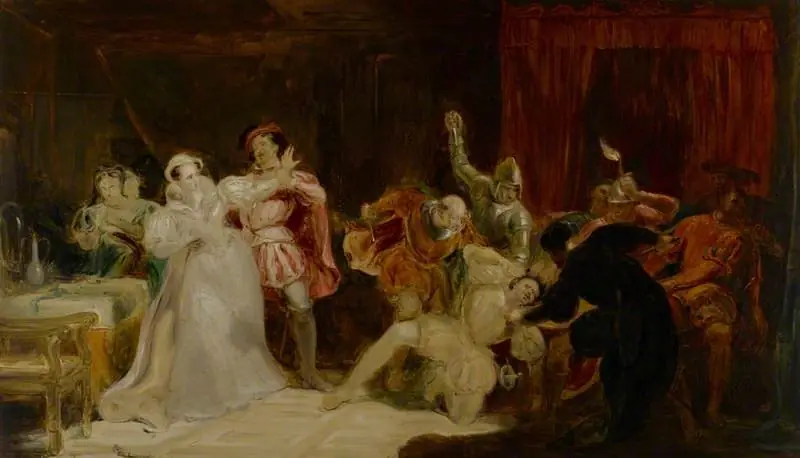 A Study for 'The Murder of David Rizzio' (NG 1677)