Artwork
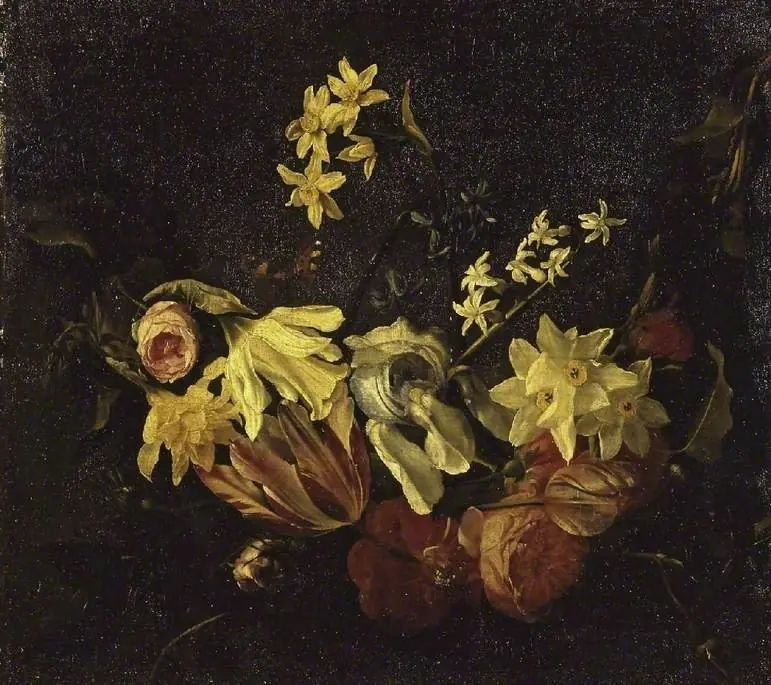
Festoon of flowers
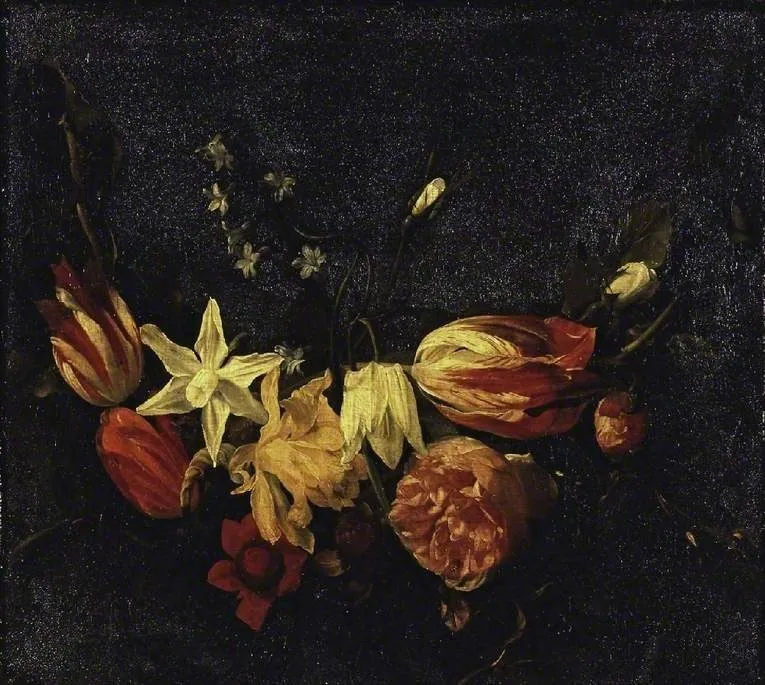
Festoon of flowers is an oil painting by the Flemish Baroque painting artist Daniel Seghers. It dates from 1635 and is held in the collection of the Fitzwilliam Museum.
About this work
Overview
Created circa 1635 by the Flemish Jesuit painter Daniel Seghers, this oil on canvas presents a still‑life composition of a flower garland. Executed within the Flemish Baroque tradition, the work now belongs to the Fitzwilliam Museum’s collection. It exemplifies Seghers’ reputation for intricate floral arrangements that appealed to elite patrons of his time.
Subject & Meaning
The canvas depicts a dense cluster of blossoms—tulips, roses and assorted flowers—set against a somber, almost black background. The petals appear faded, some taking on brownish or yellowed tones, suggesting a moment of decline rather than peak bloom. This muted vitality may allude to the fleeting nature of beauty, a theme often explored in devotional and secular still‑lifes of the period.
Technique & Style
Seghers employed meticulous brushwork to render each petal and leaf with a tactile realism, using soft shadows to give the arrangement a three‑dimensional presence. Layers of translucent glazes build depth and subtle colour shifts, a hallmark of 17th‑century Flemish painting. The overall composition balances detailed observation with the decorative flourish typical of garland paintings.
History & Provenance
The painting was produced during Seghers’ most productive phase, when his floral works were in high demand among aristocratic collectors. After changing hands through private collections, it entered the Fitzwilliam Museum, where it remains on display as part of the institution’s Flemish Baroque holdings.
Artist & collection
Artist
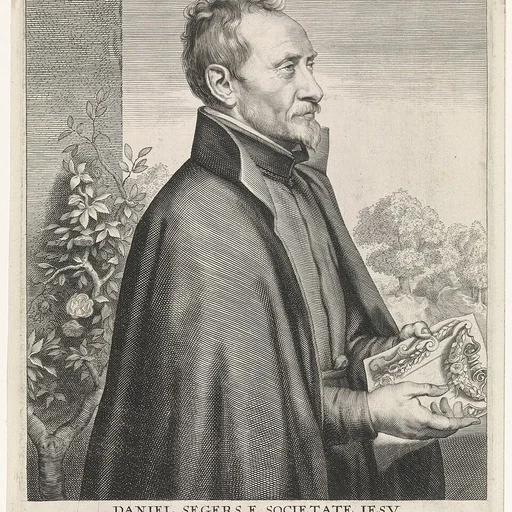
Daniel Seghers (3 December 1590 – 2 November 1661) was a Flemish Jesuit brother and painter who specialized in flower still lifes.

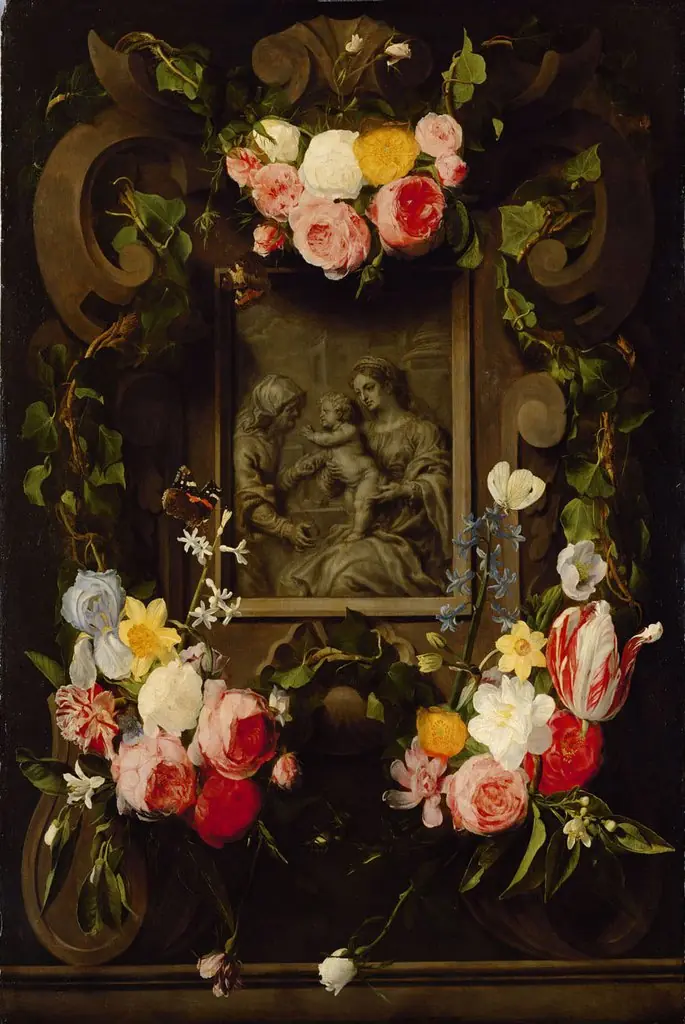 Madonna and Child with St Anna in a Flower Garland
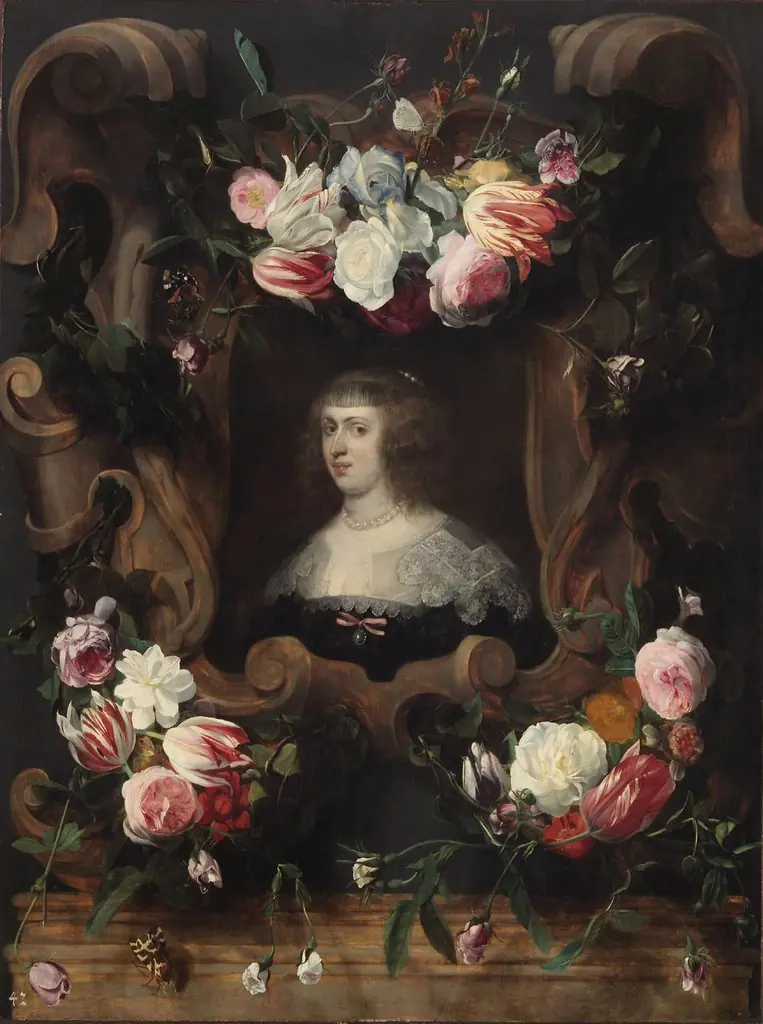 Cartouche decorated with flowergarlands surrounding a portrait of archduchess Maria Anna of Austria (1610-1665)
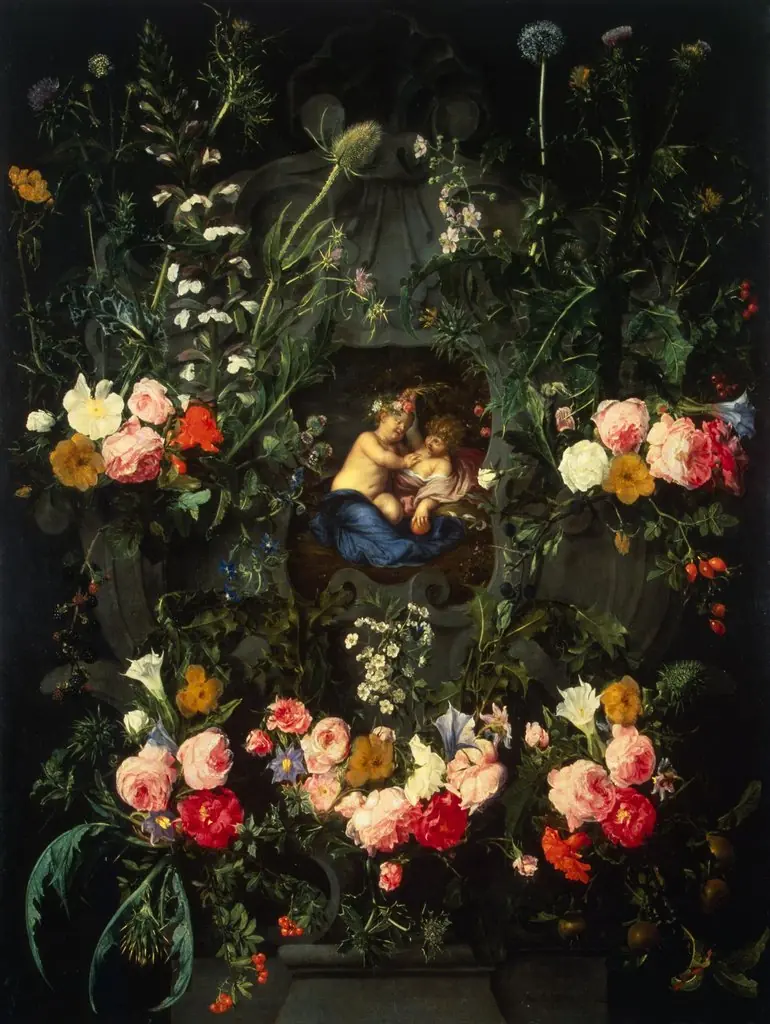 Garland of Flowers Around a Cartouche with Jesus and St John the Baptist as Children
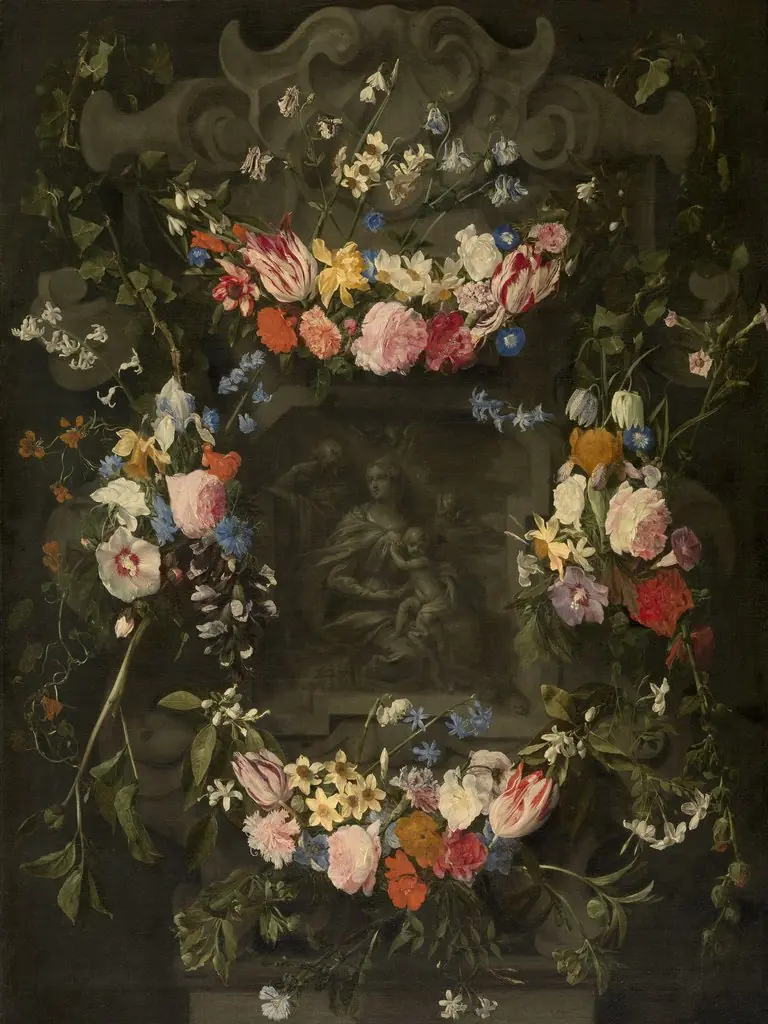 Holy Family in a Flower Garland
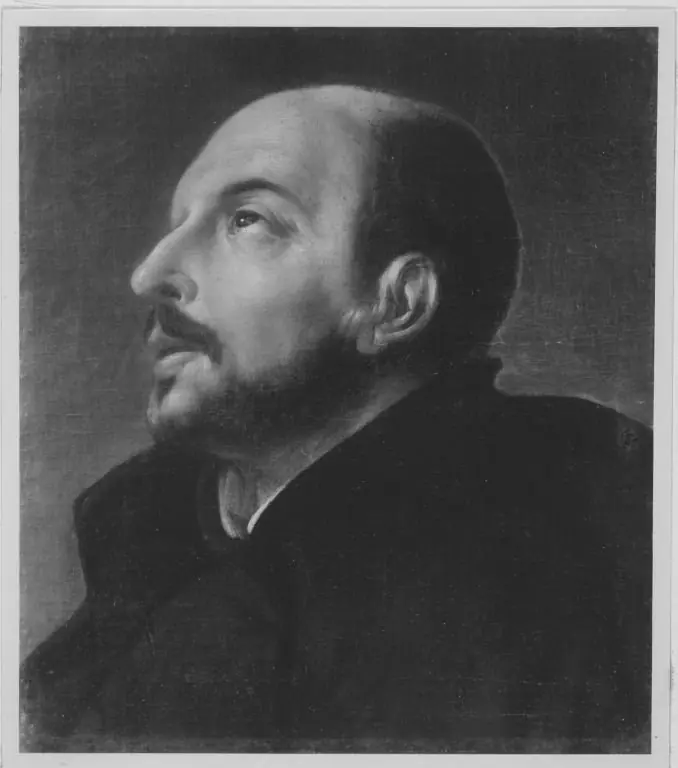 Bust portrait of Ignatius of Loyola
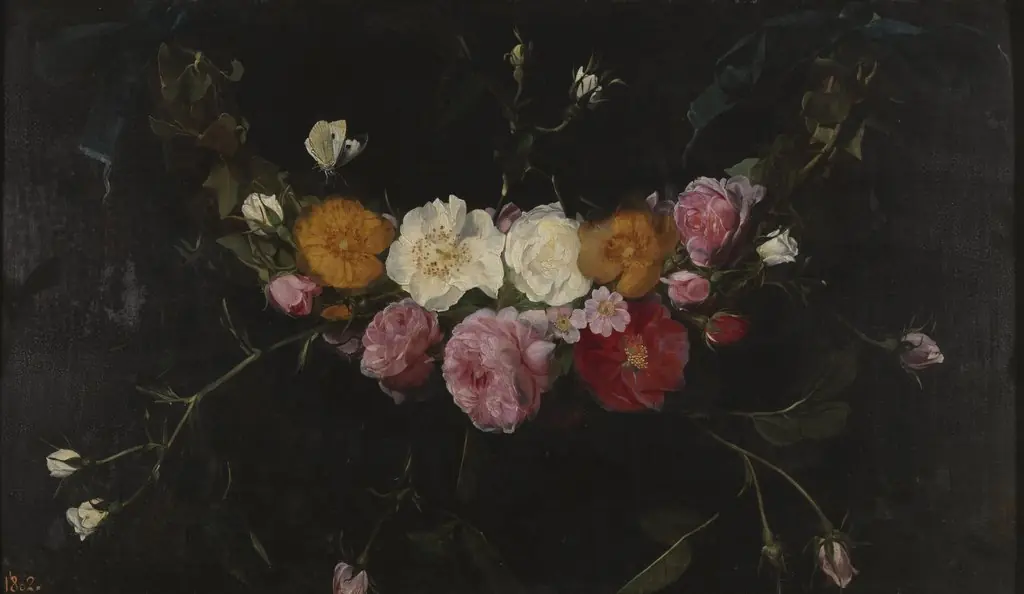 Garland of Roses
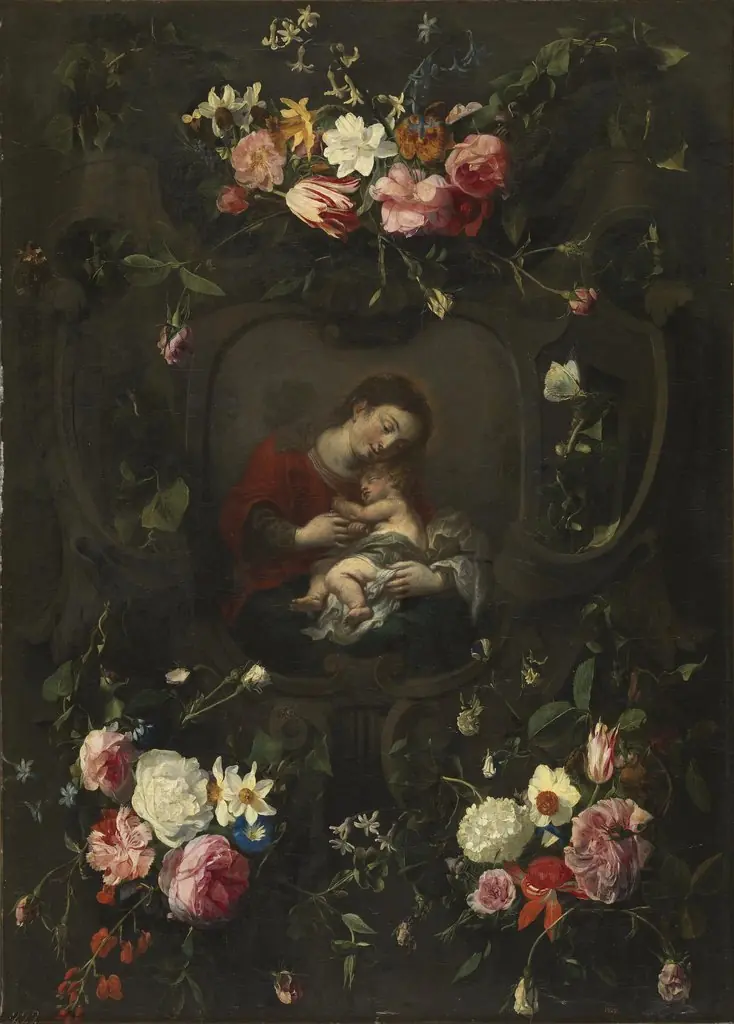 Flower garland around a Madonna and Child
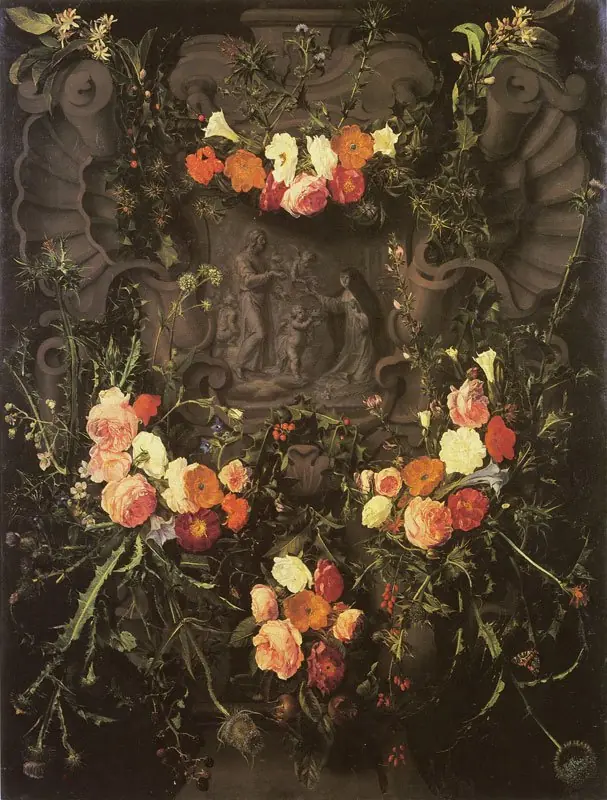 Saint Catherine of Siena Surrounded by a Garland of Flowers