Artwork
Portrait of a Gentleman
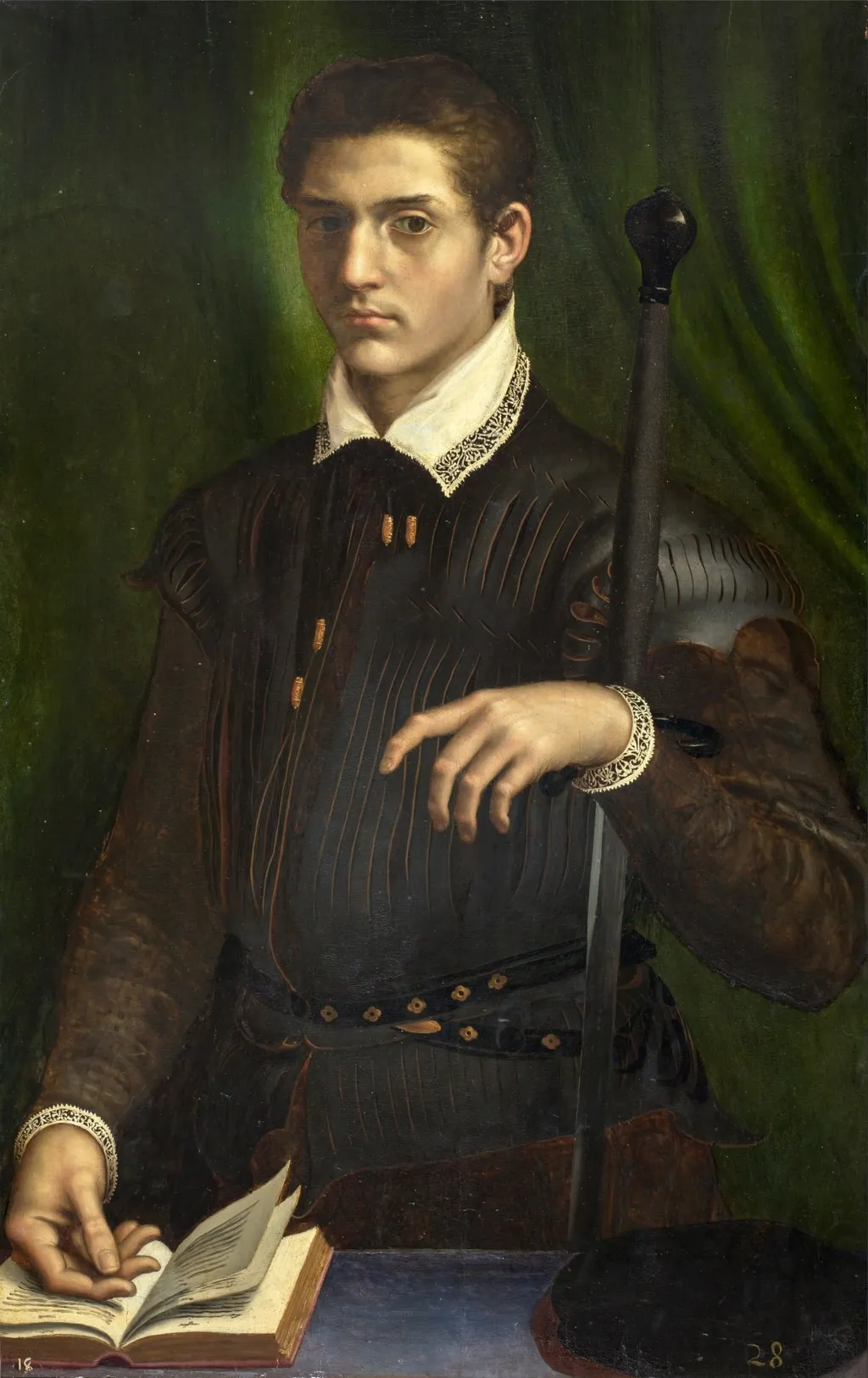
Portrait of a Gentleman is an unspecified painting by the Mannerist artist Daniele da Volterra. It dates from 1550 and is held in the collection of the Museo del Prado.
About this work
Overview
Portrait of a Gentleman, created circa 1550 by Italian Mannerist artist Daniele da Volterra, is a portrait painting housed in the Museo del Prado. The work showcases a man in a distinctive attire, holding an open book and a sword against a somber, dark green background.
Subject & Meaning
The subject, a gentleman, is portrayed with a serious demeanor, conveying a sense of gravity.
The subject, a gentleman, is portrayed with a serious demeanor, conveying a sense of gravity. His attire combines practical and ornate elements, such as a striped shirt with metal buttons and fancy cuffs, suggesting a balance between functionality and status. The juxtaposition of an open book (symbolizing intellect or spirituality) and a sword (embodying power or defense) may imply a multifaceted personality or the Renaissance ideal of a well-rounded individual.
Technique & Style
The painting exemplifies Mannerist traits, potentially influenced by Daniele da Volterra's association with Michelangelo. Notable is the use of chiaroscuro, where dramatic light and shadow create depth and emphasize the subject's features and the contrasting elements he holds. The artist's handling of light on the gentleman's clothing and the subtle play of shadows on his face contribute to the overall sense of volume and emotional intensity.
History & Provenance
Created around 1550, the portrait is attributed to Daniele da Volterra, known for both his original works and his posthumous alterations to Michelangelo's *Last Judgment*. The painting's provenance prior to its current location in the Museo del Prado is not detailed here.
Context
Within the broader context of 16th-century Italian art, *Portrait of a Gentleman* reflects the Mannerist emphasis on complexity and emotional depth. Daniele da Volterra's work, in particular, bridges the High Renaissance (through his connection to Michelangelo) and the emerging Mannerist style, characterized by its dramatic lighting, intense emotions, and sometimes unsettling compositions.
Legacy
While *Portrait of a Gentleman* may not be as widely recognized as Daniele da Volterra's modifications to *The Last Judgment*, it contributes to the artist's reputation for nuanced, emotionally charged portraits. The painting's exploration of light, shadow, and the juxtaposition of symbols (book and sword) showcases Mannerist innovations that influenced subsequent artistic movements.
Artist & collection
Artist
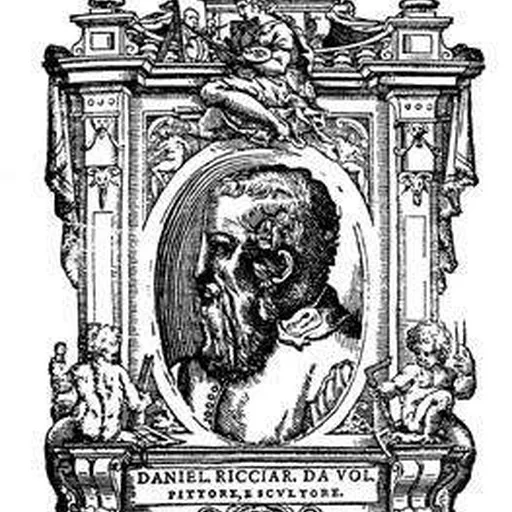
Daniele Ricciarelli (Italian: ; c. 1509 – 4 April 1566), better known as Daniele da Volterra (, Italian: ), was a Mannerist Italian painter and sculptor. He is best remembered for his association with Michelangelo.…