Artwork
Charles Kean as Hamlet in <i>Hamlet</i> by William Shakespeare
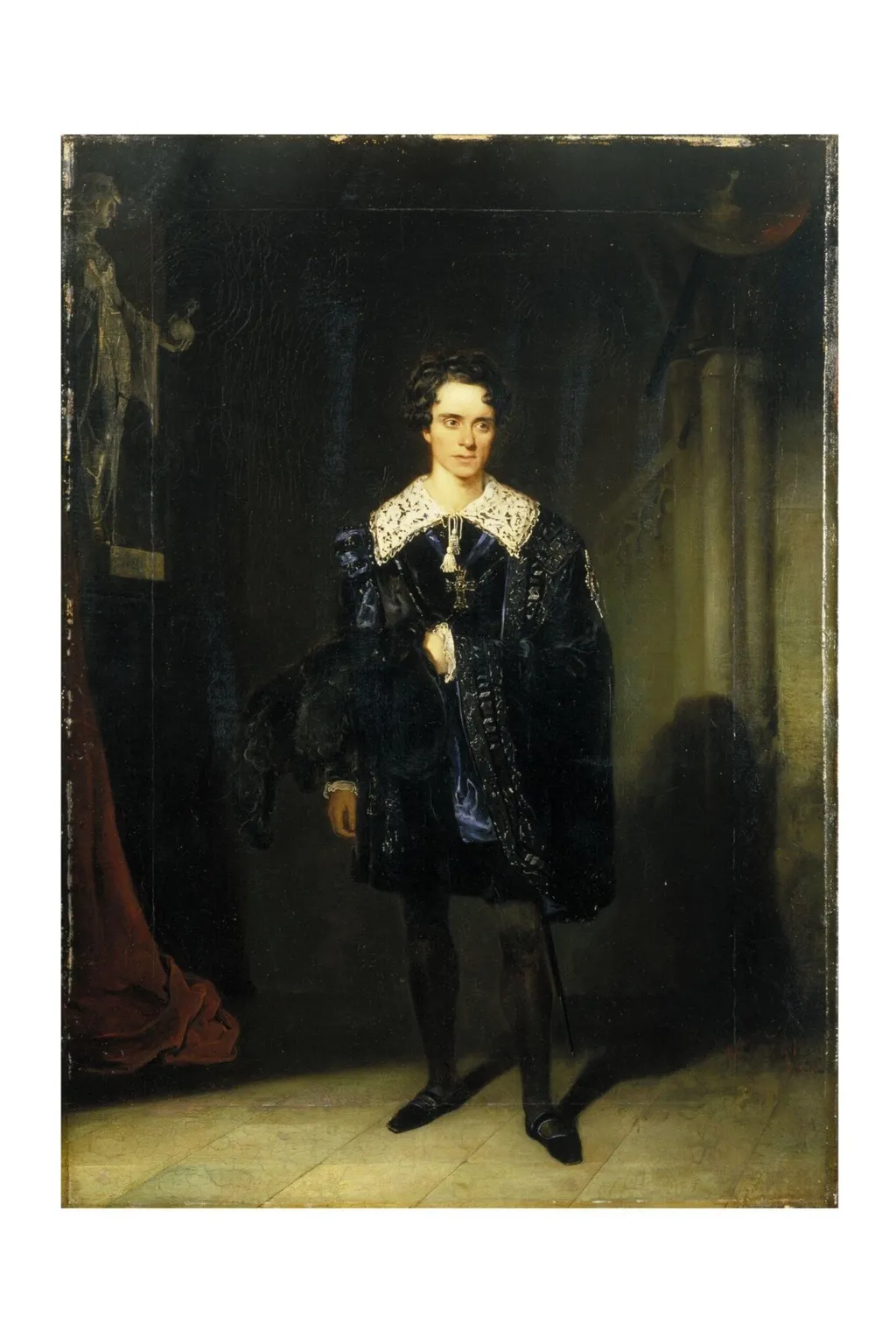
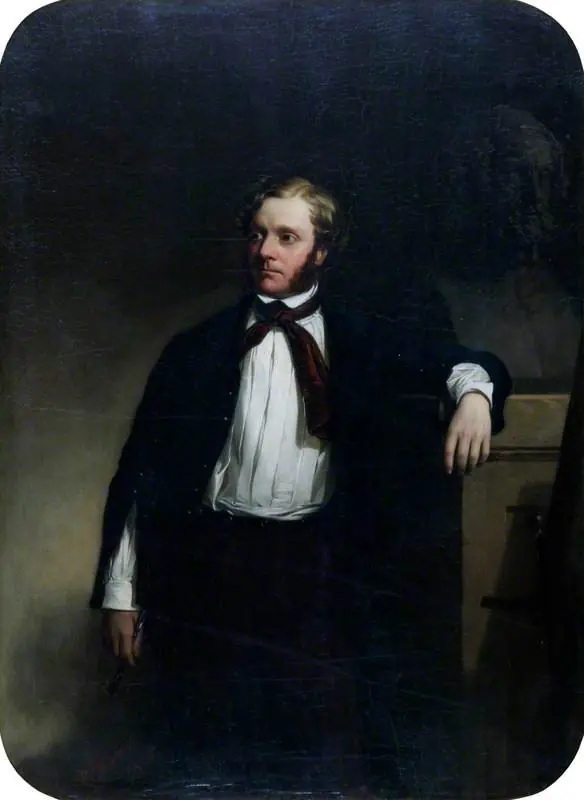
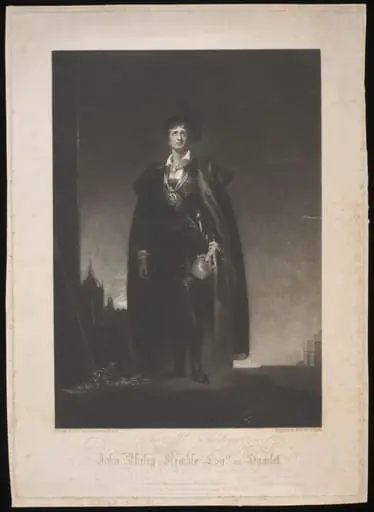
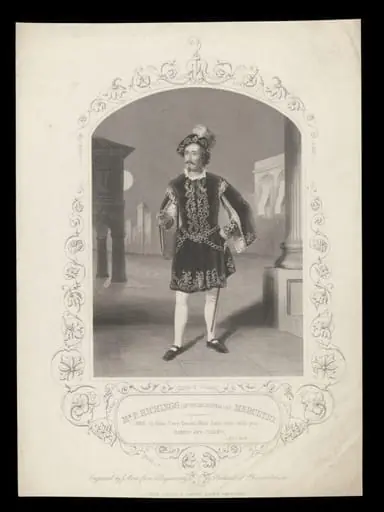
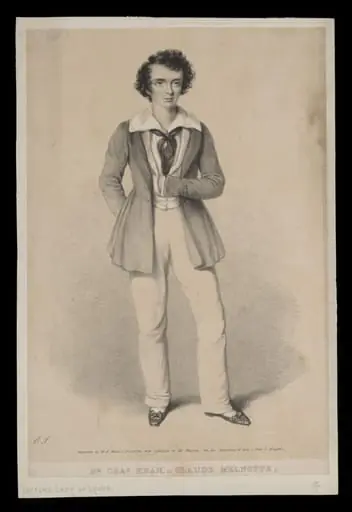
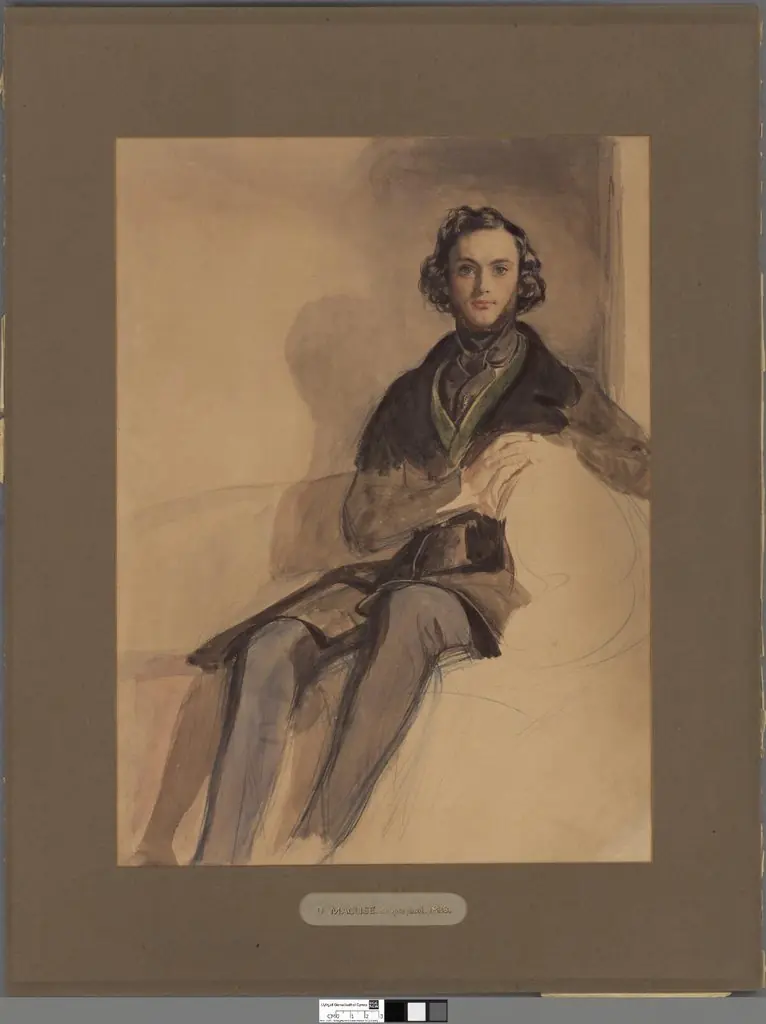
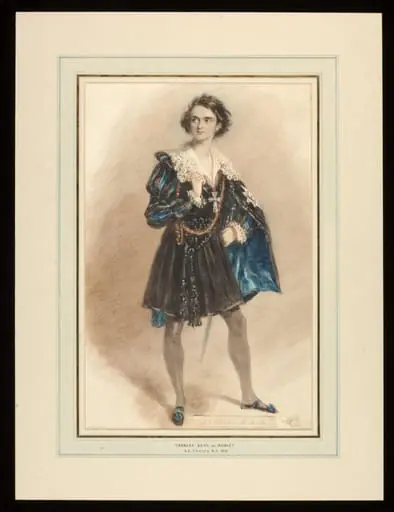
Charles Kean as Hamlet in <i>Hamlet</i> by William Shakespeare is a paint painting by the Romanticist artist William Daniels. It dates from 1835 and is held in the collection of the Victoria and Albert Museum. This 19th-century oil painting captures actor Charles Kean in the role of Hamlet, portraying the Danish prince in a moment of introspection.
About this work
Overview
This 19th-century oil painting captures actor Charles Kean in the role of Hamlet, portraying the Danish prince in a moment of introspection. The composition isolates the figure against a dimly lit stage backdrop, emphasizing his solitary presence. The use of deep shadows and selective illumination draws attention to the actor’s posture and costume, reflecting theatrical conventions of the period.
Subject & Meaning
The faint figure in the background may hint at unseen observers or spectral presences from the play, reinforcing themes of surveillance and dread.
Kean depicts Hamlet not in action, but in stillness—hand in pocket, gaze distant—conveying psychological depth rather than dramatic intensity. The dark cloak, fastened with a cross, and the visible hilt of a sword suggest inner conflict and royal burden. The faint figure in the background may hint at unseen observers or spectral presences from the play, reinforcing themes of surveillance and dread.
Technique & Style
The artist employs chiaroscuro to heighten the emotional weight of the scene, contrasting the actor’s sharply lit form against a near-black background. The texture of the lace collar and polished buttons is rendered with precision, grounding the theatricality in material realism. The red object in shadow adds a subtle visual anchor, its meaning ambiguous but visually disruptive.
History & Provenance
Painted during Kean’s tenure as a leading Shakespearean actor in Victorian England, the work documents a specific performance style prized for its historical accuracy and psychological nuance. It likely originated as a portrait commissioned to celebrate his theatrical reputation, possibly for private collection or theatrical archive, though its early ownership remains undocumented.
Context
In mid-19th-century Britain, Shakespearean drama was elevated to cultural reverence, and actors like Kean were celebrated as interpreters of literary genius. This painting reflects a trend toward naturalistic staging and character study, moving away from melodramatic gestures. The setting, stripped of elaborate scenery, aligns with contemporary efforts to prioritize textual fidelity and emotional authenticity on stage.
Legacy
The painting serves as a visual record of a pivotal moment in theatrical history, preserving how Hamlet was imagined by a generation committed to scholarly performance. While Kean’s interpretation has since been superseded, the work remains a testament to the intersection of literature, performance, and visual art in the Victorian era.
Artist & collection