Artwork
Ruins of the Chateau of Cremieux (Les Ruines du chateau de Cremieux)
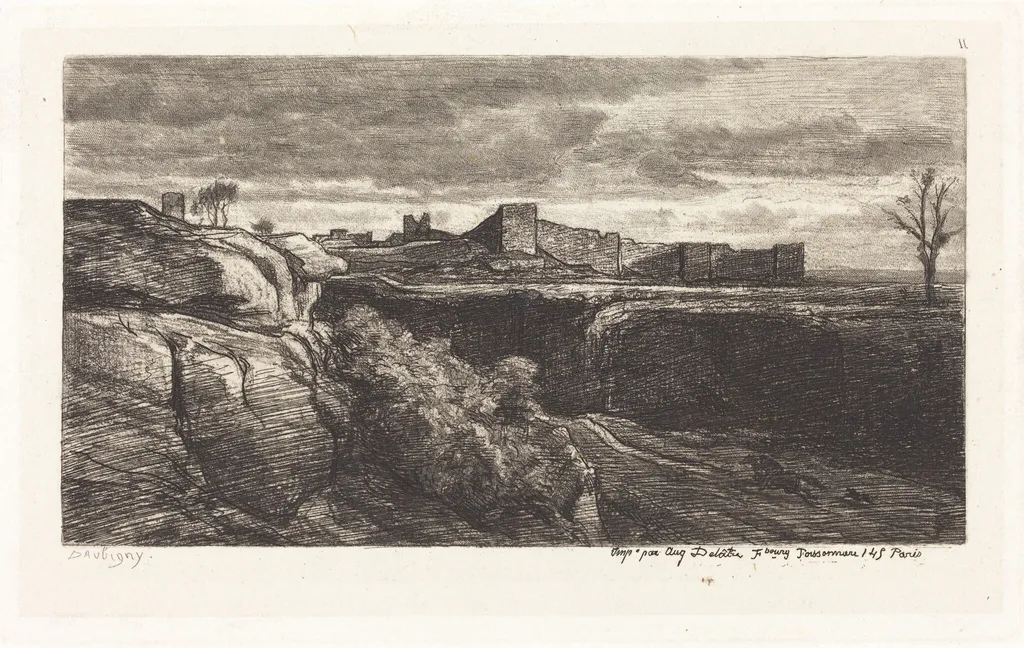
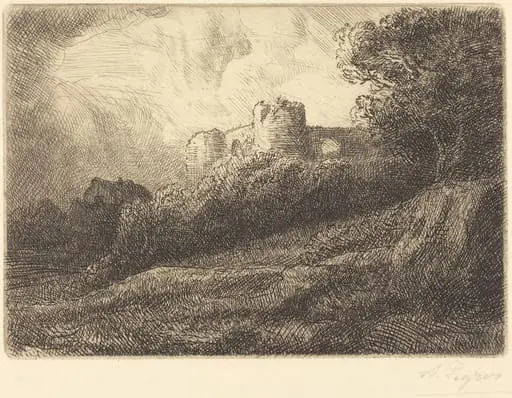
Ruins of the Chateau of Cremieux (Les Ruines du chateau de Cremieux) is an ink print by the Impressionist artist Charles François Daubigny. It dates from 1850 and is held in the collection of the National Gallery of Art. Created in 1850, *Ruins of the Chateau of Cremieux* is an etching by French artist Charles-François Daubigny.
About this work
Overview
As a member of the Barbizon school, Daubigny turned to printmaking to explore landscape themes with intimacy and nuance.
Created in 1850, *Ruins of the Chateau of Cremieux* is an etching by French artist Charles-François Daubigny. As a member of the Barbizon school, Daubigny turned to printmaking to explore landscape themes with intimacy and nuance. This work exemplifies his interest in capturing the quiet decay of rural architecture, using the etching process to render subtle tonal shifts and delicate textures in monochrome.
Subject & Meaning
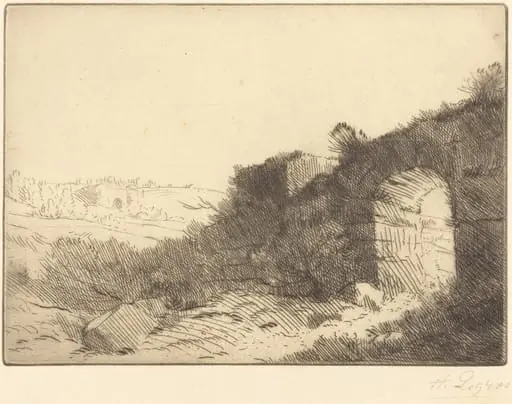
The print portrays the fragmented remains of a medieval chateau nestled in a quiet countryside. Overgrown vegetation and crumbling stonework suggest abandonment and the passage of time. The absence of human figures and the solitary trees reinforce a mood of solitude, aligning with the Barbizon ethos of finding dignity in unidealized nature and the traces of human history left to fade.
Technique & Style
Daubigny employed fine, controlled etching lines to suggest the roughness of stone, the softness of grass, and the airy texture of clouds. The composition directs the eye along a winding path toward the ruins, where light and shadow are delicately modulated to create a sense of atmospheric depth. His use of the medium avoids dramatic contrast, favoring muted tones that enhance the scene’s quiet melancholy.
History & Provenance
The etching was produced during a period when Daubigny was deeply engaged with printmaking, often using it to study light and form outside the constraints of oil painting. While specific early ownership records are sparse, the work is recognized as part of his broader exploration of French rural ruins, a theme he returned to throughout the 1850s in both drawings and prints.
Context
In mid-19th century France, artists increasingly turned away from historical or mythological subjects toward everyday landscapes and ruins. Daubigny’s etching reflects this shift, aligning with the Barbizon school’s emphasis on direct observation and emotional resonance in nature. His prints circulated among collectors and fellow artists, contributing to a growing appreciation for printmaking as a serious artistic medium.
Legacy
Daubigny’s approach to etching influenced later generations, including the Impressionists, who admired his ability to capture transient effects of light and atmosphere. *Ruins of the Chateau of Cremieux* stands as an early example of how printmaking could convey poetic stillness and historical reflection, expanding the possibilities of the medium beyond reproduction into personal expression.
Artist & collection
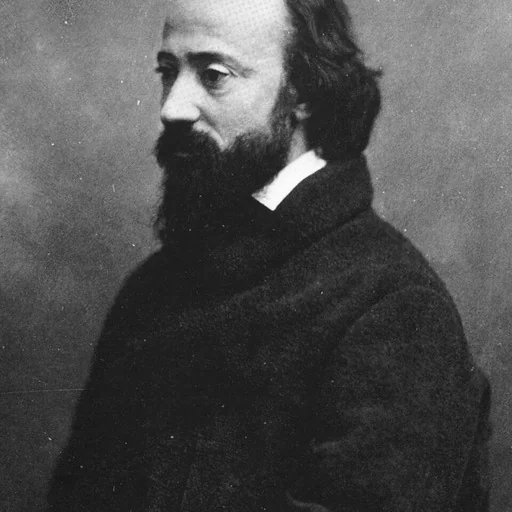
Artist
Charles-François Daubigny ( DOH-bin-yee, US: DOH-been-YEE, doh-BEEN-yee, French: ; 15 February 1817 – 19 February 1878) was a French painter, one of the members of the Barbizon school, and is considered an important precursor of…