Artwork
A asnières
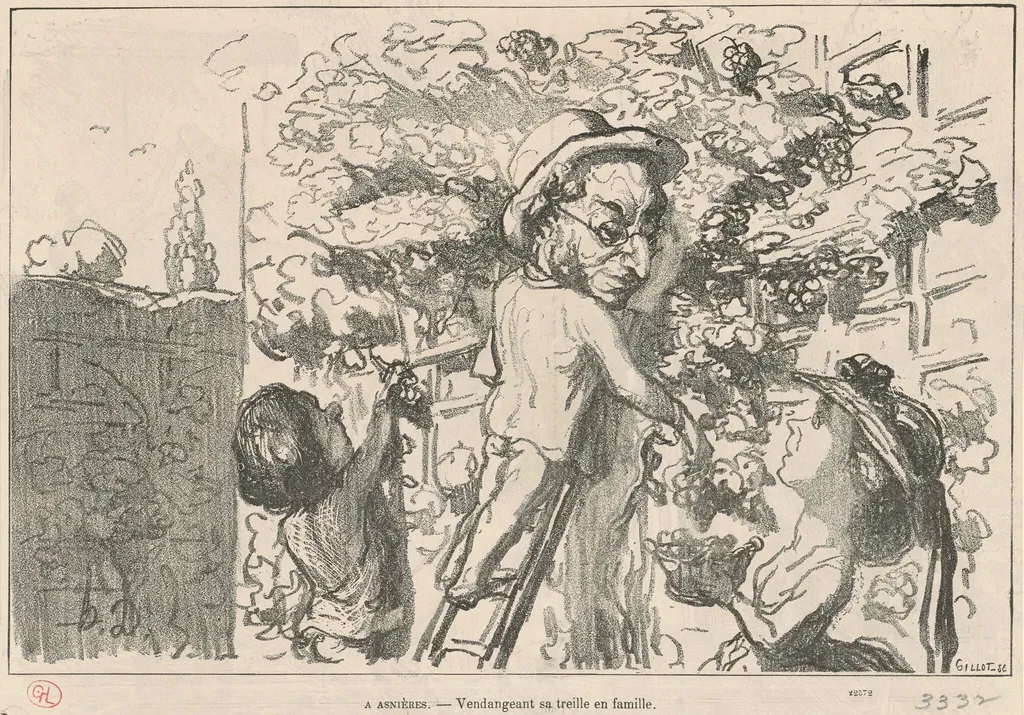
A asnières is an ink print by the Impressionist artist Honoré Daumier. It dates from 1864 and is held in the collection of the National Gallery of Art.
About this work
Overview
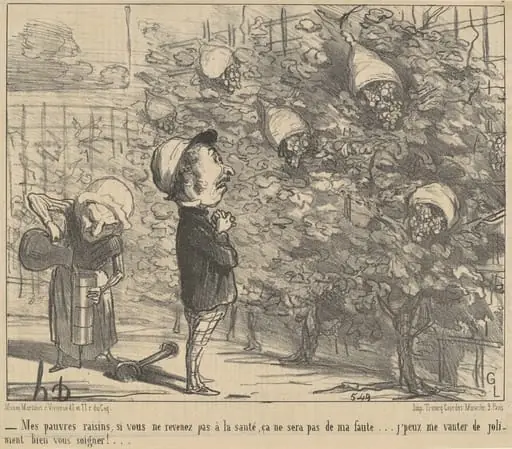
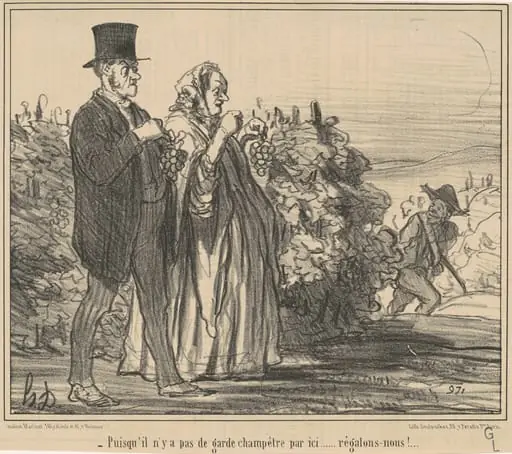
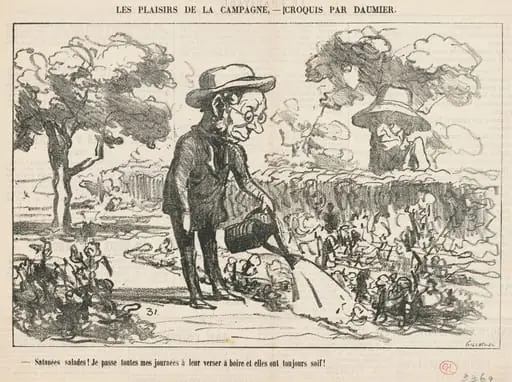
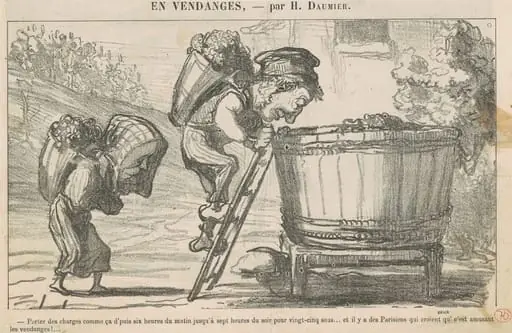
Honoré Daumier’s lithograph *A asnières* presents a bustling vineyard scene in the suburb of Asnières. The print captures laborers bent over vines, harvesting grapes beneath an open sky. Daumier’s composition centers on the activity of the workers, while a minimal background suggests the surrounding landscape.
Subject & Meaning
The image foregrounds ordinary people at work, reflecting Daumier’s recurring interest in everyday labor. By depicting the physical act of grape‑picking, the print highlights the rhythm of rural life and the collective effort required during harvest, offering a quiet tribute to the working class.
Technique & Style
Created with a lithographic stone and ink, Daumier employed vigorous, scratchy lines and strong contrasts to render form and texture. The bold shadows and varied shading give the figures volume, while the sparse background—limited to hints of sky and distant land—focuses attention on the activity in the foreground.
Context
Produced during the mid‑19th century, the work aligns with Daumier’s broader oeuvre that frequently portrayed contemporary social scenes. The choice of a suburban vineyard reflects the growing interest in rural subjects outside Paris, situating the print within the period’s expanding visual documentation of everyday French life.
Artist & collection

Artist
Honoré-Victorin Daumier was a French painter, sculptor, and printmaker, whose many works offer commentary on the social and political life in France, from the Revolution of 1830 to the fall of the Second French Empire in 1870.