Artwork
Allongeons le pas ... voila ceux hommes ...
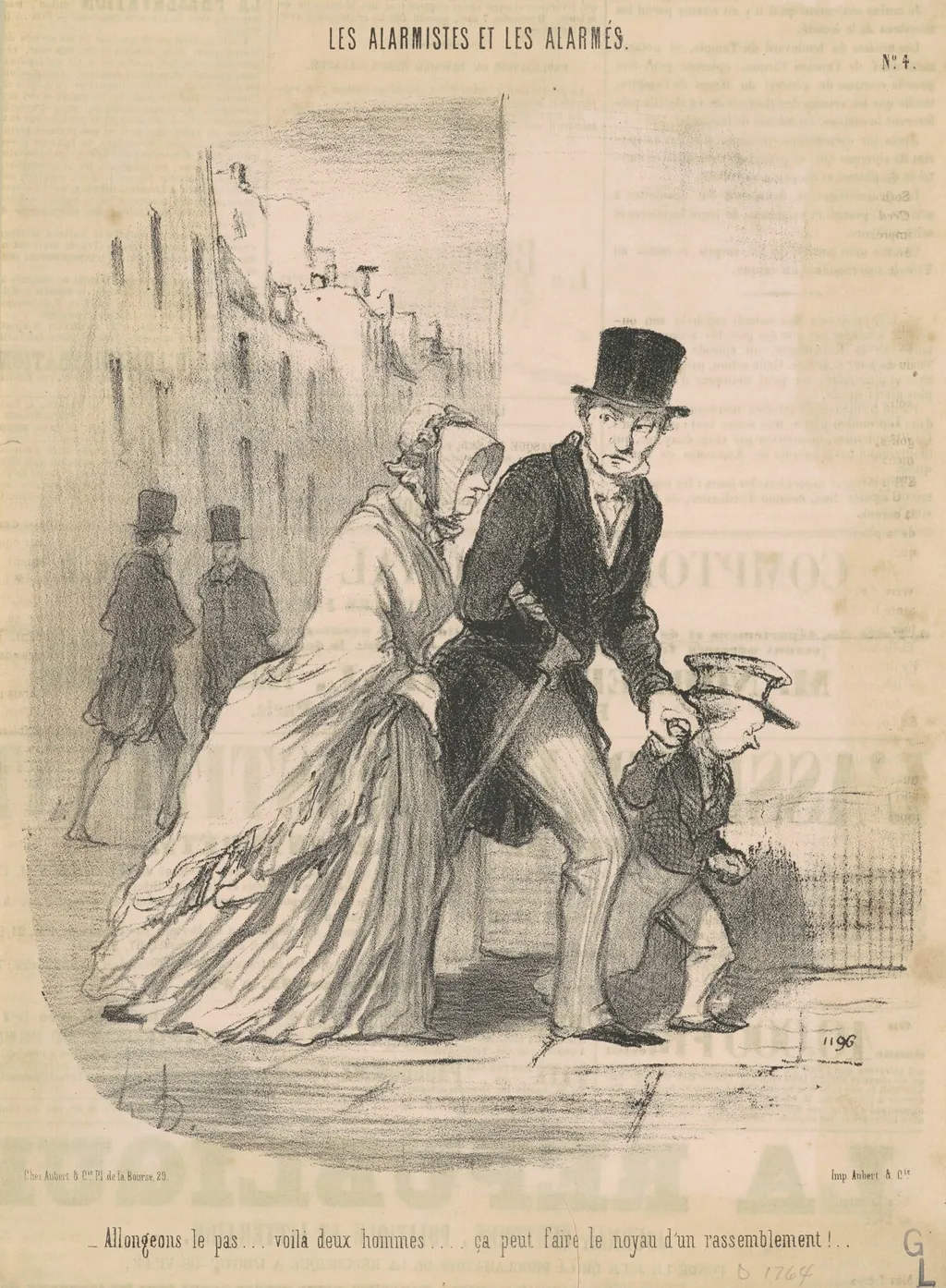
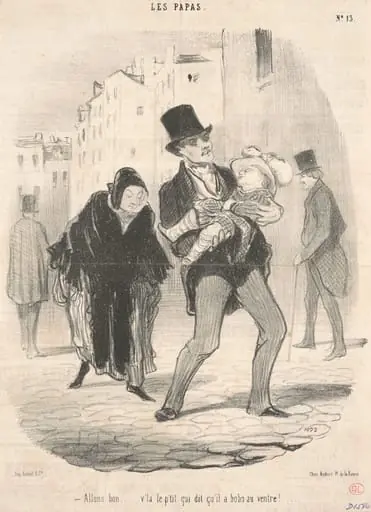
Allongeons le pas ... voila ceux hommes ... is an ink print by the Romanticist artist Honoré Daumier. It dates from 1848 and is held in the collection of the National Gallery of Art.
About this work
Overview
Rendered in the stark contrasts characteristic of the medium, the print captures a fleeting moment of urban tension without narrative explanation.
Honoré Daumier’s lithograph titled *Allongeons le pas … voilà ces hommes …* presents a brief glimpse of a bustling city street. The composition centers on three figures moving briskly, their postures and expressions conveying a palpable sense of unease. Rendered in the stark contrasts characteristic of the medium, the print captures a fleeting moment of urban tension without narrative explanation.
Subject & Meaning
The three passers‑by, dressed in mid‑nineteenth‑century attire, appear hurried and apprehensive, suggesting a collective anxiety that Daumier often linked to the social climate of his era. Their strained gait and wary glances embody a dichotomy between those who spread alarm and those who receive it, reflecting the artist’s satirical observation of contemporary public discourse.
Technique & Style
Executed as a lithograph, the work relies on the fluidity of drawn lines and the tonal depth achievable through stone printing. Daumier’s handling of light and shadow accentuates the figures’ movement, while the limited palette emphasizes the starkness of the scene. The print’s immediacy and sketch‑like quality are hallmarks of his graphic practice.
Context
Created during a period when Daumier frequently addressed political and social issues through caricature and print, this piece aligns with his broader critique of Parisian life in the 1850s‑60s. The urban setting, fashionable yet hurried clothing, and the sense of collective alarm echo the rapid modernization and accompanying social anxieties of the time.
Artist & collection

Artist
Honoré-Victorin Daumier was a French painter, sculptor, and printmaker, whose many works offer commentary on the social and political life in France, from the Revolution of 1830 to the fall of the Second French Empire in 1870.