Artwork
Amateurs parisiens profitant du séjour de Rossini
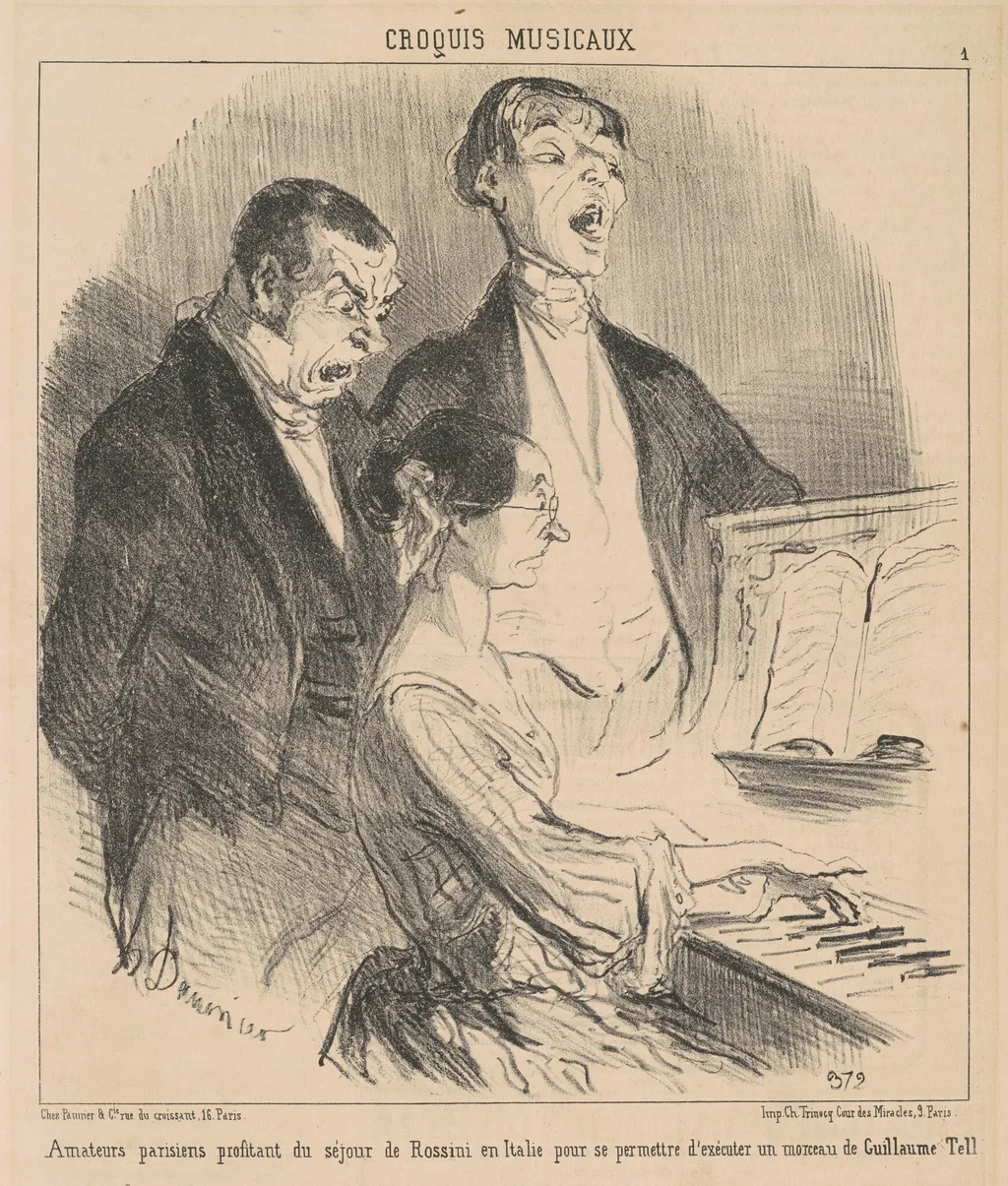
Amateurs parisiens profitant du séjour de Rossini is an ink print by the Impressionist artist Honoré Daumier. It dates from 1852 and is held in the collection of the National Gallery of Art.
About this work
This lithograph shows three Parisians singing together in a room. One woman plays piano while two men stand beside her. All wear fancy clothes, mid-song.
Daumier loved drawing musicians and everyday life. He made this while Rossini stayed in Paris in 1852. The artist catches a real moment, not a stiff portrait.
Check out more Daumier at the National Gallery of Art, Washington.
Overview
The piece emerged during the Italian composer Gioachino Rossini’s extended stay in the city, a time when musical salons flourished among Parisian amateurs.
Created in 1852 by Honoré Daumier, this lithograph captures a private musical gathering in Paris. It portrays three individuals— one woman at the piano and two male singers—engaged in an informal performance. Rendered in ink on paper, the work reflects Daumier’s interest in everyday cultural moments rather than grand historical scenes. The piece emerged during the Italian composer Gioachino Rossini’s extended stay in the city, a time when musical salons flourished among Parisian amateurs.
Subject & Meaning
The scene depicts non-professional musicians enjoying music as a social activity, not a public spectacle. Dressed in evening attire, the figures embody the middle-class pursuit of refined leisure. Their postures suggest spontaneity—mid-performance, unposed—highlighting music as a shared, intimate experience. Daumier avoids idealization, instead emphasizing the quiet dignity of ordinary people engaging with art in their homes.
Technique & Style
Daumier employed lithography to achieve fluid, expressive lines with subtle tonal variation. His brushwork conveys movement through loose, energetic strokes, particularly in the folds of clothing and the positioning of hands. The composition is tightly framed, focusing attention on the performers’ interaction. Shadows and minimal background detail isolate the figures, reinforcing the domestic setting and the immediacy of the moment.
History & Provenance
The print was produced during Rossini’s 1852–1855 residence in Paris, a period when his presence inspired widespread musical enthusiasm among the city’s amateurs. Daumier, known for his satirical and observational works, turned his attention to this cultural ripple. Though not widely published at the time, the lithograph entered institutional collections in the 20th century, including the National Gallery of Art in Washington, D.C.
Context
In mid-19th century Paris, domestic music-making was a common social ritual among the bourgeoisie. Salons hosted by amateur musicians offered cultural exchange outside formal concert halls. Daumier’s work aligns with a broader trend in French art that valued candid depictions of daily life, contrasting with academic traditions. His focus on non-professionals reflects a democratic view of art’s role in society.
Legacy
This lithograph exemplifies Daumier’s enduring contribution to the documentation of bourgeois culture through art. While not widely celebrated in his lifetime, such works later influenced realist and modernist artists interested in unvarnished human behavior. Today, it stands as a quiet testament to the private rituals that sustained musical life in 19th-century Paris, valued for its authenticity over theatricality.
Artist & collection

Artist
Honoré-Victorin Daumier was a French painter, sculptor, and printmaker, whose many works offer commentary on the social and political life in France, from the Revolution of 1830 to the fall of the Second French Empire in 1870.









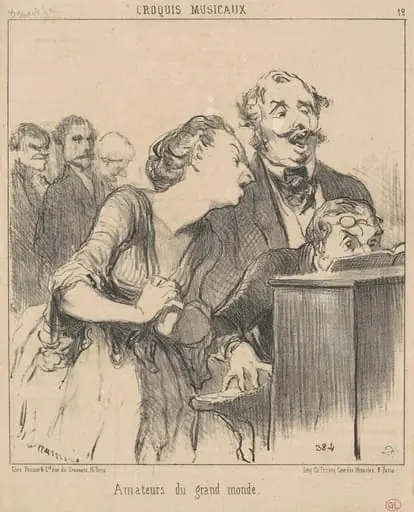 Amateurs du grand monde
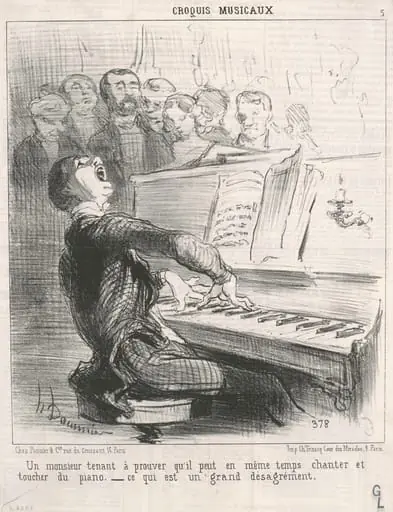 Un Monsieur tenant à prouver qu'il peut...
 Un monsieur tenant a prouver qu'il peut ...
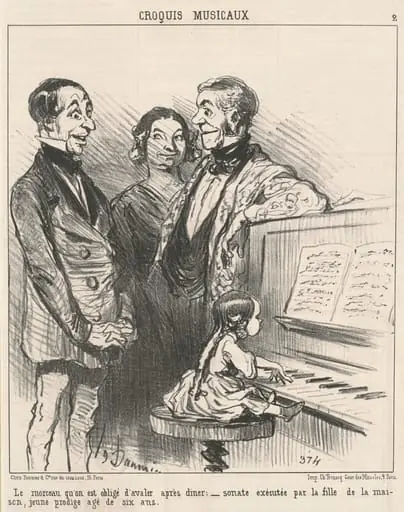 Le morceau qu'on obligé d'avalier ...
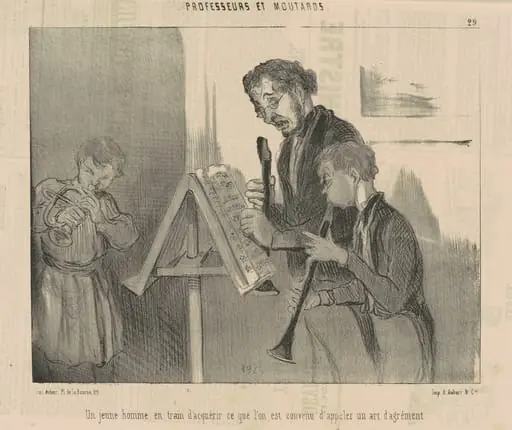 Un jeune homme en train d'acquérir ... un art d'agrément
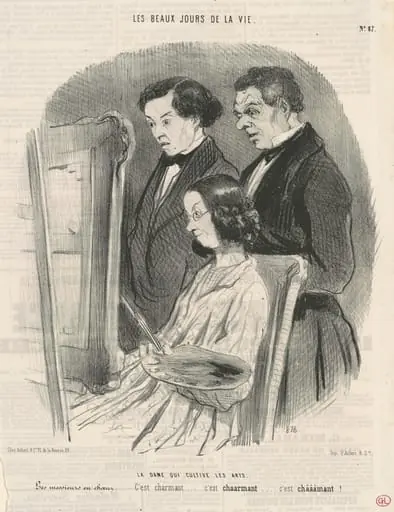 La dame qui cultive les arts
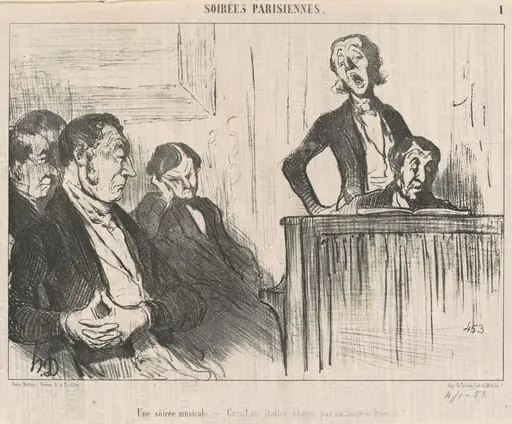 Une soirées musicale
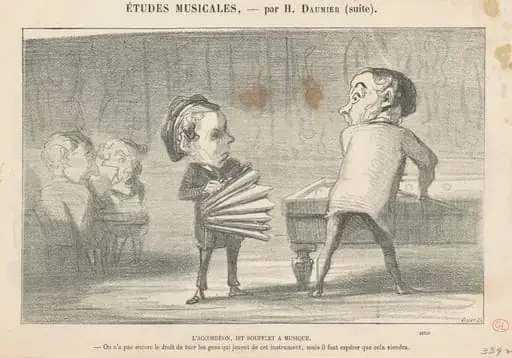 L'accordéon, dit soufflet à musique
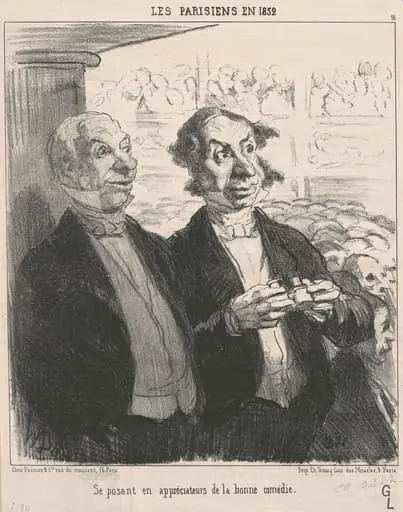 Se posant en appréciateur