Artwork
Artistes en train d'examiner ...
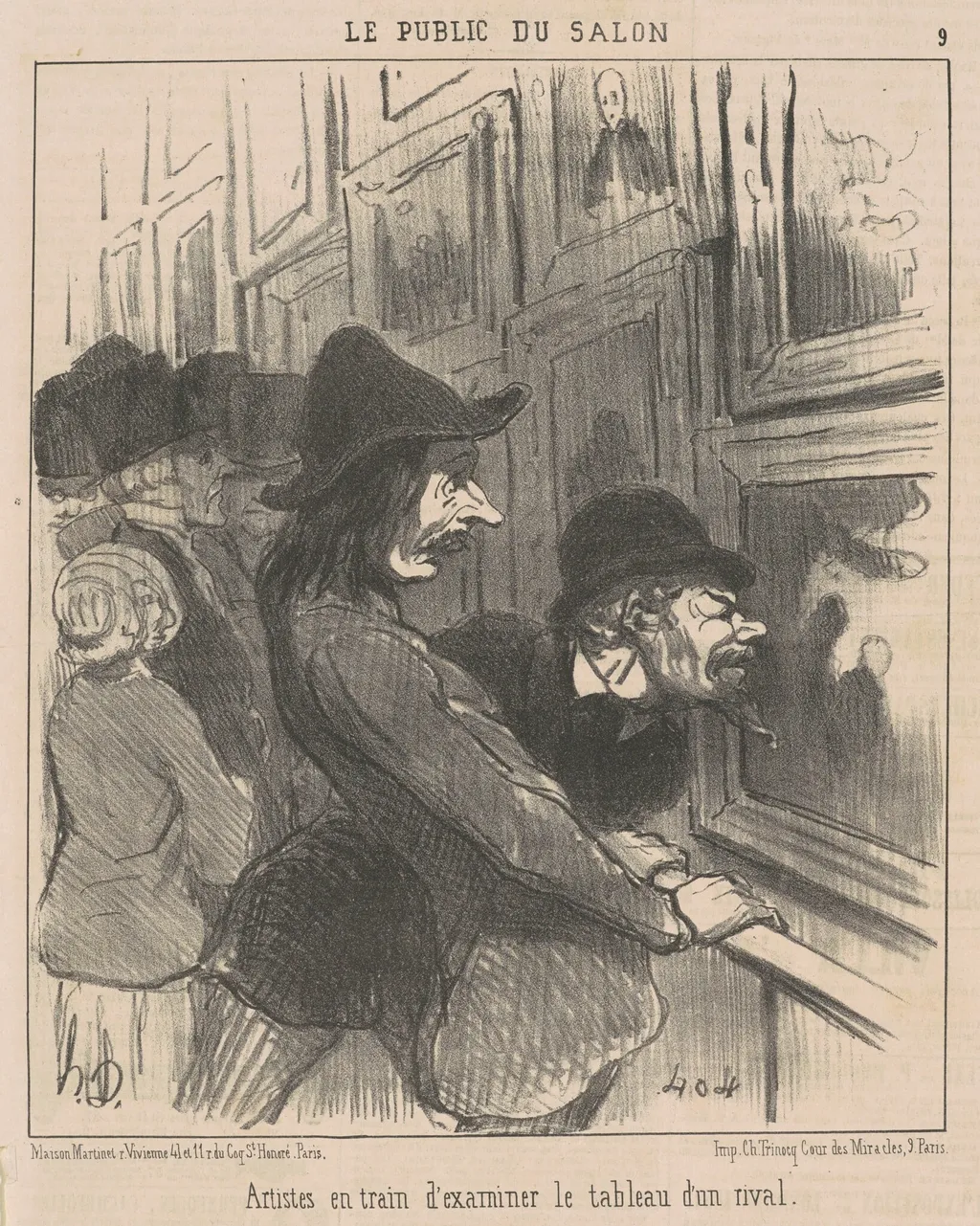
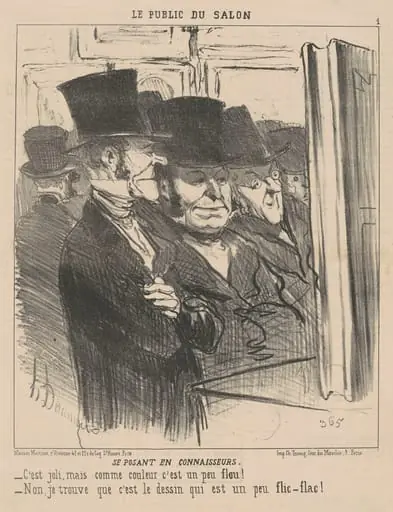
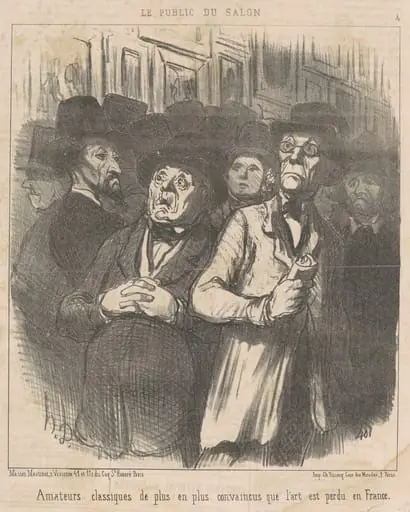
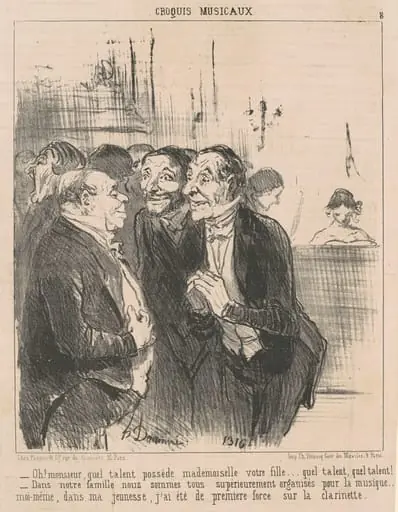
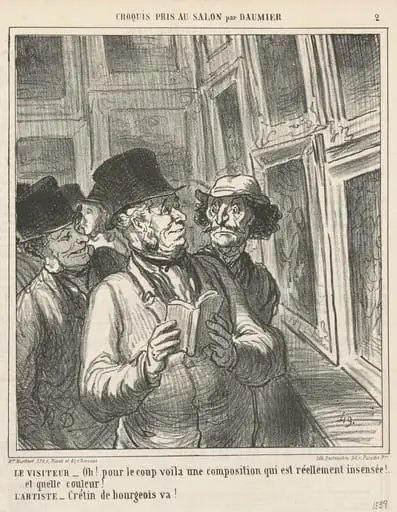
Artistes en train d'examiner ... is an ink print by the Impressionist artist Honoré Daumier. It dates from 1852 and is held in the collection of the National Gallery of Art.
About this work
Overview
The composition emphasizes collective engagement with art, portraying viewers not as passive spectators but as active participants in the act of looking.
This lithograph by Honoré Daumier captures a group of figures gathered in an art gallery, their attention fixed on the works mounted on the walls. Rendered in the medium of lithography, the print conveys a quiet, observational moment rather than a dramatic scene. The composition emphasizes collective engagement with art, portraying viewers not as passive spectators but as active participants in the act of looking.
Subject & Meaning
The figures, dressed in mid-19th-century attire, represent a cross-section of society engaged in the ritual of art viewing. Their postures and expressions suggest deep concentration, implying intellectual or aesthetic deliberation. Daumier does not idealize the scene; instead, he presents it with subtle irony, hinting at the social performance of cultural refinement among the bourgeoisie during a time when public galleries were becoming sites of civic identity.
Technique & Style
Daumier employed lithography to achieve a fluid, sketch-like quality, using tonal contrasts and simplified forms to suggest movement and texture. The lines are economical, avoiding excessive detail, which directs focus to the figures' gestures and the spatial arrangement of the gallery. The medium’s capacity for rapid reproduction aligned with Daumier’s interest in documenting everyday life for a broad audience, reinforcing the print’s social commentary.
History & Provenance
Created during the 1850s or 1860s, the work emerged from Daumier’s broader series of lithographs critiquing Parisian cultural institutions. It was likely published in a periodical or as a standalone print, circulating among middle-class collectors. While the exact provenance of individual impressions is often undocumented, the piece is now held in major museum collections, reflecting its enduring status as a record of 19th-century visual culture.
Context
In mid-19th-century France, public museums like the Louvre were newly accessible to non-elites, transforming art viewing into a social practice. Daumier’s scene reflects this shift, capturing the rise of the art-going public. At the same time, the work subtly critiques the performative nature of this engagement, revealing how cultural participation could mask conformity or superficiality amid growing commercialization of the arts.
Legacy
Daumier’s lithograph remains a significant document of how ordinary people interacted with art in an era of institutional change. Its unembellished realism influenced later artists interested in the sociology of viewing, from Degas to modern documentary photographers. The work endures not for its aesthetic polish, but for its quiet, incisive observation of human behavior within the evolving landscape of public art culture.
Artist & collection

Artist
Honoré-Victorin Daumier was a French painter, sculptor, and printmaker, whose many works offer commentary on the social and political life in France, from the Revolution of 1830 to the fall of the Second French Empire in 1870.