Artwork
C'est singulier... il ne me vient plus d'idées... que...
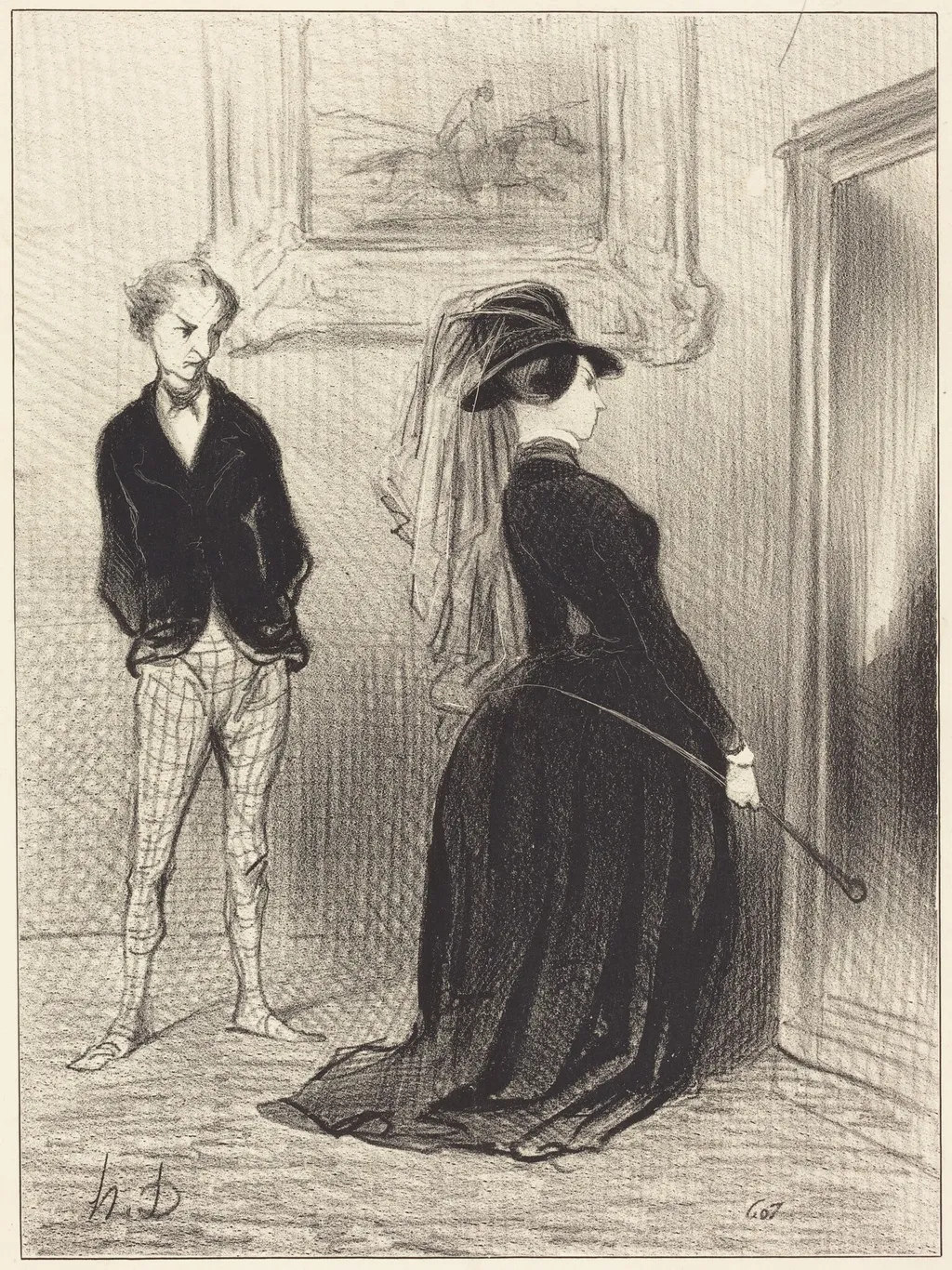
C'est singulier... il ne me vient plus d'idées... que... is an ink print by the Romanticist artist Honoré Daumier. It dates from 1844 and is held in the collection of the National Gallery of Art.
About this work
Overview
Created in 1844, this lithograph is one of many satirical works by Honoré Daumier produced for French periodicals. It captures a quiet, tense moment between two figures in an unadorned interior, reflecting his focus on everyday human behavior rather than overt political symbols. Daumier’s output during this period consistently critiqued social pretensions through subtle, observational imagery.
Subject & Meaning
The kneeling figure, veiled and holding a fan, suggests a woman of uncertain social standing, perhaps in a moment of vulnerability or performative modesty.
The scene depicts two individuals in a moment of stalled communication—one kneeling awkwardly on a chair, the other standing with downcast eyes. The kneeling figure, veiled and holding a fan, suggests a woman of uncertain social standing, perhaps in a moment of vulnerability or performative modesty. The ambiguity of their interaction invites interpretation of social discomfort, unspoken tension, or the exhaustion of empty ritual.
Technique & Style
Daumier employed lithography to achieve a spontaneous, sketch-like quality. His loose, rapid lines convey movement and psychological unease without detailed rendering. The soft, diffused lighting and blurred contours enhance the sense of intimacy and impermanence. The medium allowed him to produce images quickly for mass circulation, aligning his technique with the immediacy of journalistic satire.
History & Provenance
This print emerged during Daumier’s most prolific period as a political caricaturist, when his work appeared regularly in publications like Le Charivari. Though not as overtly political as his depictions of judges or royalty, this image fits within his broader project of exposing social absurdities. Its survival in museum collections reflects its recognition as a representative example of his psychological realism in print.
Context
In mid-1840s France, under the July Monarchy, public discourse was tightly controlled, yet satirical prints flourished in underground circulation. Daumier’s work navigated censorship by focusing on human foibles rather than direct portraits of power. This image’s quiet unease mirrors the broader societal anxiety of a middle class navigating shifting class boundaries and rigid social performances.
Legacy
Daumier’s ability to convey complex emotional states through minimal means influenced later realist and modernist artists. This lithograph exemplifies his departure from caricature’s exaggeration toward nuanced observation. Its enduring presence in collections underscores its role in redefining printmaking as a vehicle for intimate, human-centered commentary rather than mere political polemic.
Artist & collection

Artist
Honoré-Victorin Daumier was a French painter, sculptor, and printmaker, whose many works offer commentary on the social and political life in France, from the Revolution of 1830 to the fall of the Second French Empire in 1870.









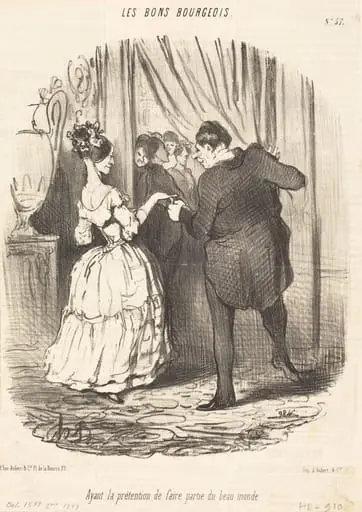 Ayant la prétention de faire partie du beau monde
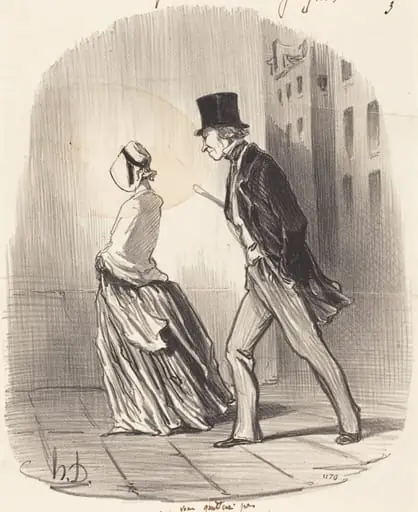 Non, madame, je ne vous quitterai pas...
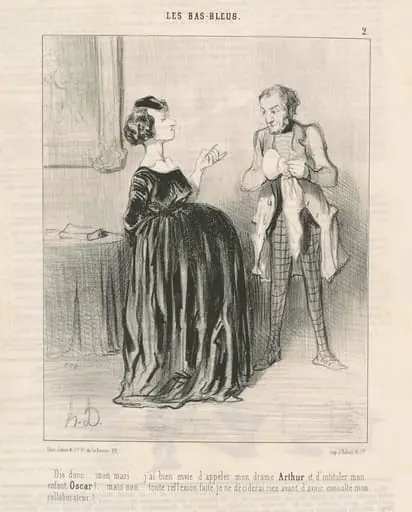 Dis donc ... mon mari ...j'ai bien envie d'appeler mon drama ...
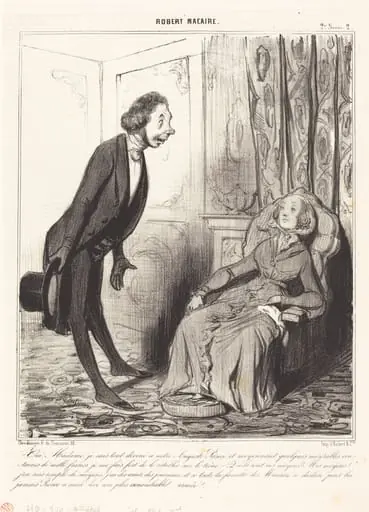 Oui, Madame, je suis tout dévoué a notre... Prince...
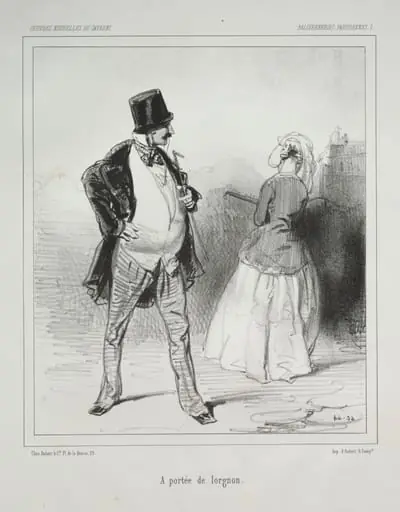 A portée de lorgnon
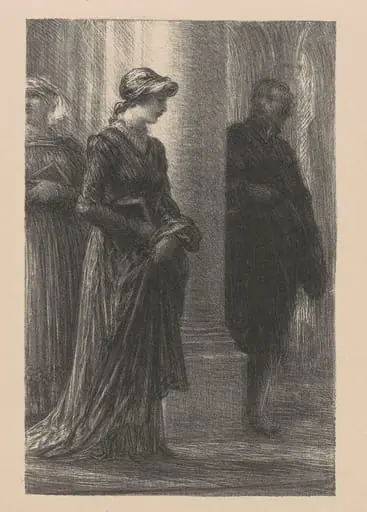 Richard Wagner and His Genius from Scenes of Rheingold
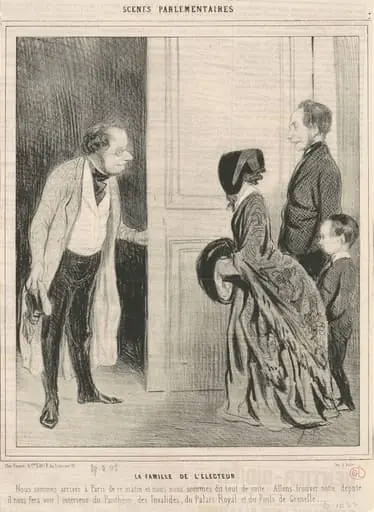 La famille de l'électeur
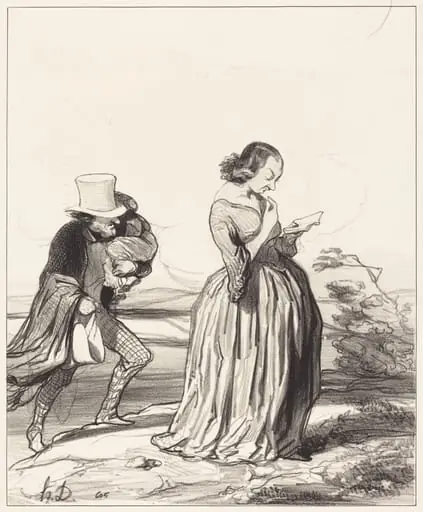 Saperlotte!... que je voudrais... que ma femme ait fini...
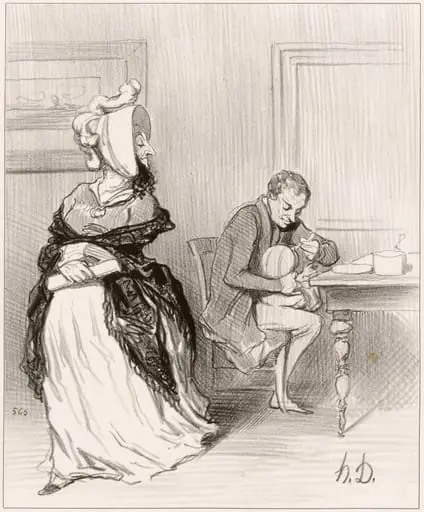 Adieu, mon cher, je vais chez mes éditeurs...