Artwork
Ce qu'on appelle les plasirs du turf
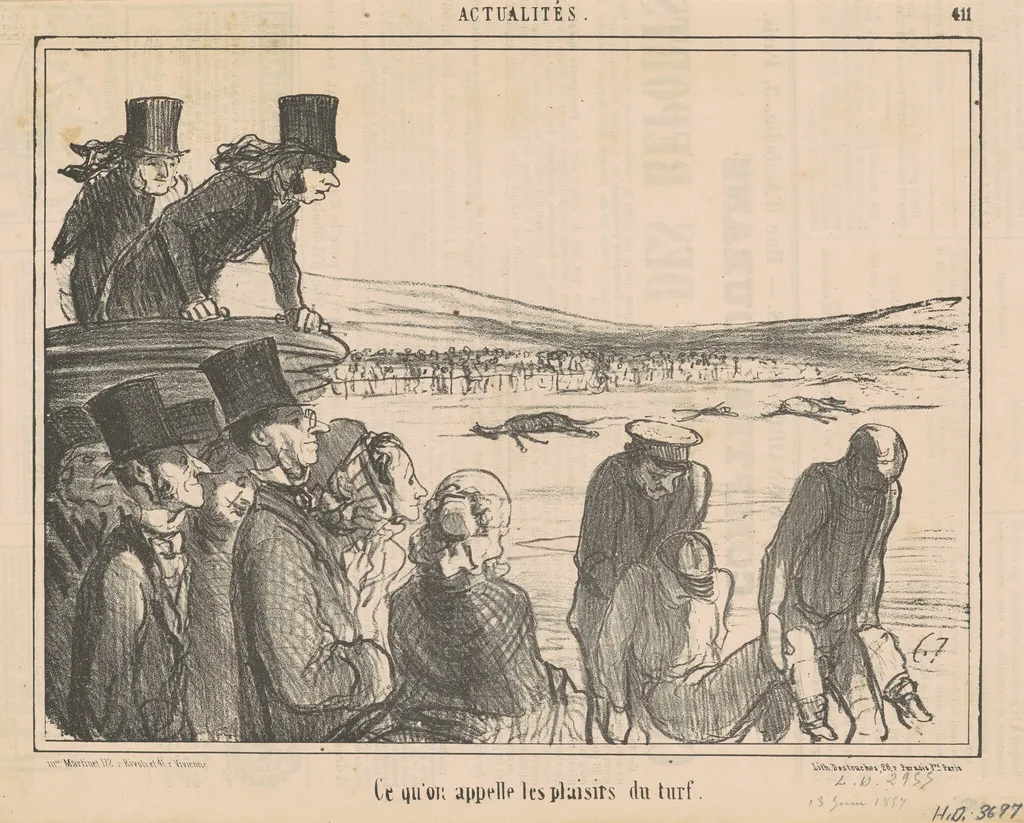
Ce qu'on appelle les plasirs du turf is an ink print by the Impressionist artist Honoré Daumier. It dates from 1857 and is held in the collection of the National Gallery of Art.
About this work
Overview
Honoré Daumier’s lithograph 'Ce qu'on appelle les plasirs du turf' portrays a crowd gathered at a horse race, rendered in stark black and white. The composition captures the motion of galloping horses and the varied postures of spectators, conveying the energy and rhythm of the event without color or embellishment. Daumier’s focus lies in the collective experience rather than individual glory.
Subject & Meaning
The scene depicts the social ritual of horse racing in 19th-century France, where attendance was as much about public display as sport. Daumier presents the audience not as aristocrats but as a cross-section of urban society—men in top hats, women in bonnets, laborers on their feet—revealing how leisure activities bridged class boundaries, even if only temporarily.
Technique & Style
Using lithography, Daumier employed fluid, expressive lines and contrasting tones to suggest movement and texture. His loose, almost sketch-like strokes convey urgency and spontaneity, avoiding fine detail in favor of emotional resonance. The monochrome palette heightens the drama of gesture and form, aligning with his broader interest in capturing fleeting human behavior.
History & Provenance
Created in the 1850s, the print was likely produced for publication in a periodical, part of Daumier’s prolific output for satirical journals. It circulated widely among Parisian readers, reflecting his role as a chronicler of contemporary life. The work entered museum collections in the 20th century as interest grew in his social commentary through graphic art.
Context
Horse racing in mid-19th-century France was both a fashionable pastime and a symbol of modern urban life. As racecourses expanded near cities, they became sites of public spectacle. Daumier’s image aligns with broader cultural shifts—industrialization, rising middle-class leisure, and the democratization of entertainment—capturing a moment when sport intersected with social observation.
Legacy
Daumier’s lithographs, including this one, helped redefine printmaking as a vehicle for social critique and everyday realism. His unidealized depictions of public life influenced later generations of artists, from the Impressionists to modern graphic illustrators, who sought to document the pulse of urban society with honesty and immediacy.
Artist & collection
Artist
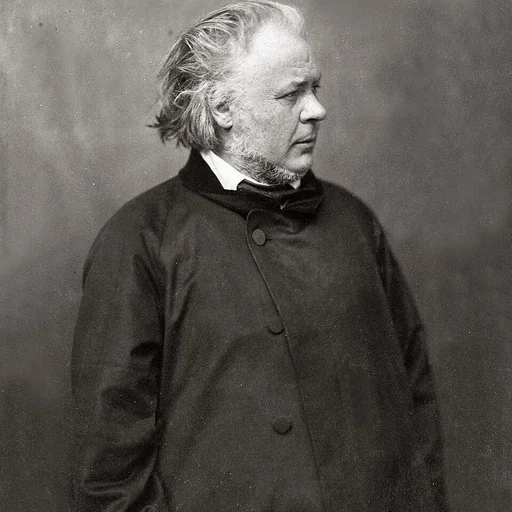
Honoré-Victorin Daumier was a French painter, sculptor, and printmaker, whose many works offer commentary on the social and political life in France, from the Revolution of 1830 to the fall of the Second French Empire in 1870.









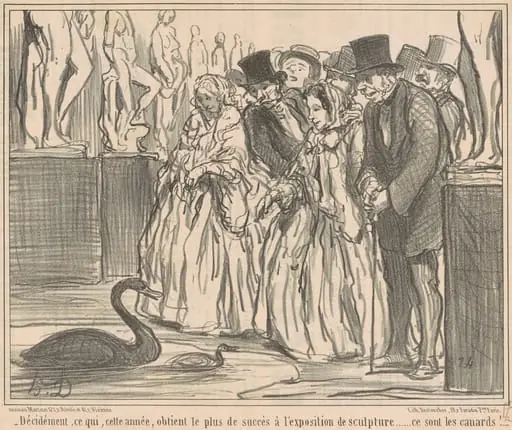 Décidément, ce qui, cette année, obtient ...
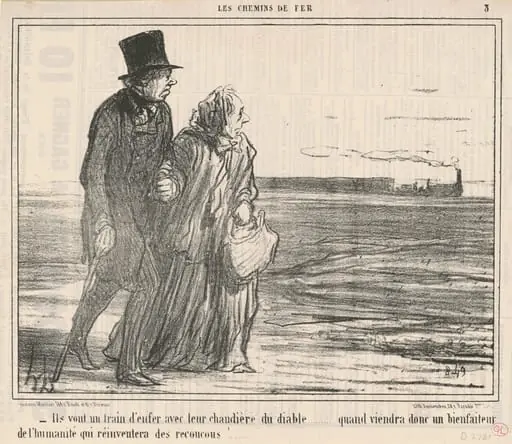 Ils vont un train d'enfer ...
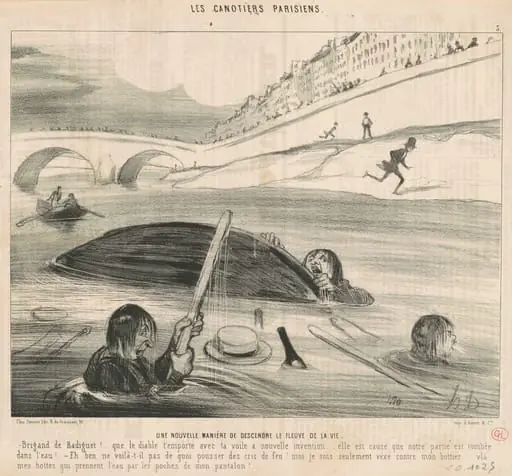 Une nouvelle maniére de descendre le fleuve de la vie
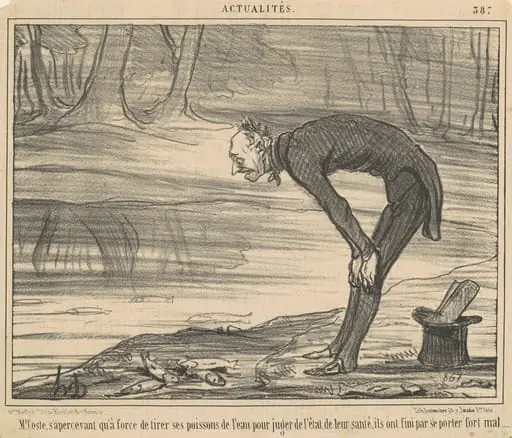 M. Coste, s'apercevant qu'a force de tirer
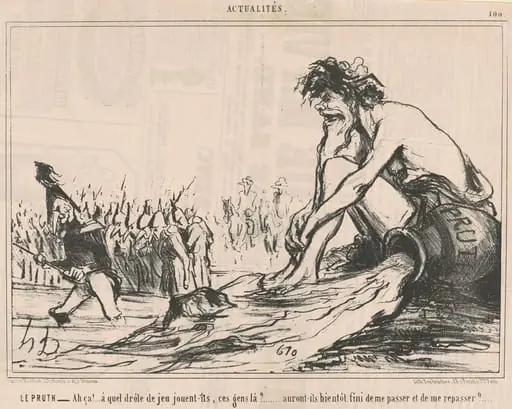 Le Pruth
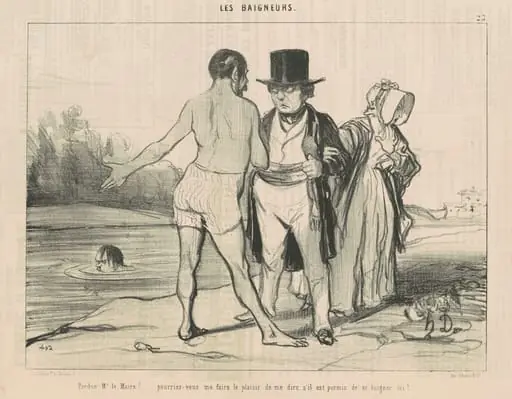 Pardon, Mr Le Maire! ... pourriez-vous ...
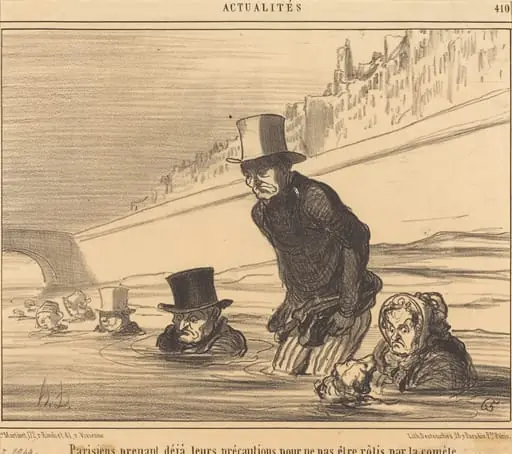 Parisiens prenant... leurs précautions...
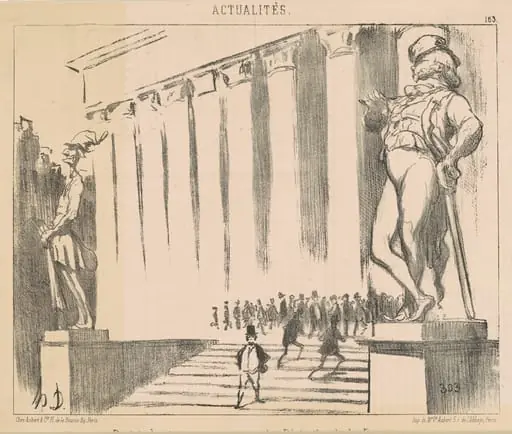 Projet de statutes pour orner ... la Bourse