Artwork
De l'utilité d'une famille pour une cantatrice
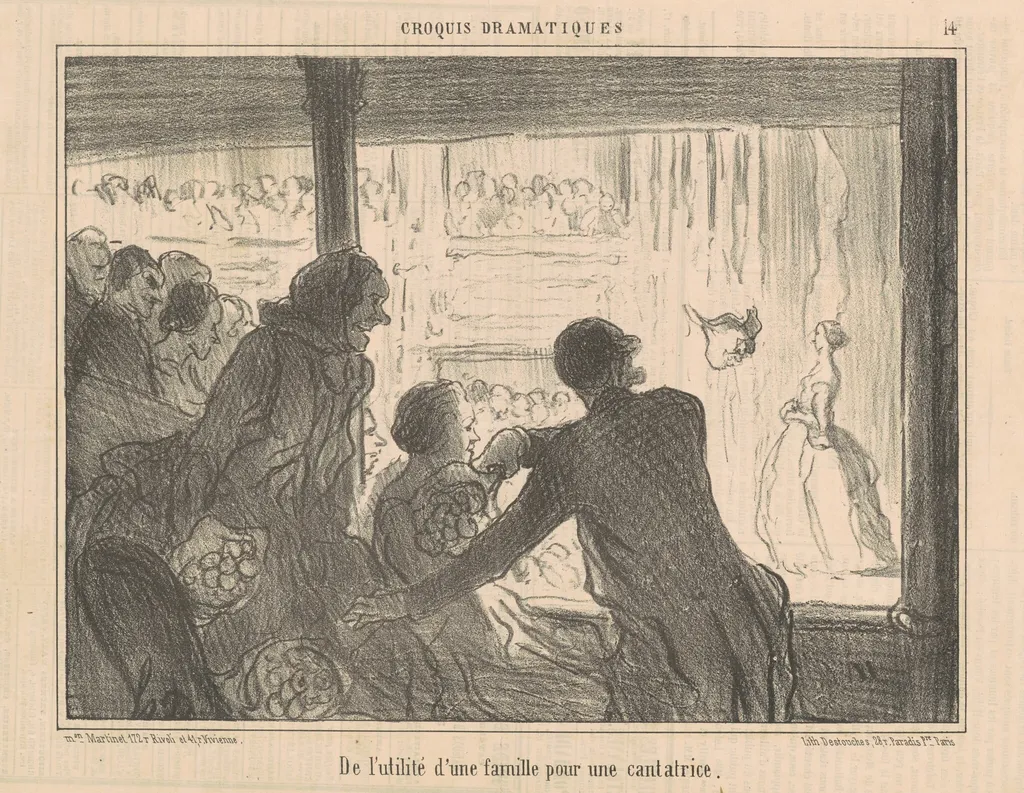
De l'utilité d'une famille pour une cantatrice is an ink print by the Impressionist artist Honoré Daumier. It dates from 1857 and is held in the collection of the National Gallery of Art.
About this work
Overview
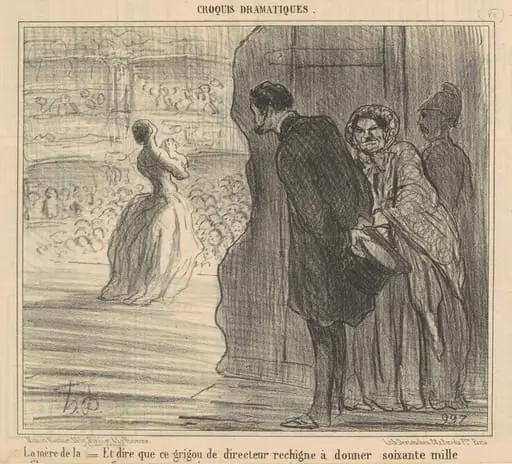
Honoré Daumier’s lithograph titled *De l’utilité d’une famille pour une cantatrice* captures a bustling 19th‑century theatre scene. The print depicts a densely packed auditorium where elegantly attired spectators observe a solo singer onstage, offering a snapshot of contemporary leisure and public performance.
Subject & Meaning
The central figure is a female vocalist, hands clasped in concentration, positioned against a relatively empty stage. Around her, the audience’s varied profiles—some holding bouquets—underscore the social ritual of attending operatic or concert events, hinting at the communal value placed on cultural gatherings.
Technique & Style
Executed in lithography, Daumier employs stark contrasts between the dark silhouettes of the crowd and the lighter, more detailed rendering of the singer. The crisp line work and careful shading convey depth within the cramped space, while the repetitive profiles emphasize the uniformity of the fashionable public.
Context
Created during the mid‑1800s, the print reflects the rise of bourgeois patronage of the arts in Paris. Daumier, known for his satirical observations of everyday life, applied his keen eye to the theatrical milieu, documenting the era’s social hierarchies and the collective experience of public entertainment.
Artist & collection

Artist
Honoré-Victorin Daumier was a French painter, sculptor, and printmaker, whose many works offer commentary on the social and political life in France, from the Revolution of 1830 to the fall of the Second French Empire in 1870.