Artwork
Impressions de vendages
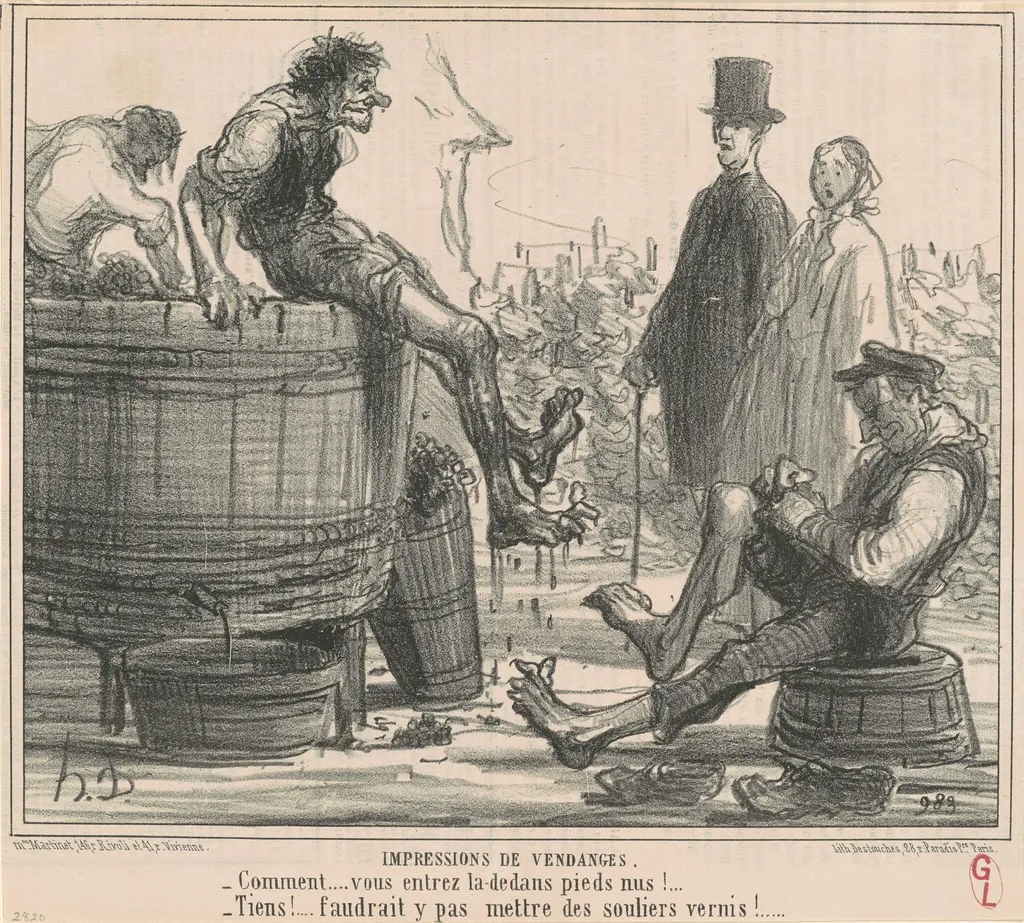
Impressions de vendages is an ink print by the Impressionist artist Honoré Daumier. It dates from 1856 and is held in the collection of the National Gallery of Art.
About this work
Overview
The lithograph titled "Impressions de vendages" presents a lively vignette of grape‑stomping. Four robust figures are shown pressing grapes in a wooden vat, their expressions exaggerated for comic effect, while a small dog observes from the periphery. A caption in bold lettering hovers above the scene, reinforcing the work’s humorous tone.
Subject & Meaning
Rather than a solemn depiction of agricultural labor, the image treats the harvest as a source of amusement. By amplifying the workers’ gestures and adding playful text, the artist satirizes the rustic routine, inviting viewers to recognize the absurdities of everyday toil without resorting to overt criticism.
Technique & Style
Executed in lithography, the print relies on thick, energetic black lines that convey motion and texture. The stark contrast between inked areas and white space heightens the sense of chaos, while the exaggerated facial features and stylized figures reflect a caricatural approach typical of the creator’s broader oeuvre.
Context
Created during a period when the artist frequently employed satire to comment on contemporary life, this work aligns with his broader practice of blending social observation with humor. The focus on a traditional winemaking activity situates the piece within a rural French setting, yet the treatment remains universal in its comedic critique of labor.
Legacy
The lithograph exemplifies how print media could disseminate socially aware yet entertaining imagery in the 19th century. Its combination of bold line work and witty commentary continues to be referenced in studies of visual satire, illustrating the enduring relevance of humor as a vehicle for cultural reflection.
Artist & collection
Artist
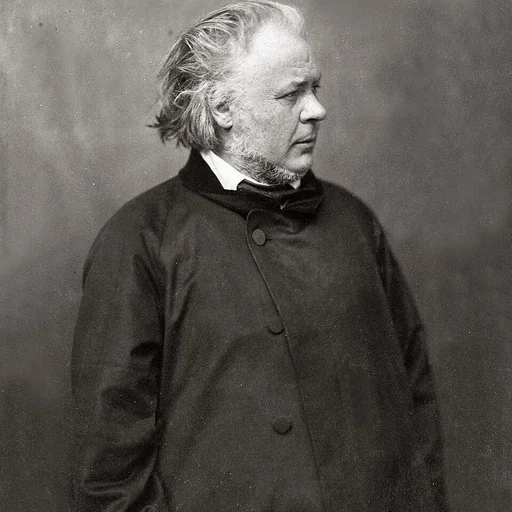
Honoré-Victorin Daumier was a French painter, sculptor, and printmaker, whose many works offer commentary on the social and political life in France, from the Revolution of 1830 to the fall of the Second French Empire in 1870.









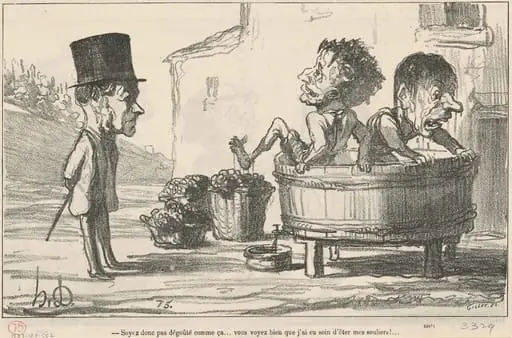 Soyez donc pas dégouté comme ca ...
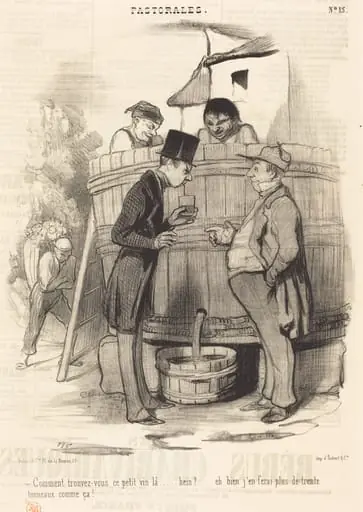 Comment trouvez-vous ce petit vin-la...
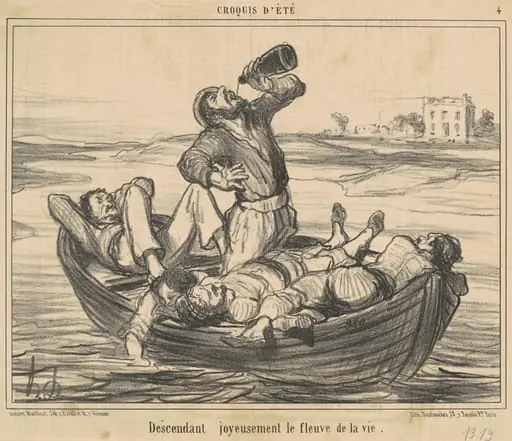 Descendant joyeusement le fleuve de la vie
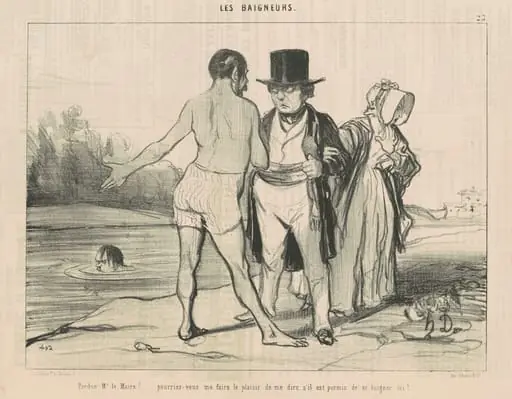 Pardon, Mr Le Maire! ... pourriez-vous ...
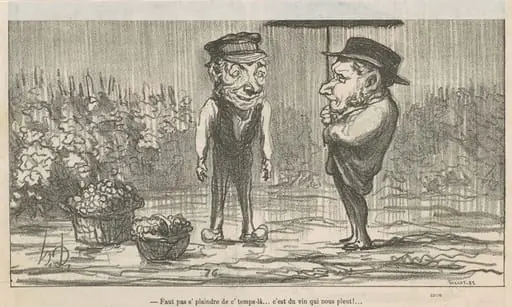 Faut pas s'plaindre de c'temps-la ...
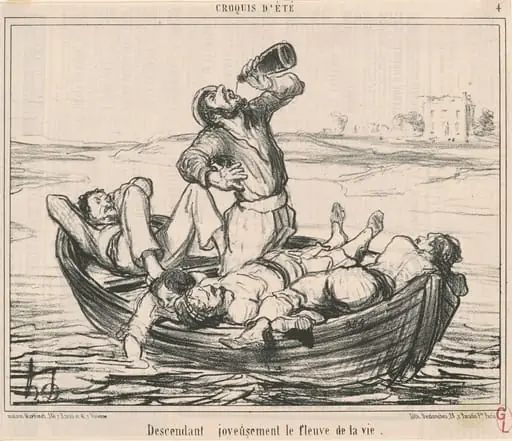 Descendant joyeusement le fleuve de la vie
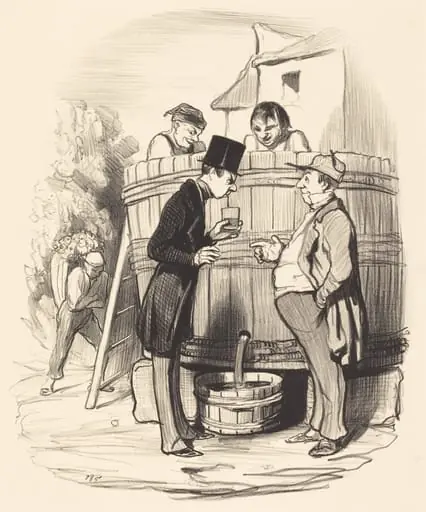 Comment trouvez-vous ce petit vin-la...
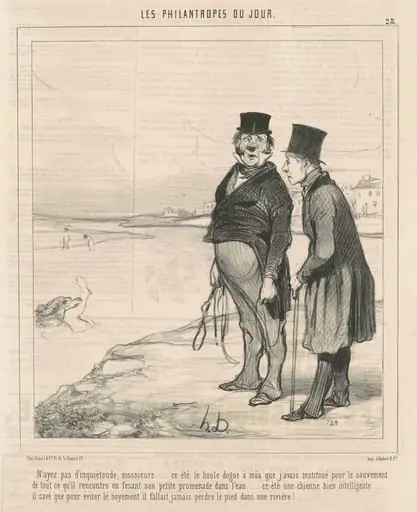 N'ayez pas d'inquiètoude ...
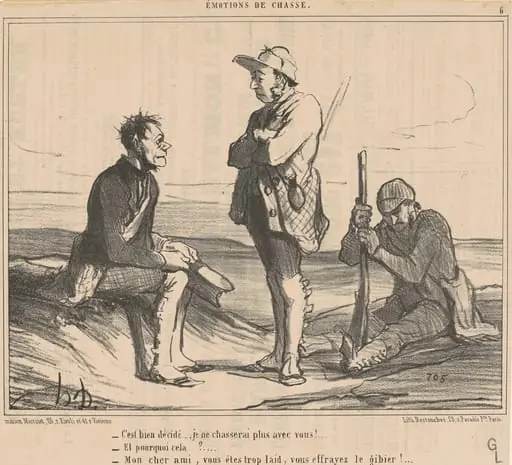 C'est bien décidé ... Je ne chasserai plus avec vous! ...
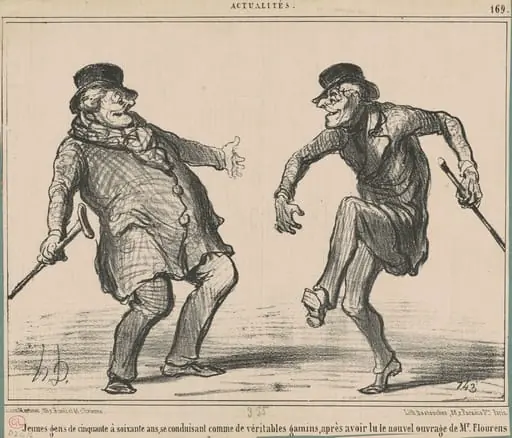 Jeunes gens de cinquante a soixante ans ...