Artwork
La répétition
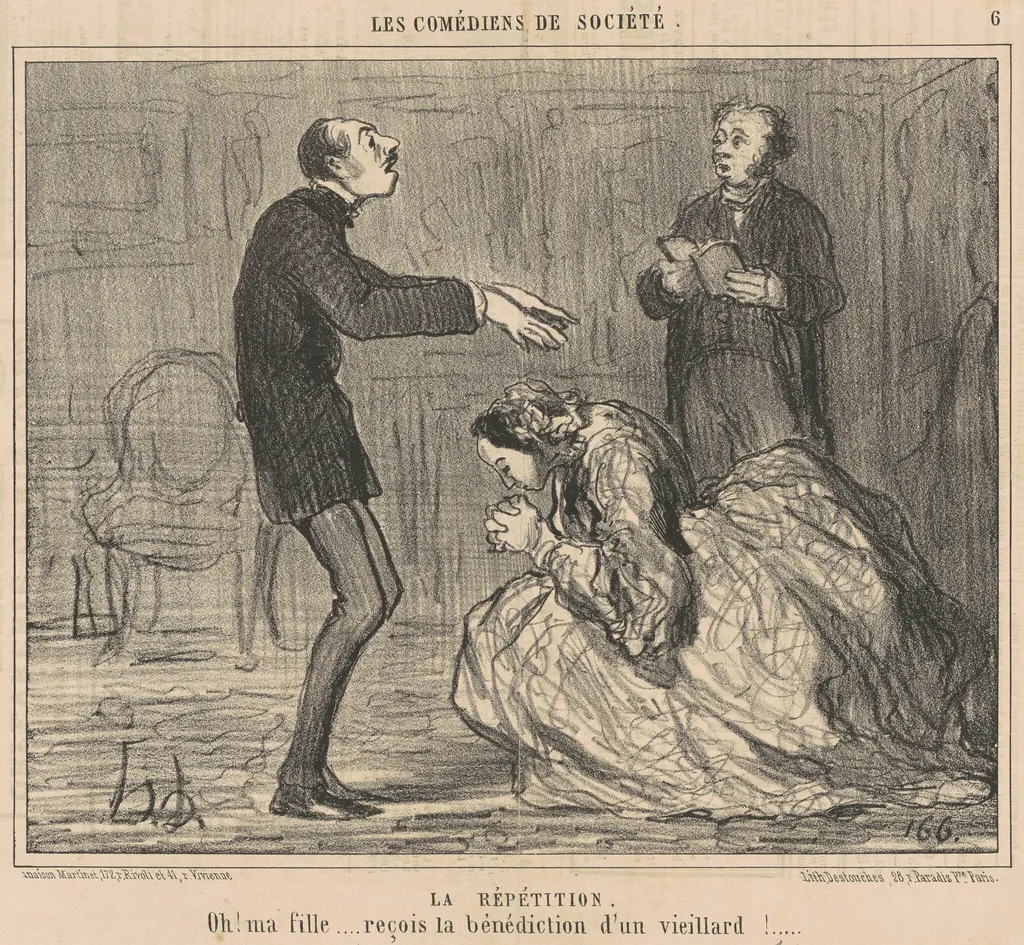
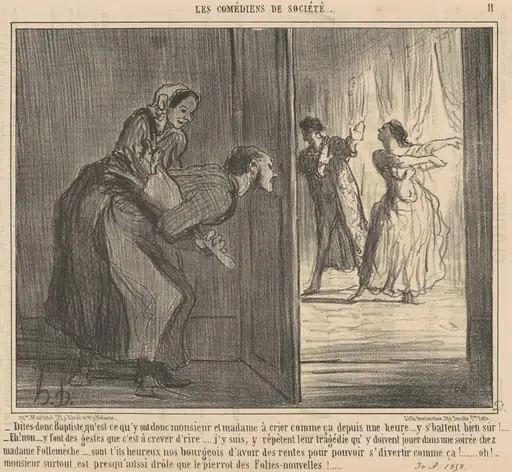
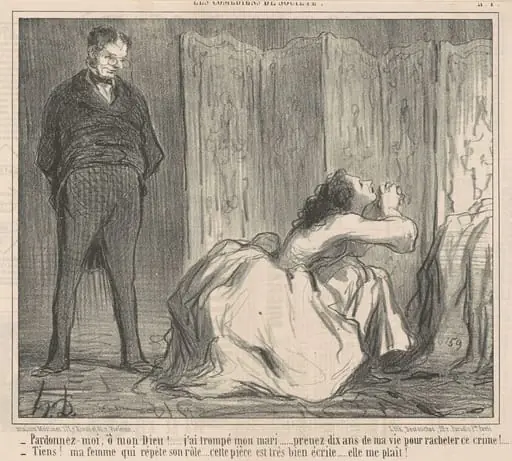
La répétition is an ink print by the Impressionist artist Honoré Daumier. It dates from 1858 and is held in the collection of the National Gallery of Art.
About this work
Overview
The medium of lithography allowed him to draw directly onto stone, translating spontaneous gestures into printed form with immediacy and precision.
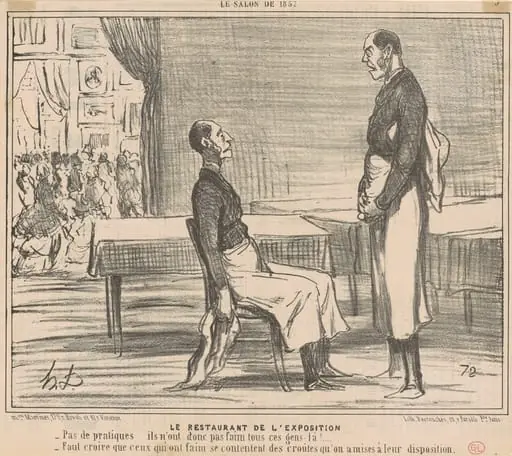
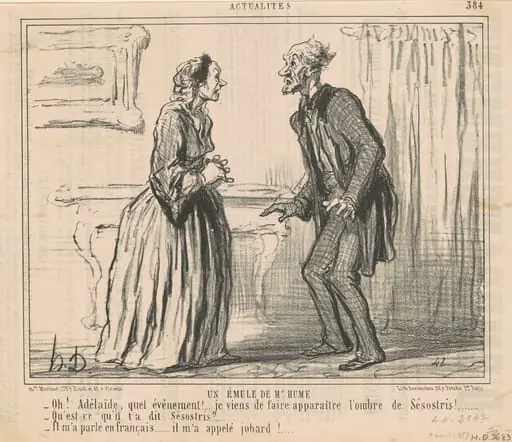
La répétition, a lithograph from 1858 by Honoré Daumier, depicts a moment of theatrical rehearsal with three figures in dynamic interaction. Executed in monochrome, the print reflects Daumier’s frequent work for periodicals, where speed and clarity were essential. The medium of lithography allowed him to draw directly onto stone, translating spontaneous gestures into printed form with immediacy and precision.
Subject & Meaning
The scene portrays three individuals engaged in an intense exchange during a rehearsal. The standing figure, arms flung wide, dominates the composition, while the seated pair lean forward, absorbed in the dialogue. Daumier captures the unguarded energy of performance preparation, revealing the human theater behind the stage — a quiet commentary on the performative nature of social and professional life.
Technique & Style
Daumier employed lithography, drawing with greasy crayon directly on limestone, a method suited to rapid production for newspapers. His lines are fluid and economical, conveying motion through posture and gesture rather than detail. The absence of color focuses attention on expression and composition, emphasizing the physicality of interaction over environmental context.
History & Provenance
Created during Daumier’s prolific period as a political and social satirist for illustrated journals, La répétition was likely made for publication in a weekly paper. Though its exact initial publication is undocumented, it belongs to a broader body of works produced between the 1830s and 1870s that documented French urban life and theatrical culture with sharp observational insight.
Context
In mid-19th century France, lithographic prints were a primary medium for mass communication, especially in satirical and illustrated press. Daumier’s work responded to a public hungry for commentary on politics, class, and culture. Theatrical scenes like this one resonated because they mirrored the performative rituals of everyday life, blurring the line between stage and society.
Legacy
Daumier’s lithographs, including La répétition, influenced later artists in their use of expressive line and social observation. His ability to distill complex human interactions into single, charged images helped redefine printmaking as a vehicle for psychological depth. Today, these works remain vital for understanding the intersection of art, journalism, and public life in modern Europe.
Artist & collection

Artist
Honoré-Victorin Daumier was a French painter, sculptor, and printmaker, whose many works offer commentary on the social and political life in France, from the Revolution of 1830 to the fall of the Second French Empire in 1870.