Artwork
Le prèvenu
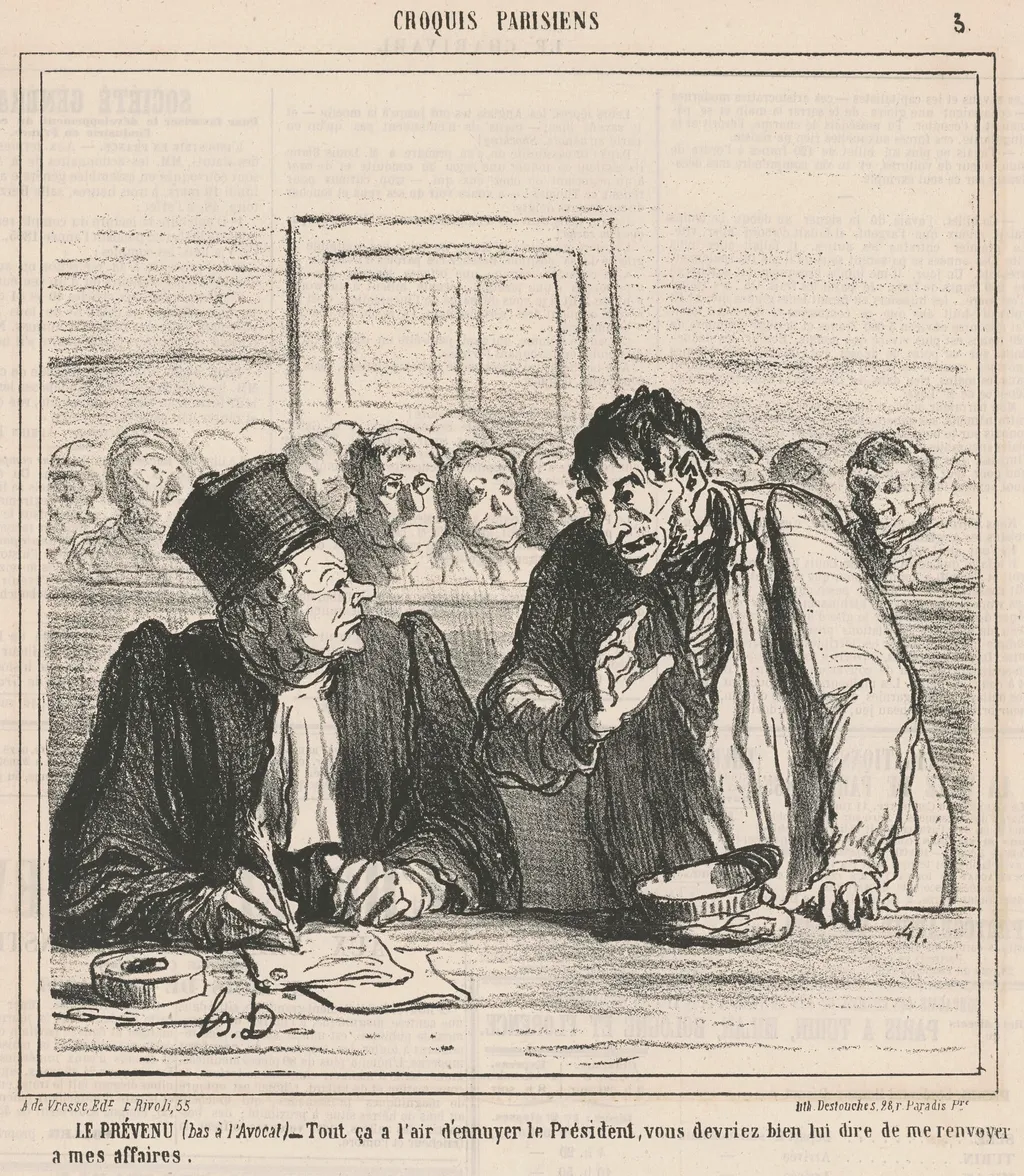
Le prèvenu is an ink print by the Impressionist artist Honoré Daumier. It dates from 1866 and is held in the collection of the National Gallery of Art.
About this work
Overview
The composition conveys the weight of legal ritual through restrained gestures and attentive observers, reflecting Daumier’s interest in institutional life.
Created in 1866, Le Prèvenu is a lithograph by Honoré Daumier that captures a quiet moment in a French courtroom. The scene centers on a magistrate in full judicial attire, poised to record proceedings, while a nearby figure leans in as if offering counsel. The composition conveys the weight of legal ritual through restrained gestures and attentive observers, reflecting Daumier’s interest in institutional life.
Subject & Meaning
The print portrays the quiet labor of justice rather than its drama. The magistrate, immersed in duty, is framed by silent spectators, suggesting the public’s passive observation of legal proceedings. The leaning figure introduces an element of informal exchange, hinting at the human negotiations beneath formal procedure. Daumier highlights the tension between official formality and personal interaction within the judiciary.
Technique & Style
Daumier employed lithography to achieve sharp contrasts and fluid line work, emphasizing texture in fabric and the weight of posture. His use of ink washes adds depth without clutter, focusing attention on facial expressions and body language. The medium allowed for rapid reproduction, aligning with his practice of documenting social realities through accessible imagery rather than grand historical narratives.
History & Provenance
Le Prèvenu was produced during Daumier’s later years, when he increasingly turned to printmaking after years of political caricature. It was likely made for private circulation or as part of a series on legal life, reflecting his sustained critique of institutional authority. The work entered public collections in the late 19th century, preserved as an example of his observational realism.
Context
In mid-19th century France, the judiciary was undergoing formalization amid political instability. Daumier, long critical of power structures, used courtroom scenes to reveal the human mechanics behind legal authority. His depictions avoided overt satire, instead offering nuanced portrayals that mirrored public skepticism toward bureaucratic institutions during the Second Empire.
Legacy
Le Prèvenu stands as part of Daumier’s broader contribution to documenting everyday institutional life. His lithographs influenced later realist artists and photojournalists by demonstrating how subtle gestures could convey systemic truths. The work remains a reference for its quiet psychological insight, avoiding melodrama while preserving the dignity of its subjects.
Artist & collection
Artist
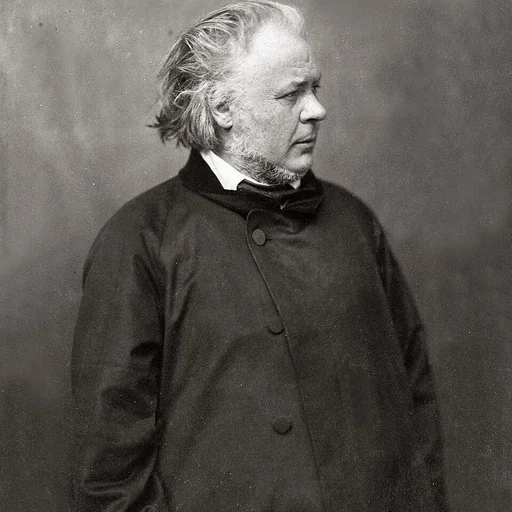
Honoré-Victorin Daumier was a French painter, sculptor, and printmaker, whose many works offer commentary on the social and political life in France, from the Revolution of 1830 to the fall of the Second French Empire in 1870.








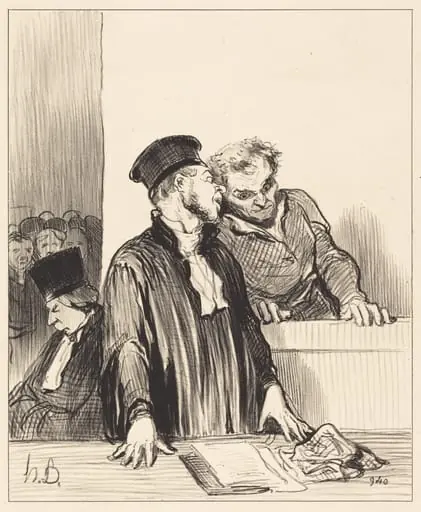 Voila le ministère public qui vous dit des choses... désagréables...
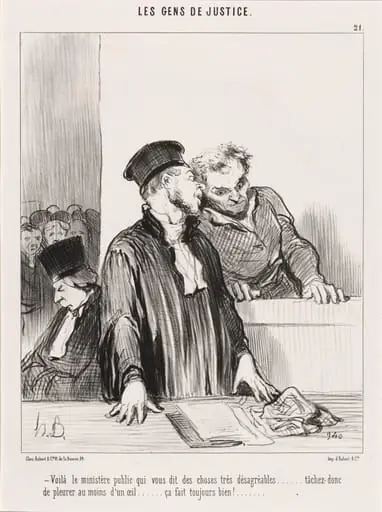 Voila le ministère public qui vous dit des choses... désagréables...
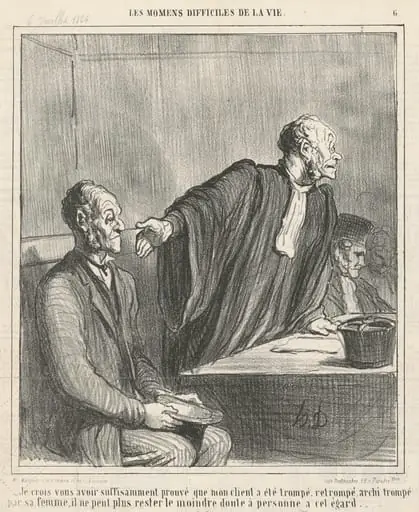 Je crois vous avoir ... prouvé que mon client ...
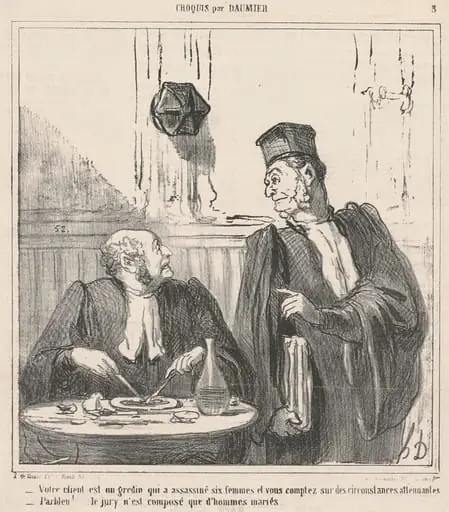 Votre client est un gredin ...
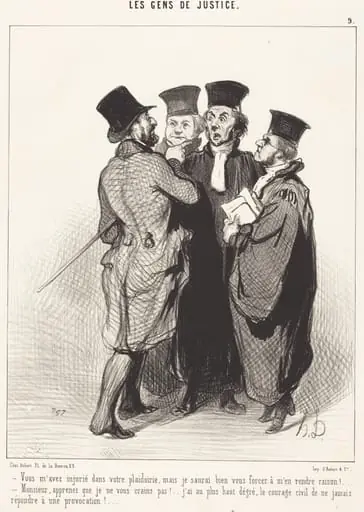 Vous m'avez injurié dans votre plaidoirie...
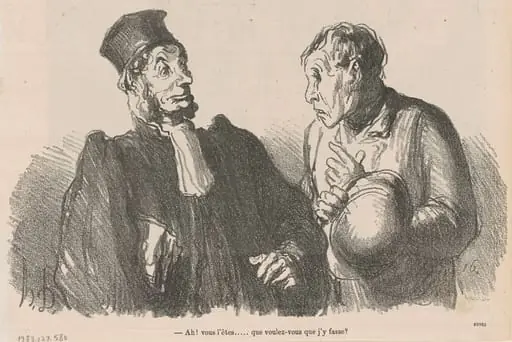 Ah! Vous l'êtes ... que voulez-vous que ...
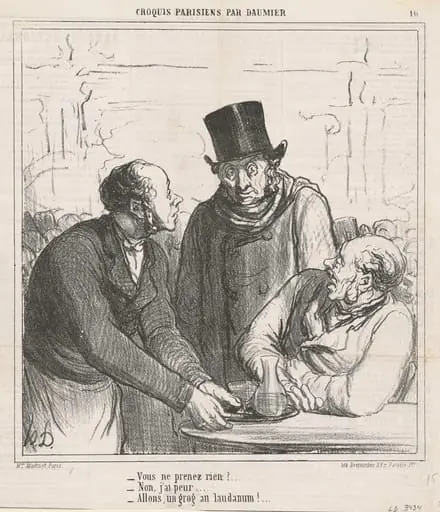 Vous ne prenez rien?
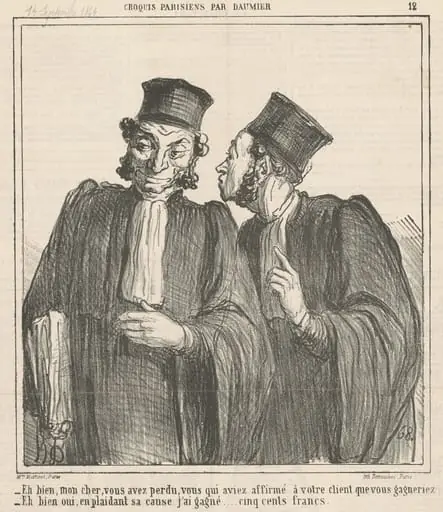 Eh bien, mon cher, vous avez perdu ...
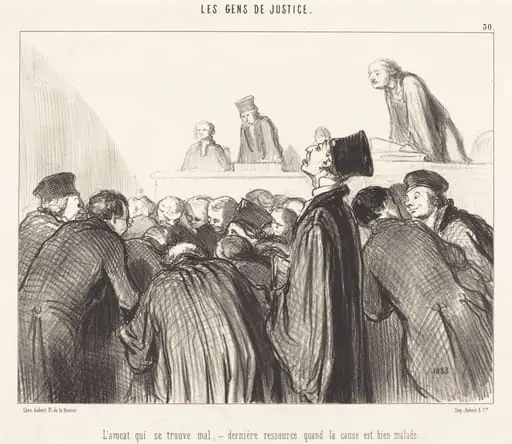 L'Avocat que se trouve mal
 Une soirées musicale