Artwork
Les satanés séducteurs
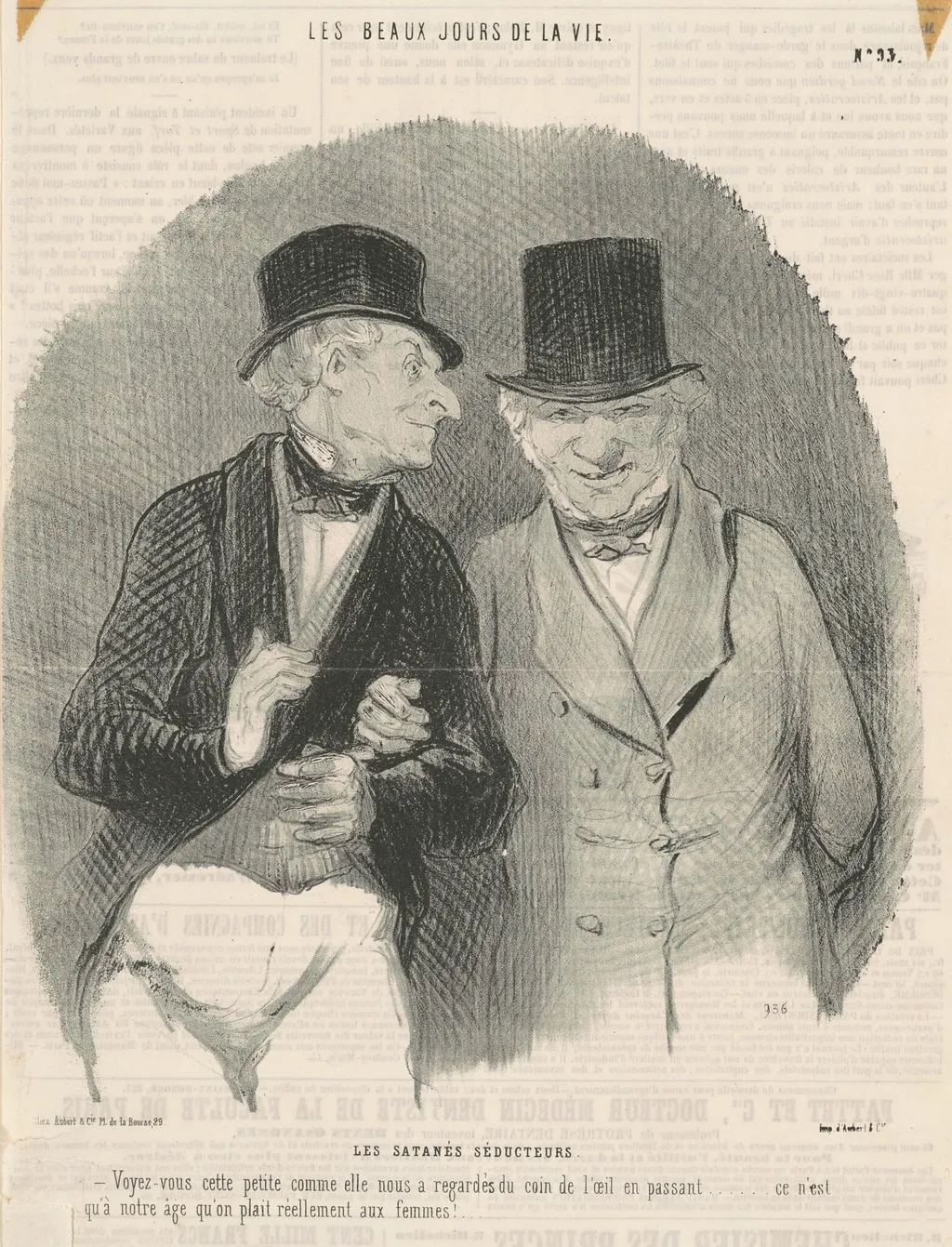
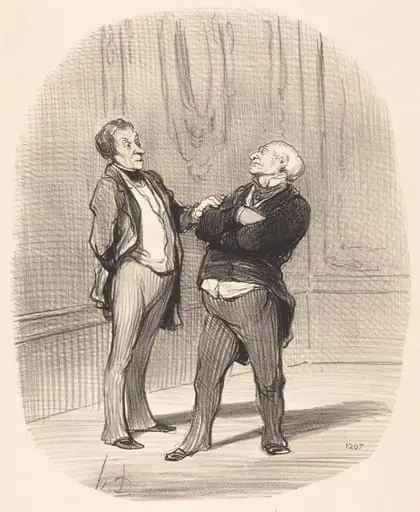
Les satanés séducteurs is an ink print by the Romanticist artist Honoré Daumier. It dates from 1846 and is held in the collection of the National Gallery of Art.
About this work
Overview
Created in 1846, 'Les satanés séducteurs' is a lithograph by Honoré Daumier that portrays two elderly men standing side by side.
Created in 1846, 'Les satanés séducteurs' is a lithograph by Honoré Daumier that portrays two elderly men standing side by side. The work belongs to a series of satirical prints examining social behavior in 19th-century France. Daumier uses the medium’s capacity for tonal nuance to render subtle contrasts in posture and expression, capturing a moment of quiet theatricality rather than overt action.
Subject & Meaning
The two figures, though aged, display mischievous expressions that suggest lingering vanity or flirtatious intent. Their attire—slightly outdated and exaggerated—hints at social pretension. Daumier does not mock them outright but invites reflection on the persistence of youthful impulses in later life, subtly critiquing societal expectations of decorum and aging.
Technique & Style
Daumier employed lithography to achieve a range of textures and tonal gradients, using ink washes and hatched lines to define facial features and fabric folds. The background is deliberately sparse, drawing focus to the figures’ gestures and expressions. His style blends realism with caricature, enhancing psychological depth without sacrificing the humor inherent in the scene.
History & Provenance
The print was published in the French periodical 'La Caricature,' known for its political and social satire. Daumier contributed regularly to such publications, often risking censorship. 'Les satanés séducteurs' was part of a broader body of work critiquing bourgeois manners. Its early circulation among Parisian intellectuals helped solidify Daumier’s reputation as a keen observer of everyday life.
Context
In 1840s France, lithography was a dominant medium for mass-produced satire, allowing artists to reach a broad audience. Daumier’s work emerged amid rising tensions between traditional social hierarchies and emerging middle-class values. His depictions of aging men clinging to romantic illusions reflect broader anxieties about identity, status, and the performance of masculinity in a changing society.
Legacy
Daumier’s lithographs, including this one, influenced later generations of illustrators and cartoonists by demonstrating how visual economy could convey complex social commentary. The work remains a reference point in studies of aging, gender, and satire in 19th-century art, valued for its restraint and psychological insight rather than overt exaggeration.
Artist & collection

Artist
Honoré-Victorin Daumier was a French painter, sculptor, and printmaker, whose many works offer commentary on the social and political life in France, from the Revolution of 1830 to the fall of the Second French Empire in 1870.









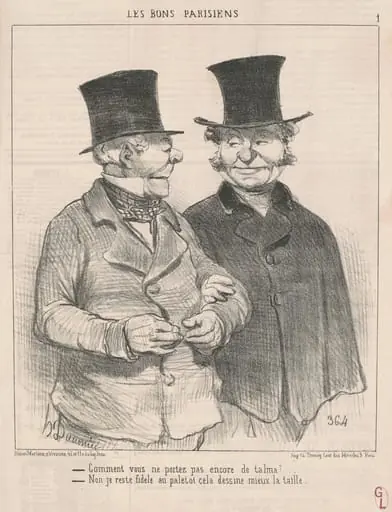 Comment vous portez pas encore de talma? ...
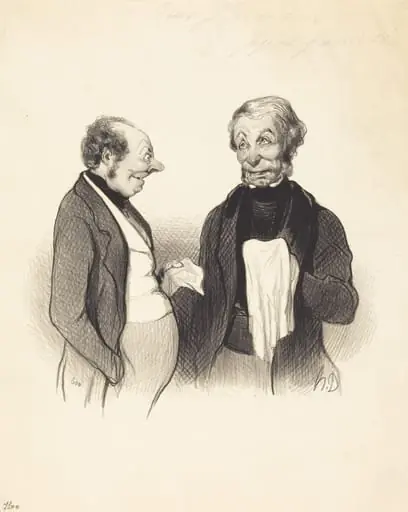 Une Heureuse nouvelle
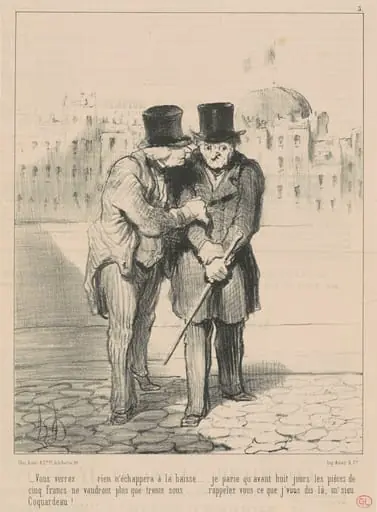 Vous verrez ... rien n'échappera a la baisse ...
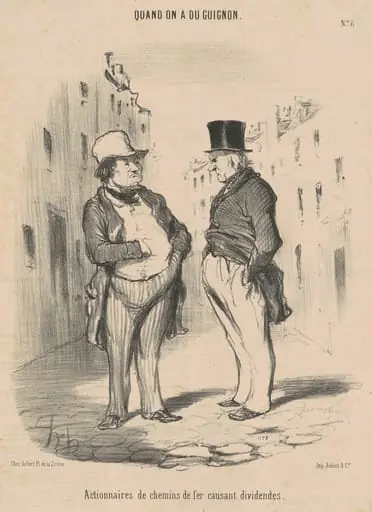 Actionnaires de chemins de fer causant dividendes
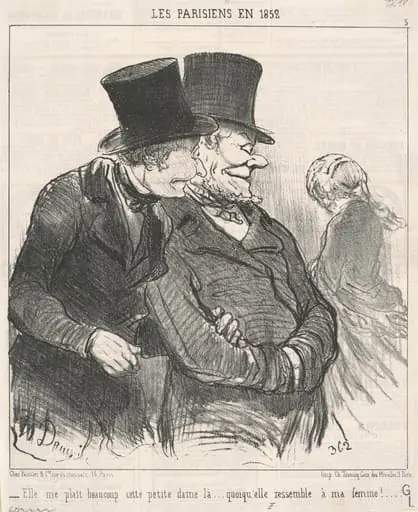 Ell me plait beaucoup ...
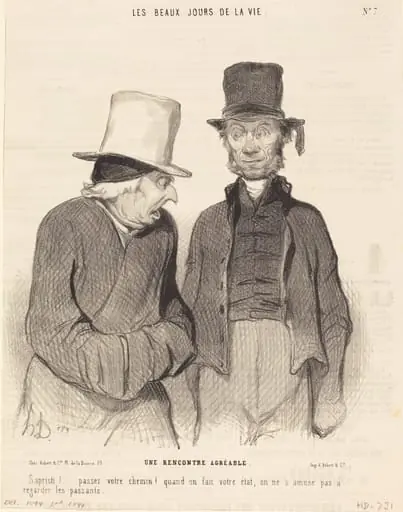 Une Rencontre agréable
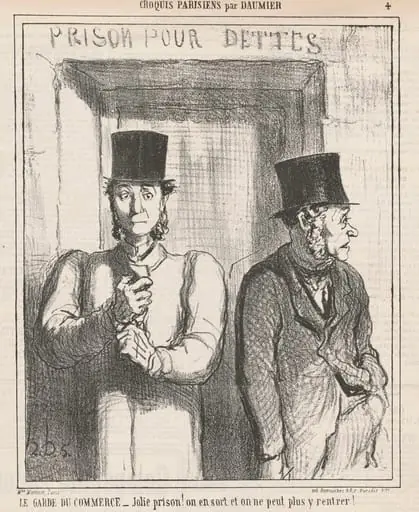 Le garde du commerce
 Il y a la guerre... les loyers vont... diminuer...
 Se posant en appréciateur