Artwork
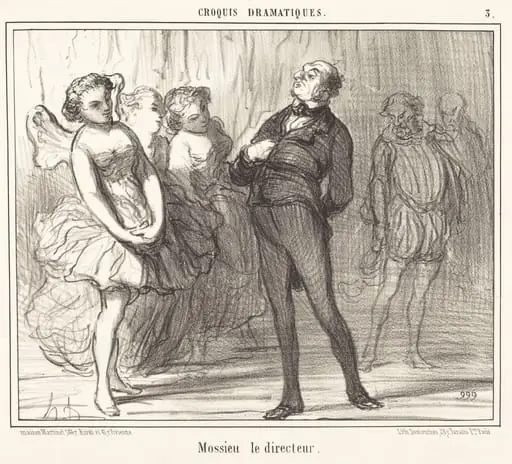
Mossieu la directeur
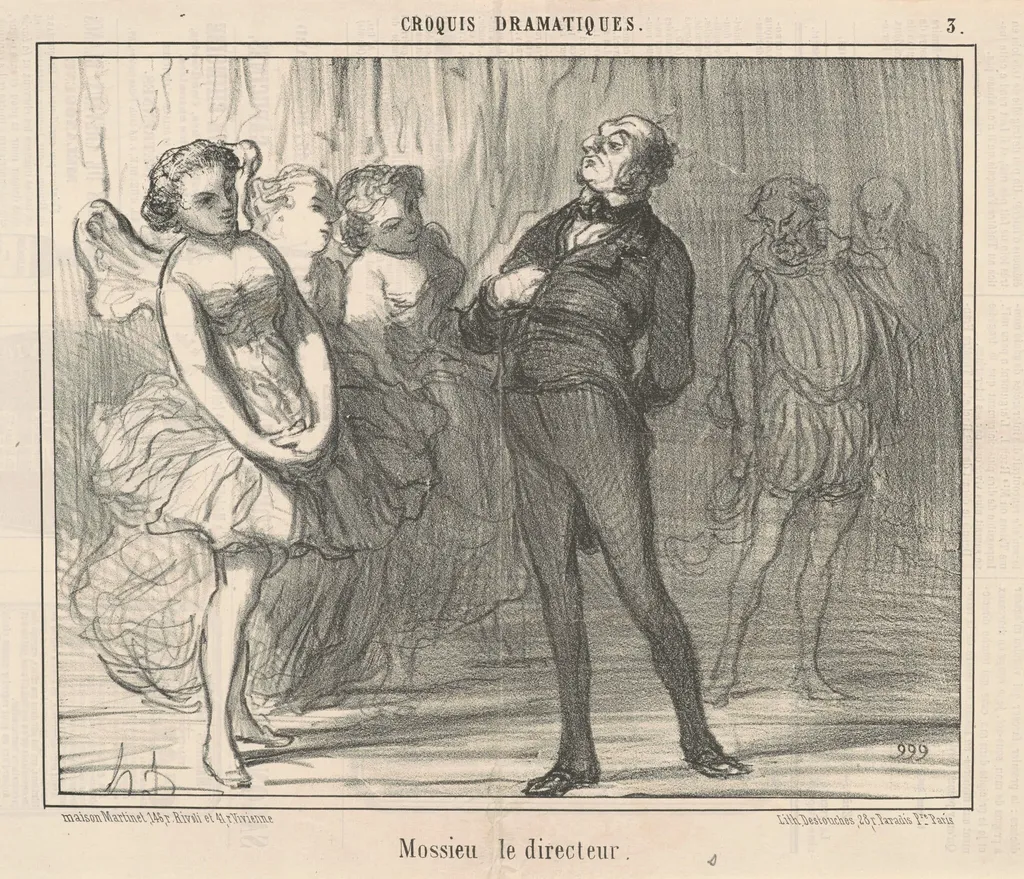
Mossieu la directeur is an ink print by the Impressionist artist Honoré Daumier. It dates from 1856 and is held in the collection of the National Gallery of Art.
About this work
Overview
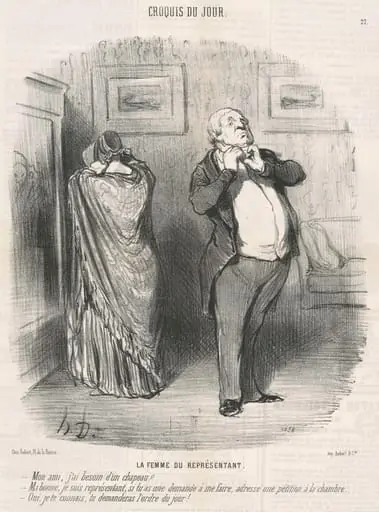
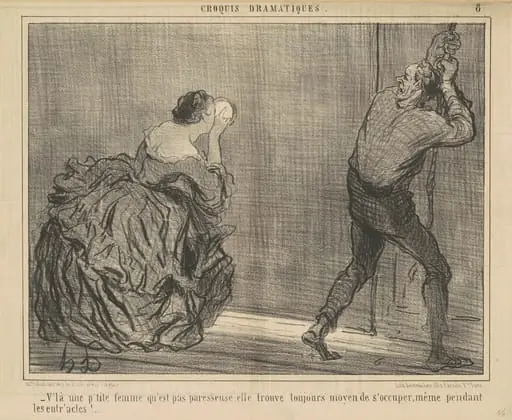
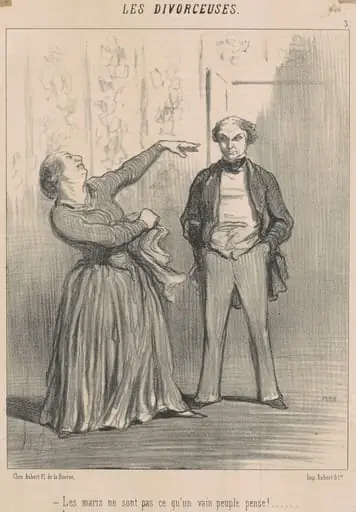
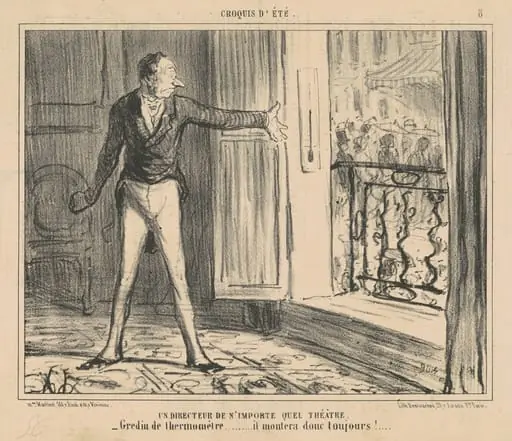
Honoré Daumier’s 1856 lithograph, titled *Mossieu la directeur*, portrays a man and a woman seated together in a theater box. The composition captures a quiet, intimate moment, with the pair positioned close to one another amid the surrounding audience.
Subject & Meaning
The work contrasts the man’s dark suit with the woman’s light dress, highlighting their differing social roles. Their sharply rendered faces convey a subdued emotional exchange, suggesting a private connection that stands apart from the public setting of the theater.
Technique & Style
Daumier employed the lithographic process, drawing directly on a stone surface with greasy ink. The resulting bold black lines and pronounced shadows give the scene a strong sense of depth and drama, while the crisp detailing of the figures emphasizes their emotional states.
History & Provenance
Created in 1856, the print reflects Daumier’s interest in contemporary urban life and theatrical environments. It was produced as part of his broader series of lithographs that documented social interactions in mid‑nineteenth‑century Paris.
Context
During the mid‑1800s, Parisian theaters served as social arenas where class distinctions were both displayed and negotiated. Daumier’s depiction of a mixed‑class couple in a box seat comments on these dynamics, illustrating how personal intimacy could intersect with public spectacle.
Artist & collection

Artist
Honoré-Victorin Daumier was a French painter, sculptor, and printmaker, whose many works offer commentary on the social and political life in France, from the Revolution of 1830 to the fall of the Second French Empire in 1870.